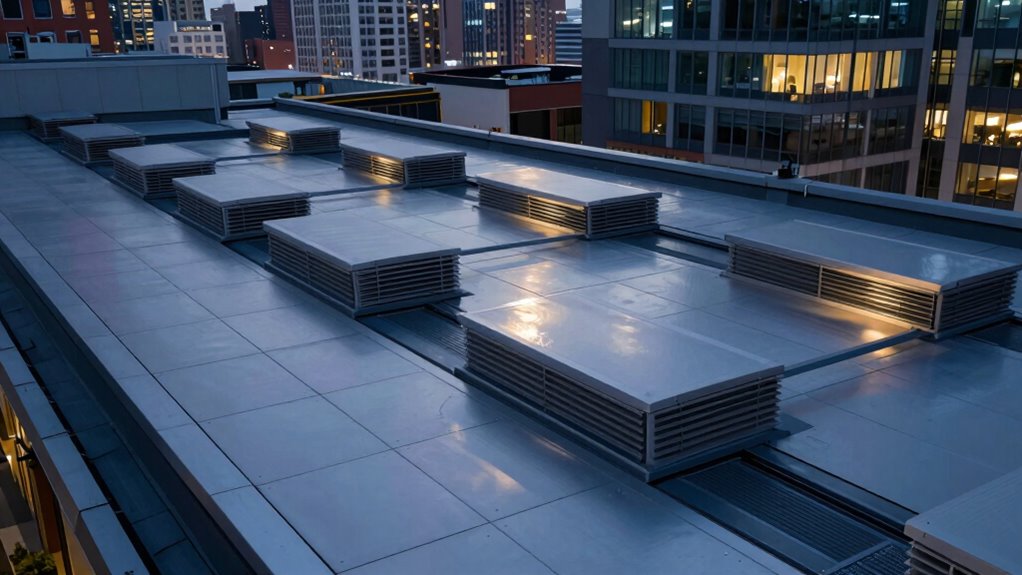

The Night Flush Strategy helps you cool your home naturally by using cooler outdoor air at night. You open windows and vents in the evening, allowing cooler air to enter and absorb heat from thermal mass inside your space. By closing windows in the morning, you trap the coolness, reducing indoor temperatures during the day. Proper implementation and monitoring maximize comfort and energy savings. Keep exploring to discover how to optimize this eco-friendly cooling method.

Prime made for students and young adults
- Fast, free delivery for dorm and study essentials
- Prime Video and Amazon Music included
- Member-only deals
Key Takeaways
- The night flush strategy uses cooler outdoor air at night to passively lower indoor temperatures through cross-ventilation.
- It relies on thermal mass to absorb heat during the day and release it at night, enhancing cooling efficiency.
- Effective implementation involves strategic window placement, outdoor landscaping, and thermal insulation to maximize airflow and heat retention.
- Indoor temperature monitoring helps determine optimal times for opening windows and trapping cool air for sustained comfort.
- Combining night flushing with DIY home improvements like reflective shades and insulation boosts cooling effectiveness and energy savings.
thermal mass insulation for home
As an affiliate, we earn on qualifying purchases.
As an affiliate, we earn on qualifying purchases.
What Is the Night Flush Strategy?

The Night Flush Strategy is a method that leverages cooler nighttime temperatures to reduce indoor heat. It relies on passive cooling techniques to help with thermal regulation, minimizing the need for mechanical cooling systems. By opening windows or vents during the night, you allow the cooler outdoor air to enter your home, lowering indoor temperatures naturally. This process helps to dissipate the heat accumulated during the day, making it easier to stay comfortable without excessive energy use. The strategy taps into the natural temperature swings that occur overnight, using them to maintain a more stable indoor climate. It’s a simple, eco-friendly way to improve thermal comfort, reduce energy costs, and create a more sustainable approach to summer cooling. Additionally, practicing staying aware of your environment can help you optimize the timing and effectiveness of this cooling method.
As an affiliate, we earn on qualifying purchases.
How Does Night Cooling Work? The Science Explained
Night cooling works by harnessing the natural temperature differences between daytime and nighttime. During the day, your building’s thermal mass absorbs heat from the sun, storing it inside. When night falls, cooler air causes heat transfer from the thermal mass to the environment, releasing stored warmth. This process reduces indoor temperatures without active cooling devices. The key is understanding how thermal mass acts as a heat reservoir, delaying the rise in indoor temperature. As heat transfers out, your building’s interior cools down, making it more comfortable the next day. Effective night cooling relies on maximizing heat transfer during the cooler hours, allowing the thermal mass to shed heat efficiently. This natural process helps you save energy while maintaining a comfortable indoor environment. Understanding thermal mass is essential for optimizing this cooling strategy effectively.
As an affiliate, we earn on qualifying purchases.
How to Implement the Night Flush Technique Effectively
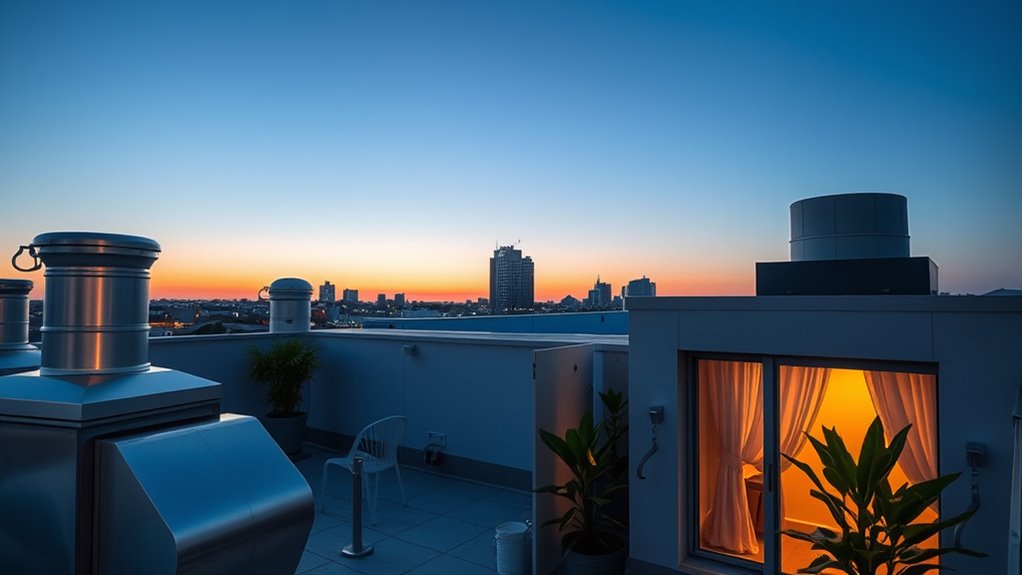
To implement the night flush technique effectively, you need to optimize your home’s natural ventilation and thermal mass management. Start with landscape planning by planting shade trees and strategic shrubs to block heat gain during the day and encourage airflow. Guarantee windows and vents are positioned to maximize cross-ventilation, especially at night when outdoor temperatures drop. Use thermal mass materials like concrete or stone inside your home to absorb heat during the day and release it at night, aiding cooling. Improving indoor air quality is also vital; keep vents unobstructed and consider air purifiers if needed. Regularly monitor outdoor temperatures and adjust window openings accordingly. Properly planned landscape and ventilation will enhance the night flush’s effectiveness, reducing reliance on mechanical cooling. Additionally, incorporating simple home cooling strategies can further enhance comfort during hot summer nights.
As an affiliate, we earn on qualifying purchases.
What Factors Make Night Flush Successful?

Success with the night flush technique depends on several key factors working together. First, your home’s thermal insulation plays a vital role. Good insulation helps retain cool night air and prevents heat from seeping in during the day. Without proper insulation, even excellent outdoor airflow won’t keep your home cool enough. Second, outdoor airflow is essential. You need to ensure that your windows or vents are strategically placed to maximize air exchange. The cooler night air must flow freely into your living space, replacing the warmer indoor air. Additionally, the design of your home should promote natural ventilation. When these factors align—strong thermal insulation and effective outdoor airflow—you create a perfect environment for the night flush to cool your home efficiently. Proper ventilation strategies can further enhance airflow effectiveness, ensuring optimal cooling.
Easy DIY Tips to Boost Your Night Cooling System
Boosting your night cooling system is easier than you might think, and small DIY adjustments can make a big difference. Start by adding indoor plants near windows; they help regulate humidity and absorb heat, enhancing cooling efficiency. Next, improve window insulation with weatherstripping or thermal curtains to prevent heat from entering during the day and keep the cool air inside overnight. Consider using reflective window films or shades to reduce heat gain. Ensuring proper ventilation also helps; open windows at night to let cooler air in and trap it using insulation. Additionally, implementing energy-efficient appliances can reduce heat output and improve overall cooling performance. These simple steps don’t require major renovations but can considerably boost your night flush strategy, making your home cooler and more comfortable during summer nights.
Why Use the Night Flush Strategy? Key Benefits

Have you ever wondered how to keep your home cooler naturally and efficiently during summer nights? The night flush strategy leverages passive design principles to cool your home without extra energy. By opening windows at night, you allow cooler outdoor air to replace warm indoor air, reducing reliance on air conditioning. This method offers significant energy savings and minimizes environmental impact. Here’s a quick comparison:
| Benefit | Description |
|---|---|
| Passive cooling | Utilizes natural airflow without mechanical systems |
| Energy savings | Cuts down on electricity costs |
| Improved comfort | Keeps indoor temperatures stable |
| Eco-friendly | Reduces carbon footprint |
| Cost-effective | Minimal investment needed |
Using this strategy, you harness natural forces for a sustainable, cost-effective way to stay cool. Passive cooling methods are increasingly recommended in green building practices to enhance energy efficiency.
What Challenges Might You Face? Tips to Overcome Them

While the night flush strategy offers many benefits, you might encounter some challenges when implementing it. Cost considerations can be a concern, especially if you need to upgrade your windows or install ventilation systems. These upfront expenses might seem intimidating, but they often pay off through reduced cooling costs later. Maintenance challenges can also arise, as keeping vents and filters clean is essential for ideal airflow and air quality. Regular upkeep might feel like extra work, but establishing a routine helps prevent issues. Additionally, temperature fluctuations or unexpected weather can impact effectiveness. To overcome these hurdles, plan your budget carefully and schedule routine maintenance. Proper ventilation system installation can significantly enhance the efficiency of night flushing, ensuring you enjoy the full benefits of night flushing without unnecessary stress.
How to Combine Night Flush With Other Cooling Methods

Integrating night flush with other cooling methods can substantially enhance your overall comfort and energy efficiency. To maximize effectiveness, consider these strategies: 1. Use passive design principles, like shading and insulation, to reduce heat gain during the day and retain coolness at night. 2. Combine night flush with renewable energy sources, such as solar-powered ventilation, to sustainably cool your space with minimal environmental impact. 3. Coordinate night flush with natural ventilation, opening windows strategically after sunset to flush out accumulated heat and promote airflow. Additionally, monitoring indoor temperature with simple tools can help you determine the best times to implement these methods for optimal comfort.
Frequently Asked Questions
Can the Night Flush Strategy Be Used in Humid Climates?
Yes, you can use the night flush strategy in humid climates, but you need to focus on moisture control. In humid conditions, opening windows at night helps cool your space, but it can also bring in more moisture. To prevent humidity buildup, guarantee proper ventilation, use dehumidifiers, or increase airflow with fans. This way, you can enjoy cooling benefits while managing humidity effectively.
What Are the Environmental Impacts of Night Cooling Techniques?
Have you ever wondered how cooling your home affects the environment? Night cooling techniques often reduce energy consumption, which is great for lowering greenhouse gas emissions. However, they can impact air quality if not managed properly, as increased outdoor air movement might carry pollutants indoors. Overall, when you use night cooling thoughtfully, you minimize negative environmental impacts, balancing comfort with sustainability.
How Does Insulation Affect the Effectiveness of Night Flushing?
Insulation substantially impacts the effectiveness of night flushing by increasing thermal resistance and insulation value. When your building has high insulation, it slows heat transfer, making it harder for cool night air to lower indoor temperatures effectively. Conversely, lower insulation allows heat to escape more easily, enhancing night flushing. To optimize cooling, balance insulation levels so they protect during the day but don’t hinder cooling at night.
Are There Safety Concerns With Opening Windows Overnight?
Opening windows overnight can be risky, as you might worry about window security and insect intrusion, but it’s also a simple way to cool your home naturally. To stay safe, make sure your windows have secure locks and screens to prevent unwanted guests. While it’s a balancing act, taking these precautions helps you enjoy fresh air without sacrificing safety, making your night flush both effective and worry-free.
Can Night Flush Be Integrated With Smart Home Systems?
Yes, you can integrate night flush with smart home systems. By using smart automation, you can schedule windows to open and close automatically during cooler nights, maximizing energy savings and comfort. Smart home integration enhances the automation benefits, giving you control and peace of mind. You can also set safety features like alerts or locks, ensuring your night flush system is both efficient and secure without manual intervention.
Conclusion
Embracing the night flush strategy transforms your summer cooling routine from a mere necessity into a smart, eco-friendly choice. By harnessing the cool night air, you open a secret weapon against sweltering days—like capturing moonbeams to chase away the heat. With simple steps and a little planning, you can enjoy a cooler, more comfortable home while reducing energy costs. Why not turn the night into your coolest ally? After all, the night holds the key to your comfort.
Fall Picks
fall essentials
As an affiliate, we earn on qualifying purchases.