
Insulated curtains work better in some rooms than others because your room’s exposure to outdoor elements and its purpose matter. If your room faces direct sunlight, wind, or cold, insulation can make a big difference. In contrast, interior rooms or spaces with limited natural light see less benefit. Factors like humidity or window placement also influence effectiveness. To optimize your space, understanding these details can help you choose the best window treatment solutions—stick around to find out more.

Prime made for students and young adults
- Fast, free delivery for dorm and study essentials
- Prime Video and Amazon Music included
- Member-only deals
Key Takeaways
- Rooms with large, uninsulated windows experience more heat transfer, making insulation more effective.
- Interior or naturally shaded rooms have less temperature fluctuation, reducing the need for insulation benefits.
- Spaces exposed to direct sunlight or wind gain or lose heat more rapidly, enhancing insulation effectiveness.
- Humid areas require moisture-resistant treatments; insulation alone may not address moisture-related issues.
- Room purpose influences insulation benefits; bedrooms benefit from noise reduction and draft blocking, while ventilated spaces may not.

Insulated curtains are a versatile solution for enhancing comfort and energy efficiency across various rooms in your home. They serve as effective window treatments that help regulate temperature, making your living spaces more comfortable and reducing energy costs. However, their effectiveness can vary depending on the room’s location, purpose, and exposure to the elements. This is why insulated curtains work better in some rooms than others.
Insulated curtains boost comfort and energy savings, but their effectiveness varies by room’s location and use.
In rooms that experience extreme temperatures, such as bedrooms or living rooms facing the sun, insulated curtains shine. These spaces often have large windows that let in a lot of heat during summer or cold during winter. Installing insulated curtains here can *substantially* improve thermal efficiency, keeping the room warmer in winter and cooler in summer. By creating a barrier between the window and the room, they minimize heat transfer, making them excellent window treatments for maintaining a steady indoor climate. In these areas, the investment in quality insulation pays off by reducing the need for heating and cooling systems to work overtime, ultimately saving you money.
On the other hand, rooms that don’t rely heavily on natural light or have limited exposure to outdoor elements may not benefit as much from insulated curtains. For example, interior rooms or spaces with small or shaded windows naturally maintain a more stable temperature, so the added insulation might not make a noticeable difference. In such cases, opting for lighter curtains or alternative treatments could be more practical. Additionally, rooms with high humidity levels, like bathrooms or kitchens, may require specific types of window treatments designed for moisture resistance, as insulation alone won’t address issues like mold or condensation. Understanding humidity levels and how they interact with insulation can help you select the best window solutions for these spaces. Furthermore, considering climate factors can help you determine the overall effectiveness of insulation in your home environment. It’s also worthwhile to evaluate the window placement to understand how much direct sunlight or wind might influence the need for insulation. Proper assessment of these factors can ensure you choose the most energy-efficient and suitable window treatments for each room.
The purpose of each room also influences how well insulated curtains work. In bedrooms, where comfort and sleep quality are priorities, insulated curtains can help block out drafts and external noise, enhancing thermal efficiency and creating a peaceful environment. Conversely, in rooms where ventilation and airflow are more important, heavy curtains might obstruct air circulation, reducing overall comfort. For these spaces, layered window treatments can be a practical solution to balance insulation with airflow. For workspaces or areas where natural light is essential, you might choose insulated curtains with a thinner lining or opt for layered window treatments to balance insulation with brightness. Recognizing the specific needs of each space is crucial for selecting the most suitable window treatments to maximize comfort and energy savings.
Popular right now

De'Longhi Linea Classic Espresso Machine with Adjustable Milk Frother

KitchenAid Artisan 5-Quart Tilt-Head Stand Mixer, Almond Cream

Bose QuietComfort Wireless Noise-Cancelling Over-Ear Headphones, Black
As an affiliate, we earn on qualifying purchases.
Frequently Asked Questions
Do Insulated Curtains Improve Soundproofing as Well?
Yes, insulated curtains can improve soundproofing by enhancing sound absorption and noise reduction. Their thick, layered fabric absorbs sound waves, reducing echoes and muffling noise from outside. While they don’t fully block all sound like specialized acoustic panels, insulated curtains are effective in decreasing daytime noise and creating a quieter environment. You’ll notice a significant difference when using them in rooms like bedrooms or home offices.
How Do Insulated Curtains Affect Room Humidity Levels?
Insulated curtains gently influence your room’s atmosphere, subtly aiding humidity regulation and moisture control. They don’t drastically alter humidity but can help stabilize it by reducing drafts and preventing excess moisture escape. In colder months, they keep warmth in, which may slightly decrease humidity levels, while in warmer seasons, they help maintain a balanced environment. Overall, they contribute to a more comfortable, moisture-controlled space without overwhelming your room’s natural humidity.
Are There Specific Colors That Work Better for Insulation?
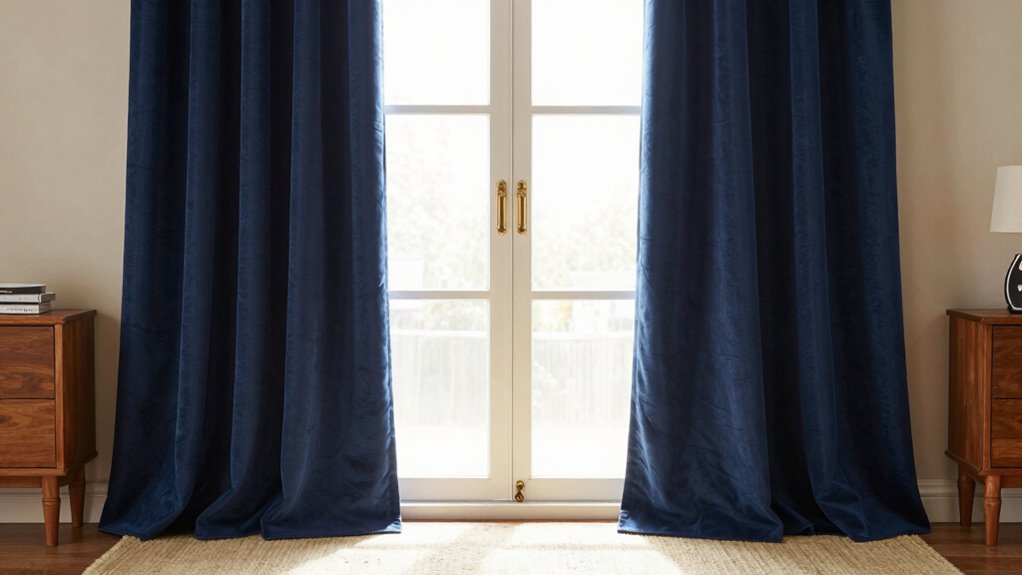
Colors like dark blues, deep greens, and rich browns tend to work better for insulation because they absorb and retain heat more effectively. While color psychology suggests these hues promote calm and comfort, they also enhance aesthetic appeal by creating cozy atmospheres. Bright or lighter shades may not insulate as well but can brighten a room. Choose darker, warmer tones for better insulation and a welcoming vibe.
Can Insulated Curtains Be Used Outdoors Effectively?
Yes, you can use insulated curtains outdoors, but only if they’re built for the job. Think of them as armor against the elements, offering outdoor durability and UV resistance. These curtains withstand sun, rain, and wind, keeping heat in or out as needed. Look for specially designed outdoor insulated curtains that promise longevity and performance, turning your porch or patio into a cozy, energy-efficient haven.
Do Insulated Curtains Require Special Maintenance or Cleaning?
Insulated curtains don’t require special maintenance, but you should consider fabric durability and cleaning frequency. Typically, you can vacuum or spot clean them regularly to remove dust and dirt. For deeper cleaning, check the care label—most can be machine washed or gently hand washed. Avoid harsh chemicals to preserve insulation properties. Regular cleaning keeps your curtains looking good and guarantees they function effectively, especially in rooms with high humidity or frequent use.
Conclusion
So, next time your insulated curtains seem to do nada, don’t blame them — maybe your living room just isn’t ready for their magic. Perhaps it’s time to accept that some rooms are born to be chilly, no matter how snug your curtains try to make them. Or maybe, just maybe, you’re secretly hoping they’ll turn your house into an Arctic tundra. Either way, don’t lose hope — or your sense of humor.