
Water softener sizing confuses many households because the process involves more than just choosing a model. You need to understand your water usage, hardness levels, and match the right capacity to avoid issues like over- or under-sizing. Many find calculations intimidating or feel unsure about installation. Misunderstandings about maintenance and system lifespan add to the confusion. Stick around to discover how understanding these factors can help you choose the right softener with confidence and avoid costly mistakes.

Prime made for students and young adults
- Fast, free delivery for dorm and study essentials
- Prime Video and Amazon Music included
- Member-only deals
Key Takeaways
- Many households struggle to accurately match softener capacity with their water usage and hardness levels.
- Complex calculations and installation procedures intimidate homeowners, leading to incorrect sizing choices.
- Misconceptions about softener size, maintenance, and lifespan cause confusion and poor decision-making.
- Variations in household water consumption patterns make it difficult to select the appropriate softener size.
- Lack of professional guidance and understanding increases the likelihood of errors and system inefficiency.
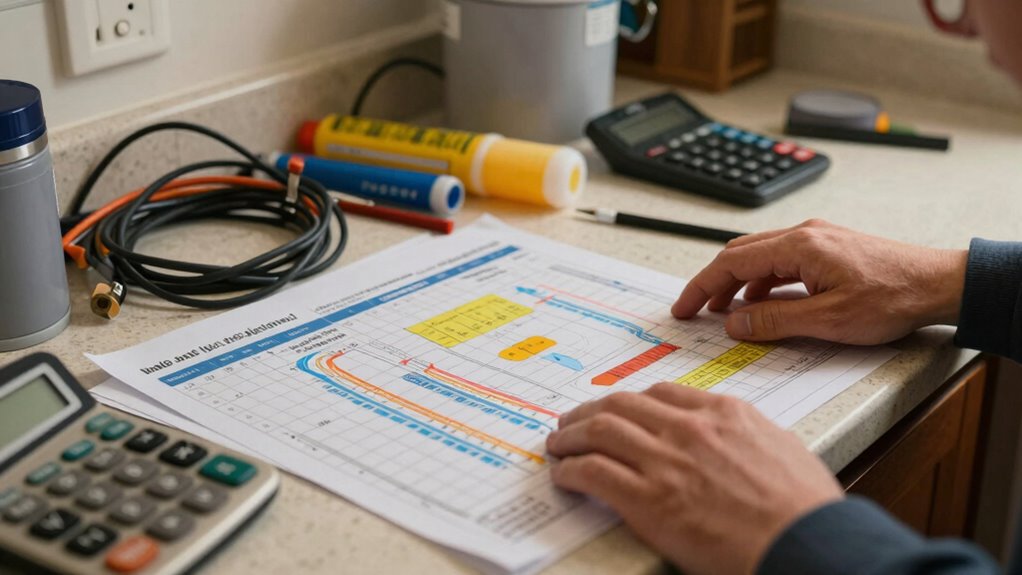
Have you ever felt overwhelmed trying to figure out the right size water softener for your home? It’s a common experience because sizing isn’t as simple as picking a model off the shelf. Many households struggle with understanding how to match a softener’s capacity to their water usage, leading to frustration and uncertainty. One reason for this confusion is the installation challenges that come with choosing the wrong size. If the softener is too small, it can’t handle your household’s demand, resulting in frequent regeneration cycles and hard water slipping through. Conversely, a too-large unit might seem like a safe bet, but it can be unnecessarily expensive and inefficient. Proper installation requires careful calculations, which many homeowners find complicated or intimidating. Without professional guidance, it’s easy to make mistakes that impact performance and longevity. Additionally, misconceptions about the softener’s capacity can lead to choosing an unsuitable size, further complicating the situation.
Choosing the right water softener size is complex but essential for optimal performance and longevity.
Another factor fueling the confusion is maintenance misconceptions. Some people believe that bigger softeners are always better because they last longer or need less frequent servicing. Others assume that small units will quickly break down under heavy use. These misconceptions make it hard to determine what size is truly appropriate for your needs. In reality, maintenance isn’t just about the size but about correctly understanding your household’s water consumption patterns. Oversized units may be underused, leading to unnecessary wear and tear, while undersized units struggle to keep up, causing increased maintenance and shorter lifespan. Misunderstanding how often your softener needs to regenerate can lead to unnecessary costs and frustration. A clear understanding of water usage patterns can significantly improve your sizing decisions. It’s also helpful to understand that water hardness levels directly influence the amount of softening required and should be factored into your calculations. Additionally, many homeowners underestimate how installation complexity can impact the overall efficiency and durability of the system. Recognizing these factors can help homeowners make better-informed decisions and avoid common pitfalls.
water softener capacity calculator
As an affiliate, we earn on qualifying purchases.
As an affiliate, we earn on qualifying purchases.
Frequently Asked Questions
How Often Should I Replace My Water Softener’s Resin?
You should replace your water softener’s resin every 10 to 15 years, depending on its resin lifespan. The replacement frequency varies based on your water usage, water hardness, and maintenance. If you notice a decline in water softening efficiency or increased soap usage, it’s a sign your resin may need replacing sooner. Regular maintenance and monitoring help guarantee your resin performs at its best and extends its lifespan.
Can a Water Softener Remove All Types of Contaminants?
Imagine your water softener as a sieve that catches some debris but not everything—it’s great at removing calcium and magnesium, but it can’t handle all contaminant types like bacteria, pesticides, or heavy metals. Its filtration limitations mean it’s not a one-stop solution. To truly purify water from these contaminants, you’d need additional filtration systems like UV filters or carbon filters.
Is a Larger Softener Always Better for My Household?
A larger water softener isn’t always better for your household. You need to take into account your water capacity needs and installation location. If your household uses a lot of water or has high mineral levels, a bigger unit can be more effective. However, installing a softener that’s too large might waste space and energy. Assess your daily water use and choose a size that balances capacity with proper installation space for ideal performance.
How Does Water Usage Variation Affect Softener Sizing?
Water usage variation impacts softener sizing because fluctuating water flow and household habits influence how much softened water you need. If your household has busy days or irregular water flow, you might require a larger unit to handle peak usage efficiently. Proper sizing considers these variations to prevent regeneration issues and guarantee consistent water quality. By understanding your household habits, you can select a softener that adapts to your specific water flow needs.
What Signs Indicate My Softener Is Undersized or Oversized?
You might notice your water softener struggles if your water hardness feels unrelenting or if you see mineral buildup faster than usual. An undersized softener can’t handle your softening needs, forcing you to constantly regenerate. Conversely, an oversized unit wastes capacity and costs extra. Pay close attention to your water hardness levels and softener capacity to guarantee your system matches your household’s demands perfectly, avoiding these costly mistakes.
best water softener for large households
As an affiliate, we earn on qualifying purchases.
As an affiliate, we earn on qualifying purchases.
Conclusion
So, next time you’re staring at water softener options, remember: size doesn’t matter—unless it does. Sure, choosing the wrong one can turn your laundry into a soap scum showdown or leave your hair as rough as sandpaper. But hey, who needs clarity when confusion makes shopping so much more exciting? Just pick whatever fits your budget and hope for the best. After all, what’s life without a little water softener mystery?
As an affiliate, we earn on qualifying purchases.
water softener maintenance supplies
As an affiliate, we earn on qualifying purchases.
As an affiliate, we earn on qualifying purchases.
Halloween Picks
halloween
As an affiliate, we earn on qualifying purchases.