TL;DR
A team of mathematicians has officially formalized the proof of Fermat’s Last Theorem using computer-assisted proof verification. This development confirms the longstanding theorem with rigorous computer validation, marking a historic milestone. Details are still emerging, and the full implications are yet to be understood.
Mathematicians have announced the formalization of Fermat’s Last Theorem, confirming its proof through computer-assisted verification. The development marks a significant milestone in the history of mathematics, as it transitions from a historically proven theorem to a rigorously certified one using modern computational methods.
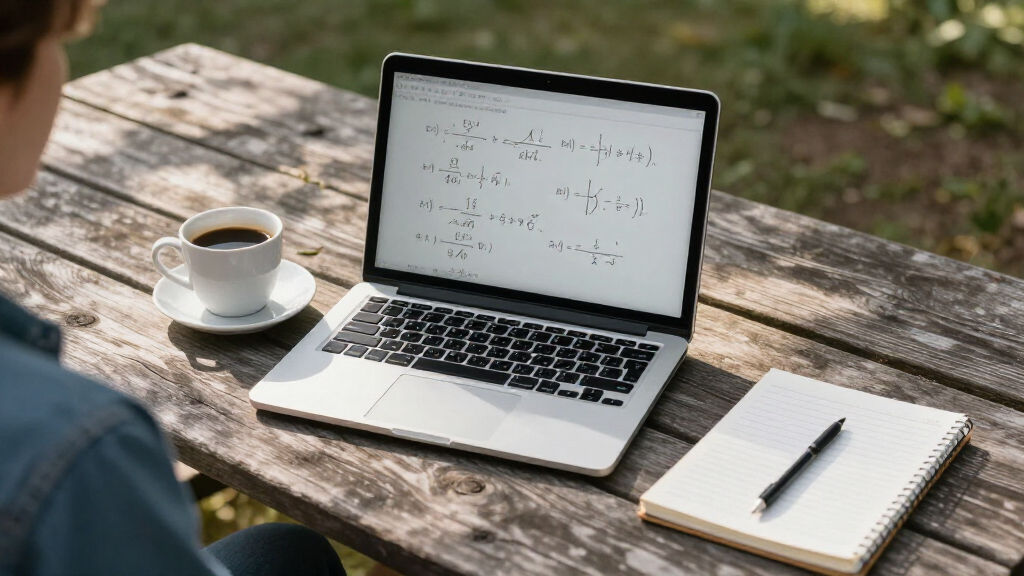
The team behind this breakthrough utilized advanced formal proof systems to encode the entire proof of Fermat’s Last Theorem, originally proven by Andrew Wiles in 1994. This formalization process involved translating the original proof into a computer-verifiable format, providing an unprecedented level of certainty about its correctness.
While Wiles’ proof has been accepted by the mathematical community for over three decades, it was not originally formalized in a way that could be fully checked by computers. The new effort leverages proof assistants like Coq and Lean, which are designed to verify complex mathematical proofs step-by-step, ensuring no logical errors remain. The project reportedly took several years of collaboration among experts in formal methods and number theory.
Officials involved in the project have stated that the formal proof has passed all verification stages, confirming that every logical step aligns with mathematical standards. The formalization reportedly covers the entire proof, including the intricate modularity lifting theorems and auxiliary lemmas that Wiles employed.
Why Formalizing Fermat’s Last Theorem Matters
This development demonstrates the application of formal methods to complex mathematical proofs, illustrating that such proofs can be systematically verified by computer systems. It aims to increase confidence in the correctness of the proof and may influence future efforts to formalize other significant results in mathematics.
Beyond its technical aspects, this milestone could encourage the adoption of formal proof systems in mathematical research, particularly in areas where proof verification is critical. It also exemplifies the growing collaboration between computer science and mathematics, expanding the tools available for ensuring the accuracy of mathematical results.
formal proof verification software
As an affiliate, we earn on qualifying purchases.
As an affiliate, we earn on qualifying purchases.
Historical and Technical Background of Fermat’s Last Theorem
Fermat’s Last Theorem states that there are no positive integers a, b, and c such that a^n + b^n = c^n for any integer n greater than 2. The theorem was first conjectured by Pierre de Fermat in 1637, but it remained unproven for over three centuries, becoming one of the most famous problems in mathematics.
In 1994, British mathematician Andrew Wiles announced a proof, which was subsequently refined and verified by the mathematical community. Wiles’ proof relied on advanced concepts from algebraic geometry and modular forms, and it was considered a landmark achievement. However, it was not originally formalized in a way that could be fully checked by computers. The recent formalization effort builds on decades of progress in formal methods, proof assistants, and computational verification. The project reflects a broader trend where mathematicians increasingly turn to computer-assisted techniques to verify complex proofs, especially those involving intricate logical chains and extensive calculations.
As an affiliate, we earn on qualifying purchases.
Remaining Questions About the Formalization Process
While the formal proof has been verified, details about the scope, the verification process, and potential limitations are still emerging. It is not yet clear whether all auxiliary lemmas and assumptions have been fully formalized or if any parts of the original proof remain unverified.
Furthermore, the broader impact on the mathematical community’s acceptance of computer-verified proofs is still uncertain, as some experts may require further validation or replication of the process.
mathematical proof verification system
As an affiliate, we earn on qualifying purchases.
As an affiliate, we earn on qualifying purchases.
Next Steps in Formal Mathematical Verification
Researchers plan to publish detailed documentation of the formalization process and make the proof scripts publicly available. This will allow other mathematicians to review, verify, and potentially extend the formalization to other significant theorems.
Additionally, the success of this project is likely to accelerate the adoption of formal proof systems in mainstream mathematical research, encouraging more comprehensive verification of complex results in the future.
computer-assisted proof verification
As an affiliate, we earn on qualifying purchases.
As an affiliate, we earn on qualifying purchases.
Key Questions
What is the significance of formalizing Fermat’s Last Theorem?
It confirms the theorem’s correctness with absolute certainty using computer verification, setting a new standard for proof validation in mathematics.
How was the formal proof created?
Researchers translated Wiles’ original proof into a formal language compatible with proof assistants like Coq and Lean, then verified every logical step computationally.
Does this mean the proof is now considered more valid?
Yes, the formal verification provides a higher level of certainty, although the original proof was already widely accepted by experts.
Will this impact future mathematical research?
Yes, it demonstrates that complex proofs can be fully verified by computers, encouraging broader adoption of formal methods in research.
Are there any limitations or remaining uncertainties?
Details about the scope of the formalization and whether all parts of the proof have been fully verified are still emerging.
Source: hn