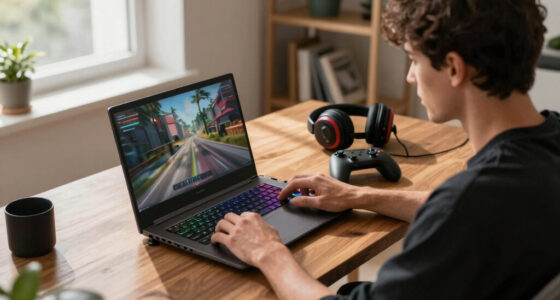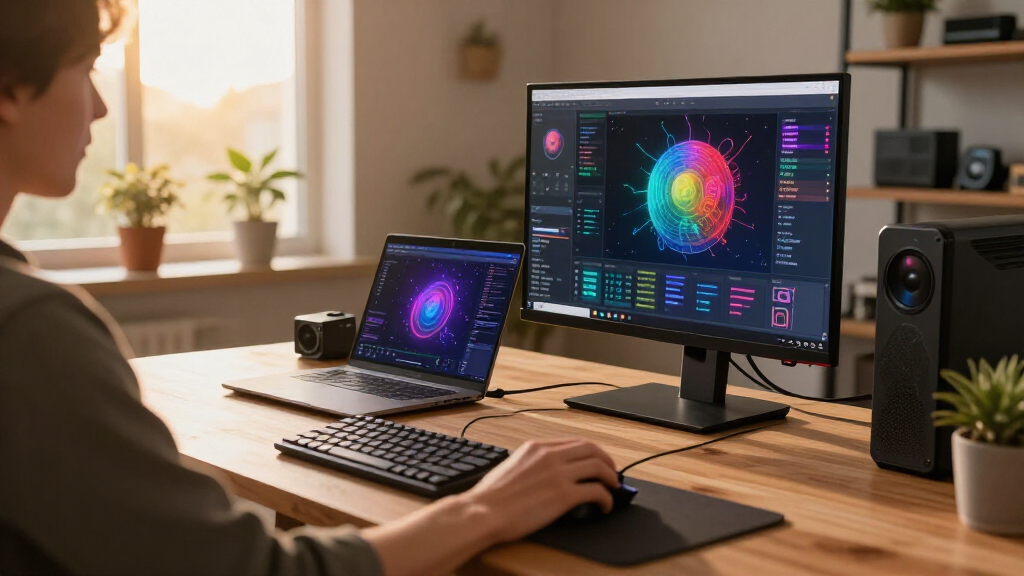

🔍 Read the full analysis: How External GPUs Are Changing AI In 2026 on ThorstenMeyerAI.com

Prime made for students and young adults
- Fast, free delivery for dorm and study essentials
- Prime Video and Amazon Music included
- Member-only deals
TL;DR
External GPUs are revolutionizing AI in 2026 by providing higher processing power and flexibility outside traditional hardware constraints. This development accelerates AI research and deployment, especially for labs and startups.
In 2026, external GPUs (eGPUs) are becoming a crucial component in advancing artificial intelligence capabilities, as industry leaders and hardware vendors report increased adoption and performance gains. For a detailed overview, see the original analysis. This shift is enabling AI developers to access high-end processing power without upgrading entire systems, marking a significant change in how AI workloads are handled.
Multiple sources confirm that major hardware manufacturers, including Razer, ASUS, and MINISFORUM, have launched new eGPU models optimized for AI workloads. These devices support high-throughput standards like Thunderbolt 4 and USB4, allowing seamless connection to laptops and mini PCs. Industry analysts note that the top models, such as Razer’s Core X V2 and ASUS’s ROG XG Mobile, now deliver support for the latest high-performance GPUs, including NVIDIA’s Ada Lovelace and AMD’s RDNA 3 architectures. You can explore external GPU options for AI in 2026.
AI firms and research institutions are increasingly integrating eGPUs into their workflows to accelerate training, inference, and data processing tasks. The portability and scalability of these external enclosures mean that AI teams can upgrade their hardware on demand, avoiding costly system replacements. Experts highlight that the ability to connect powerful GPUs via high-speed Thunderbolt 4 ports is a key factor driving this trend, as it offers data transfer speeds up to 40Gbps, significantly reducing bottlenecks. Learn more about AI’s organizational radar and its role in hardware advancements.
The 10 picks
- 1
 ASUS ROG XG Mobile (2025) External Graphics Card with NVIDIA GeForce RTX 5090View on Amazon →
 - 2ASUS ROG XG Mobile (2025) External Graphics Card with NVIDIA GeForce RTX 5070 TiView on Amazon →
- 3
 Razer Core X V2 External Graphics Enclosure (eGPU)View on Amazon →
 - 4
 AOOSTAR AG02 OCuLink eGPU Dock with 800W PSU and USB4 Port, External GPU Dock…View on Amazon →
 - 5
 External GPU Dock Station, Mini eGPU Enclosure Compatible with Thunderbolt 3/…View on Amazon →
 - 6
 MINISFORUM DEG1 eGPU Dock, External GPU Docking Station for RTX 4090, AMD RX…View on Amazon →
 - 7
 OwlTree PCIe 5.0 x4 128Gbps eGPU Dock for 50 Series Graphics Cards, M.2 NVMe…View on Amazon →
 - 8
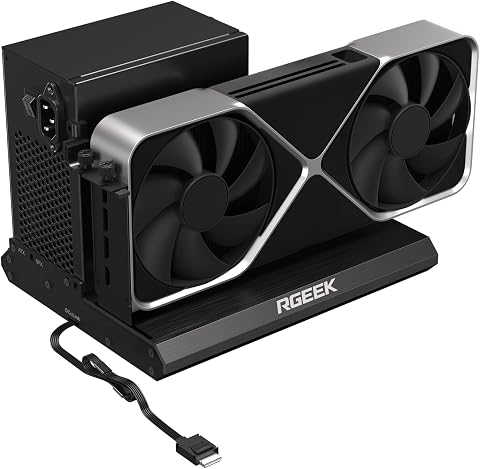 RGEEK OCuLink eGPU Dock PCIe 5.0 x4 for External Graphics CardView on Amazon →
 - 9
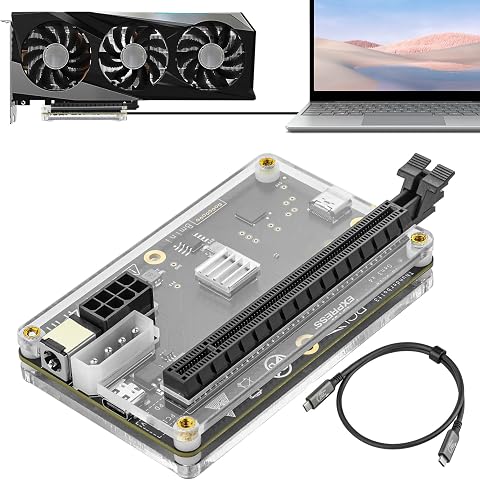 PCIe 3.0 x16 22Gbps eGPU Dock with Thunderbolt 4 Cable for Windows/LinuxView on Amazon →
 - 10
 OCuLink eGPU Dock, PCIe 4.0 x4 64Gbps, 19.7-inch SFF-8611 Cable, External GPU…View on Amazon →
Impact of External GPUs on AI Development in 2026
This development matters because it democratizes access to high-performance computing for AI, enabling smaller labs and startups to leverage top-tier GPU power without investing in expensive dedicated servers. The flexibility of external GPUs accelerates innovation, reduces costs, and allows rapid hardware upgrades, which are critical for AI progress. Furthermore, the trend supports the growth of portable AI solutions, expanding deployment options across various industries, from healthcare to autonomous vehicles.
Evolution of GPU Use in AI and Hardware Trends
Historically, AI performance improvements depended on upgrading internal GPU hardware or building dedicated data centers. In recent years, external GPU enclosures gained popularity primarily among gamers and creative professionals. However, by 2025, the rise of high-speed connectivity standards like Thunderbolt 4 and USB4, combined with more powerful, energy-efficient GPUs, has made external GPUs viable for demanding AI tasks. Industry reports from 2024 indicated a steady increase in AI applications utilizing external GPU setups, with projections suggesting exponential growth in 2026.
Major hardware vendors announced new models in early 2026 designed explicitly for AI workloads, emphasizing thermal management, power delivery, and compatibility with high-end GPUs. The convergence of these technological advances has created an environment where external GPUs are now central to AI infrastructure, especially for organizations seeking scalable, portable solutions.
Remaining Questions About External GPU Adoption in AI
While adoption is increasing, it is still unclear how widespread external GPU use will become across different AI sectors. Questions remain about long-term durability, thermal management under continuous high loads, and the true performance gains in real-world AI applications. Additionally, compatibility issues with some laptops and mini PCs persist, and the cost of high-end enclosures may limit access for smaller organizations.
Next Steps for External GPU Integration in AI Workflows
Industry stakeholders expect further refinement of external GPU hardware, including more compact designs and enhanced thermal solutions. Software support, including driver optimizations and AI frameworks tailored for external GPU architectures, is also expected to improve. Major AI platforms are likely to release updates to better support external GPU configurations, making this technology more accessible and efficient. Monitoring adoption rates and performance benchmarks over the coming months will clarify how deeply integrated external GPUs will become in AI ecosystems.
Key Questions
Can any laptop support external GPUs for AI workloads?
Not all laptops support external GPUs. Compatibility depends mainly on the presence of Thunderbolt 4 or USB4 ports, along with sufficient power delivery and physical space. Checking device specifications and manufacturer support is essential before investing in an external GPU enclosure.
Are external GPUs cost-effective for AI research?
External GPUs can be cost-effective compared to building dedicated internal systems, especially for small to medium-sized organizations. However, high-end enclosures and GPUs can still be expensive, so the total cost depends on the desired performance level and scalability needs.
Will external GPUs replace internal GPUs in AI systems?
Currently, external GPUs complement internal GPU setups rather than replace them. They offer flexibility and scalability, but internal GPUs still provide lower latency and potentially better thermal management for continuous high-load tasks. Future developments may shift this balance further.
What are the main limitations of external GPUs in AI applications?
Limitations include potential latency issues, compatibility constraints with some hardware, and the cost of high-performance enclosures. Additionally, thermal management during prolonged high-load operations remains a challenge in some models.
Source: ThorstenMeyerAI.com
Halloween Picks
halloween
As an affiliate, we earn on qualifying purchases.