
Using mulch that’s not too thick helps your garden stay healthy by allowing proper water penetration, promoting soil aeration, and supporting beneficial microorganisms. When mulch is too deep, it can cause compaction, trap moisture, and encourage weeds or rot. A balanced layer prevents root problems and keeps soil ecosystems thriving. If you want to discover how to apply mulch effectively and avoid common mistakes, there’s more to uncover below.
Key Takeaways
- Thinner mulch allows better water penetration and prevents uneven soil moisture distribution.
- Properly layered mulch promotes soil aeration and supports beneficial microorganisms.
- Avoiding thick mulch reduces the risk of fungal growth and root rot.
- Light mulch layers make weed removal easier and more effective.
- Maintaining moderate mulch thickness helps prevent soil compaction and preserves soil health.
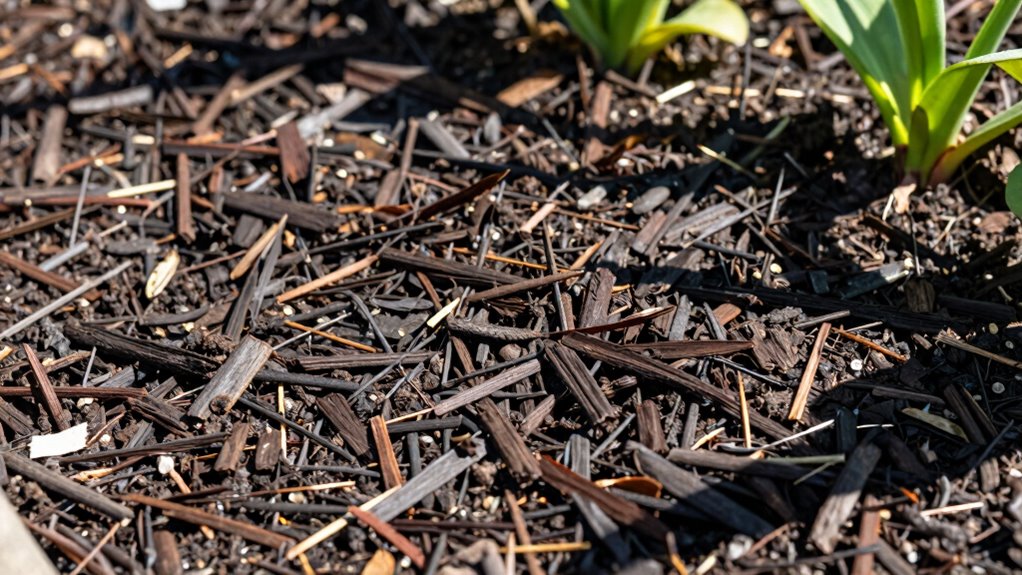
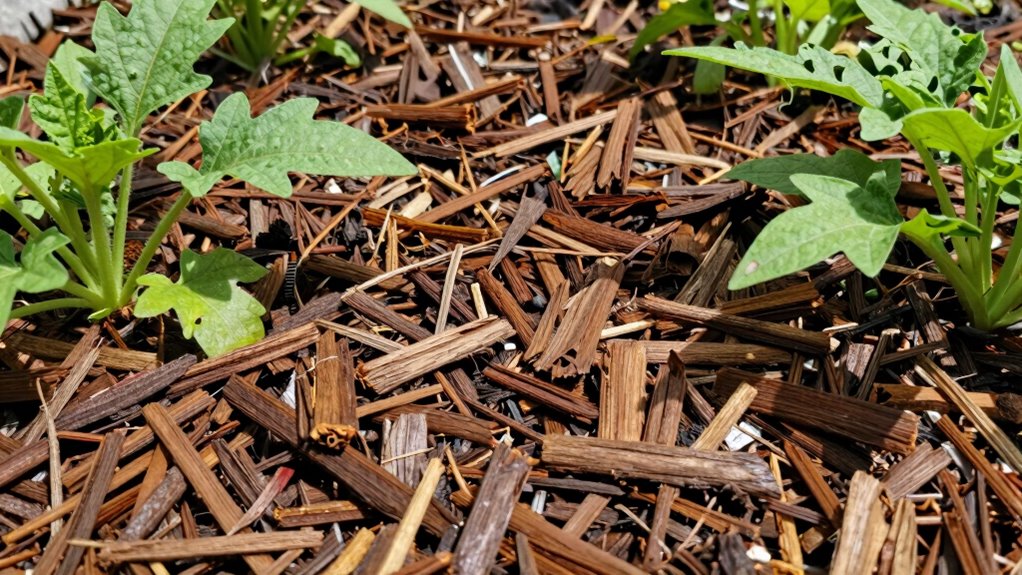
Applying mulch is a great way to protect your garden, but many gardeners overlook the importance of not piling it on too thick. When you spread mulch too heavily, you risk creating a barrier that hinders essential processes in your soil and plants. A thin, even layer allows your garden to breathe and thrive, rather than suffocate under a dense layer of organic material. One of the key benefits of proper mulching is maintaining ideal soil moisture. When mulch is applied correctly, it helps lock in moisture by reducing evaporation, especially during hot, dry weather. However, if you pile it on too thick, it can prevent water from penetrating the soil efficiently, leading to uneven watering and potential stress for your plants. That’s why a moderate, well-distributed layer is best for keeping moisture levels steady, guaranteeing your plants stay hydrated and healthy. Proper mulching also enhances soil aeration, allowing roots and beneficial microorganisms to flourish without being restricted by excessive organic cover. Additionally, good mulching practices support soil health by preventing compaction and promoting natural soil processes. Using the right mulch thickness can also help prevent issues like mulch compaction, which can trap moisture and hinder root growth. Another advantage of applying mulch properly is weed suppression. Mulch acts as a physical barrier that prevents weeds from sprouting and competing with your garden plants for nutrients and sunlight. When you use too much mulch, it can actually create a cozy environment for weeds to establish themselves, especially if the layer becomes compacted or if debris gets trapped within it. Thick mulch can also trap moisture in a way that promotes fungal growth or rot, which might encourage weed seeds to germinate. By keeping the mulch layer light and even, you create a less hospitable environment for weeds, making your garden easier to maintain. A controlled mulch layer also allows you to spot and remove emerging weeds more easily, saving you time and effort. Furthermore, a thinner mulch layer enhances soil health over time. Excessively thick mulch can lead to problems like rotting organic matter, which might create an oxygen-deficient environment in the soil. This can negatively impact beneficial soil organisms that help break down organic matter and improve soil fertility. Proper mulching also encourages microbial activity, which is vital for maintaining a healthy soil ecosystem. When you mulch appropriately, you support a healthy soil ecosystem, promoting better soil structure and nutrient availability. Additionally, a thinner layer helps prevent mulch from smothering your plants’ roots or blocking air circulation around them. This balance ensures your garden receives the benefits of mulching without the drawbacks of overdoing it.
As an affiliate, we earn on qualifying purchases.
Frequently Asked Questions
How Often Should I Replace or Add Mulch to Maintain Optimal Thickness?
You should add or replace mulch about once a year to keep ideal thickness. During mulch application, aim for a 2-3 inch layer, which helps maintain soil moisture without suffocating plants. Check your mulch regularly, especially after heavy rain or wind, and top it off as needed. Proper mulch application guarantees soil moisture stays consistent, promoting healthier plants and reducing weed growth.
Can Too Little Mulch Be as Harmful as Too Much?
Yes, too little mulch can be as harmful as too much. Insufficient mulch leaves your soil exposed, increasing the risk of soil erosion and making it easier for weeds to sprout. Without enough mulch, your plants won’t get proper weed suppression or moisture retention, which can stunt growth. Maintaining the right mulch thickness helps protect your soil, reduces erosion, and keeps weeds at bay, ensuring healthier, more resilient plants.
What Types of Mulch Are Best Suited for Thinner Layers?
You should opt for organic mulches like bark or wood chips, which spread easily in thinner layers, maintaining soil moisture effectively. These types allow proper airflow, preventing compaction and mold. When applying mulch, keep it light and even to avoid suffocating plants. Thinner mulch layers promote better soil moisture retention without risking over-mulching, helping your garden thrive without the downsides of excessive coverage.
Does Mulch Thickness Affect Plant Growth Differently for Various Species?
Yes, mulch thickness impacts plant growth differently across species. You’ll find that species-specific benefits play a role, as some plants thrive with a thinner mulch layer for better oxygen flow and root access, while others prefer a thicker layer for moisture retention. The mulch layer impact varies, so you should tailor the mulch depth to each plant’s needs, ensuring ideal growth conditions without suffocating roots or restricting airflow.
Are There Specific Signs Indicating My Mulch Layer Is Too Thick?
Like a scribe stuck in a medieval script, you’ll notice signs your mulch is too thick. You might see mulch layering into a moldy mat, causing excessive moisture that risks plant rot. If weeds still sprout through, or your mulch remains overly damp, it indicates too much thickness. Proper mulch promotes good moisture retention and weed suppression, but too much blocks airflow and traps moisture, harming your plants rather than helping.
As an affiliate, we earn on qualifying purchases.
Conclusion
So, next time you lay down mulch, remember that less is often more. Applying a thin, even layer allows water, air, and nutrients to reach your plants more effectively. Overdoing it can smother roots and invite pests. Isn’t your garden worth giving the best care possible? By keeping mulch at the right thickness, you’ll help your plants thrive and keep your garden looking its best. Isn’t that a goal worth aiming for?
weed barrier fabric for gardening
As an affiliate, we earn on qualifying purchases.
As an affiliate, we earn on qualifying purchases.
As an affiliate, we earn on qualifying purchases.