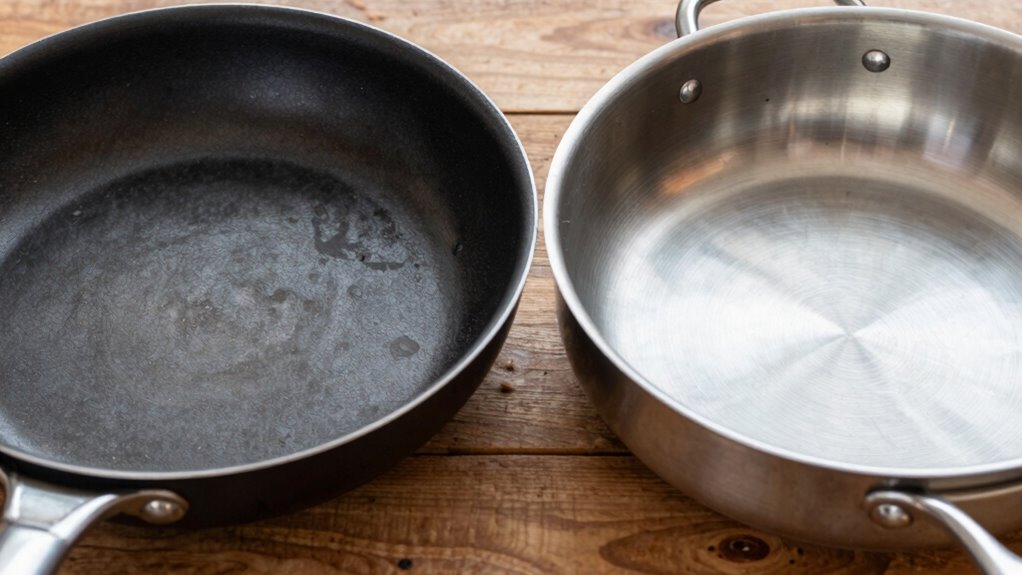

You feel the difference between carbon steel and stainless steel because they respond differently to heat and develop distinct surfaces. Carbon steel heats up quickly, retains heat well, and becomes more non-stick over time through seasoning, giving it a natural feel. Stainless steel heats faster and responds to temperature changes more precisely, staying smooth and shiny. Understanding these differences can help you cook better; keep exploring to learn how each material can work for you.
Listen free for 30 days with Audible
Thousands of audiobooks and originals — cancel anytime.
As an affiliate, we earn on qualifying purchases.
Key Takeaways
- Carbon steel retains heat better, making it feel heavier and more responsive during high-temperature cooking.
- Stainless steel heats up and cools down quickly, providing a lighter, more reactive cooking experience.
- The seasoned surface of carbon steel creates a different tactile feel compared to the smooth, non-porous stainless steel.
- Carbon steel’s higher thermal mass results in a warmer, more stable cooking surface over time.
- Stainless steel’s non-reactive nature offers a smoother, cooler feel, especially when handling during cooking.
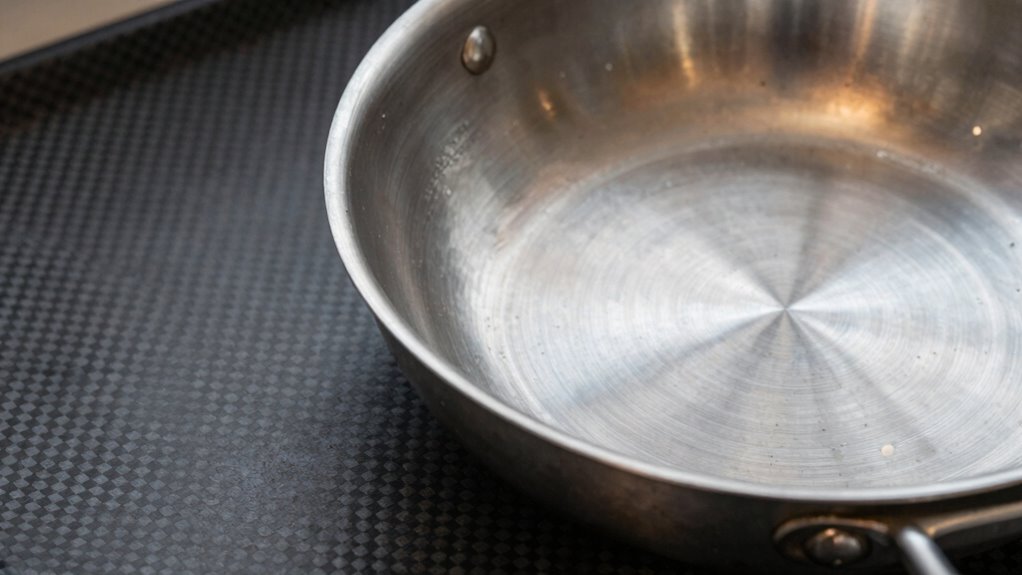
When you’re cooking daily, you’ll notice that carbon steel and stainless steel pans feel markedly different in your hand and during use. This difference isn’t just about weight or appearance; it’s rooted in how each material interacts with heat and food. You’ll quickly realize that carbon steel pans often require seasoning techniques to develop a natural non-stick surface, which enhances their performance over time. Unlike stainless steel, which remains smooth and shiny without additional treatment, seasoned carbon steel develops a patina that improves with use. This process isn’t complicated—simply heating the pan and adding a light layer of oil can create a seasoned surface that improves heat retention and makes cooking smoother. Proper seasoning techniques are essential to unlocking the full potential of your carbon steel pan, ensuring it performs well and lasts longer.
Heat retention is another key factor that sets these pans apart. Carbon steel, with its higher thermal mass, absorbs and holds heat better than stainless steel. When you cook with a carbon steel pan, you’ll notice it stays hot even when you add ingredients. This consistency allows you to sear meats, stir-fry vegetables, or fry foods without sudden temperature drops. Stainless steel pans, on the other hand, tend to respond more quickly to changes in heat, which can be an advantage or a disadvantage depending on what you’re cooking. But because stainless steel doesn’t require seasoning, it maintains its sleek, non-porous surface, making it easier to clean and less prone to staining. Understanding material properties can help you better manage your cookware and optimize your cooking techniques. Being aware of how heat conduction varies between materials can lead to more precise control over your cooking process. Additionally, knowing about reactive versus non-reactive cookware can assist in choosing the best pan for different ingredients, especially acidic or alkaline foods.
Your experience with these pans will also be shaped by how you handle heat and maintain them. For example, with a carbon steel pan, you might find that proper seasoning techniques are essential to prevent sticking and make cleanup easier. As you cook regularly, the seasoned layer develops a natural non-stick quality, saving you time and effort. Stainless steel pans, while requiring less maintenance, may need more attention during cooking to prevent food from sticking or burning, especially since they lack that seasoned patina. Over time, though, both types of pans can become reliable tools, each offering unique benefits. When you understand how each material responds to heat and seasoning, you’ll be better equipped to choose the right pan for your needs and get the most out of your daily cooking routine.
As an affiliate, we earn on qualifying purchases.
Frequently Asked Questions
How Does Seasoning Affect the Feel of Carbon Steel Pans?
Seasoning buildup on your carbon steel pan changes its feel by smoothing out the surface texture over time. As you add layers of oil and heat, the pan develops a natural non-stick coating, making it feel less rough and more polished. This gradual process enhances your cooking experience, providing a softer, more even surface that improves with each use, unlike stainless steel, which doesn’t develop this seasoned feel.
Do Stainless Steel Pans Require Special Maintenance to Feel Different?
Stainless steel pans don’t require special maintenance to feel different, but their weight and heat conductivity matter. Imagine holding a lightweight, responsive tool—like a chef’s knife—making precise cuts easier. Similarly, stainless steel pans often feel lighter and conduct heat more evenly than carbon steel. Regular cleaning with mild soap and avoiding abrasive scrubbers helps maintain their sleek feel, ensuring they perform consistently and stay comfortable to handle over time.
Can the Handle Material Influence the Perceived Difference in Pan Feel?
Yes, handle material can influence how a pan feels. Handles with ergonomic design and textured grip provide better control and comfort, making the pan feel more secure and easier to maneuver. If the handle’s material is cool, hot, or slippery, it affects your perception of the pan’s overall feel. So, choosing a handle with the right ergonomics and grip texture can enhance your cooking experience markedly.
How Does Pan Thickness Impact the Tactile Experience During Cooking?
Pan thickness profoundly impacts your tactile experience by influencing grip texture and weight distribution. Thicker pans feel sturdier, providing a more solid grip, and distribute weight evenly, making them easier to handle. Conversely, thinner pans can feel more responsive but less stable. Your sense of balance and control during cooking depends on this thickness, affecting how comfortable and confident you feel when maneuvering the pan.
Are There Temperature Differences That Affect the Feel of Each Pan Type?
You’ll notice temperature differences because of heat conductivity and weight distribution. Carbon steel heats up quickly and responds swiftly, giving you a more immediate feel when cooking. Stainless steel heats more evenly but at a slower pace, making it feel steadier but less reactive. This quick-to-respond nature of carbon steel makes it feel hotter or cooler faster, like catching lightning in a bottle, while stainless steel offers a more consistent touch.
As an affiliate, we earn on qualifying purchases.
Conclusion
Think of your cookware as a trusted companion on your culinary journey. Carbon steel, like a seasoned traveler, feels rugged and responsive, enthusiastic to adapt with each recipe. Stainless, on the other hand, is the steady friend, offering reliability and ease. Embrace these differences—they’re not just about materials but about how each tool guides you through the art of cooking. Your choice shapes not just your dishes, but your growing story in the kitchen.
As an affiliate, we earn on qualifying purchases.
As an affiliate, we earn on qualifying purchases.
Flea & tick season Picks
flea and tick prevention
As an affiliate, we earn on qualifying purchases.