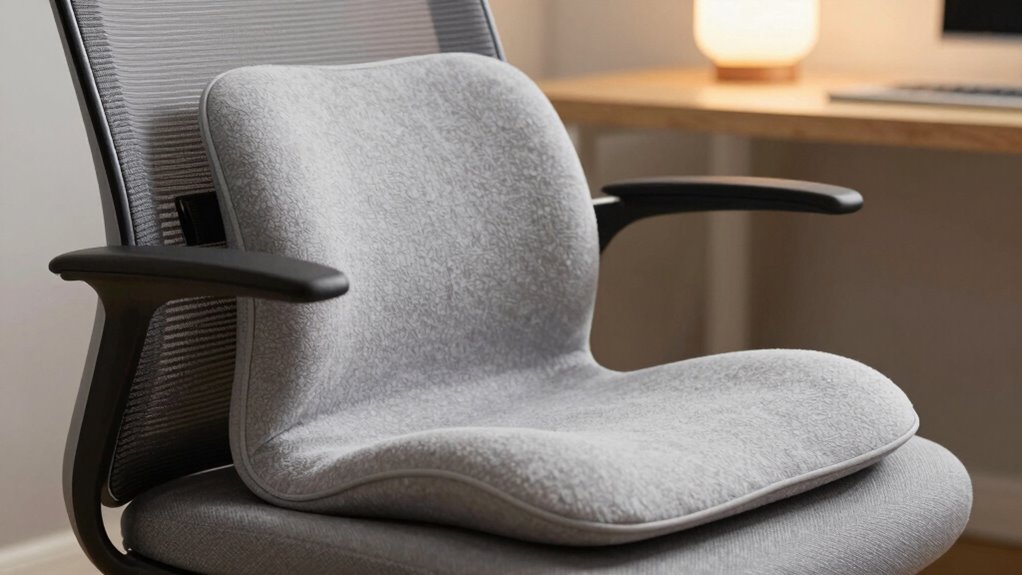

Proper lumbar support should feel like a gentle yet firm cradle that naturally follows your lower back’s curve, providing consistent, comfortable pressure to promote good posture and reduce strain. It shouldn’t be too tight or loose, and you should feel supported without discomfort or soreness. If it feels supportive and helps keep your back aligned, you’re on the right track. Keep exploring for tips on how to maintain and adjust your lumbar support effectively.
Key Takeaways
- It should feel supportive and stable, gently cradling the lower back without causing discomfort.
- Maintains the natural lumbar curve, reducing strain and promoting proper posture.
- Padding should be soft yet firm, conforming to your back without feeling restrictive.
- Provides consistent, gentle pressure that alleviates pressure points and prevents soreness.
- Easily adjustable for a personalized fit, ensuring optimal alignment and comfort during prolonged sitting.
Why Proper Lumbar Support Matters for Your Back

Proper lumbar support is essential because it maintains the natural curve of your lower back, preventing strain and discomfort. An ergonomic design ensures the support fits your body’s shape, reducing pressure points and encouraging proper posture. When the support conforms well, it minimizes muscle fatigue and decreases the risk of long-term back issues. Material breathability also plays a vital role; breathable fabrics allow air circulation, keeping your skin cool and dry during extended periods of sitting. This prevents sweat buildup and irritation, making your seating experience more comfortable. Well-designed lumbar support not only enhances comfort but also promotes spinal health by encouraging correct alignment. Choosing a support with an ergonomic design and breathable materials helps you stay comfortable and protected throughout the day. Additionally, natural materials can improve overall comfort and sustainability in lumbar support options.
How Should Lumbar Support Feel When You Sit

Have you ever noticed how your lower back feels when you’re sitting with good lumbar support? It should feel supported, stable, and comfortable—like your back is cradled just right. The ergonomic design ensures your lumbar curve is maintained, reducing strain. Material comfort matters too; soft yet firm padding should conform to your back without feeling restrictive. You shouldn’t experience pressure points or soreness after sitting for a while. Instead, you should feel a gentle, consistent support that encourages proper posture. Consider this emotional connection:
| Comfort Level | Feelings | Expectations |
|---|---|---|
| Soft | Relaxed | No pain or discomfort |
| Firm | Supported | Maintains natural curve |
| Responsive | Adjusts | Fits your back shape |
| Stable | Confident | Encourages good posture |
Signs Your Lumbar Support Isn’t Doing Its Job

If you notice your posture slipping or find yourself slouching more than usual, your lumbar support might not be working effectively. Persistent discomfort or pain in your lower back is another warning sign that your support isn’t doing its job. Paying attention to these signs helps you know when it’s time to adjust or replace your lumbar support. Additionally, improper lumbar support can lead to poor postural alignment, which may cause further discomfort or injury over time.
Poor Posture Indication
When your lumbar support isn’t working correctly, signs often show up through your posture. You might notice you’re slouching or leaning forward more than usual, which indicates your support isn’t maintaining proper spinal alignment. An ergonomic design should naturally promote good posture, but if it’s ineffective, your seat height could be contributing to the problem. If your seat is too high or too low, it can cause you to shift your position constantly, undermining the lumbar support’s purpose. You may also find yourself arching your back excessively or feeling like your lower back isn’t supported at all. These cues suggest your lumbar support isn’t fulfilling its role, and adjusting your seat or choosing a better-designed support can help restore proper posture. Additionally, floating on water can be a gentle way to relieve back strain and improve posture through aquatic exercise.
Persistent Discomfort or Pain
Persistent discomfort or pain in your lower back is a clear sign that your lumbar support isn’t doing its job properly. If you notice ongoing soreness despite sitting for extended periods, it could mean your seat comfort isn’t optimized. An ergonomic design should cradle your lower back, providing consistent support that relieves pressure and encourages proper posture. When lumbar support fails, you might feel persistent ache or stiffness, especially after sitting for a while. This discomfort indicates your support isn’t aligning with your natural spine curve or maintaining proper alignment. Don’t ignore these signs. Adjust your lumbar support to better fit your body or consider upgrading to a chair with improved ergonomic features. Proper support should alleviate pain, not exacerbate it. ergonomic design plays a crucial role in ensuring lumbar support effectively maintains spinal health during extended sitting.
What Features Make a Lumbar Support Effective

A lumbar support becomes effective when it features adjustable components that allow you to customize the fit to your body’s shape and needs. An ergonomic design ensures the support aligns naturally with your spine’s curvature, promoting proper posture and reducing strain. Look for supports with contoured shapes that follow your lower back’s natural curve. Material durability is equally important; choose sturdy, long-lasting fabrics or foam that maintain their shape over time without sagging. Adjustable straps or height settings help you fine-tune the placement, enhancing comfort and effectiveness. The combination of ergonomic design and durable materials ensures your lumbar support stays supportive and comfortable during extended use, providing consistent relief and proper support to prevent discomfort. Additionally, understanding Youngster Choice can help you select a support that suits your lifestyle and preferences.
How to Adjust Your Lumbar Support for Comfort

Adjusting your lumbar support correctly is key to guaranteeing maximum comfort and benefit. Start by positioning the support so it aligns with the natural curve of your lower back. An ergonomic design makes this easier, allowing you to customize the fit to your body. Ensure the support isn’t too tight or too loose; it should provide gentle pressure without causing discomfort. Check that the material quality feels durable and comfortable against your skin, as poor material can lead to irritation or decreased support over time. Many supports feature adjustable height or firmness settings—use these to fine-tune the support until it feels natural and supportive. Proper adjustment encourages healthy posture and reduces strain, so take a moment to get it just right for your unique needs. Understanding support adjustment techniques can help you optimize comfort and prevent long-term discomfort.
Tips to Keep Your Lower Back Supported Over Time

To maintain your lower back support over time, it’s essential to regularly inspect and clean your support device. Check for signs of wear, especially in areas with frequent contact, and replace parts if needed. Choose supports with an ergonomic design that adapts to your body’s natural curves, providing consistent comfort and support. Prioritize devices made from durable materials that resist cracking, tearing, or deformation, ensuring longevity even with daily use. Clean your support device according to manufacturer instructions to prevent dirt buildup that can compromise its integrity. Proper maintenance keeps your lumbar support effective and comfortable, helping you avoid discomfort or injury over time. Regularly check and clean filters to ensure your support device functions properly and maintains optimal performance. Remember, investing in high-quality, durable, ergonomically designed support prolongs its benefits and supports your lower back health in the long run.
Frequently Asked Questions
Can Lumbar Support Prevent Long-Term Back Issues?
Yes, lumbar support can prevent long-term back issues if it’s designed ergonomically and used correctly. It helps promote proper posture correction by supporting the natural curve of your lower back, reducing strain and muscle fatigue. When your chair’s ergonomic design aligns with your body, you’re less likely to develop chronic back problems. Consistent use of supportive lumbar cushions encourages healthier habits and can markedly lower the risk of long-term discomfort.
How Often Should I Replace My Lumbar Support Device?
Ever wondered when your lumbar support needs replacing? You should typically swap it out every 1-2 years, depending on usage and wear. Check for signs like loss of ergonomic design or material durability, which indicate it’s time for a new one. Regularly inspecting your support guarantees it maintains proper back alignment and comfort, preventing long-term issues. Don’t wait until it’s too late—trust your body’s signals and replace when necessary.
Is Lumbar Support Necessary During Short Sitting Periods?
You might not need lumbar support during short sitting periods if your ergonomic office setup already promotes good posture. However, using supportive cushions can help prevent strain, especially if you tend to slouch or experience discomfort. Even during brief sitting, maintaining lumbar alignment is beneficial. So, if your chair lacks proper lumbar support, adding supportive cushions can make a noticeable difference in comfort and back health.
Are There Specific Materials Best for Lumbar Support Comfort?
You’ll feel like you’re sitting on a cloud with the right lumbar support material. Memory foam is ideal because it molds perfectly to your back, providing tailored comfort. Look for high foam density; low-density foam can feel too firm or too soft, causing discomfort. Memory foam, especially with medium to high density, offers the best balance of support and cushioning, ensuring your lower back stays happy during long sits.
Can Incorrect Lumbar Support Cause New Back Pain?
Yes, incorrect lumbar support can cause new back pain. When your lumbar support lacks ergonomic design or isn’t made from durable materials, it may misalign your spine or put pressure on muscles. This improper support can strain your lower back, leading to discomfort or pain. Always choose lumbar support that’s well-designed and durable, ensuring it fits your natural curve and provides consistent support to prevent new issues.
Conclusion
Remember, proper lumbar support keeps your back happy and healthy, much like a trusty steed in a medieval tale. Pay attention to how it feels—should be firm yet comfortable, never restrictive. Adjust it as needed and watch for signs it’s not working. With the right support, you’ll avoid aches and pains, even as you go about your daily quest. So, don’t be a knave—give your lower back the support it deserves, now and forever.