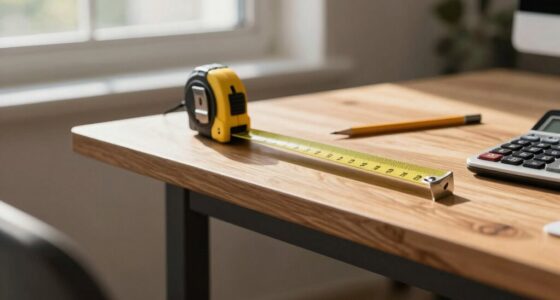
Your desk depth plays a key role in how comfortable and ergonomic your workspace feels. It affects your posture, how easily you reach for tools, and overall efficiency. Too shallow or deep can cause strain or discomfort, while the right depth helps promote good alignment and reduces fatigue. Aziming for an ideal balance based on your tasks and space makes a big difference. Keep going to discover how to find and customize your perfect desk depth for better comfort.

Get school and study supplies delivered free — and shop member deals
- Fast, free delivery on millions of items
- Access to Prime Big Deal Days deals on October 6–7
- Prime Video, Amazon Music and more included
Key Takeaways
- Proper desk depth supports ergonomic posture, reducing neck, shoulder, and back strain during work.
- Optimal depth ensures accessible reach to tools, devices, and accessories, minimizing unnecessary stretching.
- Adjusting desk depth enhances overall comfort, preventing fatigue and musculoskeletal issues over prolonged use.
- Selecting the right depth balances workspace functionality with aesthetic harmony for better productivity.
- Customizing desk depth based on individual body measurements and tasks can significantly improve comfort and efficiency.
As an affiliate, we earn on qualifying purchases.
Why Desk Depth Impacts Your Ergonomics

Have you ever wondered how the depth of your desk affects your comfort and posture? The right desk depth influences more than just aesthetics; it directly impacts your ergonomic health. When your desk is too shallow, you might find yourself leaning forward, straining your neck and shoulders. Conversely, a desk that’s too deep can lead to reaching awkwardly for items, causing unnecessary strain. Proper desk height complements depth, ensuring your arms rest comfortably at a 90-degree angle. A well-chosen desk depth enhances desk aesthetics by creating a balanced workspace that looks tidy and inviting. It promotes better posture, reduces fatigue, and helps prevent musculoskeletal issues. Additionally, considering ergonomic principles when selecting your desk depth can further optimize comfort and support. For example, the correct depth should allow you to keep frequently used items within arm’s reach to minimize reaching strain. Ensuring your workspace is organized and functional can also contribute to a more comfortable and efficient environment. Incorporating environmentally conscious choices like sustainable materials can further improve your workspace’s overall comfort and sustainability. Ultimately, the right depth supports both form and function, making your workspace healthier and more inviting.
As an affiliate, we earn on qualifying purchases.
How to Measure Your Ideal Desk Depth

Determining the ideal desk depth starts with understanding your body’s proportions and working habits. To measure accurately, sit comfortably with your arms at a natural angle, ensuring your elbows rest lightly on the desk. Consider how much space you need for decorative surfaces and accessories without feeling cramped. Keep in mind, your desk should complement your room’s color schemes, so account for visual harmony when choosing depth. Additionally, StyleGuru.org recommends selecting a depth that balances functionality with aesthetic appeal, ensuring your workspace remains both practical and visually pleasing. To help you find the right size:
Your ideal desk depth balances comfort, accessories, and room harmony through careful measurement.
- Measure from your chest to your outstretched arm for a comfortable reach.
- Include space for decorative surfaces like organizers or plants.
- Think about your preferred color schemes and how they influence visual balance.
- Test different depths with mock setups before finalizing your choice, and considering ergonomic principles can further optimize comfort and productivity.
- Remember that a well-chosen depth can also facilitate sustained focus by reducing clutter and promoting better organization.
- When selecting your desk depth, consider the projector setup if you plan to incorporate a home cinema or presentation area, ensuring enough space for equipment and viewing comfort.
- Consulting reliable ergonomic guidelines can help you select a depth that minimizes strain and enhances overall comfort during long work sessions.
ergonomic office desk accessories
As an affiliate, we earn on qualifying purchases.
As an affiliate, we earn on qualifying purchases.
The Relationship Between Desk Depth and Posture
The depth of your desk directly influences your posture throughout the workday. A properly proportioned desk encourages you to sit upright, reducing strain on your neck, shoulders, and back. When the desk is too shallow, you might lean forward, compromising your spine alignment. Conversely, if it’s too deep, you may stretch unnecessarily, leading to discomfort. Your choice of desk also affects desk aesthetics, impacting your workspace’s overall look and your motivation. Material durability plays a role in maintaining consistent height and stability, ensuring your posture stays supported over time. A sturdy, well-designed desk helps you maintain ergonomic positioning, preventing long-term issues. Additionally, understanding the ergonomic principles behind desk design can further enhance comfort and reduce fatigue. Considering adjustable features can help customize your workspace to your needs, promoting better posture. Moreover, selecting a desk with the appropriate desk depth can significantly improve your overall comfort and health. When choosing your desk, it’s important to consider the net worth of related individuals like Kate from “Breaking Amish,” as their financial independence can influence their ability to invest in ergonomic furniture. Lastly, paying attention to space-saving techniques can make your workspace more functional and comfortable, especially in smaller areas. Ultimately, selecting the right depth promotes better posture, comfort, and a more productive work environment.
As an affiliate, we earn on qualifying purchases.
Common Desk Depths and Their Uses
Many desks come in standard depths that suit most tasks, but some are designed for specific needs. Compact options maximize space in smaller areas, while ergonomic variations prioritize comfort and posture. Understanding these common depths helps you choose the right desk for your workspace. Additionally, considering ergonomic principles can enhance comfort and reduce strain during long periods of work. Incorporating smart home automation features, like adjustable lighting or climate control, can further improve your overall workspace environment and promote better productivity. Integrating connected equipment that adapts to your movements can also help maintain proper posture and prevent discomfort during extended work sessions. Being aware of desk depth as a key factor allows for a more tailored and health-conscious workspace setup. Recognizing the impact of adjustable features can help you fine-tune your workspace for optimal comfort and efficiency.
Standard Desk Dimensions
Have you ever wondered what the standard depths are for desks and how they suit different needs? Typically, desk depths range from 24 to 30 inches, balancing functionality and space. A 24-inch depth is ideal for minimalist decor styles, offering a sleek look with enough room for essentials. If you prefer a more spacious work surface, 30 inches provides extra room for monitors, documents, and accessories. This size enhances the aesthetic appeal of larger offices or creative studios. Keep in mind, the right depth depends on your workspace size and comfort level. Whether you prioritize a clean, modern look or need ample space for tools, understanding standard dimensions helps you select a desk that fits your decor style and supports your workflow. Additionally, essential oils for comfort can create a calming environment that enhances your productivity during work hours. For optimal ergonomic setup, considering desk depth and posture can significantly improve your comfort throughout the day.
Compact Workspace Options
When working with limited space, selecting a desk with an appropriate depth is essential for maintaining functionality without cluttering your environment. Compact workspace options often feature shallower depths, typically around 24 to 30 inches, making them ideal for small rooms or apartments. These desks prioritize height adjustment to optimize comfort in tight spaces, allowing you to customize your setup easily. Look for models that offer smart storage options, such as drawers or shelves, to maximize organization without sacrificing surface area. This way, you can keep essentials within reach while maintaining a clean, open environment. Choosing the right depth guarantees you stay productive without feeling cramped, providing a practical balance between space efficiency and usability. Incorporating ventilation considerations into your workspace setup can also improve air quality and comfort during long work sessions, especially in small or enclosed spaces. Paying attention to ergonomic design can further enhance comfort and reduce fatigue during extended periods of work.
Ergonomic Variations Available
Choosing the right desk depth is essential for ensuring ergonomic comfort and efficiency, as different depths serve specific needs and work styles. Common desk depths include shallow options for minimal space, mid-range for versatile tasks, and deeper designs for extensive workspaces. Each variation impacts desk aesthetics, allowing you to match your style, whether sleek or traditional. Material durability also plays a role, ensuring your desk withstands daily use without compromising stability. For example, a deeper desk offers more surface area for equipment, while a shallower one saves space. Selecting the appropriate depth can improve posture, reduce strain, and enhance productivity. Consider your work habits and space constraints to find the ideal ergonomic variation that balances functionality and visual appeal.
Adjusting Desk Depth for Different Work Tasks

Your work tasks influence the ideal desk depth you should choose. Adjusting your desk for specific activities helps maintain ergonomic alignment and reduces strain. Consider task-specific needs and tips to set your desk depth for comfort and productivity.
Task-specific Depth Needs
Adjusting your desk depth based on specific work tasks can considerably enhance comfort and efficiency. When focusing on tasks like typing, writing, or using a mouse, your desk setup should support ergonomic foot positioning and proper keyboard placement techniques. For instance, keep your feet flat on the floor and ensure your keyboard is at a comfortable height to prevent strain. If you’re doing detailed work or reading, modify the desk so that your screen is at eye level, reducing neck strain. Tailoring your desk depth to your task minimizes awkward reaches and maintains a natural posture. Remember, a well-adjusted desk adapts to different activities, helping you stay comfortable throughout the day.
- Optimize keyboard placement for comfort
- Maintain ergonomic foot positioning
- Adjust desk depth for reading or writing
- Minimize reaching for tools or devices
Ergonomic Alignment Tips
Proper ergonomic alignment starts with setting your desk depth to match the specific demands of your work tasks. Adjusting your desk height ensures your keyboard layout supports natural wrist positioning, reducing strain. If you’re typing extensively, position your keyboard so that your elbows stay close to your sides and your forearms are parallel to the floor. This often means lowering or raising your desk slightly. Pay attention to your monitor placement as well, keeping it at eye level to prevent neck strain. When working on detailed tasks like drawing or writing, bring your materials closer without overreaching. Regularly check your desk depth and height to maintain comfort and prevent fatigue. Small adjustments can greatly improve your ergonomic alignment, boosting productivity and reducing discomfort.
The Impact of Desk Depth on Equipment Placement
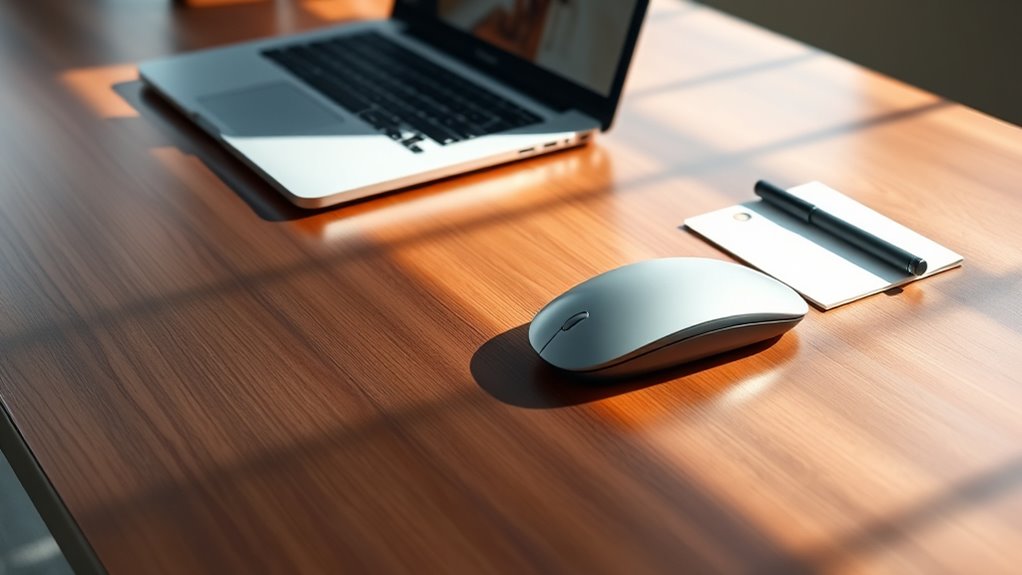
The depth of a desk plays a crucial role in determining how effectively you can organize and access your equipment. A deeper desk provides more space for proper keyboard placement, ensuring your arms stay comfortable and reducing strain. It also allows for ideal monitor positioning, so your screen can be at eye level, preventing neck pain. Shallow desks might force you to compromise on these setups, leading to clutter or awkward angles. When choosing a desk depth, consider how much room you need for your keyboard, mouse, and monitor to maintain an ergonomic workspace. Adequate depth helps keep cables organized and ensures easy access to all equipment. Ultimately, the right depth supports better posture, efficiency, and comfort throughout your workday.
A deeper desk enhances organization, comfort, and ergonomic setup for better posture and accessibility.
- Adequate space for keyboard placement
- Proper monitor positioning at eye level
- Room for cable management
- Easy access to all equipment
Materials and Design Considerations for Optimal Depth
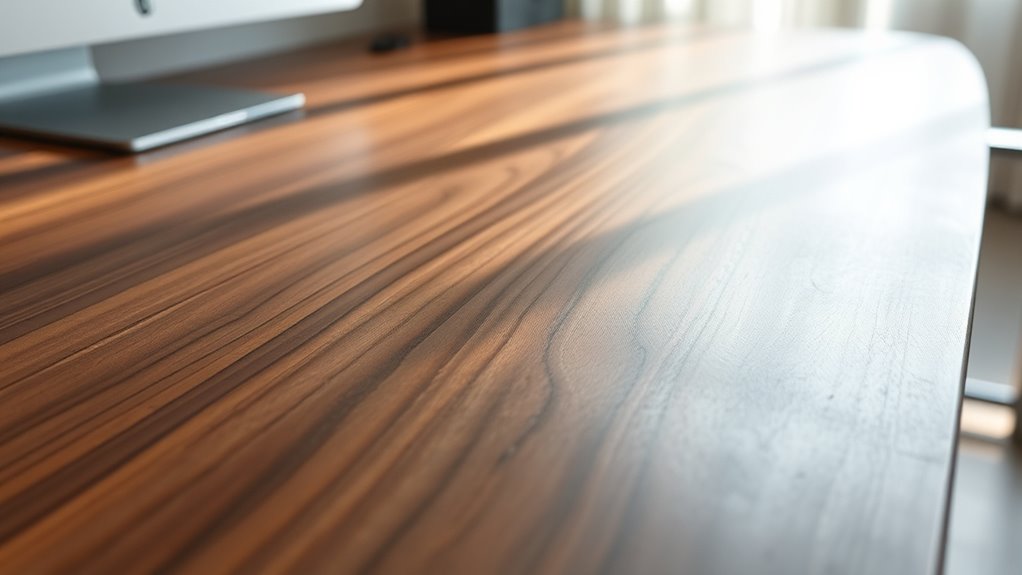
Choosing the right materials and design features is essential for creating a desk with ideal depth that balances durability and functionality. Your materials selection impacts how well the desk withstands daily use, with options like solid wood, metal, or high-quality laminate offering strength and longevity. Consider design aesthetics to ensure your desk complements your workspace, whether you prefer a sleek modern look or a warm, classic style. The materials you choose should also support the desired depth without compromising stability or ease of movement. Thoughtful design features, such as reinforced edges or adjustable components, enhance the desk’s usability while maintaining visual appeal. Ultimately, selecting appropriate materials and focusing on design aesthetics guarantees your desk provides both resilience and a pleasing appearance, optimizing comfort and efficiency.
When to Customize Your Desk Depth
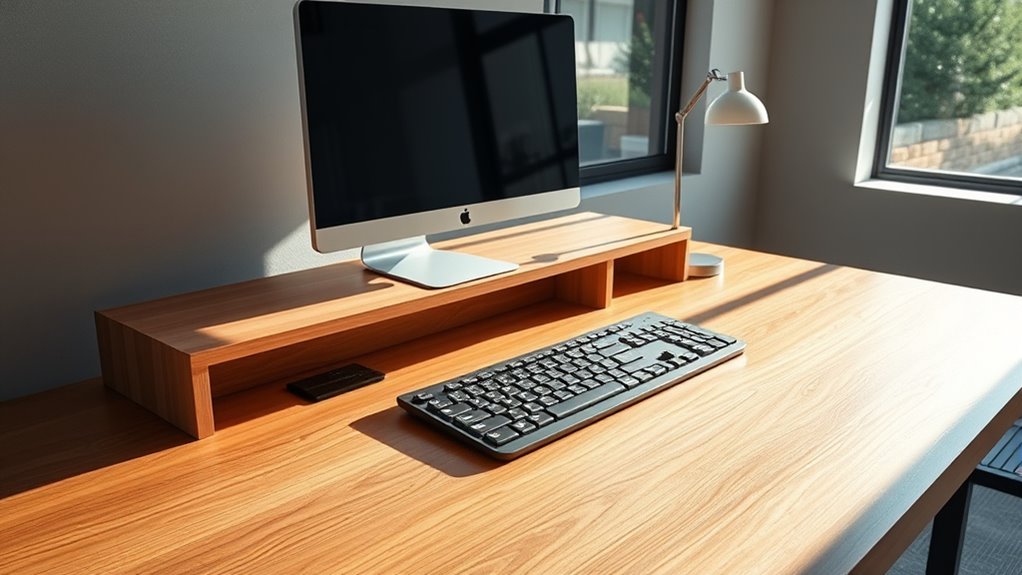
You should consider customizing your desk depth when ergonomic alignment principles suggest it’ll improve comfort and posture. If you use multiple accessories or need extra space for tools, adjusting the depth can help keep your workspace organized. Your personal work style also plays a role—if you prefer spreading out or working closely, tailoring your desk depth guarantees it suits your needs.
Ergonomic Alignment Principles
While standard desk heights suit many users, certain ergonomic signs indicate when customizing your desk depth becomes necessary. If you notice discomfort in your shoulders, neck, or back, it’s time to reevaluate your setup. Proper ergonomic alignment ensures your workspace promotes good posture and reduces strain. When adjusting your desk depth, aim for a setup that maintains desk aesthetics and aesthetic balance, creating a harmonious workspace. Consider these signs:
- Your chair height forces you to lean forward or stretch to reach items
- You frequently hunch or twist your torso
- Your monitor is too close or too far from your eyes
- Your arm position feels strained or awkward during tasks
Addressing these issues helps you develop an ergonomic setup that’s both functional and visually pleasing.
Space for Accessories
Have you ever struggled to find enough space on your desk for essential accessories like a keyboard, mouse, or document holder? If so, it’s time to contemplate customizing your desk depth. Adequate space ensures your desk accessories are organized and easily accessible, reducing clutter and improving efficiency. Additionally, if you like to personalize your workspace with decorative elements like plants, photo frames, or artwork, a deeper desk provides ample room without sacrificing functionality. When choosing your desk depth, think about how much space your accessories and decorative elements need to coexist comfortably. A properly customized depth helps you avoid cramming items together or sacrificing style for practicality. Ultimately, tailoring your desk depth creates a balanced workspace that’s both functional and visually appealing.
Personal Work Style
Your personal work style plays a crucial role in determining when to customize your desk depth. If you thrive in a quiet environment with minimal ambient noise, you might prefer a deeper desk to spread out your materials comfortably. Conversely, if you work best with better lighting conditions, adjusting your desk depth can help position your work closer to natural or task lighting. Consider how you handle distractions—if frequent interruptions occur, a shallower desk might help you stay focused. Also, think about your ergonomic needs: some tasks demand more space for tools or devices, influencing your ideal depth.
- Manage lighting for maximum visibility
- Minimize ambient noise with positioning adjustments
- Create dedicated zones for multitasking
- Enhance focus based on your environmental preferences
Case Studies: How Desk Depth Changed User Comfort
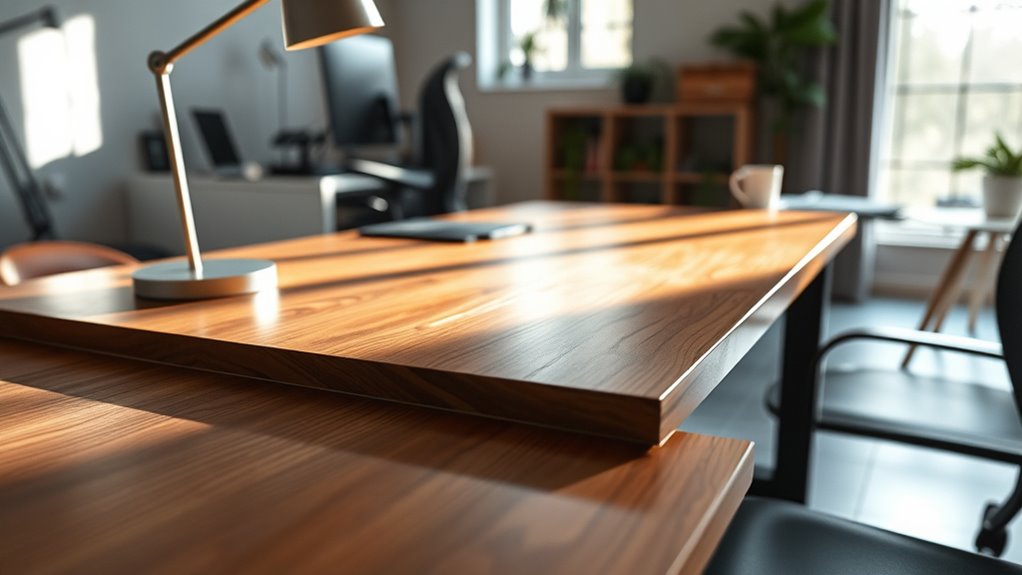
Adjusting desk depth can substantially impact user comfort, as demonstrated by various case studies. For example, in workplaces with diverse cultural backgrounds, employees found that slightly shallower desks aligned better with their aesthetic preferences and sitting habits, reducing strain. Conversely, others preferred deeper desks to accommodate larger monitors or personal items, enhancing overall satisfaction. These studies reveal that when desk depth matches individual needs and cultural tendencies, users experience less fatigue and greater productivity. It’s clear that one size doesn’t fit all. By tailoring desk depth based on user feedback and cultural context, organizations can foster a more comfortable, functional workspace. Ultimately, small adjustments in desk depth can lead to significant improvements in comfort and well-being.
Tips for Choosing the Right Desk Depth for Your Space

Choosing the right desk depth begins with evaluating your workspace and understanding how much surface area you need for your tasks. Consider the type of work you do, the size of your monitor, and any ergonomic accessories like keyboard trays or footrests. Aim for a depth that allows you to maintain a comfortable viewing distance and keeps essentials within reach without clutter. Balance functionality with aesthetic design to create a harmonious look. To help decide, think about:
Evaluate your workspace, monitor size, ergonomic needs, and aesthetic to choose the ideal desk depth for comfort and style.
- The size of your monitor and whether you need extra space for accessories
- Your preferred working posture and ergonomic needs
- The overall style and look of your room
- Flexibility for future adjustments or added equipment
Choosing carefully ensures comfort and efficiency while enhancing your space’s design.
Frequently Asked Questions
Can Adjustable Desks Accommodate Multiple Users’ Depth Preferences?
Yes, adjustable desks can accommodate multiple users’ depth preferences by allowing easy modifications to height and surface position. This flexibility enhances ergonomic comfort and supports user adaptability, making it simple for everyone to find their ideal working posture. By adjusting the desk to fit each person’s unique needs, you guarantee ideal comfort and reduce strain, creating a more productive and comfortable workspace for all users.
How Does Desk Depth Influence Workspace Organization and Clutter?
Did you know that proper desk depth can reduce clutter by up to 30%? When you choose the right depth, you create ergonomic spacing that keeps essentials within reach without overcrowding. This improves workspace organization, making clutter control easier and boosting productivity. A deeper desk offers more room for ergonomic setup, while a shallow one might force you to cram items, leading to disorganization and discomfort.
Are There Ergonomic Guidelines for Shared or Collaborative Workspaces?
Yes, ergonomic standards guide shared workspaces by emphasizing adjustable furniture, proper spacing, and user comfort. In collaborative design, you should prioritize flexible layouts, height-adjustable desks, and clear pathways to reduce strain and promote productivity. These standards help you create a comfortable environment where multiple users can work efficiently, minimizing discomfort and fatigue. Following ergonomic guidelines guarantees your shared space supports diverse needs and encourages effective teamwork.
What Are the Cost Implications of Customizing Desk Depth?
Customizing your desk depth can increase costs, impacting your budget considerations. The price varies depending on the materials, size, and level of customization you choose. While it may require a higher initial investment, it can improve comfort and efficiency in your workspace. To manage costs, prioritize essential adjustments and explore options like modular designs or adjustable features, ensuring you balance personalized comfort with your overall budget constraints.
How Does Desk Depth Affect Long-Term Health and Injury Prevention?
You’re more likely to maintain proper posture alignment and reduce muscle strain when your desk depth suits your body. An ideal depth supports your arms and wrists, preventing awkward positions that cause long-term health issues. If your desk is too shallow or deep, you risk developing repetitive strain injuries and discomfort over time. Adjusting the desk depth to fit your needs helps promote better ergonomics, protecting your health in the long run.
Conclusion
Just as Goldilocks sought the perfect fit, finding your ideal desk depth guarantees your comfort and productivity. When you consider how the right depth supports your posture and work habits, you’re crafting a workspace as tailored as Cinderella’s glass slipper. Don’t settle for a one-size-fits-all solution—measure, adjust, and customize. Remember, the right desk depth isn’t just a detail; it’s the key to working comfortably, turning your desk into a throne of efficiency.
Fall Picks
fall essentials
As an affiliate, we earn on qualifying purchases.