
Cable mess isn’t just a clutter issue; it’s an ergonomic safety concern. When cables are tangled or poorly managed, they can cause discomfort, awkward movements, and increase your risk of falls or strains. Excess cables can tug or stretch, adding tension and strain on your hands, arms, and back. Keeping cables organized improves comfort, reduces injury risks, and boosts efficiency. If you want to learn practical ways to solve this problem, there’s more you should consider.
Key Takeaways
- Cable clutter restricts device movement and adjustment, causing awkward postures and muscle strain.
- Tangled cables increase trip hazards and safety risks, contributing to fall injuries.
- Poor cable management leads to disorganized workspaces, reducing focus and increasing physical discomfort.
- Excess tension from unmanaged cables strains wires and users, elevating ergonomic injury risks.
- Effective cable organization minimizes awkward reaching and bending, promoting better posture and overall ergonomic safety.
The Impact of Cable Clutter on Physical Comfort
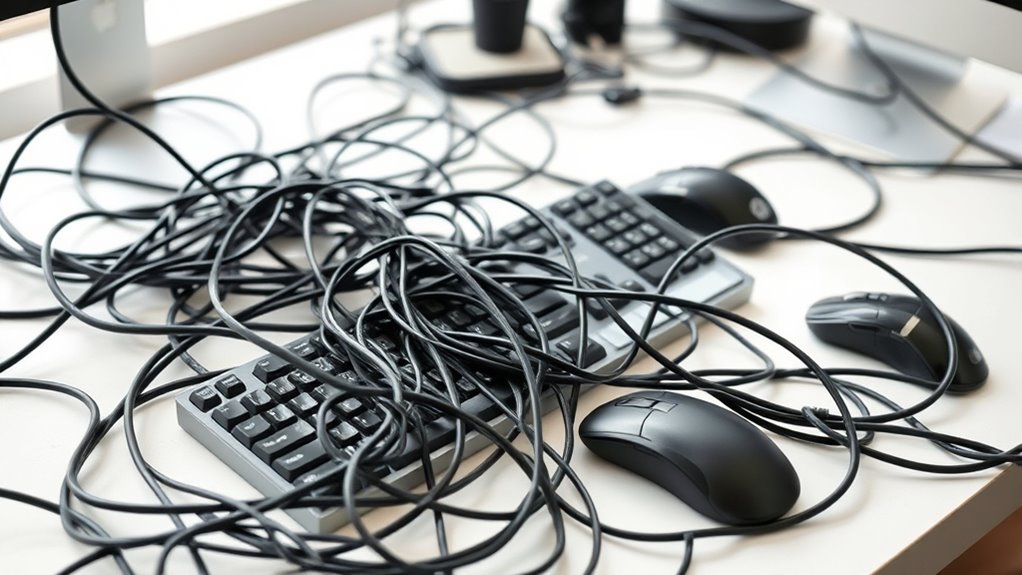
Cable clutter can substantially affect your physical comfort, especially if you work at a desk or entertainment setup. When cables are tangled or poorly managed, they limit cable flexibility, making it harder to adjust or move devices comfortably. This inflexibility can cause awkward positioning, forcing you into strained postures that lead to discomfort over time. Using ergonomic accessories, like cable clips or cable management sleeves, helps keep cables organized and prevents them from pulling or tugging on your devices. Well-managed cables allow you to maintain natural, relaxed postures, reducing muscle tension and fatigue. Proper cable organization creates a more comfortable workspace, enabling smoother movements and minimizing physical strain, which ultimately supports your overall comfort during long hours of work or entertainment. Additionally, implementing cable management practices aligned with ergonomic principles can further enhance your setup and reduce the risk of repetitive strain injuries. Incorporating ergonomic cable organization techniques can further optimize your workspace and promote better physical health. To maximize these benefits, consider cable flexibility when selecting and arranging your cables, ensuring they do not restrict movement or cause tension. Moreover, paying attention to cable durability can prevent frequent replacements and maintain a tidy environment over time. Furthermore, considering the contrast ratio of your setup can improve visual clarity and reduce eye strain during extended use.
How Poor Cable Management Contributes to Injury Risks

Poor cable management creates tripping hazards that can cause falls and injuries. When cables are tangled or stretched tight, they put unnecessary strain on your hands and arms. Addressing these issues helps keep your space safe and reduces the risk of accidents. Proper cable organization also promotes safe environments, especially for caregivers and seniors with mobility challenges. Additionally, good cable management can improve ergonomic comfort by preventing awkward postures during use. Implementing proper cable organization can also reduce the risk of strain injuries, which are common when cables are not properly managed. Using cable management solutions can further enhance safety and efficiency in your workspace. Incorporating thermal behavior considerations in cable placement can prevent overheating and potential electrical hazards.
Tripping Hazards Increase
When cables are left scattered across walkways or work areas, they create obvious tripping hazards that can lead to serious injuries. To reduce risks, consider these steps:
- Use cable concealment solutions to hide wires along walls or floors.
- Opt for wireless alternatives to eliminate unnecessary cables altogether.
- Keep cables organized with clips or ties to prevent tangling.
- Regularly inspect and adjust cable routes to make sure they stay out of foot traffic areas.
- Incorporate ergonomic principles by designing cable placement that minimizes strain and awkward positioning for users.
- Employ natural integration techniques to seamlessly blend cables into the environment, reducing visual clutter and trip hazards.
- Apply connected home fitness concepts to optimize cable management for safer and more efficient workouts.
- Additionally, implementing cable management best practices can enhance overall safety and efficiency in both work and recreational spaces.
- Proper cable management not only improves safety but also reduces fatigue by minimizing unnecessary movements and awkward postures during extended work sessions.
Strain From Tension
If cables are not properly managed, they can create tension that strains both the wires and the people handling them. Excess cable tension puts unnecessary ergonomic strain on your body, especially on your hands, arms, and back. When cables are pulled tight or hang loosely, you often need to reach or bend awkwardly to adjust or plug in devices. Over time, this repetitive tension can lead to discomfort, muscle strain, or even injury. Poor cable management forces you to apply extra force or adopt awkward postures, increasing fatigue and decreasing productivity. By organizing cables properly, you reduce tension, minimize ergonomic strain, and create a safer, more comfortable workspace. Proper cable management is essential for preventing injury risks caused by persistent tension. Additionally, utilizing smart cable organizers can help maintain tidy and safe setups. Implementing ergonomic principles in your workspace design further helps to reduce strain and promote better posture during cable handling. Incorporating ergonomic workspace design principles can also significantly decrease the risk of strain related to cable management. Understanding ergonomic risks associated with cable handling is key to maintaining a healthy workspace. Using cable tension analysis tools can help identify problematic areas and optimize your setup for safety and comfort.
The Connection Between Cable Organization and Productivity

Organized cables can substantially boost your productivity by reducing the time spent searching for the right charger or port. When your cables are neat, you experience fewer distractions and less frustration. To improve cable aesthetics and efficiency, consider these organizational tools:
- Use cable clips or sleeves to keep cords tidy and prevent tangling.
- Label cables for quick identification, saving time during setup.
- Invest in cable organizers that hold multiple cords, reducing clutter.
- Position frequently used cables within easy reach to minimize movement.
- Maintaining cable organization can also help extend the lifespan of your cords by preventing unnecessary wear and tear. Additionally, proper cable management practices can reduce safety hazards caused by loose or damaged cords. Incorporating ergonomic principles into your cable setup can further enhance comfort and reduce strain during extended use. Proper cable management not only improves safety but also supports effective workspace ergonomics, leading to better overall comfort and productivity.
Streamlining your cable setup not only enhances the visual appeal but also creates a smoother workflow. When cables are well-organized, you spend less time troubleshooting and more time focusing on your tasks. Clear, accessible cables significantly impact your overall productivity.
Designing Ergonomic Solutions for Cable Management

Designing ergonomic solutions for cable management is essential to creating a workspace that minimizes strain and maximizes comfort. You can achieve this by embracing wireless solutions to reduce clutter and improve mobility. Modular setups allow you to customize your workspace, making cable routing easier and adaptable over time. Use cable trays, clips, and sleeves to keep cords organized and out of the way. Position equipment within easy reach to prevent overextension. Consider height-adjustable desks to reduce strain on your neck and shoulders. The table below highlights key strategies:
| Strategy | Benefit | Implementation Example |
|---|---|---|
| Wireless solutions | Reduces clutter | Use wireless keyboards and mice |
| Modular setups | Flexible configuration | Segregate power and data cables |
| Cable management tools | Keeps cords organized | Cable clips and sleeves |
| Ergonomic placement | Prevents strain | Position monitors at eye level |
Prioritize these solutions for comfort and efficiency. Additionally, understanding ergonomic principles can help you design a more comfortable and productive workspace.
Common Mistakes That Aggravate Cable-Related Ergonomic Issues
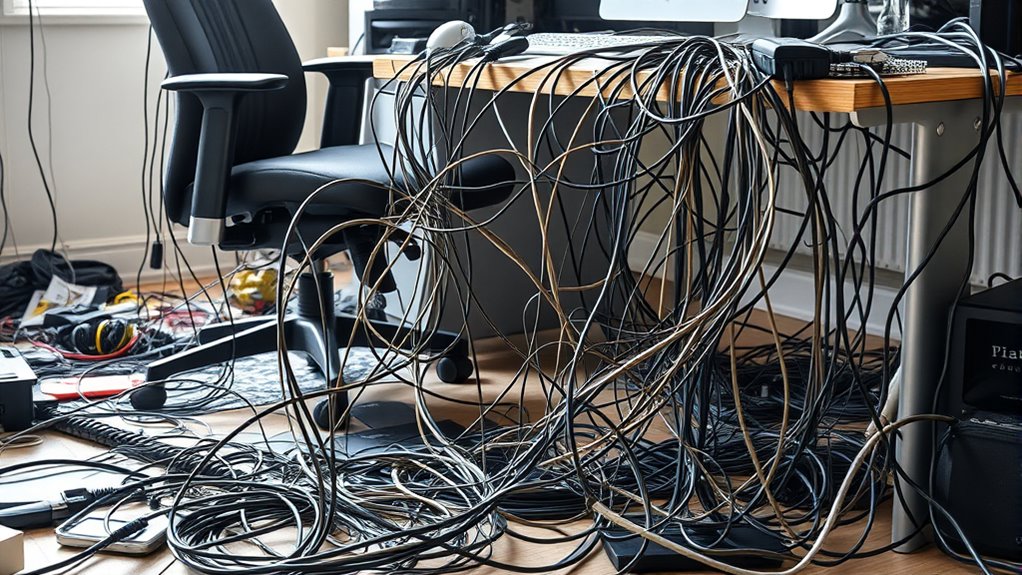
Neglecting proper cable management can greatly worsen ergonomic issues in your workspace. Common mistakes include:
- Ignoring cable concealment, which leads to clutter and trip hazards.
- Forgetting to wire label, making it hard to identify devices and disconnect safely.
- Leaving cables loose and tangled, increasing strain on connectors and causing accidental disconnections.
- Overlooking cable length, forcing you to stretch or bend awkwardly to reach ports.
These errors create unnecessary tension, risk of injury, and frustration. Proper cable concealment keeps cables out of sight and reduces clutter, while clear wire labeling helps you disconnect or troubleshoot efficiently. Avoid these mistakes to maintain a safer, more ergonomic workspace that promotes productivity and comfort.
Strategies for Creating Safer and More Comfortable Workspaces

Creating a safer and more comfortable workspace starts with implementing effective cable management practices. Consider using wireless alternatives for devices whenever possible to eliminate clutter and reduce tripping hazards. When cables are unavoidable, organize them neatly using cable labeling. Labeling helps you quickly identify and disconnect or adjust cables, preventing accidental disconnections and strain. Use cable clips, sleeves, or ties to keep cords close to desks and walls, avoiding tangles that can cause awkward movements or falls. Regularly inspect and update your cable setup to maintain safety and comfort. By adopting these strategies, you minimize ergonomic risks, improve workspace efficiency, and foster a more organized environment that supports your well-being.
Frequently Asked Questions
How Does Cable Clutter Affect Long-Term Musculoskeletal Health?
Cable clutter can lead to cable fatigue, making it harder to maintain proper posture alignment over time. When cables are tangled or uneven, you might unconsciously adopt awkward positions, straining your neck, shoulders, and back. This ongoing misalignment increases your risk of developing musculoskeletal issues in the long run. To protect your health, keep cables organized and guarantee your workspace promotes good posture.
Can Proper Cable Management Prevent Repetitive Strain Injuries?
Proper cable management can prevent repetitive strain injuries by improving cable flexibility and reducing visual clutter. When cables are organized, you avoid awkward stretches and repetitive movements that strain your muscles. Clear, well-placed cables also help you work more comfortably, decreasing the risk of musculoskeletal issues over time. So, take time to manage your cables effectively, and you’ll support your long-term health and ergonomic well-being.
What Ergonomic Standards Exist for Cable Organization in Workspaces?
Imagine your workspace as a sleek, flowing river of cables, each one lightweight and flexible, moving smoothly without tangles. Ergonomic standards emphasize minimizing cable weight and maximizing flexibility to reduce strain. You should secure cables to avoid tripping hazards and organize them to prevent unnecessary strain on your wrists and shoulders. Following these guidelines guarantees your workspace promotes comfort, safety, and efficiency, making your daily tasks feel effortless and natural.
How Do Different Cable Management Tools Improve Ergonomic Safety?
Using cable routing and ergonomic accessories, you can substantially improve safety by reducing strain and preventing accidents. Cable routing keeps cords organized and out of your way, minimizing trip hazards, while ergonomic accessories like adjustable cable clips or sleeves reduce tension on your hands and wrists. These tools help create a more comfortable workspace, lowering the risk of repetitive strain injuries and making your environment safer and more efficient.
Are There Industry Best Practices for Ergonomic Cable Layout Design?
Yes, industry best practices emphasize proper wire routing and connector placement to improve ergonomics. You should keep cables organized, avoid sharp bends, and route wires along designated paths to reduce strain. Position connectors at accessible heights, minimizing reaching or awkward postures. Regularly review and adjust cable layout, ensuring it promotes safety and efficiency. These practices help prevent discomfort and potential injuries, creating a safer, more ergonomic workspace.
Conclusion
Taming your cables is like calming a restless storm—you bring order to chaos and find peace in your space. When you organize thoughtfully, you’re not just avoiding accidents; you’re creating a sanctuary where comfort and productivity blossom. Imagine a workspace where every wire hums in harmony, freeing you to focus and thrive. So, take action today—transform your cable mess into a symphony of safety and ease, and let your workspace become your sanctuary.