Blue light impacts sleep more directly than other bright lights because its wavelength more effectively suppresses melatonin and disrupts your circadian rhythm. Exposure to blue light at night delays sleep onset and shortens sleep duration, while bright lights in general help keep you alert during the day. Managing blue and bright light exposure, especially in the evening, can considerably improve your sleep quality—if you stay curious, you’ll uncover more helpful tips.
Key Takeaways
- Blue light more effectively suppresses melatonin than other bright lights, delaying sleep onset.
- Both blue light and bright light increase alertness, but blue light has a stronger impact on circadian disruption.
- Exposure to blue light at night disrupts sleep more than non-blue bright light, affecting sleep quality.
- Bright light during the day promotes wakefulness, while evening exposure, especially blue light, hampers sleep.
- Managing blue light exposure before bed is crucial for maintaining circadian rhythm and improving sleep.
How Does Light Impact Your Sleep Cycles

Light plays an essential role in regulating your sleep cycles, primarily by influencing the production of the hormone melatonin. Exposure to excessive light pollution, especially at night, can suppress melatonin, making it harder for you to fall asleep and stay asleep. Seasonal affective disorder (SAD) is another example where reduced natural light during winter months disrupts your circadian rhythm, leading to sleep difficulties and low energy. Bright light exposure during the day helps set your internal clock, promoting alertness and better sleep at night. Conversely, dim or artificial light at inappropriate times confuses your body’s natural signals, interfering with melatonin production. Understanding how different light sources impact your sleep can help you make better choices to improve your overall sleep quality and well-being. Paying attention to light exposure routines and managing light levels can significantly enhance your sleep health.
What Does Blue Light Do to Melatonin and Circadian Rhythm

Blue light, especially from screens and electronic devices, has a powerful effect on your body’s production of melatonin, the hormone responsible for signaling sleep. When exposed to blue light at night, your eyes experience blue light interference, which disrupts the natural rise of melatonin. This suppression delays your sleep onset and can shorten overall sleep duration. Blue light interferes with your circadian rhythm, the internal clock that regulates sleep-wake cycles, making you feel alert when you should be winding down. The more exposure you have to blue light in the evening, the greater the melatonin suppression, which can lead to difficulty falling asleep and poorer sleep quality. Reducing blue light exposure before bed helps maintain your circadian rhythm and promotes better sleep. Additionally, light exposure timing plays a crucial role in how your circadian rhythm adapts to changes in your environment.
How Does Bright Light Keep You Awake and Alert

Exposure to bright light, especially in the morning or during the day, signals your brain to stay alert and awake. The higher the light intensity, the stronger the message to your body that it’s daytime, boosting your alertness levels. Bright light activates your retina, which sends signals to your brain’s wakefulness centers, helping you stay focused and energized. When you’re exposed to sufficient light, you’ll notice increased motivation, sharper concentration, and a reduced feeling of fatigue. Light intensity directly influences your circadian rhythm, reinforcing wakefulness during daylight hours.
Which Light Source Affects Sleep More: Blue or Bright Light
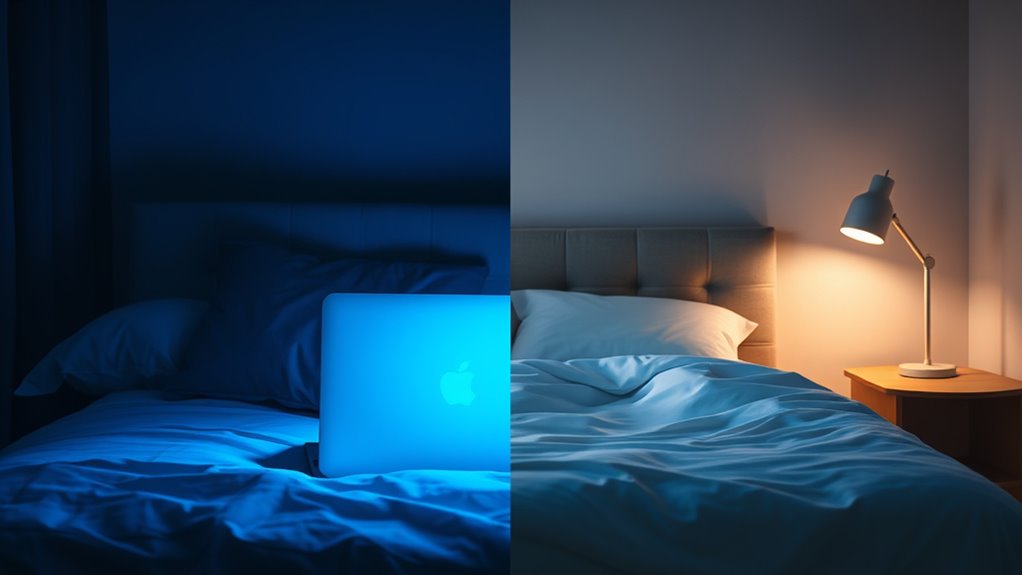
While both blue and bright light can influence your sleep, blue light has a more direct impact on your circadian rhythms. This is because blue light’s specific light color affects the production of melatonin, the hormone that regulates sleep. Even at lower light intensities, blue light disrupts your body’s natural sleep signals more than bright white light of a different color. Bright light, regardless of color, can keep you alert, but blue light’s wavelength more effectively signals your brain to stay awake. So, if you’re exposed to blue light during the evening, it’s more likely to delay sleep onset compared to other bright lights. Your focus should be on both light intensity and light color, but blue light’s influence on your biological clock is more significant. Additionally, understanding how energyLast impacts light exposure can help you manage your sleep environment more effectively.
How Can You Manage Light Exposure for Better Sleep
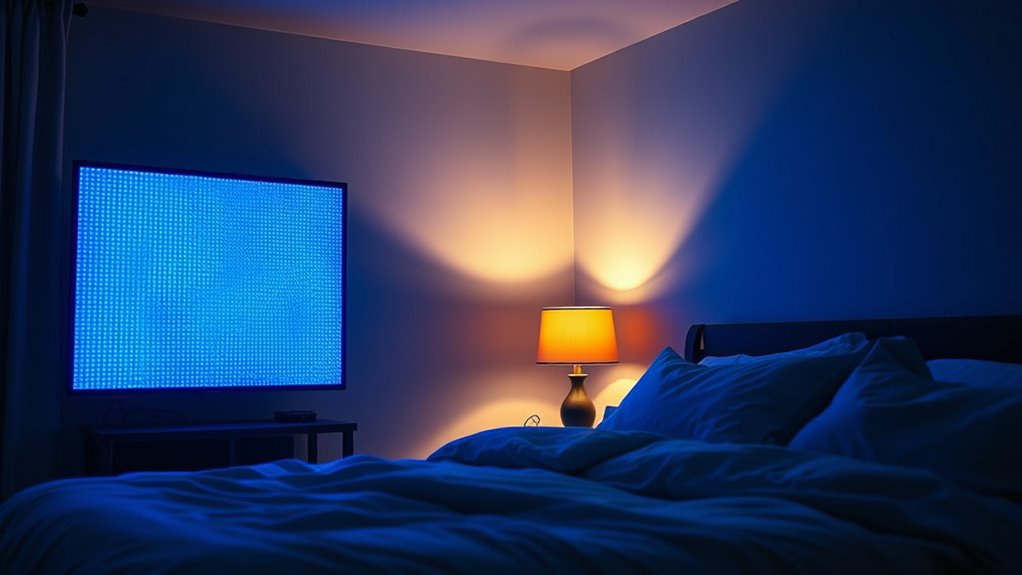
To improve your sleep, managing your light exposure in the evening is essential. Creating a calming sleep environment helps signal your body it’s time to wind down. Use light filtering options like blackout curtains or dimmer switches to reduce blue and bright light. Avoid screens at least an hour before bed or wear blue light glasses to minimize impact. Incorporate soft, warm lighting to promote relaxation and prepare your body for rest. By controlling your light environment, you can foster better melatonin production and improve sleep quality. Proper lighting can also help prevent disruptions caused by inappropriate light levels during your evening routine. Remember, small changes in your evening light habits can make a big difference. Take control of your sleep environment today to enjoy restful, rejuvenating nights. Your body and mind will thank you.
Frequently Asked Questions
Can Wearing Blue Light Glasses Improve Sleep Quality?
Yes, wearing blue light glasses can improve your sleep quality. They filter out blue light emitted by screens, which can interfere with your melatonin production and disrupt your sleep cycle. By reducing blue light exposure in the evening, you help your body prepare for sleep, making it easier to fall asleep and enjoy more restful nights. Incorporating blue light glasses into your routine is a simple way to support healthier sleep habits.
How Does Natural Sunlight Compare to Artificial Light on Sleep?
Imagine the sun as a conductor guiding your circadian rhythm, keeping your melatonin production in sync. Natural sunlight, with its full spectrum, helps regulate your internal clock better than artificial light, signaling daytime and encouraging sleep at night. Artificial light, especially at night, can disrupt this harmony, suppress melatonin, and make it harder to fall asleep. So, soaking up natural sunlight supports healthier sleep patterns.
Does Screen Time Before Bed Disrupt Sleep More Than Ambient Room Lighting?
Yes, screen time before bed disrupts your sleep more than ambient lighting. When you use devices, the blue light emitted suppresses melatonin production, making it harder to fall asleep. Ambient room lighting, especially if it’s dim and warm, has less impact on your sleep cycle. To improve sleep, limit screen time at least an hour before bed and opt for softer, ambient lighting instead.
Are There Specific Times When Light Exposure Is More Harmful to Sleep?
Timing sensitivity makes evening exposure particularly harmful to your sleep. You should avoid bright or blue light at least two hours before bed, since your body’s natural clock is most vulnerable then. Think of it as playing with fire—exposing yourself to artificial light too late tricks your brain into thinking it’s daytime, delaying sleep. By limiting evening exposure, you help your circadian rhythm stay in sync and enjoy better rest.
Can Sleep Masks Block Blue and Bright Light Effectively?
Sleep masks can effectively block blue and bright light, enhancing your sleep quality. Look for masks with light-blocking materials like blackout fabric or adjustable straps for a snug fit. By blocking out disruptive light, your sleep environment becomes darker, which promotes deeper rest. This simple tool supports sleep enhancement by reducing exposure to light that can interfere with melatonin production, helping you fall asleep faster and enjoy more restorative sleep throughout the night.
Conclusion
To improve your sleep, manage your light exposure wisely. Limit blue light before bed to protect melatonin and maintain your circadian rhythm. Embrace bright light during the day to stay alert and energized. Balance blue and bright light to support restful nights and productive days. Prioritize your sleep by controlling light, calming your mind, and creating a consistent routine. Because when you control your light, you control your sleep, and when you control your sleep, you control your well-being.