To set your workbench height based on ergonomic rules for DIY projects, guarantee it is adjusted so that your elbows stay at about a 90-degree angle when working, whether you’re standing or sitting. For standing, your forearms should be parallel to the ground, and for sitting, your feet should rest flat on the floor. Proper height helps reduce strain and boosts efficiency; keep going to discover how to fine-tune your workspace for ultimate comfort.
Key Takeaways
- Set the workbench height so your elbows form about a 90-degree angle when standing or sitting comfortably.
- Adjust the height to keep your forearms parallel to the ground during tasks.
- Ensure tools are within easy reach to minimize stretching and reduce strain.
- Use trial and error to find the height that promotes natural, ergonomic postures.
- Proper workbench height enhances safety, comfort, and productivity in DIY projects.
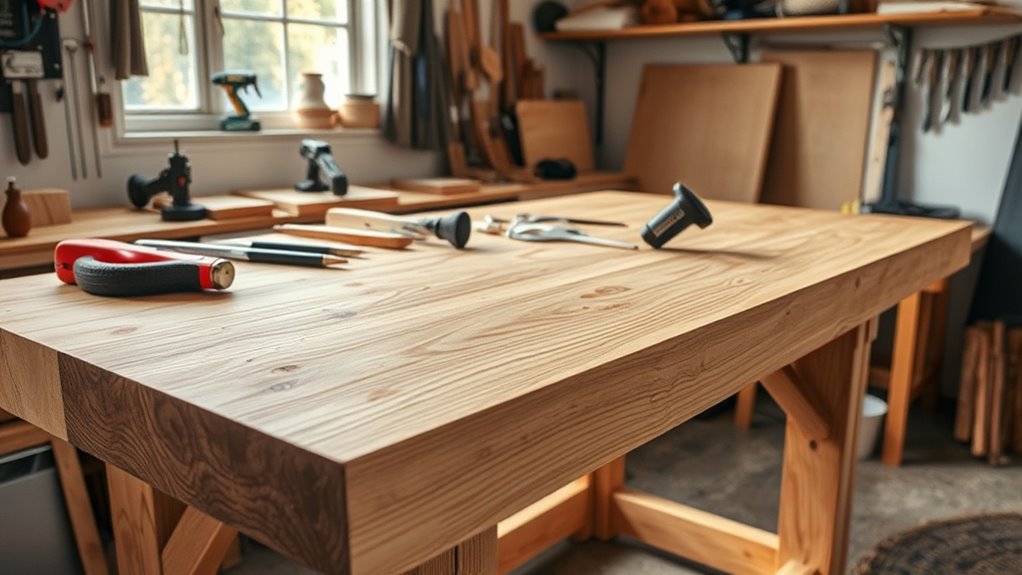
Have you ever wondered how the right workbench height can improve your comfort and productivity? Finding the perfect height isn’t just about personal preference; it’s about creating an environment that promotes ergonomic postures and maximizes tool accessibility. When your workbench is set at the right level, you’ll notice less strain on your back, shoulders, and arms, allowing you to work longer and more efficiently without discomfort.
Getting the height right helps you maintain ergonomic postures, which are essential for reducing fatigue and preventing injuries over time. If your work surface is too high, you’ll find yourself constantly reaching up, causing unnecessary tension in your neck and shoulders. Conversely, if it’s too low, you’ll hunch over, straining your back and wrists. The goal is to position your workbench so that your elbows are roughly at a 90-degree angle when you’re standing or sitting comfortably, keeping your wrists straight and your shoulders relaxed. This alignment minimizes muscle fatigue and helps you stay focused on your project rather than battling pain.
Proper workbench height supports ergonomic posture, reducing fatigue and preventing strain on neck, back, and wrists.
Tool accessibility is another critical aspect influenced by the workbench height. When your workspace is properly calibrated, tools and materials are within easy reach, reducing unnecessary movement and interruptions. If your workbench is too high, you might have to stretch or bend awkwardly to grab tools, which wastes energy and breaks your concentration. On the other hand, a too-low surface forces you to bend over, which can cause back pain and make fine tasks more difficult. An ideal height allows you to keep everything you need close at hand, so you don’t waste time searching or reaching across cluttered surfaces. This setup not only speeds up your workflow but also helps keep your workspace organized and safer.
Adjusting your workbench height might involve some trial and error, but it’s worth the effort. Consider your typical working posture and the types of projects you tackle. If you’re mostly standing, aim for a height that allows your forearms to be parallel to the ground. If you prefer sitting, make sure your seated position supports ergonomic postures, with your feet flat on the floor and your knees at a comfortable angle. Remember, tools should be stored at heights that match your natural reach, reducing unnecessary bending or stretching. Natural workbench height is an important concept that can help guide these adjustments and improve overall comfort.
In short, the right workbench height isn’t just a minor detail—it’s a fundamental factor for comfort, safety, and efficiency. By focusing on ergonomic postures and tool accessibility, you’ll enjoy a more enjoyable DIY experience, minimize fatigue, and produce better results with less effort.
Frequently Asked Questions
How Do I Adjust My Workbench Height for Standing vs. Sitting?
To adjust your workbench height for standing or sitting, start by setting it so your elbows are at a 90-degree angle when you’re working. For ergonomic sitting, make certain the bench height allows your hips and knees to be at comfortable angles. When standing, your bench should be around waist level to reduce strain. Regularly check your posture and make small adjustments for comfort and efficiency.
What Materials Affect the Ideal Workbench Height?
If you’re working with a solid hardwood top, its surface durability means you can set a slightly higher workbench height without worry. Material flexibility also impacts your choice; softer woods may need a lower height to reduce strain. For example, a flexible plywood surface might require a more ergonomic height adjustment to compensate for bending. Always consider these factors to make certain of comfort and longevity in your DIY projects.
Can Adjustable Workbenches Improve Ergonomics?
Yes, adjustable workbenches can considerably improve ergonomics by allowing you to customize the height for different tasks. This flexibility helps reduce strain, especially when working with tool storage or workspace lighting, as you can position the bench to maximize comfort and visibility. By adjusting the height, you minimize fatigue and improve efficiency, making your DIY projects safer and more enjoyable.
How Does Workbench Height Impact Safety During Projects?
You might find that the right workbench height considerably boosts your safety during projects by improving ergonomic comfort. When your work surface is at an ideal height, you reduce strain on your back and arms, which helps prevent accidents caused by fatigue or loss of control. Properly adjusted workbenches keep you focused and steady, making your work safer and more efficient. So, always tailor your workbench height to your body for better safety and comfort.
Are There Industry Standards for Workbench Height in DIY?
Yes, there are industry standards for workbench height in DIY projects, based on ergonomic best practices. Typically, the standard guidelines suggest your workbench should be around waist height, roughly 34 to 36 inches, to reduce strain. You should adjust this based on your height for comfort and safety. Following these standards helps prevent injuries and improves your efficiency during projects. Always prioritize ergonomic principles when setting up your workspace.
Conclusion
Think of your workbench as the steering wheel of your DIY journey. When it’s at the right height, you steer smoothly, avoiding unnecessary fatigue and mishaps. If it’s too high or too low, you’ll struggle like a ship battling rough seas. By setting your workbench to the ergonomic height, you’re charting a steady course toward successful projects. Remember, a well-balanced work surface keeps your craftsmanship sailing smoothly—making every task feel like a breeze.