
To stop fine dust from escaping, you need the right CFM, which measures your dust collection system’s airflow capacity. By calculating the ideal CFM based on your workspace size and dust generation, you guarantee efficient capture of even tiny particles. Keeping filters clean and maintaining airflow are critical to prevent performance drops. If you want to understand the math behind choosing the right CFM and how it keeps your workspace safe, there’s more to discover.

Prime made for students and young adults
- Fast, free delivery for dorm and study essentials
- Prime Video and Amazon Music included
- Member-only deals
Key Takeaways
- Proper CFM ensures sufficient airflow to capture and contain fine dust particles effectively.
- Maintaining clean filters prevents airflow reduction, preserving dust collection efficiency over time.
- Calculating CFM based on workspace size and tool output helps optimize dust extraction performance.
- Insufficient CFM allows fine dust to escape; adequate airflow is critical for health and safety.
- Regular filter maintenance and airflow monitoring sustain peak dust collection performance and system longevity.
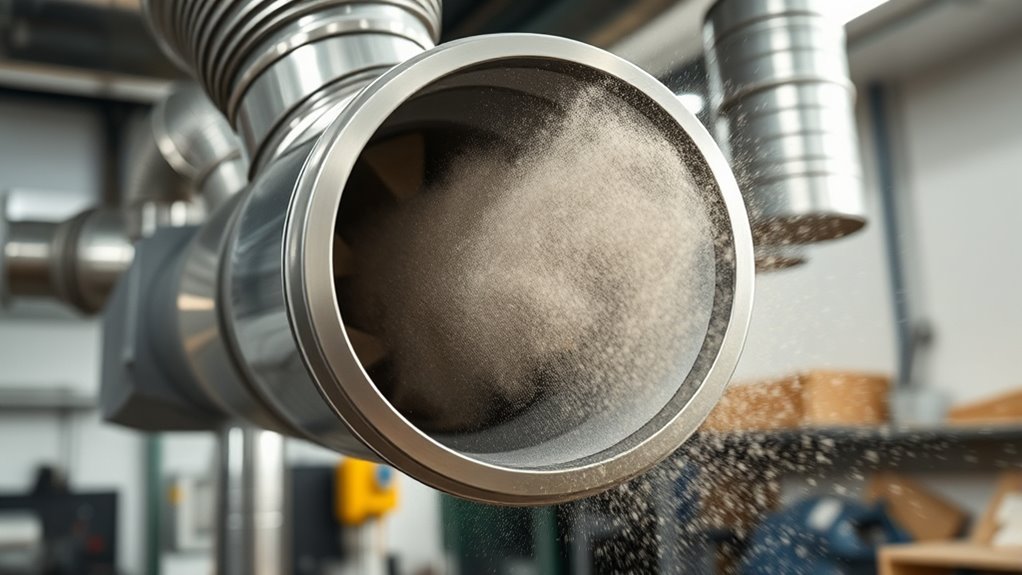
When selecting a dust collection system, understanding CFM—cubic feet per minute—is essential because it measures how effectively the system moves air and captures dust. If the airflow isn’t sufficient, fine dust particles will escape, contaminating your workspace and potentially harming your health. Higher CFM ratings generally mean better dust extraction, but it’s not just about raw numbers; you need to take into account how well the system maintains airflow efficiency over time. As dust accumulates in filters and ducts, airflow can slow down, reducing overall performance. That’s where filter maintenance becomes critical. Regularly checking, cleaning, or replacing filters ensures your system continues to operate at ideal airflow efficiency, preventing dust buildup that hampers performance. Neglecting this maintenance can lead to decreased CFM, increased dust escape, and even system overloads.
Understanding the balance between CFM and airflow efficiency helps you select a system that meets your specific needs. For example, a small workshop might require a lower CFM, but if the filters clog quickly, the system’s effectiveness drops. Conversely, a larger operation with multiple machines needs a higher CFM to ensure consistent dust collection across all tools. The key is matching your system’s airflow capacity to your workspace size and dust generation rate. Once set up, ongoing filter maintenance becomes crucial. Dirty filters restrict airflow, making your system less effective at capturing fine dust particles. This not only reduces your safety but also strains the motor, increasing energy consumption and potential breakdowns.
Moreover, a well-maintained filter system preserves your airflow efficiency, so your dust collection system runs smoothly with minimal downtime. Regularly inspecting filters, cleaning or replacing them as needed, ensures your CFM remains steady and effective. It’s also wise to monitor dust levels and airflow performance periodically, adjusting as your operations evolve. Remember, a system with high initial CFM but poor filter maintenance will quickly lose its edge, leading to performance issues and more frequent repairs. Aim for a balance where airflow efficiency is maintained through diligent filter upkeep, keeping your workspace clean and safe. In the end, understanding how CFM relates to airflow efficiency and filter maintenance empowers you to keep your dust collection system running at peak performance, effectively stopping fine dust before it becomes a problem.
dust collection system with high CFM
As an affiliate, we earn on qualifying purchases.
As an affiliate, we earn on qualifying purchases.
Frequently Asked Questions
How Does Duct Size Affect CFM Performance?
Duct size directly impacts CFM performance by influencing duct velocity and static pressure. Larger ducts reduce static pressure and allow higher CFM without increasing velocity too much, preventing airflow restrictions. Smaller ducts increase velocity but also static pressure, which can decrease overall performance and dust collection efficiency. To optimize dust collection, choose duct sizes that balance velocity and static pressure, ensuring smooth airflow and effective dust removal.
What Is the Ideal CFM for Different Workshop Sizes?
For ideal airflow and filter lifespan, aim for 350-450 CFM in small workshops, 500-700 CFM in medium spaces, and over 1000 CFM for large industrial setups. Did you know that proper airflow enhancement can extend filter life by up to 50%? Matching your dust collection system to your workshop size ensures efficient dust removal, keeps the air clean, and reduces filter clogging, making your workspace safer and more productive.
Can a Higher CFM Improve Dust Collection Efficiency?
Yes, a higher CFM can improve dust collection efficiency by increasing airflow and capturing more dust particles. This boost helps maintain better air quality and reduces airborne dust, making your workspace safer. However, be mindful that higher CFM units may generate increased noise levels, which can affect comfort. Balancing airflow with noise considerations guarantees you get effective dust control without sacrificing a comfortable working environment.
How Often Should Dust Collection Filters Be Maintained?
You should maintain your dust collection filters regularly to guarantee peak performance. Follow a maintenance schedule based on your usage, typically inspecting and cleaning filters weekly or monthly. Replace filters when they become damaged or clogged, as filter replacement is essential for maintaining efficiency. Regular maintenance prevents dust buildup, keeps airflow consistent, and prolongs your system’s lifespan. Staying on top of your filter maintenance schedule helps you effectively control fine dust and maintain a safe workspace.
What Safety Precautions Are Necessary With High CFM Systems?
Imagine a workshop with a high CFM dust collection system. You should regularly check airflow regulation to guarantee ideal performance and prevent dust buildup. Always wear personal protective equipment like respirators and eye protection, especially during maintenance. For example, in a case where airflow drops unexpectedly, proper safety protocols help prevent dust exposure. Staying vigilant with airflow regulation and PPE keeps you safe from potential health hazards associated with high CFM systems.
air filtration system for workshop
As an affiliate, we earn on qualifying purchases.
As an affiliate, we earn on qualifying purchases.
Conclusion
Understanding the math behind dust collection CFM can truly make a difference in your workspace. Did you know that proper CFM can reduce airborne dust particles by up to 99%? That’s a game-changer for your health and safety. By dialing in the right airflow, you protect yourself and create a cleaner environment. So, take these insights seriously—because a well-calculated dust collection system isn’t just about efficiency, it’s about your well-being.
dust collector filter replacement kit
As an affiliate, we earn on qualifying purchases.
As an affiliate, we earn on qualifying purchases.
portable dust extractor for woodworking
As an affiliate, we earn on qualifying purchases.
As an affiliate, we earn on qualifying purchases.
Fall Picks
fall essentials
As an affiliate, we earn on qualifying purchases.