
When you choose a saw blade with fewer teeth, your cuts will be faster but rougher, making it ideal for ripping and thicker materials. More teeth create smoother, cleaner edges and are better for finishing work or fine cuts. The tooth count affects how quickly you cut and the quality of the surface. Understanding these differences helps you pick the right blade for each task—something you’ll discover more about as you explore further.
Key Takeaways
- Lower tooth counts (24-40) produce rougher, faster cuts, ideal for framing and ripping thick materials.
- Higher tooth counts (60+) create smoother, finer cuts suitable for finish work and delicate materials.
- Increasing tooth count improves cut quality but may slow cutting speed and require more power.
- Fewer teeth remove material quickly but can result in rough edges, needing further finishing.
- Tooth count impacts the balance between cut speed, surface finish, and material control during sawing.

Have you ever wondered how the number of teeth on a saw blade affects its cutting performance? It’s a common question among woodworkers and DIY enthusiasts alike. The answer lies in understanding how the tooth count influences the type of cut you get, as well as the overall efficiency of your work. When you select a saw blade, you’ll notice that blade material and saw blade diameter are essential factors, but tooth count plays an equally important role. The number of teeth determines the smoothness, speed, and quality of the cut, making it essential to choose the right configuration for your project.
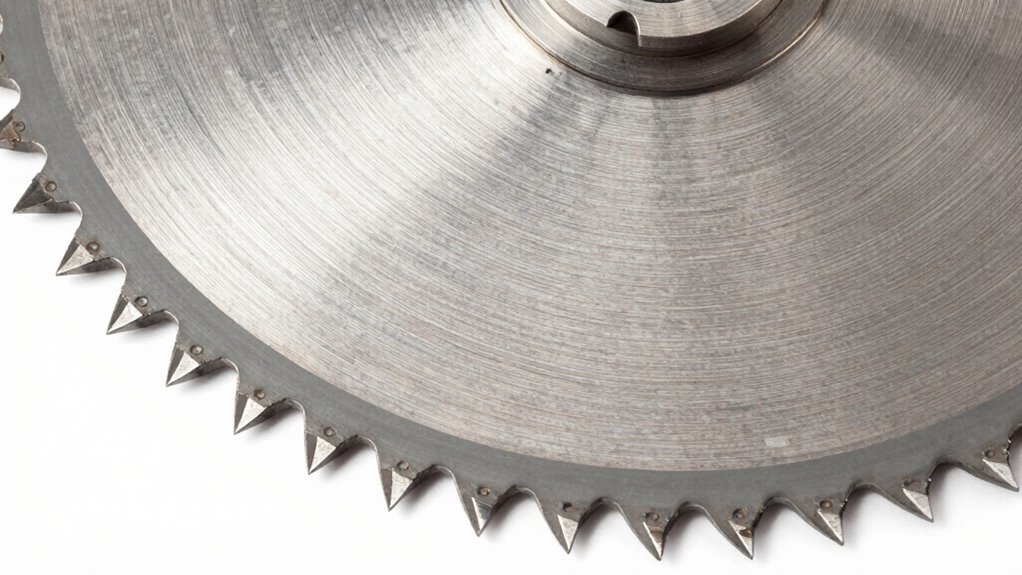
In general, blades with fewer teeth—say, around 24 to 40—are designed for faster cuts and rougher finishes. These blades tend to have larger, more aggressive teeth, which help remove material quickly. If you’re ripping through lumber or cutting thick, dense materials, a saw blade with a lower tooth count can save you time and effort. However, the trade-off is that the cut may be rougher and require additional sanding or finishing afterward. Conversely, blades with a higher tooth count—such as 60 or more—are optimized for finer, smoother cuts. These blades feature smaller, more numerous teeth that produce a cleaner edge, ideal for cross-cutting delicate materials or finished surfaces.
Blade material also influences how the tooth count performs. For example, carbide-tipped blades tend to handle higher tooth counts better, maintaining sharpness longer and providing cleaner cuts. When combined with a specific saw blade diameter, the tooth count plays a pivotal role in overall performance. Larger saw blades, like those with a diameter of 12 inches or more, typically accommodate a wider range of tooth configurations, but their cutting capabilities are also affected by how many teeth they have. A larger diameter with fewer teeth may struggle to produce a smooth cut, while a smaller diameter with many teeth can be more precise but less aggressive. Tooth count impacts the balance between cut quality and speed, which is crucial in selecting the right blade for your project.
Carbide-tipped blades handle higher tooth counts for cleaner, longer-lasting cuts across various saw blade sizes.
Ultimately, your choice depends on the type of material and finish you want. For rough cuts or framing, opt for fewer teeth and a larger saw blade diameter. For detailed work and smooth finishes, go for a higher tooth count with a smaller or medium-sized blade. Understanding how blade material, saw blade diameter, and tooth count interconnect will help you make better decisions, ensuring each cut meets your expectations. Recognizing these factors allows you to tailor your tools to specific tasks, making your work more efficient and professional-looking.

WORKPRO 10 Inch Woodworking Circular Saw Blade, 80T Ultra Fine Finish Cabinetry, Thin Kerf(1.8mm), Carbide Tipped, ATB Tooth, 1-Pack
W124880AE|10" 80T 1PC: Ultra-fine finish 80T blade for cabinetry and delicate trim work; ensures smooth edges and minimal…
As an affiliate, we earn on qualifying purchases.
As an affiliate, we earn on qualifying purchases.
Frequently Asked Questions
How Does Tooth Count Affect Blade Noise During Operation?
You’ll notice that a higher tooth count generally produces less noise during operation because it reduces blade vibration, leading to smoother cuts. Conversely, a lower tooth count increases vibration, which can cause louder sounds. This noise change also affects cutting precision, as less vibration means cleaner, more accurate cuts. So, selecting the right tooth count helps you balance noise levels with cutting efficiency and precision, improving your overall work experience.
Can Changing Tooth Count Improve Cut Quality on Specific Materials?
Think of changing tooth count as fine-tuning your tool for precision. A higher tooth count, combined with the right blade material and cutting speed, improves cut quality on delicate or detailed materials. For harder surfaces, a lower tooth count enhances durability and reduces chipping. Adjusting these factors allows you to match the blade to your material, ensuring cleaner, smoother cuts and extending your blade’s lifespan.
What Is the Optimal Tooth Count for Cutting Hardwood?
For cutting hardwood, you should choose a blade with around 60 to 80 teeth, depending on the cut quality you want. Opt for a blade made from high-quality steel or carbide for durability, and select tooth geometry with fine, precise teeth to minimize splintering. This combination guarantees a cleaner cut, reduces tear-out, and maintains blade sharpness longer, giving you ideal results in hardwood projects.
How Does Tooth Count Influence Blade Lifespan and Durability?
Like a trusty shield, your blade’s tooth count impacts its lifespan and durability. A higher tooth count often means a longer-lasting blade because the teeth are smaller and wear evenly, especially with durable blade materials. This allows for steady cutting speeds without sacrificing durability. Conversely, fewer teeth may cut faster but wear out quicker. Choosing the right combination ensures your blade stays sharp longer and performs the most effectively.
Are There Safety Considerations Related to Different Tooth Counts?
You should always wear safety gear and handle blades carefully, regardless of tooth count. Different tooth counts can affect how the blade cuts, but safety risks like kickback or blade binding remain. Use proper blade handling techniques, make sure your equipment is well-maintained, and follow safety guidelines to minimize accidents. Being cautious and attentive when working with blades helps protect you, no matter the tooth count.

CMT Orange Tools 285.624.10 – Ripping Saw Blade HW D=10 B=5/8 Z24 K=0.126 P=0.087 a=15
Teeth: 24 FLAT Kerf: 0.126”
As an affiliate, we earn on qualifying purchases.
As an affiliate, we earn on qualifying purchases.
Conclusion
Understanding how tooth count affects your saw blade helps you choose the right tool for the job, improves your cut quality, and increases your efficiency. Higher tooth counts provide smoother cuts, while lower counts offer faster, rougher results. By matching your blade’s tooth count to your material and project needs, you optimize performance, reduce frustration, and achieve better outcomes. Ultimately, selecting the right tooth count isn’t just about cutting; it’s about cutting smarter, safer, and more precisely.

MASTER DEPOT 10 Inch 80T Ultra-Fine Finish Saw Blades for Miter Saws and Table Saws, Carbide-Tipped ATB, 5/8" Arbor, Thin Kerf, Smooth Crosscuts in Plywood, Hardwood, Trim & Finish Work (2-Pack)
Ultra Fine Finish (80T) – High tooth count for smoother crosscuts and reduced tear-out; ideal for plywood, hardwood…
As an affiliate, we earn on qualifying purchases.
As an affiliate, we earn on qualifying purchases.

WEN BL1200 12-Inch 100-Tooth Carbide-Tipped Ultra-Fine Finish Professional Woodworking Saw Blade for Miter Saws and Table Saws, Silver
Featuring a 12-inch diameter (305 mm), a 1-inch arbor (25.4 mm) and a rating of up to 6000…
As an affiliate, we earn on qualifying purchases.
As an affiliate, we earn on qualifying purchases.