
When choosing an air compressor, it’s important to balance tank size and CFM to match your needs. A larger tank provides more stored air and longer runtime, but can be heavy and less portable. Higher CFM ensures sufficient airflow for demanding tools or multiple tasks. If you match the right tank size and CFM to your workload, you’ll prevent pressure drops and avoid equipment issues. Keep exploring to learn how to select the ideal compressor for your projects.

Prime made for students and young adults
- Fast, free delivery for dorm and study essentials
- Prime Video and Amazon Music included
- Member-only deals
Key Takeaways
- Match tank size to your usage for longer run times or portability, balancing weight and air reserve.
- Select CFM based on your tool’s demands to ensure consistent pressure and prevent performance drops.
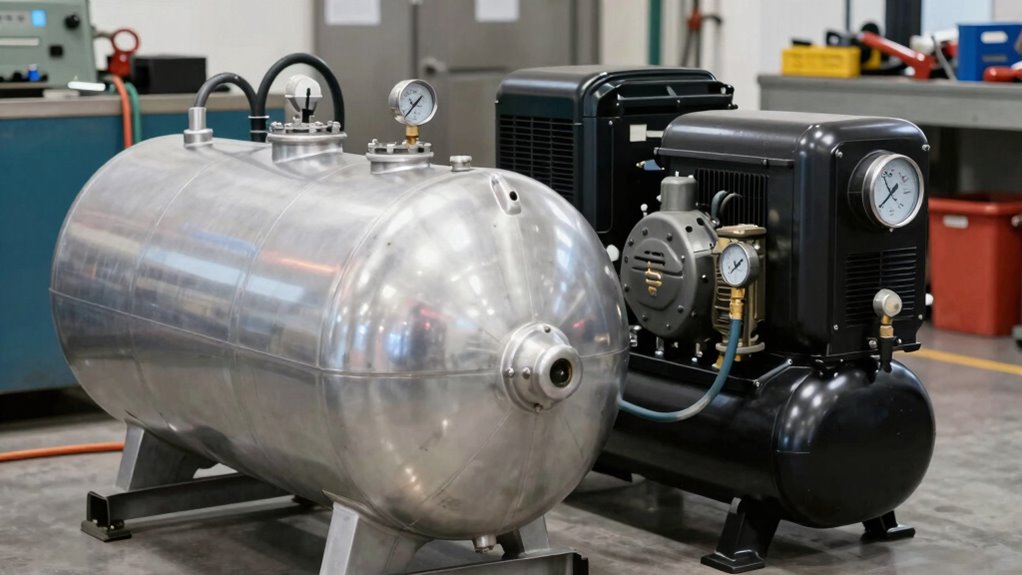
- Larger tanks store more compressed air, reducing cycling frequency but increasing weight and size.
- Higher CFM ratings support heavy-duty tools and simultaneous operations, improving efficiency.
- Properly balancing tank size and CFM prevents underperformance, extends equipment life, and avoids guesswork.
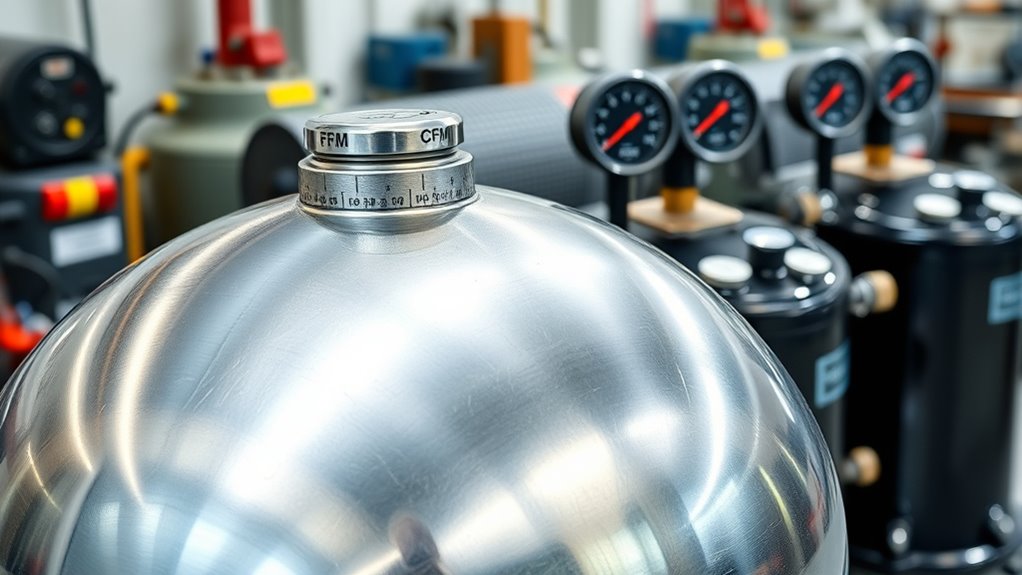
An air compressor is a versatile machine that converts power into stored compressed air, which you can use for various tasks like inflating tires, powering tools, and cleaning surfaces. When choosing your compressor, one of the most essential factors is tank size versus CFM (cubic feet per minute). Understanding how these two specifications work together helps you select the right unit for your needs, preventing you from guessing and ending up with equipment that doesn’t perform as expected.
Choosing the right air compressor involves balancing tank size and CFM for optimal performance.
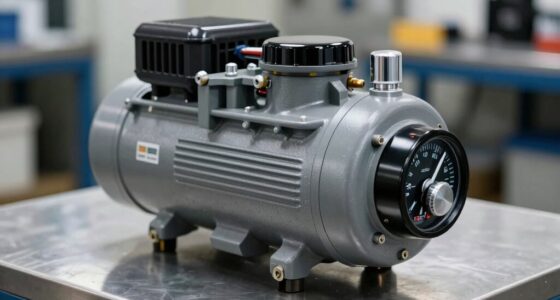
If you’re considering portable units, keep in mind that smaller tanks are easier to move around, making them ideal for on-the-go tasks or jobs that require mobility. However, smaller tanks often mean a limited air reserve, which can cause your compressor to cycle more frequently as it refills. This cycling can wear out the motor faster and reduce efficiency. On the other hand, larger tanks provide a greater air reserve, allowing for longer continuous operation, but they tend to be heavier and less portable. So, if you need a portable unit, look for a balance between tank size and weight, guaranteeing you can carry it comfortably while still getting enough air capacity for your tasks.
CFM is equally vital because it measures how much air your compressor can deliver per minute. A higher CFM means you can run more demanding tools or operate multiple tools at once without pressure drops. When matching tank size and CFM, you must consider your specific application. For light tasks like inflating tires or blowing debris, a small tank with moderate CFM usually suffices. For heavy-duty tasks like sanding or running impact wrenches, you’ll need a compressor with higher CFM ratings, regardless of tank size.
Proper maintenance tips can extend your compressor’s lifespan and keep it running smoothly. For portable units, regular checks of the air filter and drain valve prevent dust buildup and moisture accumulation, which can cause rust or damage. Always drain the tank after use to remove moisture that may have collected during operation. Keep the compressor in a clean, dry place and inspect hoses and connections for leaks or wear. Lubricate moving parts as recommended by the manufacturer to avoid unnecessary strain on the motor. Additionally, choosing a compressor with the right contrast ratio can improve its performance in various lighting conditions, ensuring consistent operation over time. Following these maintenance tips ensures your compressor stays reliable, whether you’re using a small portable unit or a larger stationary model.
portable air compressor with small tank
As an affiliate, we earn on qualifying purchases.
As an affiliate, we earn on qualifying purchases.
Frequently Asked Questions
How Does Temperature Affect Compressor Performance?
Temperature effects can substantially impact your compressor’s efficiency. When temperatures rise, the compressor works harder, reducing overall performance and increasing wear. Warmer air is less dense, leading to lower CFM output and longer cycle times. Conversely, cooler temperatures help maintain ideal compressor efficiency by allowing it to operate smoothly and with less strain. Keeping your compressor in a cool, well-ventilated area ensures better performance and longer lifespan.
Can a Small Tank Compressor Handle Industrial Tasks?
Think of a small tank compressor as trying to fill a swimming pool with a garden hose—it just won’t cut it for industrial tasks. Its limited tank capacity and small size mean it can’t sustain high-demand jobs. You need a larger compressor with greater CFM and tank size to keep up. Small compressors are great for light tasks, but for industrial work, you’ll want something more robust and capable.
Is a Higher CFM Always Better for My Tools?
A higher CFM isn’t always better for your tools. It guarantees sufficient airflow for continuous use, but too much can cause poor air quality and increased compressor noise, which might bother you or affect tool performance. Choose a compressor with CFM ratings suited to your tools’ requirements, balancing airflow with noise levels and air quality. This way, you get reliable performance without unnecessary noise or compromised air quality.
How Often Should I Drain Moisture From the Tank?
Did you know that moisture buildup occurs in 90% of air compressor tanks within the first hour of operation? You should drain your tank at least weekly to prevent rust and damage. The draining frequency depends on usage and humidity levels; if you notice water in the tank or lower performance, drain it more often. Regular maintenance guarantees your compressor remains efficient and lasts longer.
What Maintenance Is Needed for Optimal Compressor Lifespan?
To keep your compressor running smoothly, regularly check oil levels and top off as needed, following your manufacturer’s recommendations. Also, inspect belt tension—loose belts can cause inefficiency and damage. Keep the unit clean and free of dust, and make certain safety valves and filters are functioning properly. Performing these simple maintenance steps helps extend your compressor’s lifespan, saving you money and preventing unexpected breakdowns.
high CFM air compressor for heavy-duty tools
As an affiliate, we earn on qualifying purchases.
As an affiliate, we earn on qualifying purchases.
Conclusion
Choosing the right air compressor is like finding the perfect fit for a puzzle—you need the right tank size and CFM to match your needs. Bigger isn’t always better, and more CFM doesn’t mean faster. Think of it as tuning a musical instrument—you want harmony between tank size and airflow. When you get this balance right, your tools will perform smoothly, turning your projects into a well-orchestrated masterpiece.
air compressor for tire inflation and cleaning
As an affiliate, we earn on qualifying purchases.
As an affiliate, we earn on qualifying purchases.
air compressor with large tank for extended use
As an affiliate, we earn on qualifying purchases.
As an affiliate, we earn on qualifying purchases.
Fall Picks
fall essentials
As an affiliate, we earn on qualifying purchases.