
Router tables improve repeatability by giving you a stable, secure platform that keeps your cutter aligned and steady. They allow you to set and lock fence and depth positions, so you can make multiple precise cuts without readjustments. The secure workpiece setup and effective dust management help maintain accuracy over many passes. This consistent setup minimizes errors, vibrations, and shifts, ensuring reliable results every time. Keep exploring to discover how these features make your projects more precise and efficient.

Prime made for students and young adults
- Fast, free delivery for dorm and study essentials
- Prime Video and Amazon Music included
- Member-only deals
Key Takeaways
- Router tables provide a stable, secure platform, minimizing movement and vibrations that can cause inconsistent cuts.
- They allow precise and adjustable fence and stop positions for repeated, uniform cuts.
- Consistent setup procedures and locking mechanisms ensure settings remain unchanged across multiple passes.
- Effective dust collection keeps the workspace clear, improving visibility and reducing debris that could affect accuracy.
- The integrated design supports tool longevity and stable cutter operation, ensuring reliable, repeatable results over time.
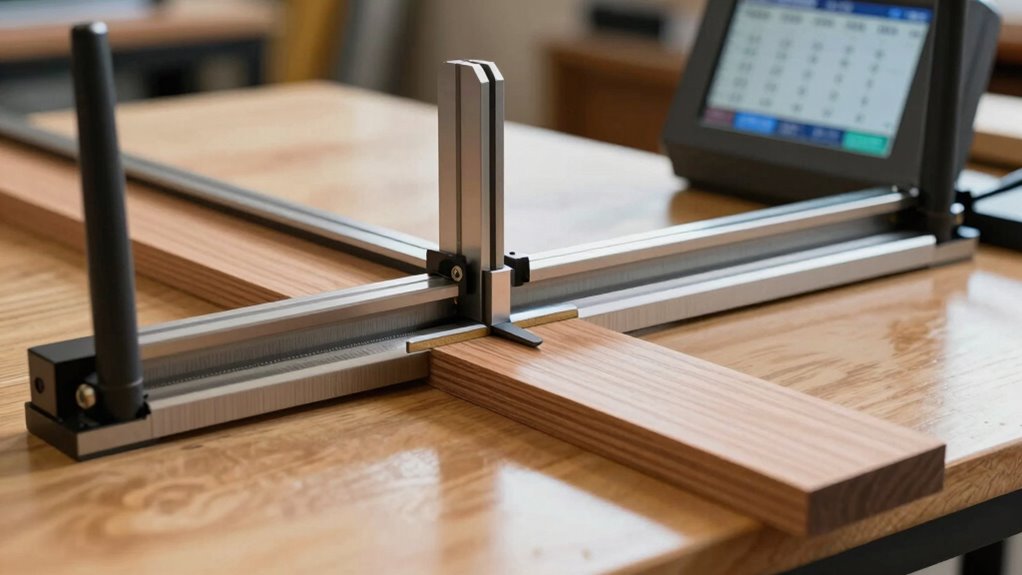
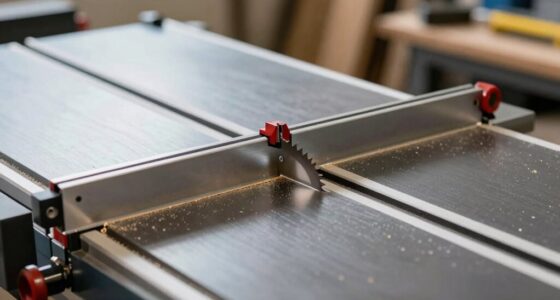
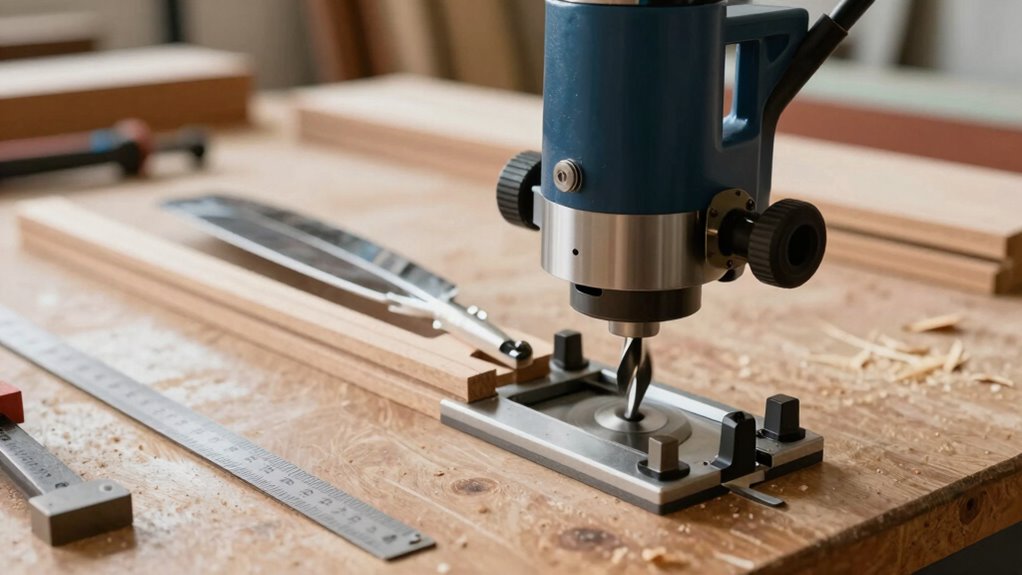
Router tables are essential tools for woodworkers seeking precision and consistency in their projects. When you invest in a good router table, you release the ability to make multiple cuts with remarkable uniformity. This consistency is especially important when you’re creating repeated pieces or intricate patterns, where even slight deviations can ruin the entire project. One of the main reasons router tables improve repeatability so much is that they provide a stable platform for your router, which minimizes wobbling and movement during cuts. This stability guarantees that your cutter remains aligned and steady, delivering cleaner, more precise cuts every time. With a well-designed router table, you can set your depth and fence positions once, then rely on those settings for multiple passes, drastically reducing the chance of errors. Additionally, cutter stability is a vital factor for achieving consistent results. When your router is mounted securely in a table, it’s less prone to vibrations and shifting, which can happen when you’re hand-routing. This stability allows you to focus on the cut itself, knowing that the tool is aligned exactly as you need it. As a result, your cuts are smoother, cleaner, and more uniform across multiple pieces. Additionally, many router tables come with adjustable fences and stops, so you can precisely control the position of your workpiece, further enhancing repeatability. Once you’ve dialed in your settings, you can produce the same cut again and again without having to readjust, saving you time and guaranteeing quality consistency. Effective clamping techniques also play a role in ensuring the workpiece remains securely in place, further supporting repeatability. Proper setup procedures are essential for maintaining accuracy throughout your project, ensuring your settings stay consistent. Dust collection is another significant advantage of using a router table, contributing indirectly to repeatability. When dust is effectively managed, your workspace stays cleaner, allowing you to see your work clearly and make more accurate adjustments. An effective dust collection system also helps to prevent dust buildup that could affect cut precision and the longevity of your tools. A good dust collection system reduces airborne debris that could settle on your workpiece or your tools, preventing buildup that might affect cut precision. Cleaner surfaces and clearer views mean you’re less likely to make mistakes or need to recalibrate your setup. Plus, with less dust clogging your tools, your router operates more smoothly, maintaining cutter stability over time. This consistent performance means you can trust your router to deliver the same results on each pass, reinforcing the repeatability that makes router tables so valuable, especially when considering tool longevity and overall efficiency.
router table with adjustable fence
As an affiliate, we earn on qualifying purchases.
As an affiliate, we earn on qualifying purchases.
Frequently Asked Questions
Can Router Tables Be Used for All Types of Woodworking Projects?
Router tables are versatile tools that can handle many woodworking projects, but they might not be suitable for all. Their versatility allows you to perform edge profiling, joinery, and decorative cuts efficiently. However, for large-scale or highly specialized tasks, you may need other equipment. Consider your project compatibility; if your work involves detailed shaping or consistent repeatability, a router table will serve you well, but always assess if it meets your specific needs.
How Do You Maintain Consistent Feed Rates on a Router Table?
To maintain consistent feed rates on a router table, you need to master cutting speed control. Keep your hands steady and push the workpiece smoothly, avoiding sudden movements. Use jigs or fixtures to guide the material consistently, and adjust your feed rate as needed. This steady approach guarantees feed rate consistency, reducing errors and producing cleaner, more precise cuts. Stay attentive, and your results will become remarkably reliable.
What Safety Precautions Should Be Taken When Using a Router Table?
When using a router table, you should wear safety gear like eye and ear protection to prevent injuries. Always guarantee dust collection is working properly to keep your workspace clean and prevent respiratory issues. Keep your hands clear of the cutting path, and use push sticks when necessary. Double-check that the router is unplugged before adjusting bits or making changes, and never operate the table without proper safety precautions in place.
Are There Specific Router Bits Recommended for Improved Repeatability?
For improved repeatability, you should choose router bits that offer better bit stability, such as carbide-tipped or solid steel bits designed for precision. Opt for bits with consistent diameter and sharp edges, which help maintain accurate cuts and reduce vibration. Proper bit selection guarantees stability during operation, leading to cleaner, more consistent results. Always match the bit type to your project to maximize safety and performance on your router table.
How Does the Size of the Router Table Affect Precision?
A larger router table acts like a sturdy foundation, enhancing router stability and precision. With more surface area, you gain better control, reducing vibrations and wobbling that compromise accuracy. A bigger table also offers greater support for larger workpieces, improving consistency in your cuts. So, as table size increases, your ability to make precise, repeatable cuts improves because stability and support are markedly enhanced.
As an affiliate, we earn on qualifying purchases.
Conclusion
Just like a seasoned conductor guarantees every note hits perfectly, a router table guides your cuts with unwavering precision. By improving repeatability, it transforms your woodworking from guesswork into craftsmanship. You’ll find that consistency becomes second nature, allowing you to focus on your creative vision rather than worrying about every cut. In the end, a router table isn’t just a tool—it’s your trusted partner, turning every project into a symphony of accuracy and quality.
As an affiliate, we earn on qualifying purchases.
router table with locking mechanisms
As an affiliate, we earn on qualifying purchases.
As an affiliate, we earn on qualifying purchases.
Halloween Picks
halloween
As an affiliate, we earn on qualifying purchases.