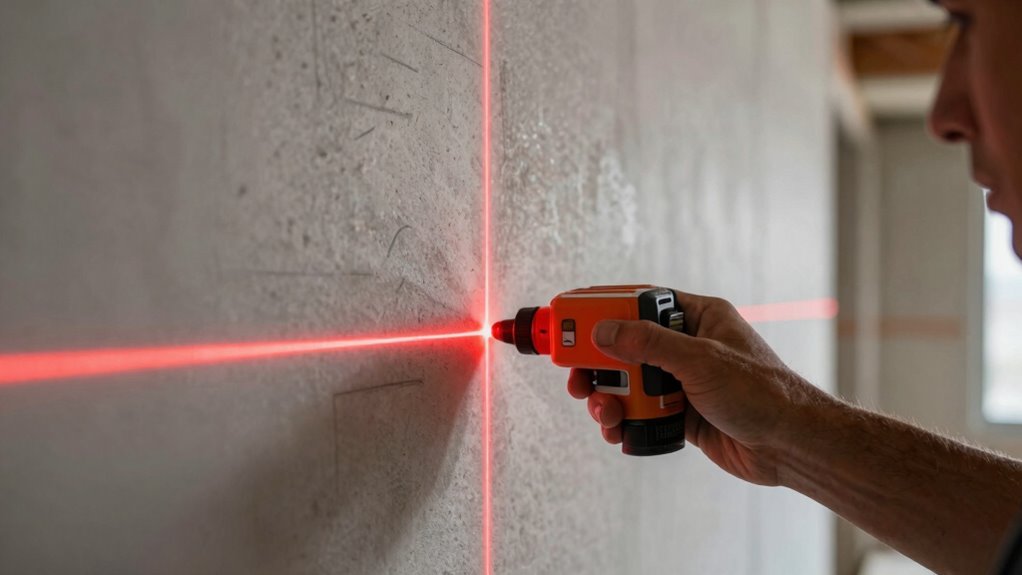

Laser levels save more rework than you might expect by providing precise measurements, quick setup, and consistent results, which help you avoid costly mistakes. They reduce human errors and guarantee your work stays on point, no matter the environment. This efficiency means projects get finished faster with fewer errors needing correction. If you continue exploring, you’ll discover how these tools can make your workflow smoother and boost your overall project quality.
Open a free Amazon Business account
Business pricing, bulk buying and tax-exempt orders.
As an affiliate, we earn on qualifying purchases.
Key Takeaways
- Laser levels provide consistent, highly accurate reference lines, reducing measurement errors that often lead to rework.
- They minimize human error and dependence on manual measurements, ensuring precise alignment over long distances.
- Faster setup and continuous reference lines streamline installation, decreasing the likelihood of mistakes requiring correction.
- Advanced features allow laser levels to adapt to various environments, maintaining accuracy and reducing project delays.
- Overall, their use enhances workflow efficiency, lowering rework rates and improving project quality.
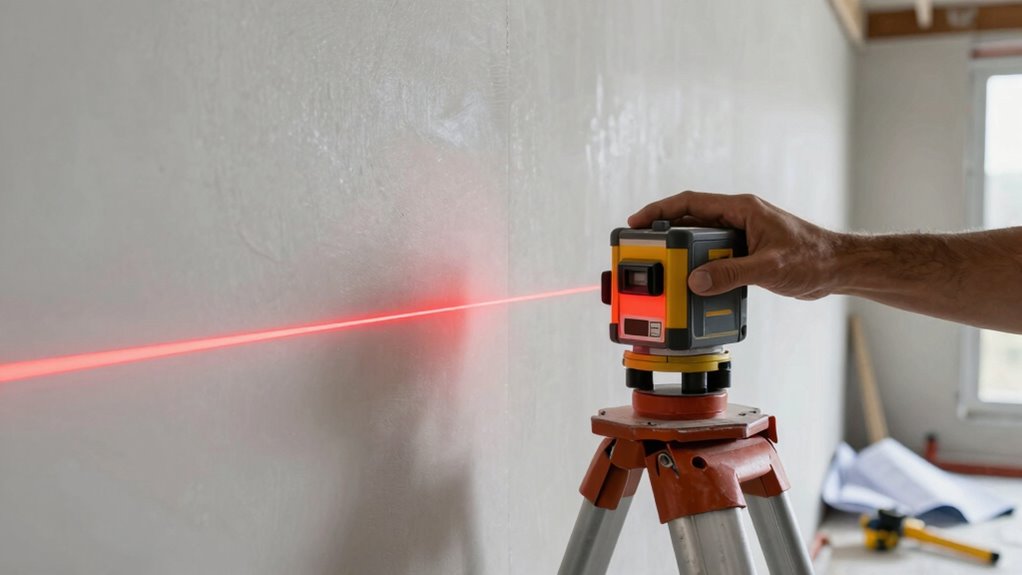
Laser levels have become essential tools on construction sites because they help guarantee accuracy and save time. When you’re working on aligning walls, ceilings, or fixtures, precision accuracy is critical. A laser level ensures your measurements are exact, reducing errors that can lead to costly rework later. Instead of relying on traditional methods like chalk lines or plumb bobs, which can be prone to human error, you get a clear, consistent line of sight that’s easy to see even from a distance. This accuracy streamlines your process, giving you confidence in your measurements and minimizing mistakes.
Laser levels ensure precise measurements, reduce errors, and streamline alignment for faster, more accurate construction work.
One of the biggest advantages of laser levels is their ability to improve installation speed. You can set up the device once, and it provides a continuous reference line or point, allowing you to work faster and more efficiently. This rapid setup cuts down on time spent double-checking measurements or readjusting tools. When you’re installing tiles, cabinetry, or drywall, that quick, reliable reference translates directly into faster progress, fewer interruptions, and a smoother workflow. The faster you work with precision, the less chance there is for errors that require rework. Additionally, industry standards emphasize the importance of precision, and laser levels help meet these benchmarks consistently.
Using a laser level also minimizes manual measurement errors, which are often inconsistent. Human error creeps in when measuring by hand, especially over long distances or in less-than-ideal lighting conditions. With a laser level, you get consistent, repeatable results, regardless of the operator’s skill level. This consistency leads to better quality work and fewer mistakes that need correction later. It’s no exaggeration to say that laser levels not only increase your installation speed but also markedly improve the precision accuracy of your job, making rework less likely and your workflow more efficient. Incorporating advanced technology further enhances their reliability and ease of use in various environments. Additionally, understanding how different laser levels operate and choosing the right one for your project can maximize these benefits. Recognizing the role of technological advancements in this field can help you leverage new features that improve overall performance.
In the end, using laser levels isn’t just about speed or accuracy; it’s about creating a smoother, more reliable construction process. When you leverage their precision and efficiency, you reduce the chances of rework, saving you time, money, and frustration.
As an affiliate, we earn on qualifying purchases.
Frequently Asked Questions
How Long Do Laser Levels Typically Last Before Needing Replacement?
Laser levels typically last around 2 to 5 years before needing replacement, depending on usage. The battery life considerably impacts this, with many models offering several hours of continuous use. Keep an eye on the projection range as well; a longer range often means more power consumption. Proper maintenance and replacing batteries when needed can extend your laser level’s lifespan, ensuring accurate measurements and fewer reworks.
Are Laser Levels Suitable for Outdoor Construction Environments?
Imagine you’re working on an outdoor project, and a laser level with weather resistance and a long visibility range keeps your alignment accurate despite rain or bright sunlight. Laser levels are highly suitable for outdoor construction environments because they’re designed to withstand harsh weather conditions and provide clear visibility over large distances. This reliability helps you avoid rework caused by misalignments, saving time and effort on your building site.
What Safety Precautions Should Be Taken When Using Laser Levels?
When using laser levels, you should prioritize laser safety by avoiding direct eye exposure to the laser beam. Always wear protective gear, such as laser safety glasses, to shield your eyes from potential harm. Keep the laser level on stable surfaces and mark off the work area to prevent others from accidentally looking into the beam. Following these precautions guarantees safe and effective use of your laser level.
Can Laser Levels Be Used for Both Vertical and Horizontal Alignments?
Yes, laser levels can be used for both vertical and horizontal alignments. They’re essential for laser alignment tasks, providing precise guidance across various projects. You’ll find that their vertical accuracy guarantees your lines are straight and level, whether you’re hanging shelves or installing tiles. By switching modes, you can easily achieve accurate vertical or horizontal alignment, saving time and reducing rework, which is why they’re a must-have for many construction and interior tasks.
Do Laser Levels Require Calibration or Regular Maintenance?
You’ll find that laser levels generally maintain their accuracy well, but occasional calibration helps guarantee peak performance. While they don’t demand frequent attention, it’s wise to check calibration frequency every few months or after rough handling. This simple step keeps your laser level’s accuracy reliable, reducing errors and rework. Regular maintenance, like cleaning the lenses, also helps prolong the device’s lifespan and ensures your projects stay on track.
As an affiliate, we earn on qualifying purchases.
Conclusion
Imagine you’re building a house, and a tiny misalignment causes weeks of costly rework. That’s where laser levels step in—they’re your silent heroes, catching errors early and saving you from costly setbacks. Think of them as your trusty compass in a sea of chaos, guiding you straight to success. When you invest in laser levels, you’re not just saving time and money—you’re safeguarding your peace of mind and craftsmanship’s integrity.
As an affiliate, we earn on qualifying purchases.
As an affiliate, we earn on qualifying purchases.
Flea & tick season Picks
flea and tick prevention
As an affiliate, we earn on qualifying purchases.