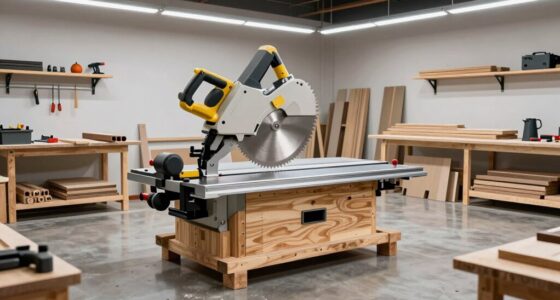
Many beginners confuse a miter saw’s capacity because they mix up the maximum cut width or length with the cut depth. They often assume capacity refers to how deep or high a cut can go, which isn’t accurate. This misunderstanding can lead to choosing the wrong blade or pushing the saw beyond its limits. To avoid these mistakes, it’s helpful to understand what capacity actually means. Keep exploring to learn how to make the most of your saw’s capabilities.
Listen free for 30 days with Audible
Thousands of audiobooks and originals — cancel anytime.
As an affiliate, we earn on qualifying purchases.
Key Takeaways
- Beginners often confuse maximum cut width with cut depth, leading to misinterpretation of capacity.
- Focus on a single measurement, like width, causes neglect of other capacity factors such as height and angle.
- Different blade types and sizes affect actual cutting capacity, which beginners may not fully understand.
- Misreading manufacturer specifications and manuals can cause incorrect assumptions about saw limits.
- Safety concerns and guidelines are overlooked, prompting users to push beyond true capacity unintentionally.

If you’re new to woodworking, understanding the capacity of a miter saw is vital for completing your projects efficiently. Many beginners often misread or underestimate the saw’s capacity, leading to mistakes and frustration. One common reason is that the term “capacity” can be confusing if you’re not familiar with how it’s measured or what factors influence it. Miter saw capacity typically refers to the maximum width or length it can cut, but it’s easy to assume this means the depth or height of cuts, which isn’t always accurate. This misunderstanding can cause you to select a saw that seems suitable but actually isn’t for your specific project needs.
Understanding miter saw capacity is essential to avoid mistakes and choose the right tool for your project.
Another reason beginners misread capacity is because they focus solely on one measurement—like the crosscut width—without considering other essential details. For example, the blade type plays a significant role in what cuts you can make. A larger blade might cut wider materials, but it could also require more clearance and might limit the saw’s ability to make precise angled cuts. Additionally, safety precautions are often overlooked during initial use. If you’re not fully aware of the safety guidelines, you might push the saw beyond its true capacity, risking accidents or damaging the equipment. Understanding your saw’s safety precautions not only helps prevent injuries but also guarantees you use the saw within its intended limits.
Beginners also tend to overlook the impact of blade types on capacity. Different blades—such as standard, fine-tooth, or carbide-tipped blades—have unique characteristics that influence how deep or wide you can cut. For instance, a blade with a larger diameter might seem to increase capacity, but it also requires more space and may reduce the precision of angled cuts. Recognizing these differences helps you better interpret your saw’s actual capacity, rather than relying solely on manufacturer specifications or assumptions. Moreover, blade compatibility is crucial to ensure your chosen blade does not interfere with the saw’s operation or safety.
Finally, many beginners underestimate the importance of reading the user manual thoroughly. The manual provides detailed information about the saw’s capacity, safety precautions, and blade compatibility. Without this knowledge, it’s easy to misjudge what your miter saw can handle, leading to cutting errors or safety hazards. Taking the time to understand your miter saw’s true capacity and the various factors that influence it guarantees you work safely, efficiently, and with confidence. Additionally, understanding measurement guidelines can help you make more accurate cuts and select the right tools for your projects. It’s also beneficial to familiarize yourself with blade specifications to ensure compatibility and optimal performance. Remember, a clear understanding of capacity, safety, and blade types makes all the difference as you develop your woodworking skills.
As an affiliate, we earn on qualifying purchases.
Frequently Asked Questions
Can Miter Saw Capacity Vary Between Brands?
Yes, miter saw capacity can vary between brands due to differences in design and manufacturing. Brand consistency in how capacity measurement is determined is often lacking, which can lead to confusion. You should always check the specific capacity specifications for each brand and model, as they may measure capacity differently or have unique limitations. This helps you choose the right saw for your cutting needs and avoids surprises during projects.
How Often Should I Calibrate My Miter Saw?
You should calibrate your miter saw regularly, ideally every few months or whenever you notice inaccuracies, to guarantee proper alignment. Calibration frequency depends on how often you use the saw and the intensity of your projects. Regular checks help maintain precision, prevent miscuts, and extend your tool’s lifespan. By staying consistent with calibration, you guarantee your cuts stay accurate and your projects turn out just right.
Does Blade Size Affect Cutting Capacity?
Yes, blade size directly affects your miter saw’s cutting capacity. Larger blades, like 10 or 12 inches, allow you to cut thicker or wider materials, but they also require compatible blade suitability. Keep in mind, your cutting angle can influence how much material you can cut, especially at steeper angles. Always check your saw’s specifications to guarantee your blade size and cutting angle align for safe, effective cuts.
Can I Cut Metal With a Miter Saw?
Yes, you can cut metal with a miter saw, but only if it’s specifically designed for metal cutting or you have the right blade compatibility. Using a blade made for metal ensures clean cuts and safety. Make certain to select a blade with the proper material and teeth count for metal, and always follow safety guidelines. Keep in mind, not all miter saws are suitable for metal cutting, so check your saw’s specifications.
What Safety Features Influence Capacity Limits?
Safety features like blade guards and dust collection influence miter saw capacity limits by ensuring safe operation during cuts. Blade guards prevent accidental contact with the blade, allowing you to cut confidently within the saw’s capacity. Dust collection systems improve visibility and reduce hazards, helping you make precise cuts without exceeding the saw’s limits. These features help you operate safely while respecting the miter saw’s capacity, preventing damage or accidents.
best miter saw blades for accurate cuts
As an affiliate, we earn on qualifying purchases.
As an affiliate, we earn on qualifying purchases.
Conclusion
Mastering miter saw measurements might seem tricky at first, but don’t let misunderstanding muddle your motivation. With a little practice and patience, you’ll perfect your precision and prevent pesky misreads. Remember, staying mindful of the limits and learning the lines will lead to better, bigger projects without blunders. Keep curious, stay committed, and your carpentry skills will confidently climb, creating craftsmanship that’s both clever and compelling. Keep cutting, and enjoy your woodworking journey!
As an affiliate, we earn on qualifying purchases.
miter saw manual and specifications
As an affiliate, we earn on qualifying purchases.
As an affiliate, we earn on qualifying purchases.
Flea & tick season Picks
flea and tick prevention
As an affiliate, we earn on qualifying purchases.