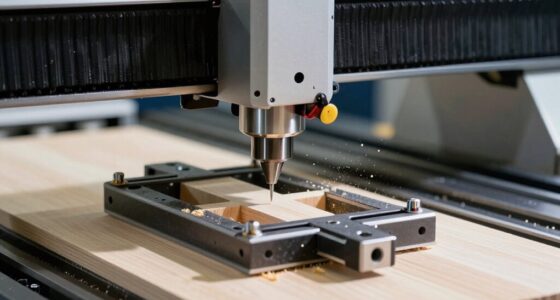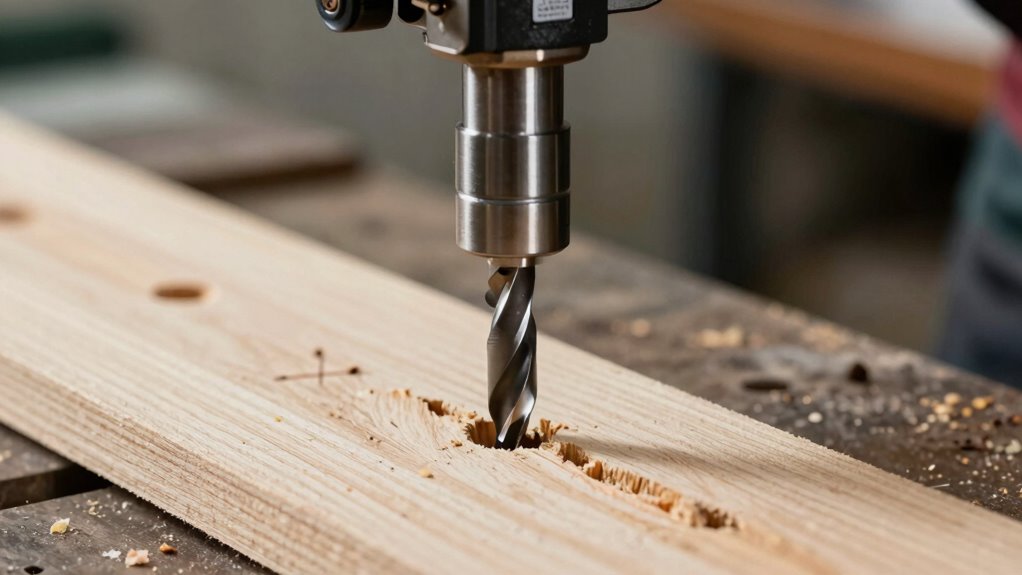
Wobble in your drill press causes uneven holes and poor precision. This often happens when your bit isn’t tightly secured, misaligned, or dull, leading to instability. Using a bit that’s worn or improperly installed, along with insufficient motor power or improper speeds, increases vibration. To improve your results, confirm your bits are sharp, properly tightened, and suited for your material. Keep these tips in mind, and you’ll discover how to minimize wobble and achieve better holes.

Get school and study supplies delivered free — and shop member deals
- Fast, free delivery on millions of items
- Access to Prime Big Deal Days deals on October 6–7
- Prime Video, Amazon Music and more included
Key Takeaways
- Wobbling bits cause uneven holes and reduce precision during drilling.
- Dull or damaged bits lead to instability and wobble, ruining hole quality.
- Improperly secured or misaligned bits in the chuck increase wobble and inaccuracy.
- Insufficient motor power struggles with dense materials, causing vibrations and wobble.
- Using the correct speed and technique minimizes vibrations, ensuring cleaner, more accurate holes.
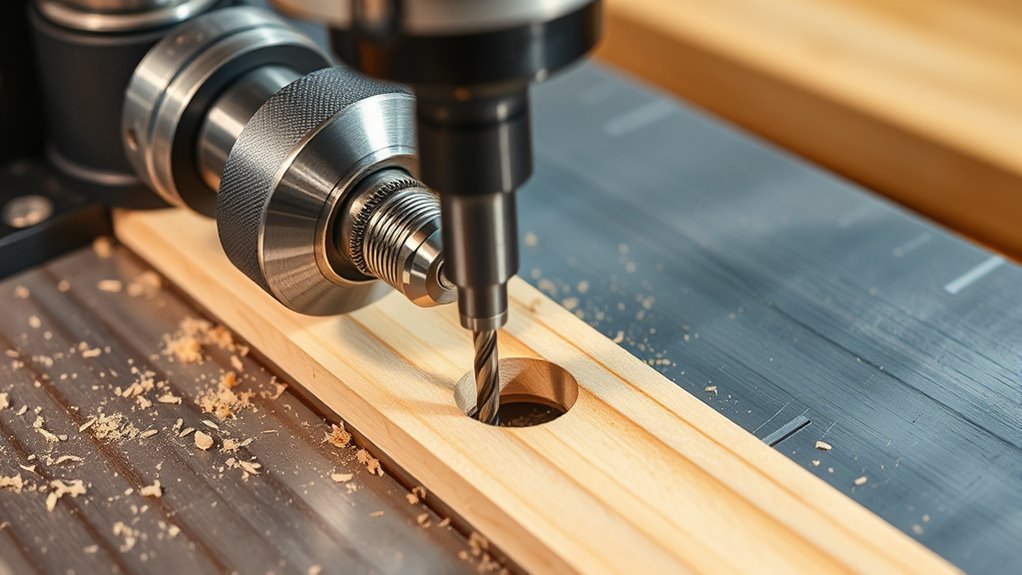
Have you ever wondered how to make precise holes in wood, metal, or plastic? Achieving clean, accurate results depends heavily on your drill press setup and technique. One of the most common issues that ruins those perfect holes is wobbling, which can stem from a variety of factors. To prevent wobble and ensure your projects turn out just right, you need to pay attention to the details that influence bit accuracy and motor power.
First, consider the importance of bit accuracy. When selecting a drill bit, make sure it’s sharp and suited for the material you’re working with. Dull or mismatched bits tend to wobble because they don’t cut smoothly, causing the hole to become uneven or enlarged. Also, inspect the bit shank for any damage or burrs that could prevent it from sitting perfectly in the chuck. A loose or bent bit will wobble during operation, leading to sloppy holes. Properly aligning the bit in the chuck is equally vital; tighten it securely and double-check that it’s centered. When the bit is seated correctly, it maintains stability, reducing the chances of wobble and ensuring that each hole is precise.
Motor power plays a pivotal role in controlling wobble and maintaining bit accuracy. A drill press with insufficient motor power struggles to cut through tough materials smoothly, often causing the bit to vibrate or wobble. This is especially true when drilling into dense wood, thick metal, or rigid plastics. If your motor isn’t strong enough, the bit can bind or flex under pressure, resulting in crooked holes. Upgrading to a drill press with higher motor power provides more torque, allowing you to apply consistent pressure without sacrificing stability. With a more powerful motor, you can also run the drill at appropriate speeds for each material, reducing the risk of overheating or burning the bit, which can compromise bit integrity and accuracy. Additionally, motor efficiency can influence how well your drill maintains consistent performance over extended use.
Additionally, controlling the feed rate and speed of your drill press influences how well the bit maintains accuracy. Using the correct speed setting for your material minimizes stress on the bit and prevents wobbling caused by excessive vibration. When you combine a sturdy, high-powered motor with sharp, well-maintained bits, you create a stable environment that greatly diminishes the chances of wobble ruining your holes.
As an affiliate, we earn on qualifying purchases.
Frequently Asked Questions
How Does Wobble Affect the Lifespan of Drill Bits?
Wobble considerably shortens your drill bits’ lifespan because it causes uneven bit wear, leading to faster dulling and potential breakage. When you drill with wobble, the bit experiences unnecessary stress, reducing drill longevity. This uneven wear not only damages the bit but also compromises hole precision. To extend your drill bits’ life, verify your drill press is properly aligned, and avoid excessive wobble during operation.
Can Wobble Be Completely Eliminated With Proper Setup?
Imagine a perfectly aligned dance partner—your drill press—gliding smoothly through your work. With precise drill press alignment and careful chuck tightening, you can nearly eliminate wobble. While absolute perfection is tough, meticulous setup minimizes it, leading to cleaner holes. Keep checking your alignment, tighten your chuck securely, and stay attentive. These steps make wobble a distant memory, ensuring your drill press performs at its best.
What Safety Precautions Should I Take When Fixing Wobble?
When fixing wobble, you should wear protective gear like safety goggles and gloves to shield yourself from debris. Make certain your workspace is well-organized, keeping tools and materials tidy to prevent accidents. Secure the drill press firmly and double-check that the chuck and bit are properly aligned. Avoid distractions and work at a controlled speed. These precautions help keep you safe and ensure precise, wobble-free drilling.
Does Drill Press Wobble Impact the Precision of Finished Projects?
A wobble in your drill press can turn your project into a shaky foundation, directly impacting drill accuracy and hole quality. When the drill isn’t steady, holes become uneven, and precision suffers, like a ship tossed by turbulent waves. To guarantee your finished projects are smooth sailing, fix the wobble promptly. This keeps your holes true and your work impeccable, giving you confidence in every cut you make.
Are There Specific Drill Press Models Less Prone to Wobble?
Yes, some drill press models are less prone to wobble due to better stability features. Look for models with reinforced columns, heavy bases, and precision-machined spindles, which enhance stability. To further reduce wobble, apply wobble mitigation techniques like aligning the table properly, ensuring the drill bit is sharp, and tightening all fittings securely. These steps help you achieve cleaner, more accurate holes with less wobble.
sharp drill bits for metal and wood
As an affiliate, we earn on qualifying purchases.
As an affiliate, we earn on qualifying purchases.
Conclusion
So, next time your drill press wobbles, don’t pretend it’s just a quirky feature. Remember, precision isn’t just for perfectionists; it’s for anyone who values their sanity—and their holes. Wobbling isn’t charming; it’s chaos disguised as character. Fix that jiggle before your project turns into a modern art sculpture. Keep your holes straight, your work clean, and your patience intact. Because, honestly, wobbling drills are just a fancy way of saying, “I didn’t bother.”
As an affiliate, we earn on qualifying purchases.
As an affiliate, we earn on qualifying purchases.
Halloween Picks
halloween
As an affiliate, we earn on qualifying purchases.