
Sealants and adhesives serve different purposes and shouldn’t be mixed up. Sealants are flexible materials that block moisture, air, and debris, ideal for filling gaps and allowing movement. Adhesives, on the other hand, create strong, durable bonds by chemically sticking surfaces together. Using the wrong product can cause failures or damage. Understanding these differences helps make better choices, and if you keep exploring, you’ll discover how to select the right material for each project.
Key Takeaways
- Sealants are flexible, waterproof barriers; adhesives are rigid, durable bonds—use them for their intended purposes.
- Sealants accommodate movement and gaps; adhesives provide strong, permanent bonds between surfaces.
- Choosing the right product depends on surface type, environmental conditions, and whether sealing or bonding is needed.
- Mixing sealants and adhesives can cause chemical reactions, compromising performance and durability.
- Always select and apply each material separately according to manufacturer instructions for optimal results.

GE Advanced Silicone Caulk for Kitchen & Bathroom, Clear, 2.8 fl oz Tube, 1 Pack – 100% Waterproof Silicone Sealant, 5X Stronger Adhesion, Shrink & Crack Proof
- Waterproof Protection: Provides reliable waterproof seal
- Flexible and Durable: Remains flexible to adapt to surfaces
- Fast Water Resistance: Becomes water-resistant in 30 minutes
As an affiliate, we earn on qualifying purchases.
As an affiliate, we earn on qualifying purchases.
What Are Sealants and Adhesives? A Quick Overview
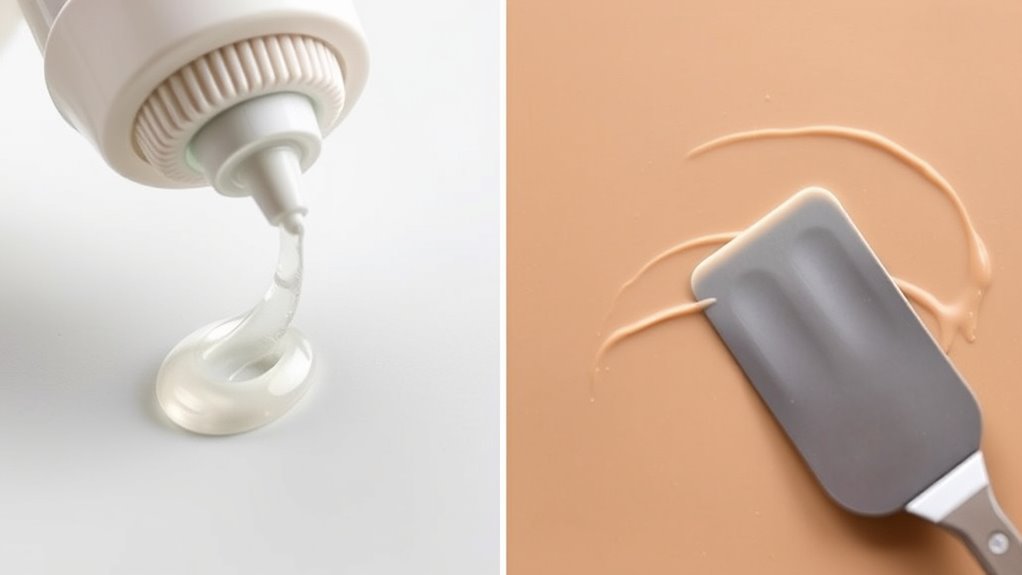
Have you ever wondered what exactly separates sealants from adhesives? The key difference resides in their purpose and properties. Sealants are designed to block out moisture, air, or debris, providing a protective barrier. Adhesives, on the other hand, create a strong bond between surfaces, holding them together. Bond strength varies between the two; adhesives typically have higher bond strength to ensure durability. Curing time also plays a role—sealants generally cure quickly to form a flexible seal, while adhesives may require longer to reach maximum strength. Both are formulated differently to suit their specific functions, but understanding these distinctions helps you choose the right product for your project. Additionally, selecting energy-efficient sealants and adhesives aligns with sustainable practices and promotes environmentally friendly solutions.

Liquid Nails 10 oz Heavy Duty Construction Adhesive
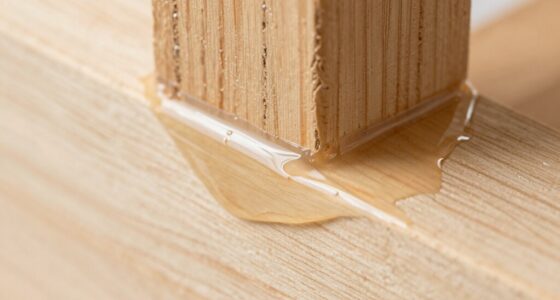
- Strong, Lasting Bond: Creates permanent interior and exterior bonds
- Waterproof & Weatherproof: Resistant to moisture, humidity, and temperature changes
- Universal Material Compatibility: Bonds wood, drywall, brick, concrete, and more
As an affiliate, we earn on qualifying purchases.
As an affiliate, we earn on qualifying purchases.
How Do Sealants and Adhesives Differ in Composition and Use
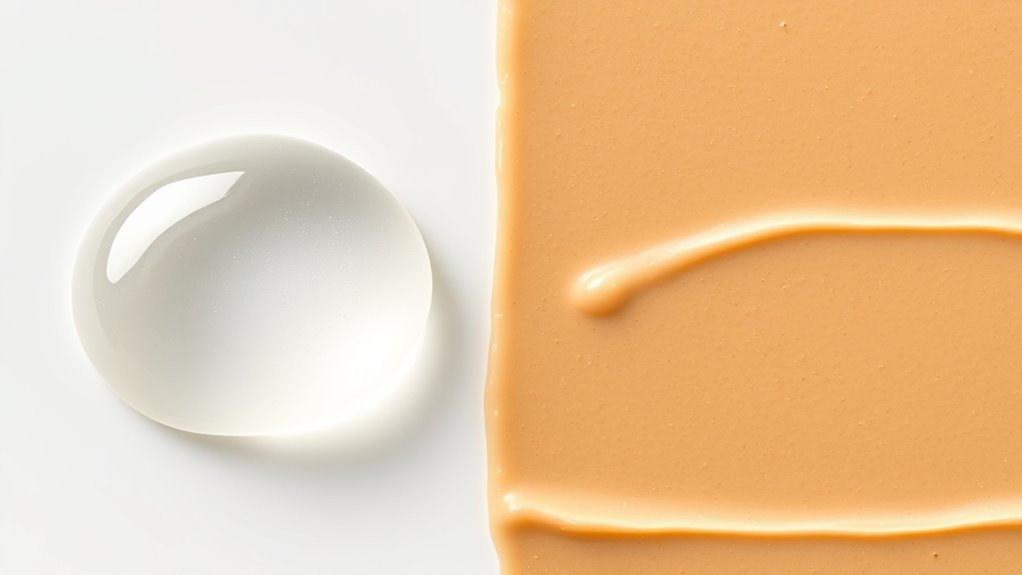
Sealants and adhesives differ markedly in their composition, reflecting their distinct functions. Sealants typically have flexible, elastic chemical properties that allow them to seal gaps and prevent leaks. They often contain polymers like silicone or acrylic, which provide durability and weather resistance. Adhesives, on the other hand, are formulated for strong bonding, with chemical properties that enable them to create durable bonds between surfaces. Their bonding mechanisms involve chemical reactions, such as curing or polymerization, that form a rigid, lasting connection. While sealants prioritize sealing and flexibility, adhesives focus on strength and permanence. Understanding these differences helps you choose the right material for your project, ensuring ideal performance based on their chemical properties and bonding mechanisms. Additionally, cybersecurity measures are crucial when working with digital projects to protect your data and ensure safety.

DAP Alex Plus Acrylic Latex Caulk, White, 10.1 Oz (7079818152)
- Surface Compatibility: Strong multi-surface adhesion
- Paint Compatibility: Paintable without discoloration
- Formula Type: Siliconized acrylic for flexibility
As an affiliate, we earn on qualifying purchases.
As an affiliate, we earn on qualifying purchases.
What Are Common Types of Sealants and When to Use Them
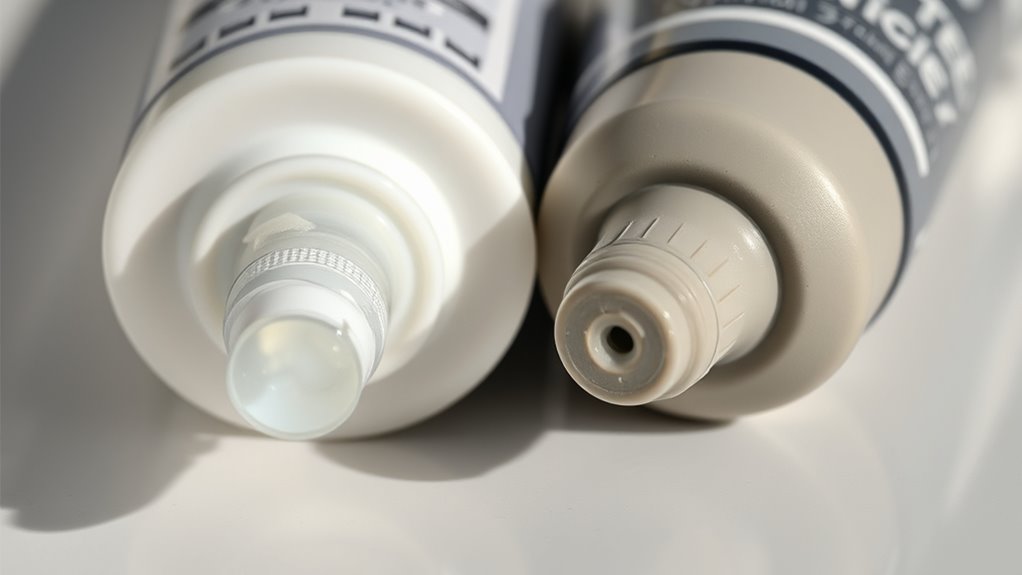
What are some common types of sealants, and how do you know which one to use? Choosing the right sealant depends on your waterproofing options and chemical properties. Here are four main types:
- Silicone Sealants – Ideal for waterproofing around windows and bathrooms due to excellent flexibility and weather resistance.
- Polyurethane Sealants – Great for broader applications like joints in concrete or wood, offering strong adhesion and durability.
- Acrylic Sealants – Perfect for interior gaps, easy to apply, and paintable, but less resistant to water.
- Butyl Sealants – Suitable for roofing and waterproofing large surfaces, providing a reliable waterproof barrier.
Match the sealant’s chemical properties to your project needs for best performance. Understanding the science behind these materials can help you make more informed choices for your sealing projects.

SIKA – Sealant – Sikaflex Concrete Fix – Limestone – Elastic sealant for Cracks and Joints – Paintable Polyurethane – 10.1 fl oz
- Seals Cracks and Joints: Elastic sealant with ±35% movement range
- Universal Material Compatibility: Adheres to concrete, brick, stucco, and more
- Easy Application: Fits most applicator guns for convenience
As an affiliate, we earn on qualifying purchases.
As an affiliate, we earn on qualifying purchases.
Which Adhesives Are Best for Different Projects
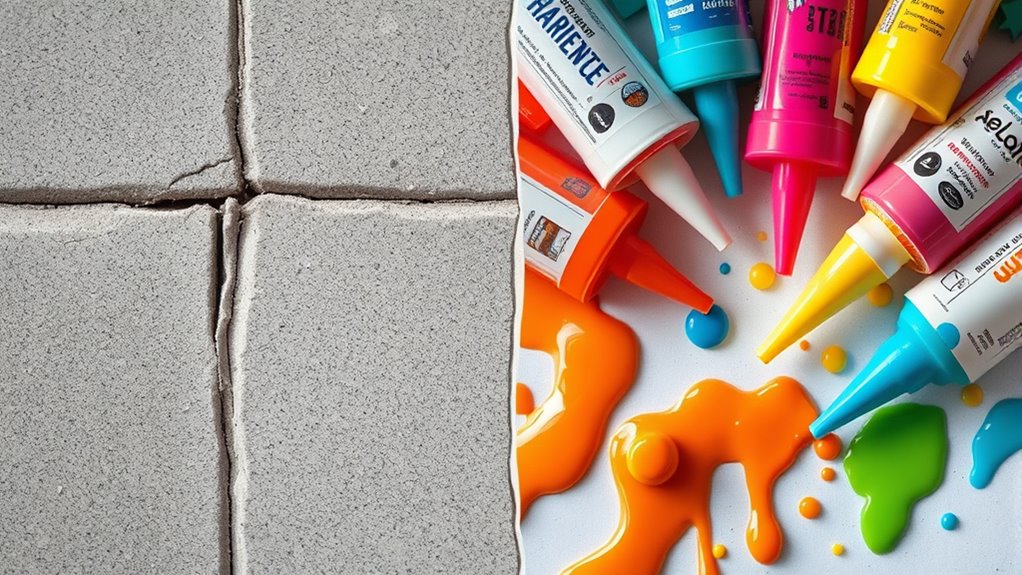
Choosing the right adhesive depends on your specific project needs. Different types work better for materials like wood, metal, or plastic, so knowing which to use can save you time and effort. Let’s explore some recommended adhesive types and tips for selecting the best one for each task. Proper adhesive selection is essential for achieving durable and high-quality results in any project.
Recommended Adhesive Types
Selecting the right adhesive depends on your specific project needs, as different tasks require different bonding strengths, materials, and curing times. For ideal results, consider adhesives that excel in chemical bonding and curing processes. Here are some recommended types:
- Epoxy – Offers strong chemical bonding, ideal for heavy-duty repairs and bonding metal or plastic.
- Cyanoacrylate (Super Glue) – Provides quick curing and excellent bond strength for small, precise tasks.
- Polyurethane – Flexible and moisture-resistant, suitable for woodworking and outdoor projects.
- Hot Glue – Fast curing with moderate strength, perfect for crafts and light materials.
Choosing the right type ensures durability and a proper bond tailored to your project’s materials and requirements.
Project-Specific Adhesive Tips
Different projects demand different adhesive solutions to guarantee strong, durable bonds. To choose the right adhesive, consider application safety—work in well-ventilated areas and wear protective gear. For example, epoxy adhesives are great for heavy-duty repairs but require careful handling. When using glue on delicate surfaces, opt for less aggressive options like craft glues. Proper storage tips are essential; keep adhesives tightly sealed and stored in cool, dry places to prevent spoilage and ensure effectiveness. Always follow manufacturer instructions for application safety to avoid mishaps. Selecting the appropriate adhesive for your project not only improves results but also enhances safety during use. Additionally, understanding premium craftsmanship can help you choose adhesives that complement high-end materials and finishes. Keep these tips in mind, and you’ll achieve better, longer-lasting bonds tailored to each project’s needs.
How Do Sealants and Adhesives Differ in Application and Performance
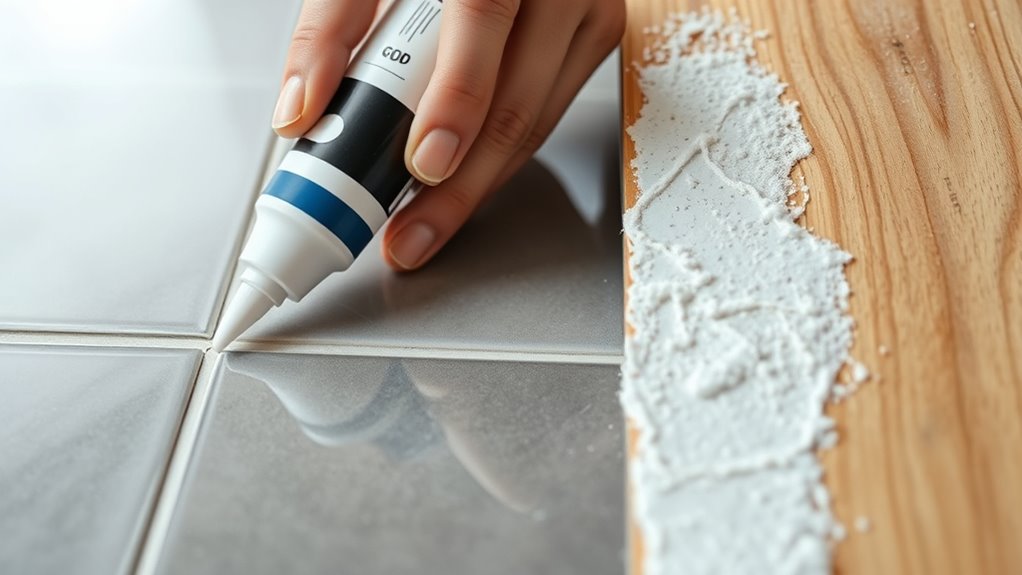
Sealants and adhesives serve distinct roles in construction and repair, and their application methods reflect these differences. Sealants typically have flexible chemical properties that allow them to fill gaps and accommodate movement, making application techniques straightforward—usually involving extrusion from a tube or gun. Adhesives, on the other hand, possess stronger bonding capabilities and require precise application to ensure a secure hold. For example, understanding the chemical properties of each product helps determine whether a material will remain flexible or become rigid after curing.
Why Using the Wrong Product Can Cause Problems
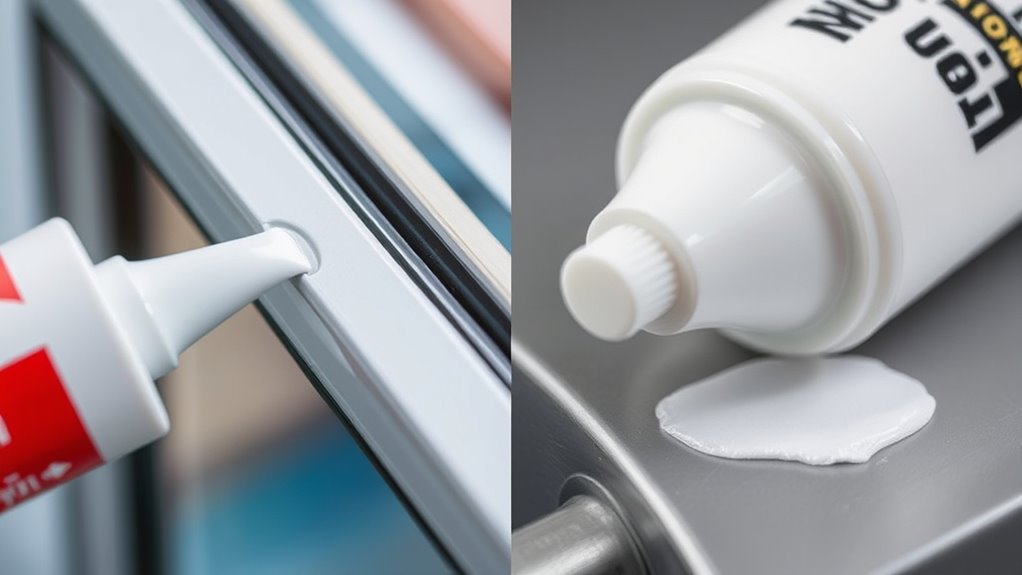
Using the wrong product for a specific task can lead to significant problems, such as compromised durability, ineffective sealing, or weak bonding. Sealants and adhesives undergo different chemical reactions during curing, which affects their performance and longevity. When you choose the wrong material, these reactions may not occur properly, leading to incomplete curing times or weak adhesion. For example, a sealant designed for flexibility might not bond well with a surface that requires a rigid adhesive, causing failure over time. Additionally, incompatible products can cause chemical reactions that degrade materials or produce harmful fumes. Proper application techniques and understanding the specific uses of each product are essential for success. To avoid these issues, select the right product for your application, considering curing times and chemical interactions, ensuring a strong, lasting bond or seal.
How to Spot Sealants Vs Adhesives by Sight and Feel
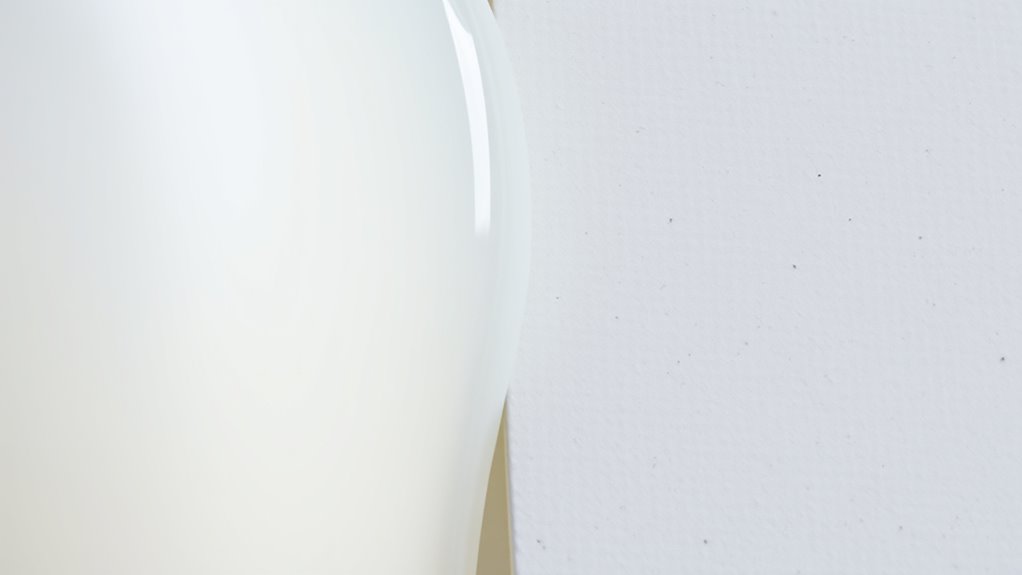
Have you ever wondered how to tell a sealant from an adhesive just by looking and feeling? You can often distinguish them through visual texture and color differences. Here are four tips:
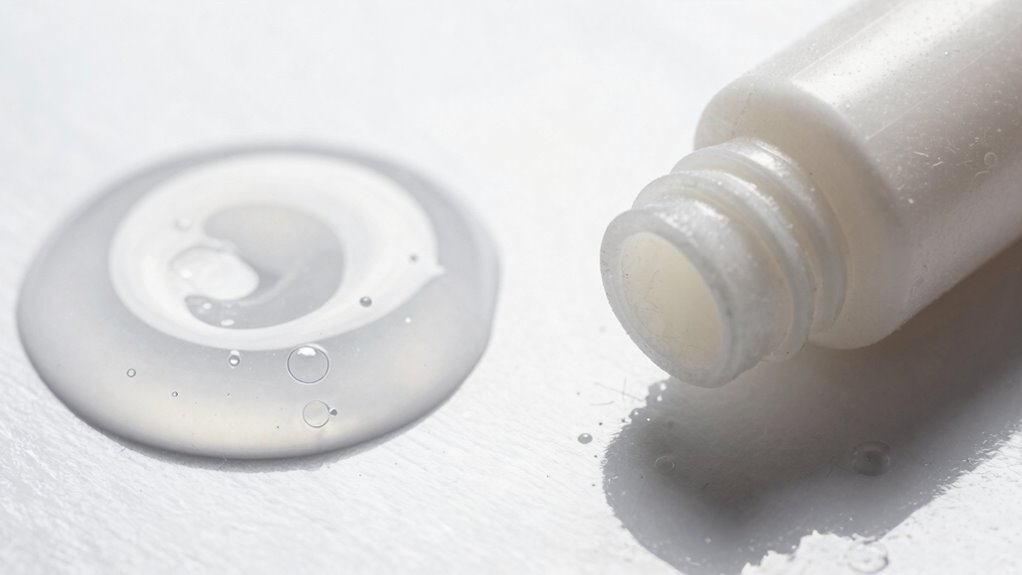
- Check the color—sealants tend to be neutral or clear, while adhesives are usually more opaque or colored.
- Feel the consistency—sealants are often smooth, stretchy, and tacky, whereas adhesives may feel firmer or glue-like.
- Observe the texture—sealants have a bead-like, rubbery surface, while adhesives can be more viscous or sticky.
- Look at the surface finish—sealants generally form a glossy, flexible layer, unlike the often thicker, less flexible adhesive layers.
- Understanding the testing methodologies used to differentiate these materials can help ensure you select the right product for your project.
Tips for Picking the Right Sealant or Adhesive
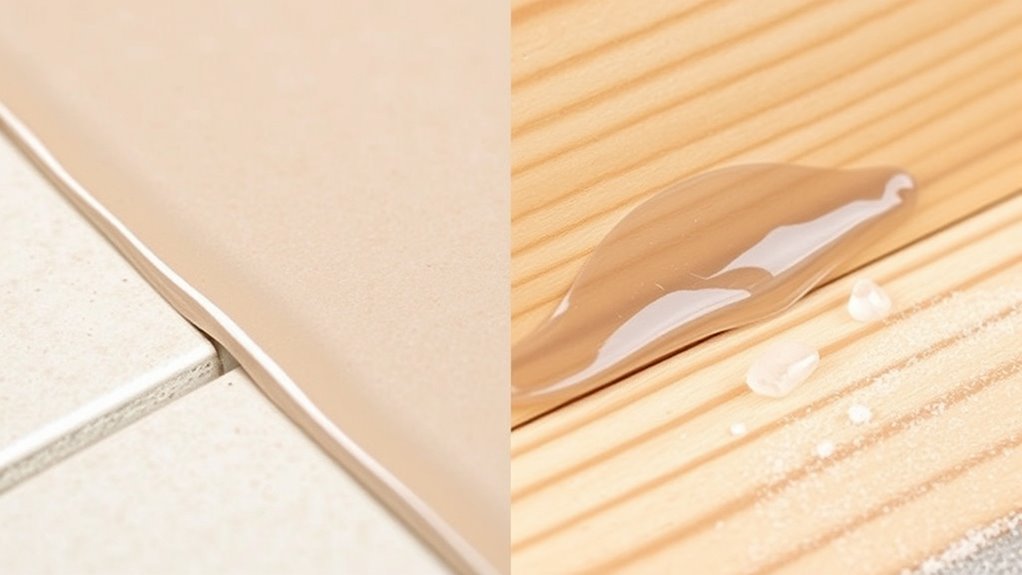
When choosing a sealant or adhesive, consider the surface you’ll be working with to guarantee compatibility. Think about environmental conditions like moisture, temperature, and exposure to elements, as they can affect performance. Picking the right product means matching these factors to get the best, long-lasting bond or seal. Additionally, understanding the specific properties of essential oils can help you select materials that resist microbial growth and maintain their integrity over time.
Surface Compatibility Considerations
Choosing the right sealant or adhesive depends heavily on the surfaces you plan to bond or seal. Surface compatibility is vital for achieving maximum bond strength. To guarantee success, consider these factors:
- Surface Material: Check if your surfaces are porous or non-porous, as some adhesives work better on certain materials.
- Surface Preparation: Clean and dry surfaces thoroughly to remove dust, grease, or moisture that can weaken the bond.
- Compatibility: Verify that the sealant or adhesive is suitable for your specific materials, avoiding chemical reactions.
- Bond Strength Requirements: Match the product’s strength to your project’s demands, ensuring durability and longevity.
Proper surface preparation and selecting compatible products will improve bond strength and overall performance.
Environmental Conditions Impact
Environmental conditions play a essential role in selecting the right sealant or adhesive, as factors like temperature, humidity, and exposure to elements can considerably affect adhesion and durability. For instance, moisture sensitivity is critical if you’re working in humid areas—some adhesives may fail if moisture is high. Environmental durability also matters; outdoor applications require products resistant to UV rays, temperature fluctuations, and water. Additionally, understanding dark psychology tactics can help you recognize manipulation attempts that might influence your choices in demanding environments. Choosing a product suited to your environment ensures long-lasting bonds and prevents premature failure. Always consider these conditions before making your selection.
When Should You Call in a Professional
If you’re unsure whether a sealant or adhesive project is beyond your skill level, it’s best to call in a professional. DIY pitfalls can lead to poor results, wasted materials, or safety hazards. Knowing when to seek help guarantees the job is done correctly and safely. Consider calling a pro if:
- The project involves structural repairs or load-bearing surfaces.
- You’re unfamiliar with the specific safety precautions for chemicals involved.
- The damaged area is hard to access or requires specialized tools.
- Previous attempts resulted in poor adhesion or leaks.
Recognizing these signs can save you time, money, and potential injury. Trusting a professional guarantees proper application, especially when safety precautions are critical or the task exceeds your expertise. Don’t risk making costly mistakes—know when to call in an expert.
Frequently Asked Questions
Can Sealants and Adhesives Be Used Interchangeably?
No, you can’t use sealants and adhesives interchangeably because their chemical differences affect their functions. Sealants are designed to block air, water, or dust, while adhesives bond surfaces together. Application techniques also differ: sealants are smoothed into gaps, while adhesives require precise placement for bonding. Using them interchangeably may lead to poor results or failure, so always choose the right product for your specific task.
Are There Health Risks Associated With Improper Use?
Using sealants or adhesives improperly can pose health concerns due to potential toxic exposure. You might breathe in fumes or get skin contact with chemicals that can cause irritation or more serious health issues over time. Always follow safety guidelines, use proper ventilation, and wear protective gear. If you’re unsure about safe use, consult the product label or manufacturer instructions to avoid any harmful health risks.
How Long Do Sealants and Adhesives Typically Last?
Sealants usually last 5 to 10 years, while adhesives can last even longer, often 10 to 20 years, depending on chemical compatibility and application durability. You should consider the specific product and its environment because factors like exposure to moisture, temperature changes, and surface materials can impact longevity. Proper application ensures maximum durability, so follow manufacturer instructions carefully to get the most out of your sealants and adhesives.
What Environmental Factors Affect Their Performance?
Imagine a sealant or adhesive exposed to relentless sun and rain. UV degradation slowly breaks down their bonds, causing cracking and loss of adhesion. Moisture impact can seep in, weakening the material and fostering mold or rust. These environmental factors silently sabotage performance, making it critical to choose products suited for your climate. Protect your investments by understanding how UV rays and moisture can undermine even the toughest sealants and adhesives.
Can They Be Removed Easily Once Applied?
You’ll find that removal ease varies depending on the type of sealant or adhesive used. Some are designed for easy removal, making cleanup simple, while others have high removal difficulty once cured. Generally, latex-based or silicone sealants are easier to remove, especially when fresh. However, epoxy or polyurethane adhesives tend to be more stubborn, requiring special solvents or tools. Always check product instructions for the best removal method.
Conclusion
Understanding the differences between sealants and adhesives helps you choose the right product for your project. Think of sealants as the flexible, weatherproofing bandages for gaps, while adhesives are the sturdy glue holding things together. Using the wrong one can cause leaks or weak joints, much like applying tape where a strong glue is needed. By recognizing their unique qualities, you make certain your work stays durable and effective—just like a well-fitted puzzle piece that stays put.