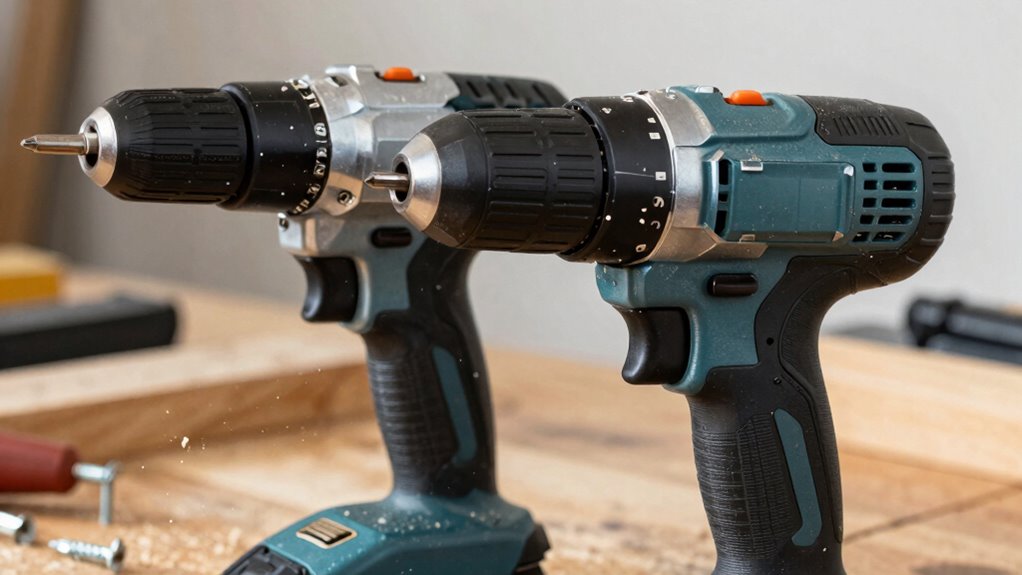
To save fasteners, use a drill for delicate tasks like precise drilling or light screw-driving, and switch to an impact driver for heavy-duty fastening or stubborn fasteners. Impact drivers deliver high torque automatically, so they can strip screws if not controlled. Always match your tool to the task’s demands, and check compatibility to avoid mishaps. Keep these rules in mind, and you’ll prevent damage and work more efficiently—there’s more to master for perfect results.

Prime made for students and young adults
- Fast, free delivery for dorm and study essentials
- Prime Video and Amazon Music included
- Member-only deals
Key Takeaways
- Use a drill for delicate or precision screw-driving to prevent fastener damage.
- Employ an impact driver for heavy-duty tasks requiring high torque and stubborn fasteners.
- Adjust clutch settings on impact drivers to prevent over-tightening and fastener stripping.
- Ensure both tools share the same battery platform for consistent power and efficiency.
- Match tool choice to task complexity to avoid overdriving or damaging fasteners.
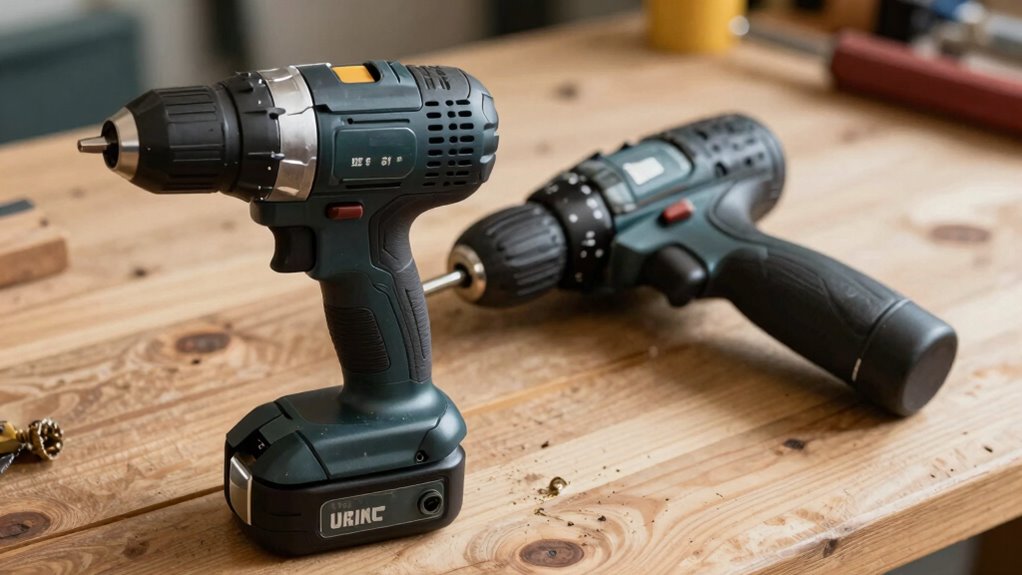
When choosing tools for your DIY projects, understanding the difference between a drill and an impact driver can save you time and frustration. Both are essential, but they serve distinct purposes. A drill is versatile, perfect for drilling holes and driving screws at moderate speeds. An impact driver, on the other hand, delivers high torque with rapid concussive forces, making it ideal for driving large fasteners or working with tough materials. Recognizing when to use each tool ensures your projects are efficient and your fasteners stay intact.
Choose the right tool: drill for precision, impact driver for heavy-duty fasteners.
One of the most critical factors to consider with impact drivers is battery compatibility. Many DIYers overlook this detail, only to find that their batteries don’t fit their new tool. To avoid this hassle, always check if your impact driver and drill share the same battery platform. Using the same batteries across tools saves money and space, keeps your workspace organized, and ensures you don’t run out of power halfway through a project. Battery compatibility also influences whether you can leverage features like quick charging and longer runtimes, which are crucial when tackling larger tasks. Ensuring battery compatibility is often the difference between a smooth project and constant interruptions.
Torque settings are another vital aspect to understand. While drills usually have adjustable speed and torque controls, impact drivers deliver high torque automatically, often without adjustable settings. This means that with an impact driver, you need to be more cautious not to over-tighten or strip screws. Many impact drivers have adjustable clutch settings that limit torque, helping you control how much force is applied. This feature is especially important when working with delicate materials or smaller fasteners. Properly setting the torque prevents damage to your workpiece and prolongs the life of your fasteners. Additionally, understanding the impact mechanism helps you appreciate why impact drivers are more effective for heavy-duty tasks. Recognizing the power source and how it influences performance can also help you select the right equipment for demanding projects. A good grasp of tool mechanics can help you select the right tool for each specific job. It’s also beneficial to consider how battery technology impacts overall tool efficiency and usability.
The rule to remember is simple: use a drill for precise, adjustable drilling and lighter screw-driving tasks, and switch to an impact driver when you need to drive large or stubborn fasteners. The impact driver’s high torque and quick concussive force make it a game-changer for heavy-duty projects, but it can be overkill for delicate tasks. By paying attention to battery compatibility, you ensure your tools work seamlessly together, and understanding torque settings allows you to avoid stripping screws or damaging materials. When you master these differences, you’ll approach each project with confidence, knowing you’re using the right tool for the job, which ultimately saves you time, effort, and fasteners.
cordless drill and impact driver combo kit
As an affiliate, we earn on qualifying purchases.
As an affiliate, we earn on qualifying purchases.
Frequently Asked Questions
How Do I Identify if My Fasteners Are Compatible With Impact Drivers?
You can identify if your fasteners are compatible with impact drivers by checking their material and head type. Impact driver suitability often depends on using fasteners made of hardened steel or similar durable materials. Look for fasteners labeled as impact-rated or designed for impact drivers, which guarantees they handle the high torque and vibrations. Avoid using standard nails or screws not specified for impact driver use, as they may break or strip easily.
Can I Use an Impact Driver for All Drilling Tasks?
Impact drivers aren’t ideal for all drilling tasks, despite their impressive impact driver power. While they excel at driving fasteners with high torque, their drill versatility is limited for precise or delicate drilling. For tasks like boring into softer materials or making accurate holes, a traditional drill offers better control. So, you can use an impact driver for some drilling, but for all-encompassing versatility, keep your drill handy.
What Are the Safety Precautions When Switching Between Tools?
When switching between tools, always wear protective gear like safety goggles and gloves to prevent injury. Make sure your tools are turned off and unplugged or battery removed before changing attachments or bits. Handle tools safely by keeping your hands clear of moving parts and maintaining a stable stance. Properly secure workpieces and double-check that you’re using the right bit for each task. These precautions promote safe handling and help prevent accidents.
How Do I Maintain and Prolong the Lifespan of My Impact Driver?
To keep your impact driver running smoothly, you gotta treat it right—think of it as a well-oiled machine. Regularly clean and inspect the vents, and avoid overworking it to prevent overheating. Proper battery maintenance, like fully charging and avoiding deep discharges, prolongs its life. Also, make certain cordless compatibility by using the right chargers and batteries recommended by the manufacturer. This way, you’ll get the most out of your tool for years to come.
Are There Specific Fasteners Designed Exclusively for Impact Drivers?
Yes, there are specialized fasteners designed exclusively for impact drivers, known as impact-rated fasteners. These fasteners are reinforced to withstand the high torque and vibrations generated by impact drivers, preventing stripping or damage. Using impact-rated fasteners guarantees you get the best performance and longevity from your impact driver. Always choose impact-rated fasteners for heavy-duty tasks to avoid fastener failure and achieve secure, reliable connections.
impact driver with adjustable clutch
As an affiliate, we earn on qualifying purchases.
As an affiliate, we earn on qualifying purchases.
Conclusion
Remember the drill vs impact driver rule to protect your fasteners and avoid costly mistakes. Imagine you’re building a deck, and using the wrong tool causes screws to strip or loosen over time. By choosing the right tool for each task, you guarantee your project stays sturdy and safe. Don’t let a simple rule turn into a costly repair—arm yourself with this knowledge and build with confidence. Your future self will thank you.
battery platform for drill and impact driver
As an affiliate, we earn on qualifying purchases.
As an affiliate, we earn on qualifying purchases.
precision drill bits for woodworking
As an affiliate, we earn on qualifying purchases.
As an affiliate, we earn on qualifying purchases.
Halloween Picks
halloween
As an affiliate, we earn on qualifying purchases.