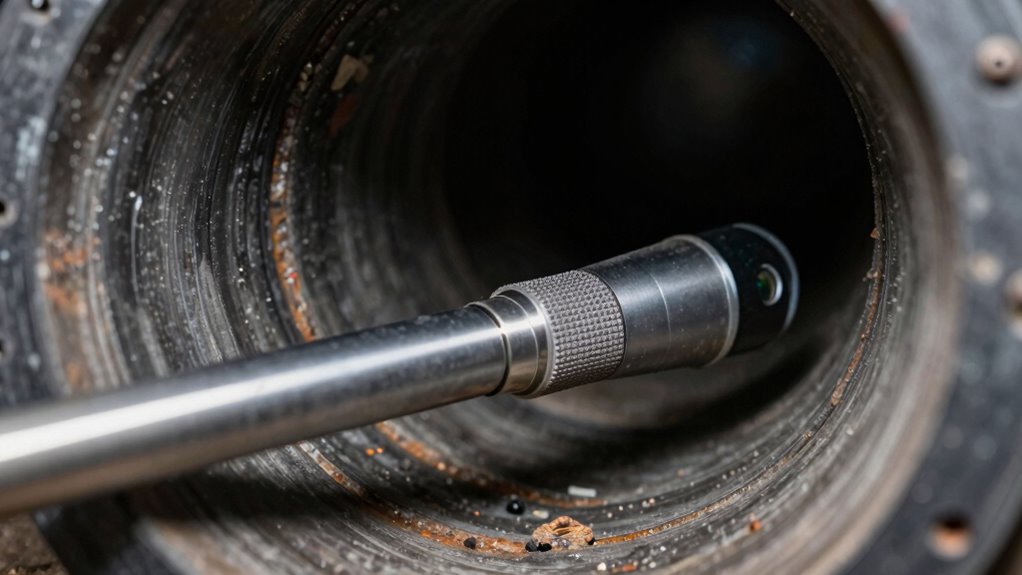
When using borescopes and inspection cameras, the technology behind sensors and resolution is what uncover hidden issues you can’t see with the naked eye. High-quality sensors provide clear visuals even in challenging environments, while high resolution reveals tiny flaws or corrosion that could otherwise go unnoticed. This combination helps you make better decisions and prevents costly surprises later. Keep exploring, and you’ll discover how advanced features can give you the edge in inspections.
Key Takeaways
- High-quality sensors enable clear visualization of hidden or hard-to-reach areas during inspections.
- Superior resolution reveals subtle flaws, cracks, or corrosion invisible to the naked eye.
- Accurate imaging in low-light or complex environments ensures critical issues are not missed.
- Combining advanced sensors with high resolution enhances inspection reliability and decision-making.
- Detecting concealed problems early helps prevent costly repairs and improves safety.
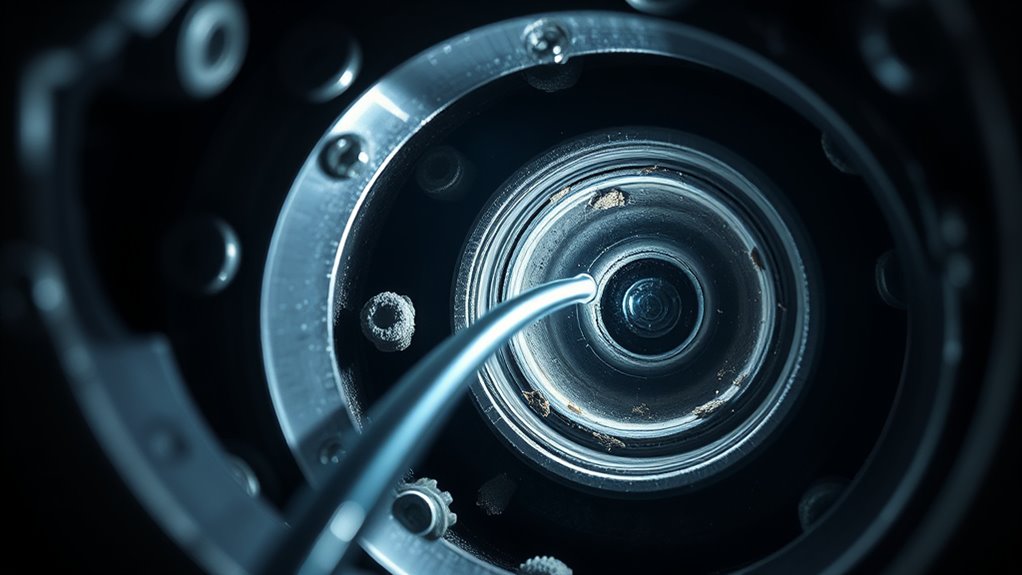
Borescopes and inspection cameras have revolutionized how professionals examine hard-to-reach areas, making inspections faster and more accurate. These tools rely heavily on advanced sensor technology to capture clear visuals from tight or concealed spaces. The quality of the sensor directly impacts the device’s ability to gather detailed information, especially in environments with low light or complex surfaces. Modern sensor technology allows these cameras to detect subtle variations in textures and colors, providing a detailed view that would be impossible to achieve with traditional inspection methods. When choosing a borescope or inspection camera, understanding how sensor technology influences image quality can help you select a device suited to your specific needs.
Advanced sensor technology enhances borescope image quality for precise inspections in challenging environments.
Another critical factor that determines the effectiveness of these inspection tools is image resolution. Higher resolution means sharper, more detailed images, allowing you to identify small flaws, corrosion, cracks, or other issues that might be missed with lower-quality visuals. A camera with a higher pixel count can reveal intricate details within pipes, engines, or wall cavities, giving you confidence in your evaluations. This level of clarity is essential in applications where precision can prevent costly repairs or safety hazards. Keep in mind that image resolution isn’t just about pixel numbers; it also involves the quality of the lens and sensor alignment, which work together to produce clear, distortion-free images.
In practical terms, high-resolution inspection cameras make your work more efficient. You spend less time trying to interpret blurry visuals or guessing about what’s behind a wall or inside a pipe. Instead, you get instant, detailed images that guide your decision-making process. Whether you’re a mechanic diagnosing engine issues, a building inspector evaluating structural integrity, or an industrial technician inspecting machinery, the combination of advanced sensor technology and high image resolution enhances your ability to detect problems early and accurately.
Ultimately, the success of your inspection depends on the quality of the images you capture. Superior sensor technology ensures that even in challenging conditions, you receive reliable data. Meanwhile, high image resolution allows you to see the fine details that matter most. Together, these features empower you to make more informed decisions, reducing risks and improving outcomes. Choosing the right borescope or inspection camera means prioritizing these technological aspects, ensuring you’re equipped with a tool that won’t just see what’s visible but will reveal what truly matters behind the surface. Sensor technology plays a crucial role in ensuring the accuracy and reliability of your inspections.
Frequently Asked Questions
How Do I Choose the Right Borescope for My Specific Application?
You choose the right borescope by considering your specific needs. Think about lens flexibility—do you need a rigid or flexible scope to access tight spots? Also, check illumination options; brighter LEDs help see in dark areas. Match these features to your application, whether inspecting engines, pipes, or machinery. Picking a model with adjustable illumination and flexible lenses guarantees clear visuals, making your inspections more effective and less frustrating.
What Maintenance Is Required to Keep Inspection Cameras Functional?
Did you know that regular maintenance can extend your inspection camera’s lifespan by up to 30%? You should stick to calibration schedules to ensure accurate readings and regularly check and recharge the batteries to prevent power issues. Clean the camera lens after each use, and store it properly in a dry, safe place. These simple steps keep your inspection camera functioning reliably and ready whenever you need it.
Are There Safety Concerns When Using Borescopes in Certain Environments?
Yes, safety concerns exist when using borescopes in certain environments. You should conduct a hazard assessment beforehand to identify potential risks like toxic fumes, high temperatures, or electrical hazards. Always wear appropriate protective gear such as gloves, goggles, and respirators if needed. Ensuring your safety helps prevent accidents and allows you to perform inspections effectively without exposing yourself to unnecessary dangers.
How Do Image Quality and Resolution Impact Inspection Accuracy?
Imagine trying to read a faded map—frustrating, right? That’s what poor image quality and low resolution do to your inspections. Clear images with sharp resolution are your lighthouse, guiding you through dark, unseen spaces. They enhance inspection accuracy by revealing tiny details and defects. Without high image clarity, you risk missing critical issues, making it essential to choose tools that deliver crisp, detailed visuals for reliable, confident inspections.
What Are the Cost Differences Between Basic and Advanced Inspection Cameras?
You’ll find basic inspection cameras are more budget-friendly, often costing a few hundred dollars, making them ideal for simple tasks. Advanced models, with higher resolution, better lighting, and more features, can range from several hundred to thousands of dollars. When considering pricing options, think about your specific needs and budget considerations to select a camera that offers the right balance of performance and affordability for your inspections.
Conclusion
Remember, just like the explorers of old who relied on their trusty telescopes, you need the right borescope or inspection camera to see what’s hidden. Don’t let unseen problems turn into a Black Plague—inspect thoroughly before it’s too late. With the right tools, you’ll uncover what lurks in tight spots and behind the unseen. So, gear up, get your eyes on the prize, and don’t be a caveman when it comes to maintenance—embrace the future of inspection technology.