
A phantom refill happens when your toilet keeps refilling without flushing, wasting water and raising your bills. This usually happens due to a faulty flapper, misaligned float, or a cracked fill valve that leaks water into the bowl. You might notice running sounds or higher bills, and a simple dye test can reveal leaks. To stop this waste, check and fix common issues—if problems persist, more tips are ahead to help you solve it.
Key Takeaways
- A phantom refill occurs when the toilet tank refills without flushing, often due to a leak or faulty flapper.
- Signs include constant running sounds, increased water bills, and visible dye in the bowl indicating a leak.
- Common causes are a worn or misaligned flapper, a misadjusted float, or a malfunctioning fill valve.
- Regular inspection and simple DIY repairs, like replacing the flapper or adjusting the float, can prevent water waste.
- Persistent issues require professional plumbing help to fix leaks and restore efficient toilet operation.
Top picks for "toilet phantom refill"
As an affiliate, we earn on qualifying purchases.
What Is a Phantom Refill and Why Does It Happen?

A phantom refill occurs when your toilet tank periodically refills itself without anyone flushing. This often signals a leak or worn-out components inside the tank. When you don’t address it, you waste water and compromise your water conservation efforts. The leak might be tiny, but it adds up over time, increasing your water bill unnecessarily. Leak detection is essential to pinpoint the cause of the phantom refill. Common culprits include a faulty flapper, a misaligned float, or a cracked fill valve. Fixing these issues not only saves water but also prevents further damage to your toilet. Recognizing the signs early helps you take action before the problem worsens, making your home more efficient and environmentally friendly. Regular maintenance and inspections can help prevent air purifier maintenance issues from developing into costly repairs.
How Can You Tell if Your Toilet Is Wasting Water?
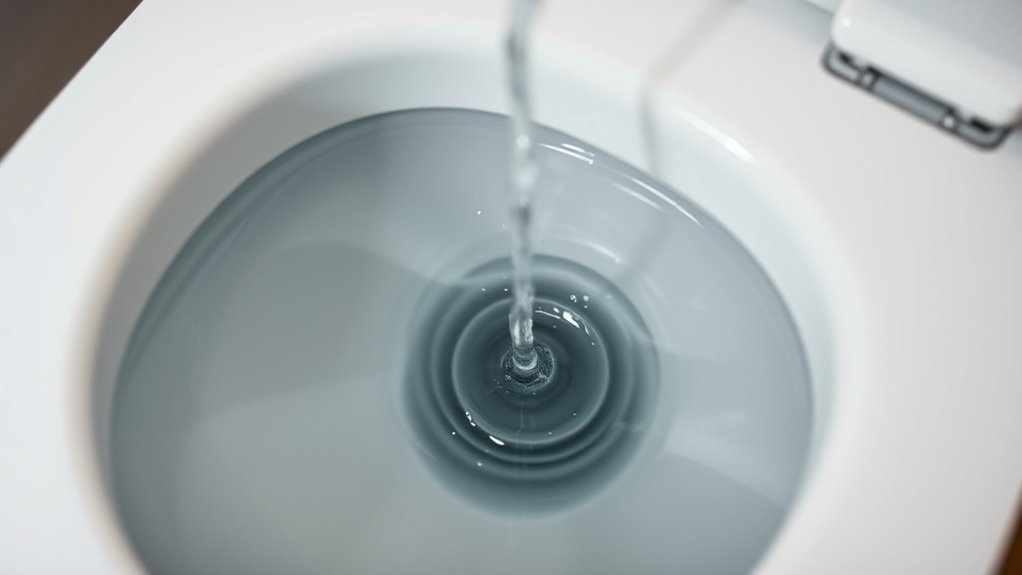
If your toilet is leaking or refilling on its own, you might notice signs that indicate water waste. The most obvious sign is a constant running sound, even when you haven’t flushed. You can also check for a higher than usual water bill, which suggests unnecessary water use. To confirm, add a few drops of food coloring to the tank; if color appears in the bowl without flushing, it’s leaking. Regular toilet maintenance helps prevent waste and saves water. Paying attention to these signs allows you to identify issues early and take action. Proper toilet repair can significantly reduce water waste and improve efficiency. Reducing water waste not only lowers your bills but also supports water conservation efforts. Being proactive with toilet maintenance ensures your fixture functions efficiently and responsibly.
What Causes a Toilet to Phantom Refill?
A common cause of phantom refills is a flapper valve that doesn’t seal properly, allowing water to slowly seep from the tank into the bowl. This often results from toilet tank leaks caused by flapper valve issues. Over time, the flapper can warp, become stained, or develop mineral deposits, preventing a tight seal. When the seal isn’t secure, the fill valve detects the drop in water level and activates, causing the tank to refill continuously. You might notice a constant hissing sound or a slight water movement in the tank. These small leaks can go unnoticed but considerably waste water over time. Regular maintenance and high-quality parts can help prevent such issues. Addressing flapper valve issues promptly helps stop the phantom refill cycle and conserves water.
How to Fix a Phantom Refill With Easy DIY Tips
Fixing a phantom refill is often straightforward with some simple DIY steps. First, check the fill valve or float mechanism inside your toilet tank. Sometimes, debris or mineral buildup causes the float to malfunction, triggering unnecessary refills. Adjust the float height or replace the faulty fill valve to restore proper toilet maintenance. Make sure the flapper seal is tight; a worn or misaligned flapper lets water leak into the bowl, causing continuous refilling. You can also clean or replace the flapper if needed. These quick fixes help prevent water waste and improve efficiency. Regularly inspecting your toilet components and performing minor repairs support water conservation efforts while keeping your toilet functioning correctly. Checking for toilet component malfunctions can help identify underlying issues before they lead to waste. These easy DIY tips save water and reduce your utility bills.
When Should You Call a Plumber for Help?
Though many toilet issues can be resolved with DIY fixes, you should call a plumber when problems persist despite your efforts or worsen over time. Ignoring ongoing issues can lead to increased water waste and costly damage. If you notice a continuous phantom refill or persistent leaks, professional plumbing maintenance is essential. A plumber can identify underlying problems that simple fixes might miss, ensuring water conservation and preventing future damage. You should also call a plumber if:
- The toilet won’t stop running after troubleshooting.
- You notice frequent clogs or strange noises.
- There’s evidence of water damage or persistent leaks around the base.
- Understanding plumbing systems can help you recognize when professional help is needed before minor issues become major repairs.
Addressing these issues promptly helps conserve water and maintains your plumbing’s efficiency, preventing minor problems from escalating into major repairs.
Frequently Asked Questions
Can a Phantom Refill Increase My Water Bill Significantly?
Yes, a phantom refill can considerably increase your water bill. It wastes water because your toilet keeps refilling without you knowing, which undermines your water conservation efforts. To prevent this, perform leak detection by listening for hissing sounds or watching the tank. Fixing a silent leak not only saves water but also lowers your bill, ensuring you’re conserving resources and avoiding unnecessary expenses.
Are There Eco-Friendly Solutions to Prevent Phantom Refills?
You can prevent phantom refills by installing water-saving devices and eco-friendly flushes. Imagine a family who added a dual-flush system, reducing water use during each flush. This simple upgrade stops continuous refills, saving water and reducing bills. Eco-friendly flushes, such as pressure-assisted or low-flow models, also help minimize waste. These solutions are cost-effective, environmentally friendly, and easy to implement, making your bathroom more sustainable.
How Often Should I Check My Toilet for Phantom Refills?
You should check your toilet for phantom refills weekly to catch issues early. During these checks, focus on flapper maintenance—listen for constant running sounds or observe if the water level drops. Incorporate water conservation tips like adjusting the float or repairing leaks promptly. Regular inspections help prevent unnecessary water waste, save you money, and keep your toilet functioning efficiently. Staying vigilant guarantees you catch and fix phantom refills before they cause bigger problems.
Do All Toilet Models Experience Phantom Refills?
Not all toilet models experience phantom refills, but many do due to worn flappers or faulty fill valves. Regular toilet maintenance helps prevent this issue. When you notice continuous running water, it’s a sign to perform plumbing diagnostics. Identifying and fixing the problem early saves water and reduces your utility bills. Keep an eye on your toilet’s performance, and don’t hesitate to seek professional advice if you suspect a phantom refill.
Is a Phantom Refill a Sign of Potential Toilet Damage?
Think of your toilet as a busy water station. A phantom refill hints at a hidden leak, often caused by flapper deterioration. While it doesn’t always mean major damage, persistent leaks can weaken parts over time, signaling potential toilet damage. If you notice continuous refilling, inspect the flapper and tank leaks. Fixing these issues early prevents bigger problems and keeps your water bill in check.
Conclusion
A phantom refill is like a sneaky leak in your home’s water story, quietly draining your resources. By catching it early, you’re the hero saving water and money, turning a mischievous ghost into a harmless whisper. With simple fixes or a call to a plumber, you can tame this invisible thief. Remember, a well-tuned toilet is like a symphony—smooth, efficient, and free of mysterious, wasteful echoes.