Water hammer is the loud bang or thump you hear in your pipes when a faucet suddenly turns off or water flow stops quickly. It happens because shockwaves travel through the pipe when water abruptly halts, causing vibrations and pressure surges. This often occurs with high water pressure or rigid piping materials. To prevent it, solutions like installing arrestors or pressure regulators can help; keep going to discover more ways to tame those pipe bangs.

Prime made for students and young adults
- Fast, free delivery for dorm and study essentials
- Prime Video and Amazon Music included
- Member-only deals
Key Takeaways
- Water hammer is a shockwave caused by sudden changes in water flow, creating loud banging sounds in pipes.
- It occurs when rapid valve closures or fixture shut-offs abruptly stop water movement.
- Rigid pipe materials transmit vibrations more effectively, amplifying noise and potential damage.
- High water pressure and fast flow increase the intensity of water hammer.
- Installing shock absorbers and regulating water pressure can prevent or reduce pipe banging.
As an affiliate, we earn on qualifying purchases.
What Is Water Hammer and Why Does It Happen?

Have you ever experienced a loud banging noise when turning off a faucet or valve? That’s water hammer, and it happens because of sudden changes in water flow. When water moves quickly through pipes made of different materials, like copper or PVC, abrupt stops or changes in direction create shockwaves. These shockwaves cause pipes to vibrate and produce loud banging sounds. The type of pipe material influences how noticeable this effect is; rigid materials transmit vibrations more effectively. Water flow speed and sudden shut-offs increase the likelihood of water hammer. Essentially, rapid changes in water velocity generate pressure surges, which ripple through the piping system. The stiffness of pipe materials also plays a role in how much vibration is transmitted, impacting the severity of water hammer. Understanding these factors helps explain why water hammer occurs and how pipe material and water flow contribute to this common plumbing issue.
As an affiliate, we earn on qualifying purchases.
How Water Hammer Works: The Science Explained
Ever wondered what causes that sudden loud bang when a valve shuts off quickly? It’s the water hammer, a shockwave traveling through your pipes. When water flows and suddenly stops, the momentum forces the water to slam into the pipe walls, creating a pressure surge. The pipe material influences this effect: rigid materials like copper transmit the shockwave more forcefully, while flexible pipes absorb some energy. Water temperature also plays a role—hot water is less dense and moves faster, increasing the potential for a stronger water hammer. Incorporating multi-functional gear and practicing proper pipe installation can help mitigate these effects and prevent damage.
To understand better:
- Rigid pipe materials amplify pressure spikes
- Hot water’s increased speed heightens shockwave impact
- Sudden flow stops generate rapid pressure changes
This science explains why your pipes sometimes rattle or bang unexpectedly.
As an affiliate, we earn on qualifying purchases.
Common Causes of Water Hammer in Your Home
You might notice water hammer when a valve shuts off suddenly, causing a shockwave through your pipes. High water pressure can also increase the likelihood of these loud banging noises. Understanding these common causes helps you take steps to prevent damage and reduce noise. Additionally, hydrotherapy techniques such as water-based exercises can help alleviate stress caused by noisy pipes in your home.
Sudden Valve Closure
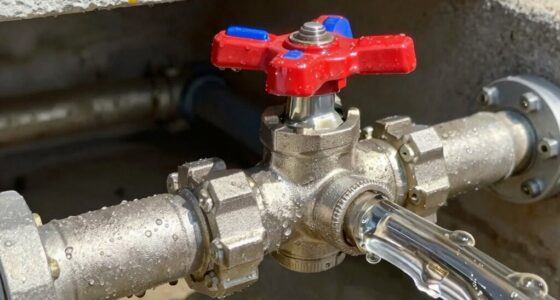
Sudden valve closures are one of the most common causes of water hammer in homes. When you rapidly shut off a valve, it disrupts the valve dynamics, causing a sudden change in water flow. This abrupt stop creates a pressure surge that travels through the pipes, leading to pipe vibrations and knocking sounds. To minimize this, avoid closing valves too quickly and consider installing slow-closing valves. Additionally, understanding how valve operation impacts water flow can help you prevent water hammer. Controlling valve speed can significantly reduce shock waves in pipes, preventing potential damage and noise.
High Water Pressure
High water pressure is a common culprit behind water hammer in homes. When pressure levels are too high, it causes pipe vibrations that amplify the shockwaves when valves close quickly. These pressure surges create sudden forceful movements, leading to the banging sounds you hear in your pipes. High water pressure increases the likelihood of water hammer because the pipes can’t absorb the rapid changes in flow, resulting in loud noises and potential damage. You might notice that your water flow feels stronger or that the banging worsens during peak usage times. To prevent this, consider installing a pressure-reducing valve or adjusting your existing one. Maintaining ideal pressure helps reduce pressure surges, minimizes pipe vibrations, and keeps your plumbing system quieter and more durable. Safety, transfer switch, and fuel‑storage checklists can help ensure your entire plumbing system is protected from pressure-related issues.
As an affiliate, we earn on qualifying purchases.
How to Recognize the Signs and Sounds of Water Hammer
How can you tell if water hammer is happening in your plumbing? You’ll notice sudden banging or thumping noises when faucets or appliances turn off. These sounds often occur near pipes that lack proper pipe insulation, allowing vibrations from water flow to reverberate. You might also see shaking pipes or hear a rattling sound, especially if water flow is high. Pay attention to the following signs:
Sudden banging and rattling pipes signal water hammer in your plumbing system.
- Loud banging when water stops flowing
- Vibrations or rattling in pipes
- Repeated thuds after turning off fixtures
- Proper pipe support can help prevent excessive movement and reduce noise.
Simple Steps to Prevent Water Hammer
To prevent water hammer from damaging your plumbing, start by installing water hammer arrestors or shock absorbers near the affected fixtures. These devices absorb sudden pressure changes whenever you turn off or shut off a valve. Additionally, using pipe insulation can dampen vibrations caused by rapid water flow, reducing the chances of noise and damage. Consider water softening if mineral buildup is contributing to pipe issues, as it helps maintain smooth water flow and prevents scale from creating blockages. Proper insulation and water softening work together to minimize pressure surges. Regularly checking your plumbing for signs of wear and fixing small issues early also helps prevent water hammer from worsening. Using pressure regulation devices can further help control water flow and protect your pipes. Taking these simple steps can save you from costly repairs down the line.
Installing Devices Like Air Chambers and Arrestors
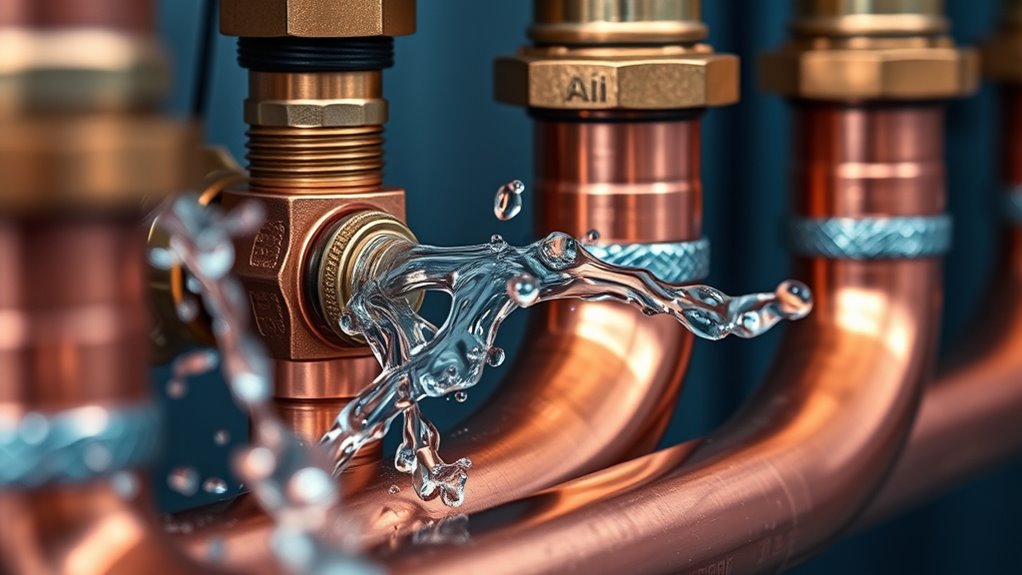
Have you considered installing air chambers and arrestor devices to effectively combat water hammer? These simple solutions absorb sudden pressure changes, preventing loud bangs and pipe damage. Air chambers are vertical pipes filled with air installed near problem areas, acting as shock absorbers. Arrestor devices, on the other hand, are installed directly into the plumbing system and contain a piston or diaphragm that cushions pressure surges. When installed correctly, they provide an immediate fix for noisy pipes and protect your plumbing from damage. Additionally, modern plumbing techniques incorporate smart sensors and automation to monitor and mitigate water hammer effects more efficiently. Regularly inspect and maintain these devices for maximum performance.
Knowing When to Call a Plumber for Persistent Issues
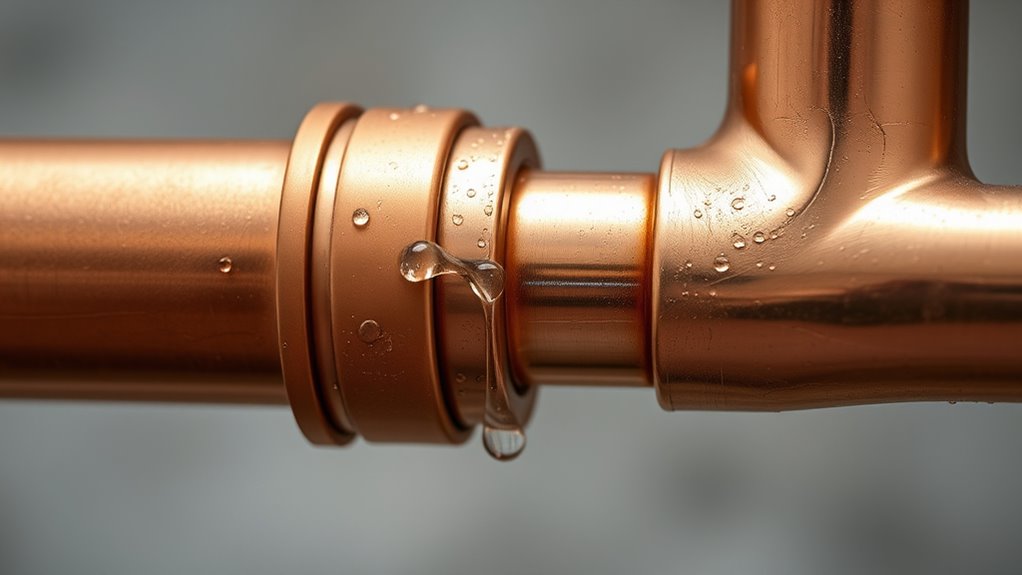
While installing air chambers and arrestors can often resolve water hammer issues, some problems persist despite these measures. If you notice ongoing banging sounds, leaks, or reduced water flow, it’s time to call a plumber. Persistent water hammer may indicate hidden leaks or inadequate pipe insulation, which can cause pressure fluctuations. A professional can perform leak detection and assess if your pipes need better insulation. Additionally, understanding water hammer mechanisms can help you communicate more effectively with your plumber about potential causes.
Frequently Asked Questions
Can Water Hammer Cause Long-Term Damage to Plumbing Systems?
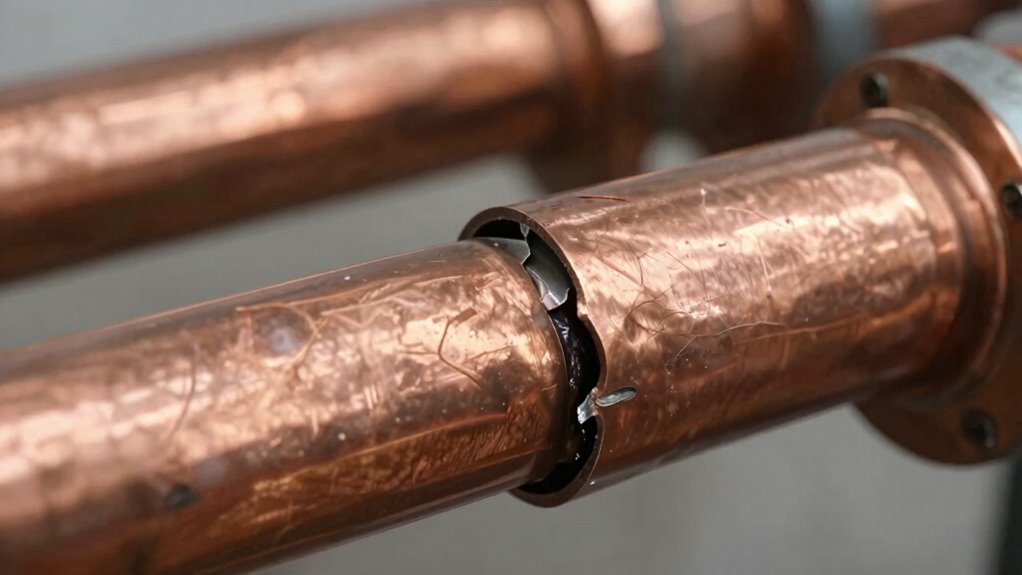
Yes, water hammer can cause long-term damage to your plumbing system. The pressure fluctuations from repeated banging can weaken pipe material over time, leading to leaks or even burst pipes. If your pipes are made of softer materials like plastic, they’re especially vulnerable. To prevent lasting damage, you should address water hammer promptly by installing air chambers or pressure regulators, reducing the risk of costly repairs later.
Are Certain Types of Pipes More Susceptible to Water Hammer?
You might notice that plastic pipes, like PVC, are more susceptible to water hammer than metal pipes, such as copper. For example, in a residential case, PVC pipes with smaller diameters amplified the banging sounds because their material and size can’t absorb pressure surges effectively. Generally, pipe material and diameter influence vulnerability; smaller diameter and flexible materials tend to be more prone to water hammer episodes.
How Does Water Temperature Affect Water Hammer Occurrences?
Your water temperature influences water hammer because higher temperatures cause thermal expansion, which increases pressure in the pipes. When hot water flows suddenly stop, the rapid pressure change can lead to more frequent or intense water hammer. Pipe material also matters; metal pipes expand more with heat, making water hammer more likely, while plastic pipes handle temperature changes better, reducing the risk. Keep an eye on temperature and pipe type to prevent issues.
Can Water Hammer Happen in Underground or Commercial Plumbing?
Yes, water hammer can happen in underground or commercial plumbing systems. You might notice it when sudden valve closures cause abrupt pressure changes, especially if pipes lack proper insulation or if pressure regulators aren’t functioning correctly. Installing pipe insulation helps absorb shock waves, while pressure regulators control flow speed, reducing water hammer risks. Regular maintenance and proper system design are key to preventing these noisy and potentially damaging occurrences.
Are There DIY Methods to Permanently Eliminate Water Hammer?
Think of fixing water hammer as calming a restless spirit. You can try DIY methods like installing or recharging air chambers to absorb sudden pressure changes. Adding pipe insulation helps reduce vibrations, preventing the noise. Make certain air chambers are drained and refilled correctly to maintain their effectiveness. While these steps can lessen the problem, for a permanent fix, consulting a professional might be necessary.
Conclusion
Remember, prevention is better than cure. By understanding water hammer and taking simple steps like installing air chambers or arrestors, you can keep your pipes quiet and damage-free. Don’t ignore those banging sounds—they’re your pipes’ way of crying out for help. As the saying goes, “A stitch in time saves nine.” Addressing issues early keeps your plumbing running smoothly, so you can enjoy peace and quiet in your home without the unwanted bang.
Columbus Day / Indigenous Peoples' Day Picks
long weekend sales
As an affiliate, we earn on qualifying purchases.