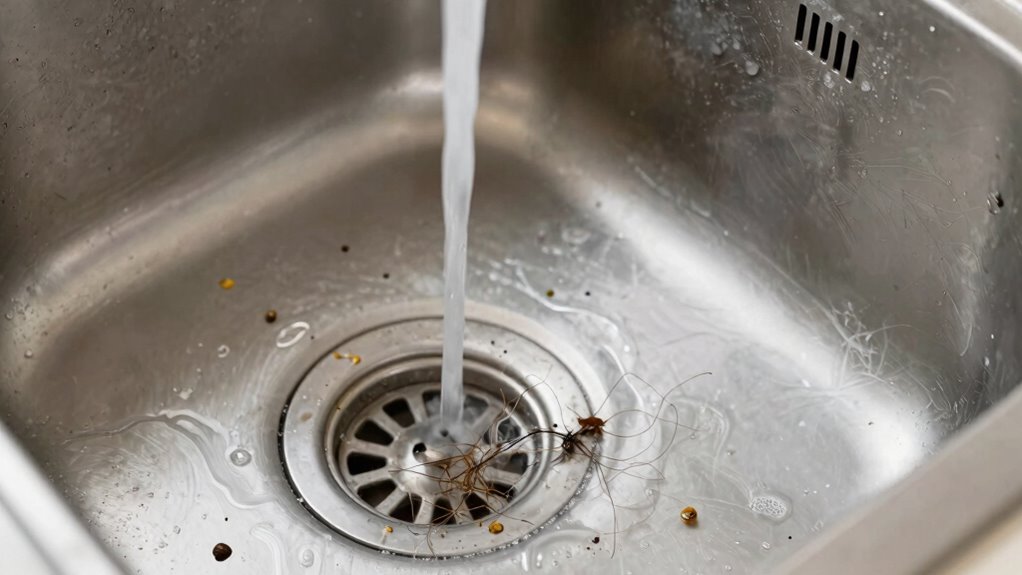
The three most common causes of slow drains include buildup of debris, grease, soap scum, or mineral deposits that narrow your pipes over time. Foreign objects like hair, wipes, or small items can also lodge in the pipes, blocking water flow. Additionally, sewer line problems such as tree roots or pipe damage can cause backups despite clear household plumbing. If you want to uncover more about fixing these issues, there’s plenty more to explore.

Prime made for students and young adults
- Fast, free delivery for dorm and study essentials
- Prime Video and Amazon Music included
- Member-only deals
Key Takeaways
- Pipe buildup from debris, grease, and mineral deposits narrows drain pathways over time.
- Foreign objects like hair or wipes can lodge and block pipes, causing slow drainage.
- Sewer line issues, such as root intrusion or pipe collapse, can slow drains despite clear household pipes.
- Poor venting or blocked vent stacks create vacuum effects, reducing water flow efficiency.
- Plumbing design flaws and lack of maintenance contribute to sluggish drains and recurring problems.
As an affiliate, we earn on qualifying purchases.
What Causes Clogged or Blocked Drain Lines?

Have you ever wondered what really causes drain lines to clog or block? Often, it’s due to pipe buildup from accumulated debris, grease, soap scum, and mineral deposits that stick to the pipe walls over time. These deposits narrow the flow, making drains slow or backing up. Foreign objects also play a big role; items like hair, wipes, or small objects accidentally flushed down the drain can get lodged and obstruct the pipe’s pathway. Even small objects can cause significant blockages if they get caught in bends or narrow sections. Regular use of drain cleaners can help, but persistent clogging indicates a more serious issue. Understanding these common causes lets you take preventative steps before you face a full-blown backup. Proper ventilation can also help prevent buildup and ensure smooth drainage.
As an affiliate, we earn on qualifying purchases.
Are Sewer Line Problems Causing Your Slow Drain?
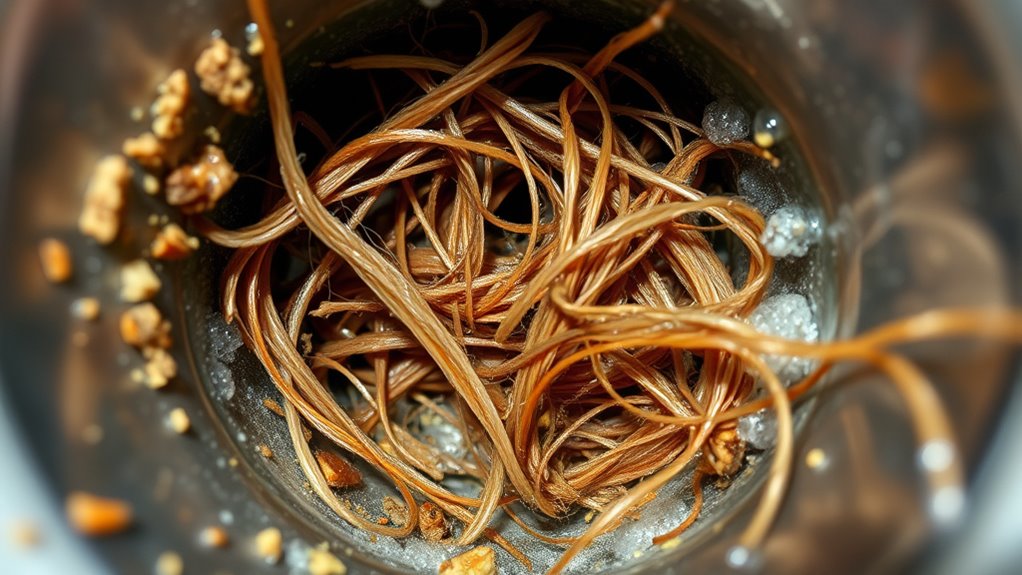
When your drains are slow despite clear pipes, the problem might lie beyond your household plumbing—specifically in the sewer line. Sewer issues can cause backups and sluggish drains, making regular drain maintenance insufficient. A sewer inspection can identify problems like tree root intrusion, pipe collapses, or blockages deep within the line. If left untreated, these issues can worsen, leading to more costly repairs. Recognizing sewer line problems early is vital to restoring proper drainage. If you’ve ruled out minor clogs, consider scheduling a professional sewer inspection to diagnose the root cause. Addressing sewer line issues promptly can prevent further damage and keep your drains flowing smoothly. Remember, sewer line problems aren’t always visible but can substantially impact your drain performance. Additionally, understanding sewer line deterioration can help homeowners take preventative measures before significant damage occurs.
As an affiliate, we earn on qualifying purchases.
Could Venting and Plumbing Design Flaws Be Slowing Your Drain?
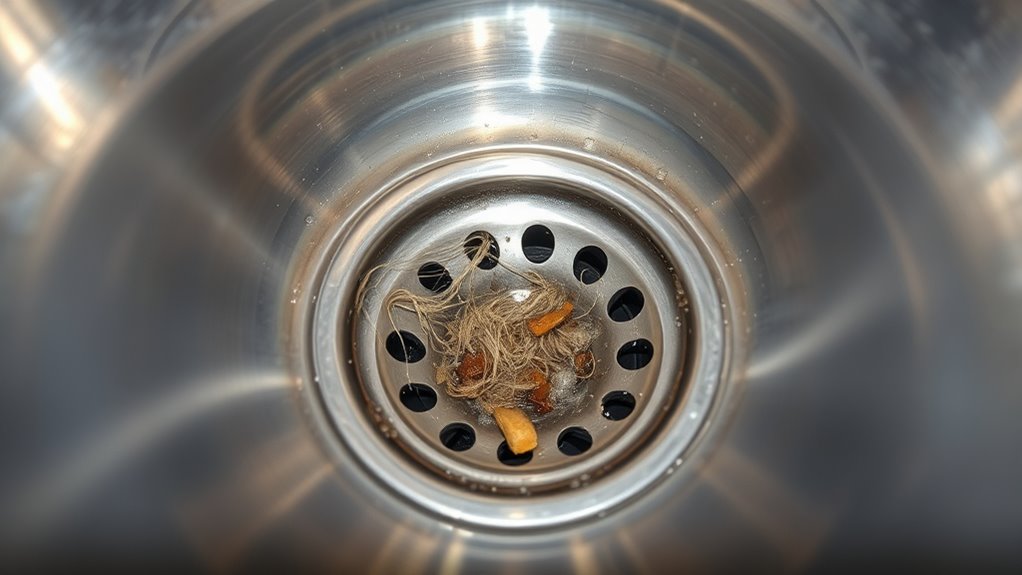
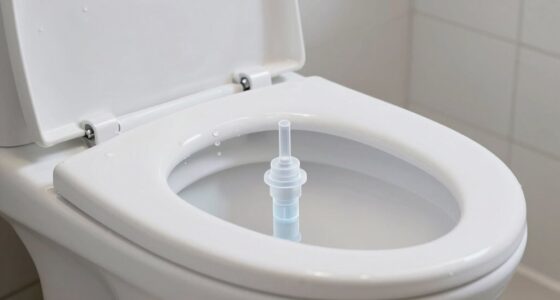
Venting and plumbing design flaws often cause slow drains even when your pipes are clear. If your drain seems sluggish, it could be due to poor venting, which prevents air from entering the system properly. An air admittance valve can sometimes help by releasing air into the drain line, but if your vent stack is blocked or improperly installed, it can create a vacuum that slows water flow. Without proper venting, wastewater struggles to flow smoothly, leading to slow drainage. Check if your vent stack is clear of debris or obstructions. If not, professional inspection and correction might be necessary. Proper venting ensures air can enter freely, allowing your drain to work efficiently and preventing slow drainage caused by plumbing design flaws. Proper venting is essential for maintaining optimal drainage performance.
As an affiliate, we earn on qualifying purchases.
Frequently Asked Questions
How Can I Prevent Slow Drains in My Home?
To prevent slow drains, you should regularly perform drain maintenance by avoiding pouring grease or hair down the drain. Use plumbing tools like a drain snake or plunger to clear minor blockages early. Installing drain screens can catch debris before it causes problems. Routine cleaning and being mindful of what goes down your pipes help keep your drains flowing smoothly, saving you from costly repairs later on.
When Should I Call a Professional for Drain Issues?
Your drain is crying out for help when it’s slow despite your efforts. Don’t ignore signs like gurgling sounds or standing water—these are flashing red flags. You should call a professional when basic plumbing maintenance and drain cleaning techniques don’t do the trick, or if you notice recurring problems. A licensed plumber can properly diagnose and fix the issue, preventing costly damage and keeping your plumbing flowing smoothly like a well-oiled machine.
Are Tree Roots a Common Cause of Slow Drains?
Yes, tree root intrusion is a common cause of slow drains. When roots grow into your pipes, they create blockages and pipe damage, leading to slow drainage or backups. If you notice persistent issues, it’s likely due to a pipe blockage caused by roots. You should call a professional to inspect and clear the intrusion before it causes more severe damage or costly repairs.
Can Chemical Drain Cleaners Damage My Pipes?
Yes, chemical drain cleaners can damage your pipes. They work through strong chemical reactions that break down clogs, but this process can also cause pipe corrosion over time. Harsh chemicals may weaken your pipes’ material, especially if they’re old or made of metal. To avoid damage, consider safer alternatives like enzymatic cleaners or professional snaking, which effectively clear clogs without risking pipe deterioration.
How Often Should I Have My Drains Professionally Inspected?
Did you know that neglecting pipe maintenance can lead to costly repairs? You should have your drains professionally inspected at least once every 1 to 2 years. Regular drain inspections help catch issues early, preventing clogs and damage. The recommended drain inspection frequency depends on your usage and pipe age, so staying proactive guarantees your plumbing stays in top condition and avoids unexpected emergencies.
Conclusion
Think of your drains as the veins of your home’s life force. When they slow or block, it’s a sign something’s amiss beneath the surface. Addressing these issues promptly keeps the flow clear and your home thriving. Don’t ignore the warning signs—they’re the voice of your home’s health, calling you to restore balance. Keep the flow steady, and your home will continue to breathe easy, resilient against the unseen obstacles that threaten its energy.
Halloween Picks
halloween
As an affiliate, we earn on qualifying purchases.