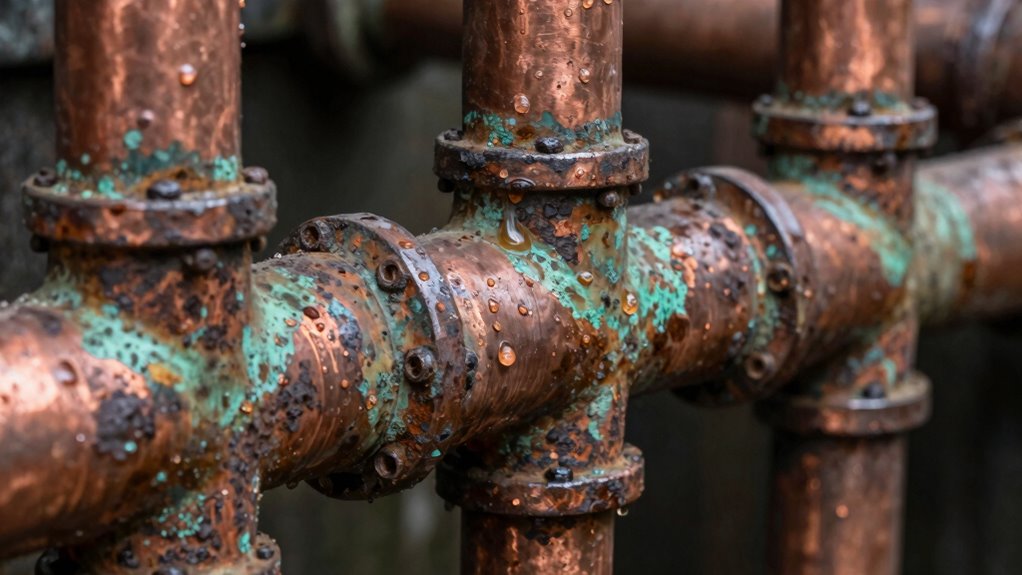
Even if your old pipes look fine on the surface, hidden corrosion can still threaten your water quality and pipe durability. Internal rust, pitting, or surface damage often develop without obvious signs, increasing risks of leaks and contamination. Regular inspections and advanced testing can reveal these silent issues before they cause costly damage or health problems. Learn more about how to identify and prevent hidden corrosion to protect your plumbing system effectively.
Key Takeaways
- Internal corrosion often occurs without visible signs, making it difficult to detect through simple visual inspections.
- Hidden corrosion can weaken pipe walls internally, leading to leaks and structural failures over time.
- Advanced diagnostic techniques like ultrasonic testing reveal internal damage that surface checks might miss.
- Corrosion can leach harmful metals into water, posing health risks despite pipes appearing “fine” externally.
- Regular maintenance and early detection are essential to prevent costly repairs and ensure water safety in old pipes.
As an affiliate, we earn on qualifying purchases.
What Is Corrosion in Plumbing Systems?
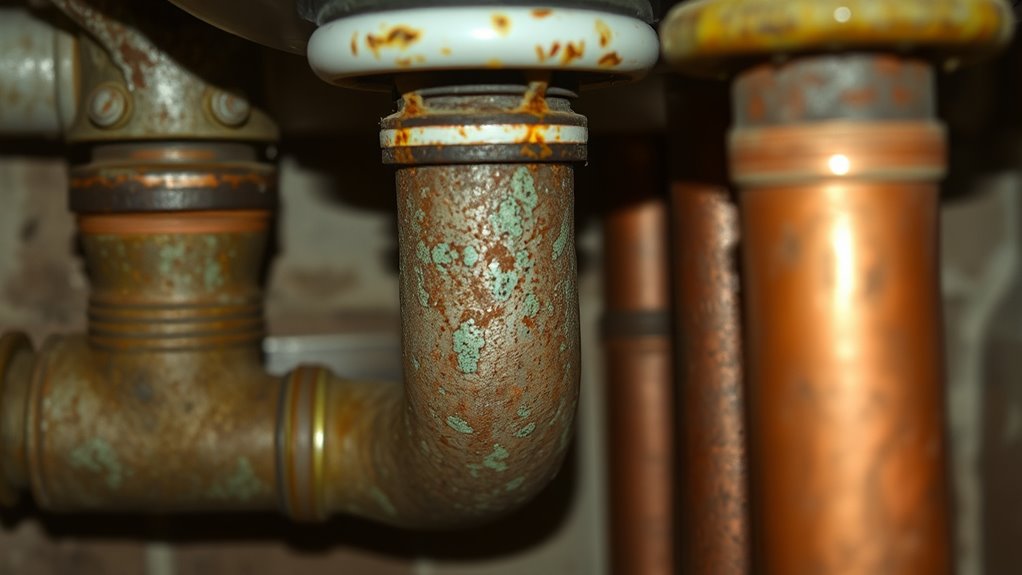
Corrosion in plumbing systems occurs when metal pipes and fixtures react with water and oxygen, causing them to weaken and deteriorate over time. The pipe material plays a vital role in how quickly this process happens. Some metals, like copper and stainless steel, have better corrosion resistance, helping them last longer. However, other materials, such as galvanized steel or cast iron, are more susceptible to rust and decay. When corrosion occurs, it can lead to leaks, reduced water flow, and potential contamination. Understanding the type of pipe material you have is essential because it influences how vulnerable your plumbing system is to corrosion. Choosing pipes with high corrosion resistance can considerably extend their lifespan and save you money on repairs down the line. Additionally, proper maintenance and corrosion protection methods can help prevent or slow down the deterioration process.
As an affiliate, we earn on qualifying purchases.
Types and Causes of Pipe Corrosion
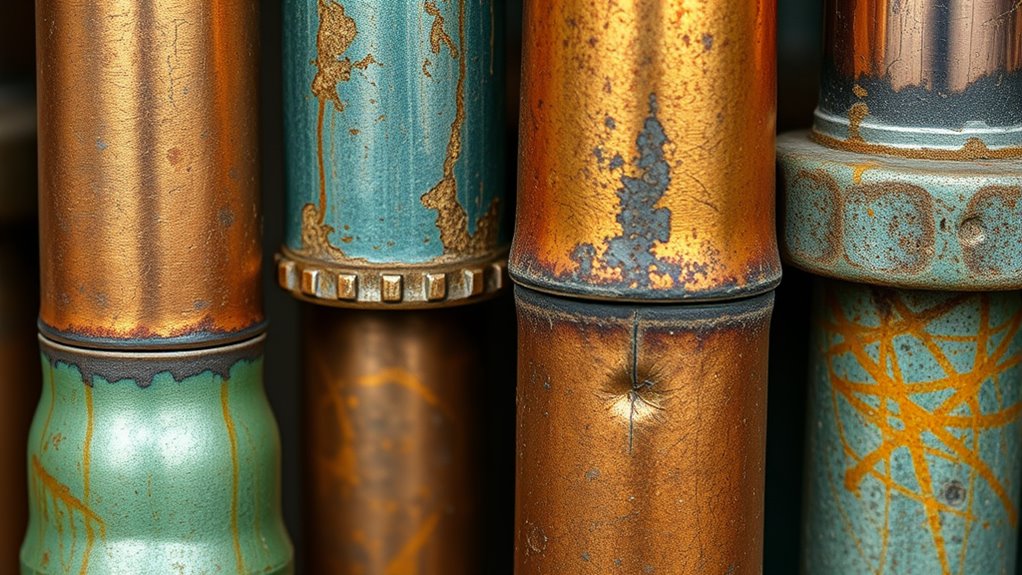
Various factors contribute to pipe corrosion, which can manifest in different forms depending on the environment and pipe material. For example, metal pipes like iron or steel are prone to rust when exposed to moisture and oxygen. Copper pipes may develop pitting corrosion due to localized chemical reactions, especially in areas with aggressive water. Environmental factors such as acidity, high humidity, and the presence of contaminants accelerate corrosion processes. Chlorine and other chemicals in water can also damage certain pipe materials over time. Additionally, galvanic corrosion occurs when dissimilar metals contact each other, creating electrical currents that erode the pipes. Understanding these causes helps you identify potential risks based on your pipe material and environment, allowing for better prevention and maintenance strategies. Corrosion mechanisms play a significant role in how and why pipes deteriorate over time.
As an affiliate, we earn on qualifying purchases.
How to Spot Signs of Corrosion in Old Pipes
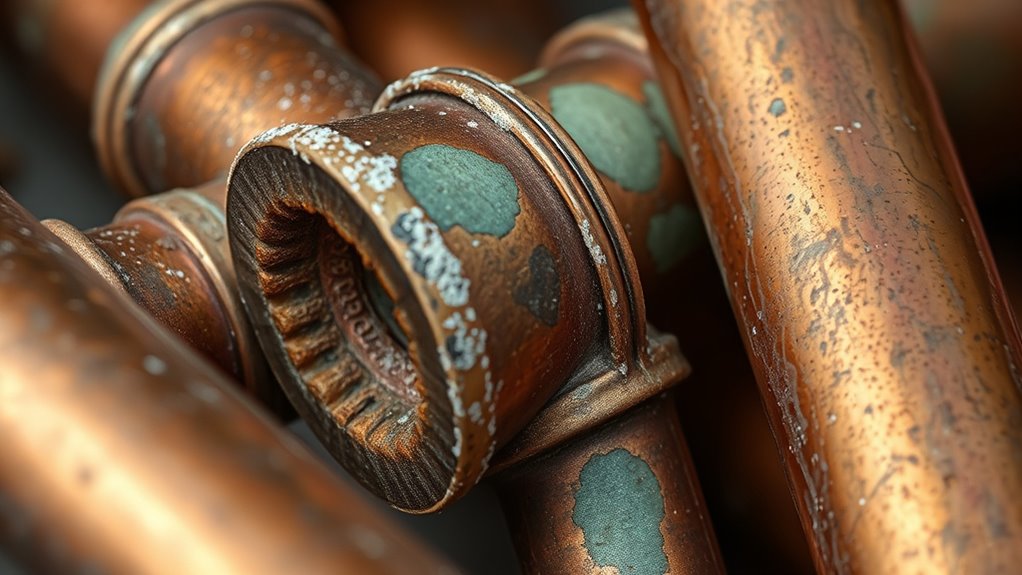
Recognizing early signs of corrosion in old pipes is essential to prevent costly damage and maintain water quality. Start by inspecting your pipe insulation; if it’s damp, moldy, or deteriorating, corrosion might be nearby. Sudden drops or fluctuations in water pressure can also indicate internal pipe corrosion, causing blockages or leaks. Look for discoloration or staining on walls, ceilings, or fixtures, which often signal leaks from corroded pipes. Unusual rust-colored particles or sediment in your water are warning signs as well. Additionally, a metallic taste or smell in your water suggests corrosion has compromised the pipe’s integrity. Regularly monitoring these signs allows you to catch corrosion early, protecting your plumbing system and avoiding costly repairs down the line. Being aware of vintage design elements and period materials can also help you identify outdated or compromised piping that may be more prone to corrosion.
advanced plumbing inspection camera
As an affiliate, we earn on qualifying purchases.
As an affiliate, we earn on qualifying purchases.
Hidden Dangers of Pipe Corrosion on Water and Health
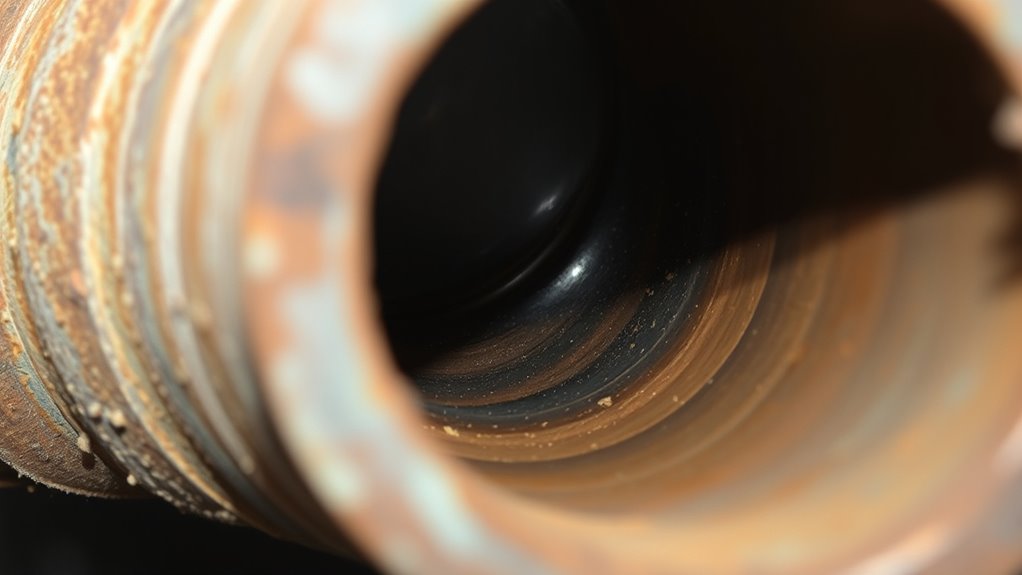
Hidden pipe corrosion can pose serious health risks because it often goes unnoticed until it causes significant damage. The pipe material, such as galvanized steel or copper, influences how corrosion develops and releases harmful substances into your water. When corrosion occurs inside pipes, it can leach metals like lead, copper, or iron into your drinking water, potentially harming your health. Water pH plays a vital role; acidic or low pH water accelerates corrosion, increasing the risk of metal contamination. Over time, this contamination can lead to health problems, especially for vulnerable populations. Because corrosion is hidden behind walls and beneath floors, you might not realize your water is unsafe until symptoms appear. Regular testing and understanding your pipe material help you identify and reduce these hidden dangers. Incorporating proper maintenance techniques can also help mitigate corrosion’s impact and prolong pipe lifespan.
How Corrosion Can Cause Leaks and Failures
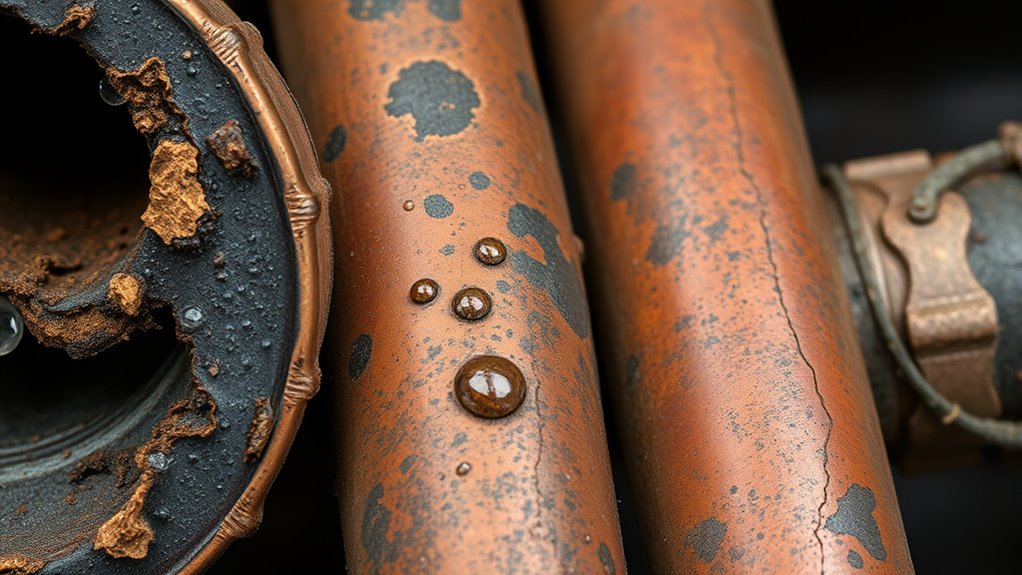
Corrosion often causes hidden surface damage that weakens pipe walls over time, making leaks more likely. As the metal deteriorates, the risk of structural failure increases unexpectedly, sometimes without obvious signs. Understanding these damage mechanisms helps you recognize how corrosion leads to leaks and pipe failures before they become major problems. Regular home maintenance inspections can help detect early signs of corrosion and prevent costly repairs later.
Hidden Surface Damage
Even when pipes look fine on the surface, unseen corrosion can quietly weaken their structure and lead to leaks or failures. Surface discoloration might seem like minor staining, but it often signals deeper corrosion beneath the surface. Pipe surface pitting creates tiny holes or indentations that are invisible without close inspection. These pits can trap moisture and accelerate corrosion from within, compromising the pipe’s integrity over time. Because these damages are hidden, you may not notice problems until leaks develop or failures occur. Regular inspections are essential to detect subtle signs like discoloration or pitting early. Addressing surface damage promptly can prevent major issues, saving you from costly repairs and potential water damage down the line. Innovative detection methods can help identify corrosion before it causes significant damage.
Structural Weakening Risks
Unseen corrosion gradually weakens the structural integrity of pipes, increasing the risk of leaks and failures over time. Different pipe materials have varying levels of corrosion resistance, which determines how vulnerable they are to this hidden damage. For example, cast iron and older steel pipes are more prone to corrosion, leading to thinning walls and potential cracks. As corrosion progresses internally, it compromises the pipe’s strength without obvious signs. This weakening can cause sudden failures or slow leaks that deteriorate your plumbing system’s reliability. Recognizing the risks linked to specific materials helps you understand why some pipes are more susceptible. Additionally, understanding the corrosion resistance of different pipe materials can guide you in choosing more durable options. Ultimately, corrosion reduces the load-bearing capacity of pipes, making them more likely to leak or burst under pressure, especially if left unaddressed.
Unexpected Leak Causes
Have you ever wondered how corrosion can unexpectedly cause leaks and failures in your pipes? It all starts with pipe material and water chemistry. Different pipe materials react differently to water conditions—metal pipes like iron or copper are more prone to corrosion, especially if water is acidic or contains high levels of dissolved minerals. Over time, corrosion creates weak spots, thinning the pipe’s walls and eventually leading to cracks or holes. These leaks often occur suddenly, catching you off guard. Even old pipes previously considered reliable can fail unexpectedly if corrosion accelerates due to changes in water chemistry or unnoticed deterioration. Understanding how corrosion affects your pipes helps you recognize the hidden risks that can lead to costly repairs and water damage down the line. Additionally, corrosion mechanisms influence how quickly and severely pipes deteriorate over time.
Detecting Internal Corrosion Inside Pipes
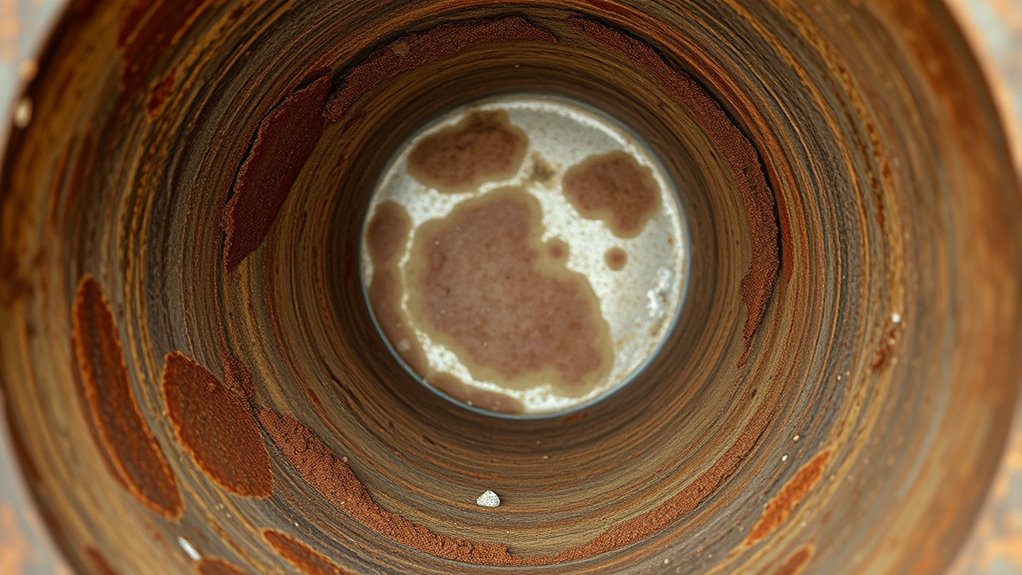
You can’t rely solely on visual inspections because internal corrosion often stays concealed from sight. That’s where advanced diagnostic techniques come in, helping you detect issues before they become serious. Using these methods ensures you identify problems early and prevent costly pipe failures. Incorporating essential oils for detection can also aid in identifying early signs of corrosion through their interactions with the pipe material.
Visual Inspection Limitations
While visual inspections are a common method for evaluating pipe integrity, they fall short when it comes to detecting internal corrosion. You can’t see beneath the pipe’s surface, so internal damage often remains hidden until failure occurs. Different pipe materials and corrosion types, such as pitting or uniform corrosion, can develop internally without obvious signs externally. This limitation leaves significant risks unaddressed. To illustrate, consider the table below:
| Pipe Material | Corrosion Types | Detection Difficulty | External Signs |
|---|---|---|---|
| Cast Iron | Pitting, galvanic | Hard to detect | Rust, discoloration |
| Steel | Uniform, crevice corrosion | Often invisible | Surface scaling, leaks |
These limitations highlight why internal corrosion demands more advanced detection techniques.
Advanced Diagnostic Techniques
Visual inspections often miss internal corrosion because it’s hidden beneath the pipe’s surface. To detect it, advanced diagnostic techniques are essential. First, you can use ultrasonic testing, which sends sound waves to measure pipe wall thickness, revealing corrosion spots. Second, electromagnetic methods like eddy current testing help identify internal flaws without damaging the pipe. Third, in some cases, inserting sensors or using smart pigging tools equipped with corrosion inhibitors can provide detailed internal corrosion maps. These techniques are crucial for planning effective pipe lining or applying corrosion inhibitors to prevent further damage. Additionally, understanding material properties can influence the choice of diagnostic method and corrosion prevention strategies. These techniques are crucial for planning effective pipe lining or applying corrosion inhibitors to prevent further damage. They give you a clear picture of internal deterioration, enabling proactive maintenance and extending pipe life. Relying on these diagnostics saves time and money compared to reactive repairs.
Why Visual Checks Might Miss Corrosion
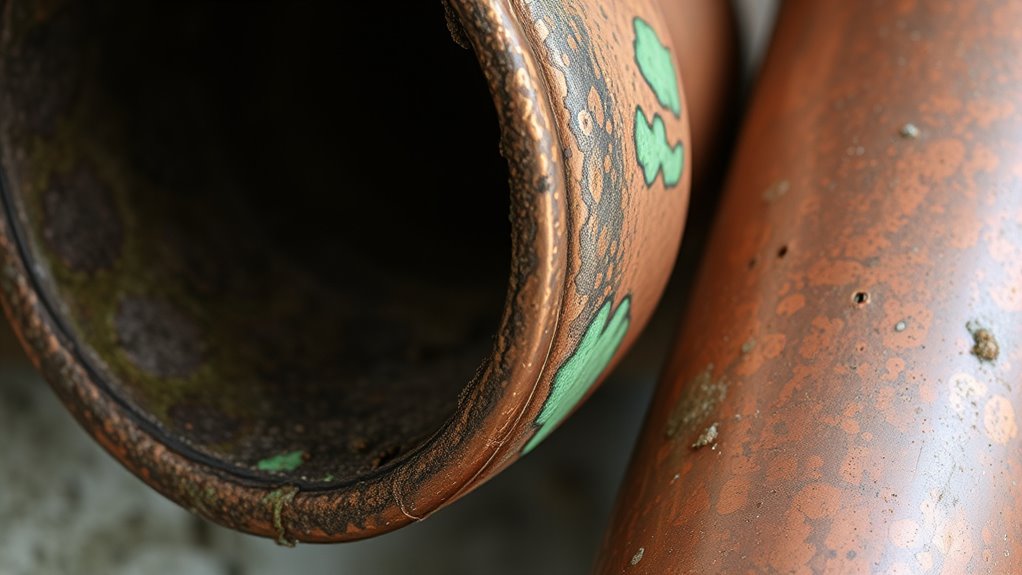
Because corrosion often occurs beneath the surface or inside the pipe walls, relying solely on visual inspections can be misleading. Surface appearances may look fine, but hidden deterioration could be progressing underneath, weakening the pipe’s integrity. Coating degradation is a common issue that masks underlying corrosion, making it harder to detect visually. Even pipes with good corrosion resistance can develop internal corrosion if protective coatings break down or become damaged. Without specialized testing, you might miss early signs of trouble, risking leaks or failures later. Visual checks are useful but limited; they don’t reveal what’s happening beneath the surface. To truly assess pipe health, you need more advanced diagnostic methods that can uncover concealed corrosion before it causes serious problems.
Simple Ways to Prevent Pipe Corrosion
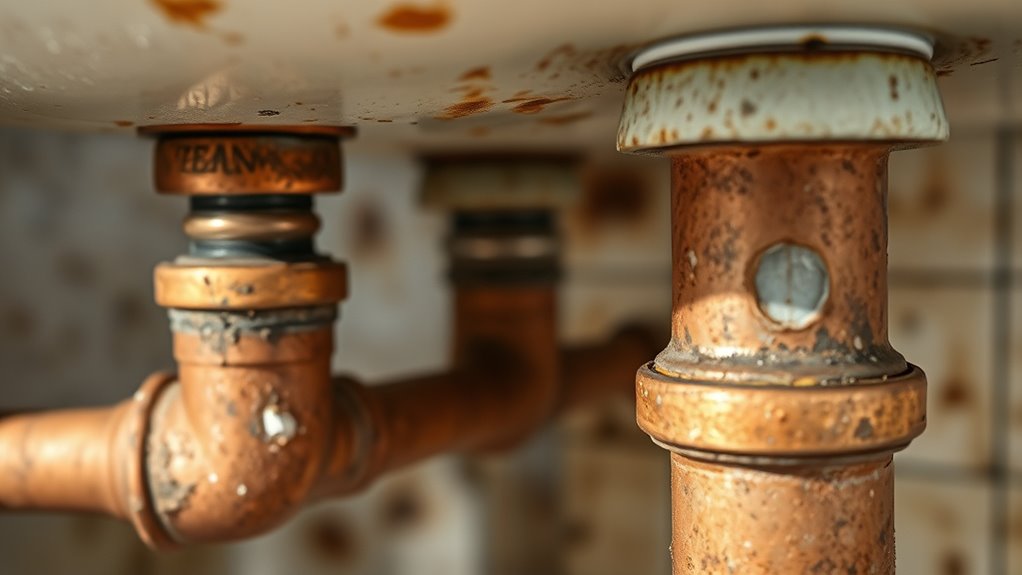
Preventing pipe corrosion starts with simple maintenance practices that you can easily implement. First, choose the right pipe material. Copper or plastic pipes resist corrosion better than older steel or iron pipes. Second, monitor and improve water quality; reduce acidity and mineral content to lessen corrosive effects. Consider installing water softeners or filtration systems to keep water less aggressive. Third, regularly inspect your pipes for early signs of corrosion, especially at joints and bends. Consistent maintenance helps catch problems early, preventing costly repairs. By paying attention to pipe material and water quality, you can considerably extend your pipes’ lifespan and avoid hidden corrosion that might go unnoticed. Simple steps now save you trouble and expense later.
Repair Options for Damaged Pipes
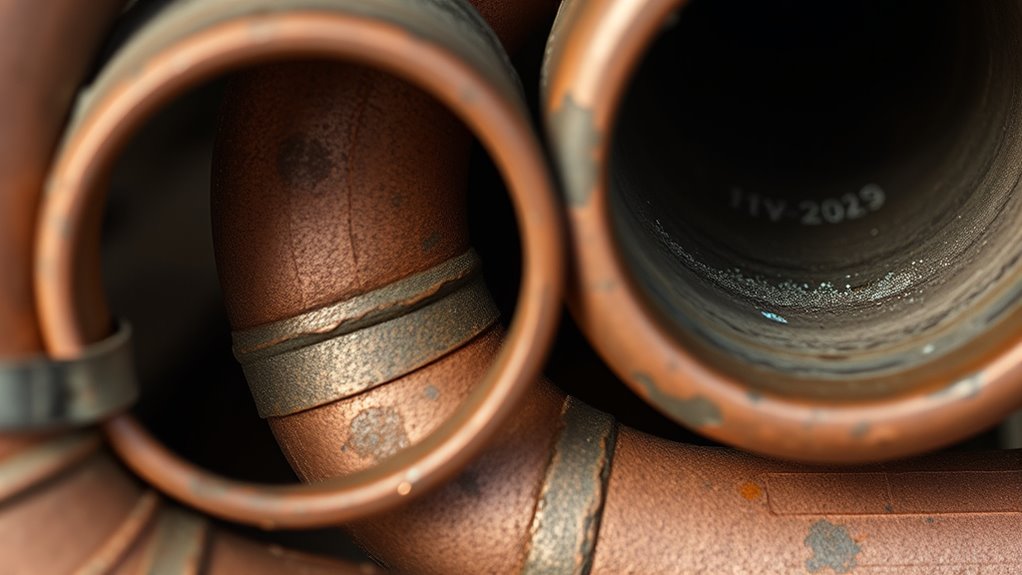
When pipes sustain damage, timely repairs are essential to avoid further deterioration and costly replacements. You have several options, depending on the extent of damage. Pipe lining involves inserting a resin-coated liner to seal leaks and restore pipe integrity. For larger cracks, replacing sections or entire pipes may be necessary. To prevent future issues, consider adding pipe insulation, which reduces temperature fluctuations and minimizes corrosion risks. Monitoring water pressure is vital; high pressure can worsen damage.
| Repair Method | Description |
|---|---|
| Pipe Lining | Seals leaks internally with a resin coating |
| Section Replacement | Swaps out damaged pipe segments |
| Full Replacement | Replaces entire pipe system |
| Pipe Insulation | Protects against temperature extremes and corrosion |
| Pressure Regulation | Maintains ideal water pressure to prevent damage |
Why Regular Maintenance Protects Your Plumbing
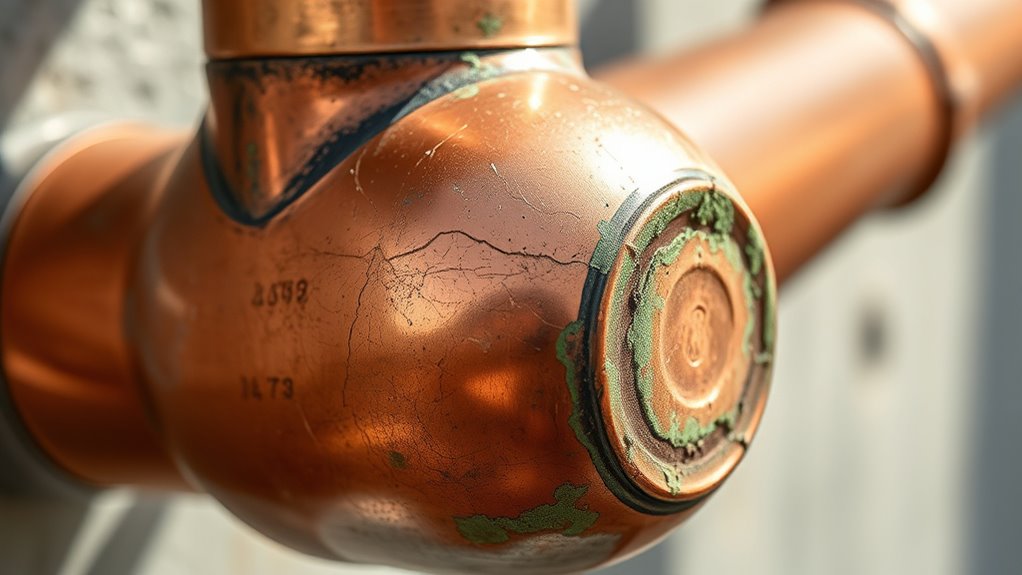
Regular maintenance is the key to keeping your plumbing system functioning smoothly and avoiding costly repairs down the line. Proper upkeep helps prevent hidden corrosion and extends the lifespan of your pipes. Here’s how regular maintenance protects you:
- Inspecting pipe insulation ensures pipes don’t freeze or crack, reducing corrosion risk.
- Water softening systems prevent mineral buildup that can corrode old pipes from the inside.
- Routine checks catch early signs of leaks or deterioration before they escalate into major problems.
Frequently Asked Questions
How Long Do Old Pipes Typically Last Before Significant Corrosion Occurs?
Old pipes typically last around 50 to 70 years before significant corrosion occurs, but this depends on material and water quality. The corrosion timeline varies, with early signs developing after 20-30 years, especially in metal pipes exposed to harsh water conditions. Regular inspections help you catch problems early. To extend your pipe lifespan, consider upgrading to corrosion-resistant materials and maintaining proper water pH levels to slow down the process.
Can Corrosion in Pipes Cause Health Issues Even if Unnoticed?
Yes, corrosion in pipes can cause health issues even if you don’t notice it. Lead poisoning can occur if lead pipes corrode, releasing toxins into your water. Bacterial growth can also thrive on corroded surfaces, increasing the risk of waterborne illnesses. Even without visible signs, these hidden problems can impact your health, so regular testing and pipe inspections are essential to keep your water safe.
Are There Specific Water Qualities That Accelerate Pipe Corrosion?
Think of your water as a patient with a fragile immune system. Acidic water with low pH levels and high mineral content acts like a corrosive acid rain, speeding up pipe deterioration. When water’s pH drops, it becomes more aggressive, and minerals like calcium or iron can catalyze corrosion. To protect your pipes, monitor these qualities and consider treatment options to keep your water’s chemistry balanced and your pipes safe.
What Are the Most Effective Long-Term Solutions for Severely Corroded Pipes?
You should consider pipe replacement for severely corroded pipes, as it offers a permanent fix. Pair this with corrosion inhibitors to slow further deterioration and protect your plumbing system. Regular inspections help catch corrosion early, reducing long-term damage. Combining these strategies ensures your pipes stay functional longer, minimizes costly repairs, and maintains water quality. These proactive steps are your best bet for long-term pipe health and performance.
How Does Pipe Material Influence Corrosion Vulnerability Over Time?
Your pipe material directly impacts its corrosion vulnerability over time. Metal pipes like iron or steel are more prone to rust, while copper and PVC offer better corrosion resistance. Pipe composition determines how well your pipes withstand environmental factors, chemical exposure, and age. Choosing materials with superior corrosion resistance minimizes deterioration, extends lifespan, and reduces maintenance costs, ensuring your plumbing stays reliable for years to come.
Conclusion
Don’t wait until a small problem becomes a costly disaster. Hidden corrosion can quietly weaken your pipes, risking leaks, water damage, and health issues. Stay vigilant, perform regular checks, and act early to protect your home. The real danger isn’t always visible—so what’s lurking inside your pipes? Keep your plumbing safe and sound before it’s too late. The next warning sign could be closer than you think—are you prepared to catch it in time?



![Navier-Stokes – Tristan Buckmaster [Pdf]](https://micronomicon.com/wp-content/uploads/2026/09/navier-stokes-tristan-buckmaster-pdf-featured-260x140.jpg)

