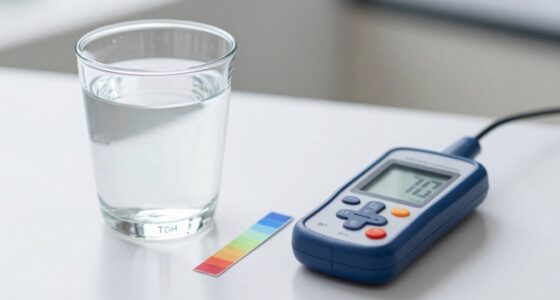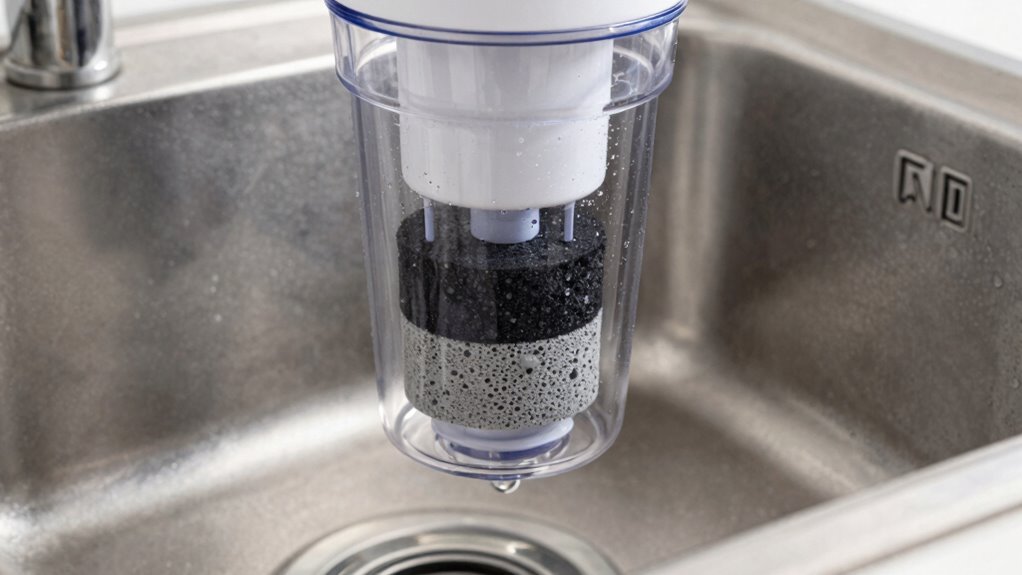

Household water filters can’t remove all microbes, viruses, or chemical pollutants, so harmful bacteria or viruses might still pass through. They often fail to eliminate pesticides, VOCs, heavy metals, and minerals like calcium and magnesium that affect taste. Plus, tiny gases and volatile compounds can vaporize and escape. Regular maintenance is vital to prevent buildup and guarantee efficiency. To keep your water truly safe, exploring additional methods can make a big difference—discover more below.
Key Takeaways
- Household filters cannot effectively alter water pH levels or remove dissolved minerals like calcium and magnesium.
- They often fail to eliminate all viruses, resistant bacteria, and tiny protozoa due to pore size limitations.
- Chemical pollutants such as pesticides, industrial chemicals, and VOCs often require specialized filtration methods.
- Filter clogging and biofilm buildup can reduce efficiency and may lead to recontamination if not properly maintained.
- Gaseous contaminants and volatile organic compounds can vaporize and escape, bypassing standard filtration systems.

iSpring RCC7AK-BN NSF Certified, 75 GPD, Alkaline 6-Stage Reverse Osmosis System, pH+ Remineralization RO Water Filter System Under Sink Patented Top-Mounted Faucet Design for Easy Installation
- Patented Top-Mounted Faucet Design: Easy above-sink installation
- Mineral Boost Stage: Adds essential minerals and pH balance
- Transparent Filter Housing: Monitor contaminant buildup easily
As an affiliate, we earn on qualifying purchases.
As an affiliate, we earn on qualifying purchases.
What Household Water Filters Can’t Remove
While household water filters can effectively remove many common contaminants, they aren’t capable of eliminating everything. For example, they often struggle with pH adjustment, which requires chemical treatment or specialized systems beyond basic filters. Sediment removal is another limitation; while filters can catch larger particles like dirt and rust, they may not fully eliminate fine sediments or mineral deposits that can clog appliances over time. Additionally, standard filters may not address issues like hardness or acidity, which can affect water quality and taste. If you need to correct pH levels or remove stubborn sediments, you’ll need to supplement your filtration system with additional treatments. Recognizing these limits helps you choose the right combination of solutions for clean, safe water. Understanding filtration limits ensures you select the most effective water treatment approach for your household.

Brita Large 10 Cup Water Filter Pitcher, Includes 1 Filter, Bright White
- Capacity: 10 cups of water
- Material: BPA-free plastic
- Environmental Impact: Reduces plastic bottle waste
As an affiliate, we earn on qualifying purchases.
As an affiliate, we earn on qualifying purchases.
Which Microbes and Pathogens Filters Can’t Catch
Many household water filters are effective at reducing certain bacteria and protozoa, but they often can’t remove all microbes and pathogens. This is mainly due to pathogen resistance and microbial size. Some microbes are too small or resistant to filter methods, allowing them to slip through. Specifically, filters may struggle with:
- Viruses, which are often less than 0.2 microns in size and can pass through many filters.
- Microorganisms with high pathogen resistance, like certain resistant bacteria.
- Tiny protozoa or cysts that are smaller or more resilient than the filter’s pore size.
Because of these factors, some pathogens can evade filtration, making it essential to understand your filter’s limitations for safe water consumption.
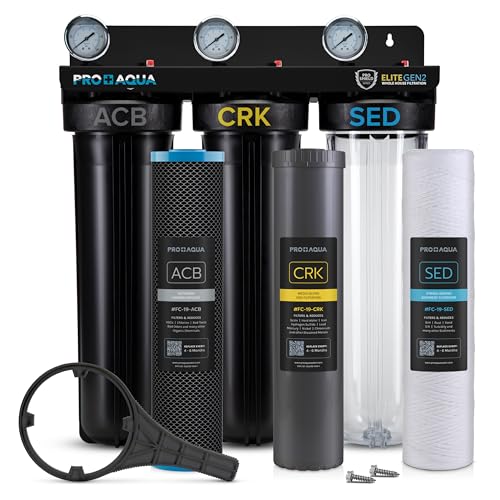
PRO+AQUA Elite Series GEN2 PRO-100-E 3-Stage Whole House Water Filtration System for City & Well Water with Pressure Gauges | Reduces Contaminants, Sediment, Chemicals, Heavy Metals, with 1” Ports
- Ideal for small to medium households: Suitable for 1-3 bathrooms, city & well water
- 3-Stage filtration system: Provides comprehensive water purification
- Sediment filter in Stage 1: Captures rust, dust, silt, and dirt
As an affiliate, we earn on qualifying purchases.
As an affiliate, we earn on qualifying purchases.
Chemical Pollutants That Need Special Filtration
Chemical pollutants in household water can pose serious health risks if not properly filtered out. Chemical contaminants such as pesticides, industrial chemicals, and volatile organic compounds often require special filtration methods. Standard filters may not effectively remove these substances, so investing in activated carbon filters or reverse osmosis systems is essential. These systems are designed to target and reduce chemical pollutants, ensuring your water is safer to drink. Without proper filtration, you risk exposure to harmful chemicals that can cause health issues over time. Be aware that not all household filters are equipped for chemical removal, so choose a filtration system specifically designed for chemical contaminants. Proper filtration helps safeguard your health and provides peace of mind with clean, safe water. Innovative European Cloud Servers leverage sustainable technologies that can also influence advancements in water treatment monitoring systems.
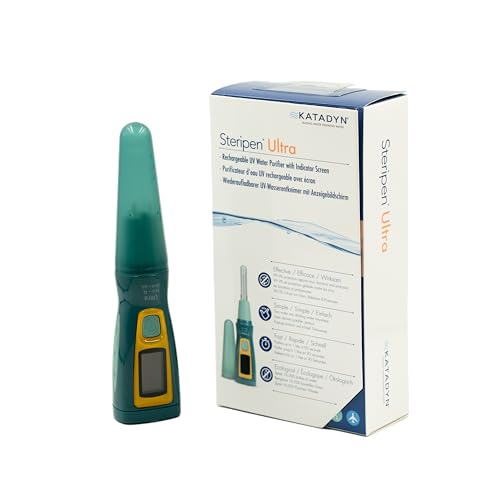
SteriPen Ultra UV Water Purifier, USB Rechargeable
- Lightweight and Portable: Weighs 4.94 oz
- Compact Size: Dimensions: 7.3 x 1.6 x 1.3 in
- Long-lasting Lamp: 8,000 treatments per lamp
As an affiliate, we earn on qualifying purchases.
As an affiliate, we earn on qualifying purchases.
Heavy Metals and Minerals That May Remain
Even if your water filter effectively removes chemical pollutants, some heavy metals and minerals can still slip through. These contaminants often originate from natural sources or aging infrastructure. Be aware of these common issues:
- Heavy metals like lead, mercury, and cadmium can linger despite filtration efforts.
- Mineral content such as calcium and magnesium may remain, affecting water taste and quality.
- Certain filters may not be designed to target these specific heavy metals and minerals effectively.
Because of this, you might still be exposed to trace amounts of harmful metals or excess minerals. While some filters claim to reduce heavy metals, their effectiveness varies. Regular testing and choosing specialized filters can help ensure safer, cleaner water. Additionally, understanding water quality and flow rate options can help you select the most appropriate system for your needs.
How VOCs and Gases Slip Through Filters

VOCs (volatile organic compounds) and gases can easily bypass standard household water filters because of their small size and ability to vaporize. VOC gases, including volatile compounds, are tiny molecules that slip through most carbon filters and other common filtration systems. Since these gases are volatile, they can vaporize and escape during filtration or even when water is stored, making them hard to trap. Standard filters are designed to target larger particles, heavy metals, and sediments, but their pore sizes are too large to block these microscopic, gaseous pollutants. As a result, VOC gases and volatile compounds often remain in your water, potentially impacting taste, odor, and health, even if your water appears clear and clean. Understanding filtration limitations helps emphasize why these gases can escape typical household systems.
Why Standard Filters Can’t Eliminate All Microbes

Standard filters often can’t remove all microbes because some are tiny enough to pass through their pores. The effectiveness also depends on the filter material, which may not trap every type of bacteria. Plus, certain microbes develop resistance, making them harder to eliminate completely. Additionally, some microbes can survive in high contrast ratio environments, further reducing filtration efficiency.
Microbe Size Limitations
Have you ever wondered why some water filters can’t remove all microbes? The main reason is microbe size. Certain microbes are smaller than the filter pore size, making them hard to trap. Here are three key points to ponder:
- Microbes like viruses are often less than 0.2 microns—smaller than many filter pores.
- Bacteria vary in size but can be as tiny as 0.2 microns, slipping through standard filters.
- Protozoa are larger, but some cyst forms can squeeze through larger pore sizes.
- The effectiveness of a filter also depends on the filter material used, which influences pore size and microbial removal capabilities.
Because filter pore size determines what gets caught, microbes smaller than the pore size pass right through. This size limitation means standard household filters can’t eliminate all microbes, especially the tiniest viruses.
Filter Material Effectiveness
Why do many household water filters fall short of eliminating all microbes? It mainly comes down to the filter material and pore size. Standard filters rely on physical barriers with specific pore sizes to trap particles, but some microbes are smaller than these pores. If the pore size isn’t small enough, microbes can slip through, bypassing the filter. Additionally, not all filter materials are equally effective at capturing or neutralizing microbes. Some materials may allow certain bacteria or viruses to pass or may degrade over time, reducing their effectiveness. Even high-quality filters have limitations, especially if not maintained properly. Hence, understanding the pore size and material properties helps explain why some microbes can evade standard household filters. Vetted – Berkley Vallone
Bacteria Resistance Challenges
Many bacteria have developed resistance mechanisms that allow them to evade filtration, making it difficult for household water filters to remove all microbial contaminants. One major challenge is antibiotic resistance, which enables bacteria to survive disinfection processes. Additionally, biofilm formation creates a protective layer around bacteria, shielding them from filtration and disinfectants. Here are key issues:
- Resistant strains can pass through filters designed for standard microbes.
- Biofilms cling to filter surfaces, recontaminating water over time.
- Some bacteria adapt quickly, developing new resistance traits.
- The presence of resistant bacteria is further complicated by the horsepower of electric dirt bikes, which illustrates how quickly some organisms can adapt to environmental pressures.
These factors mean that even advanced filters can’t guarantee complete removal of all bacteria. To protect your water, consider combining filtration with regular maintenance and additional treatment methods to address these resistance challenges effectively.
Why Regular Filter Maintenance Matters

If you don’t maintain your water filter regularly, it can clog or develop buildup that reduces its flow. Over time, this buildup makes the filter less effective at removing impurities. Staying on top of maintenance guarantees your filter keeps working efficiently and keeps your water clean. Regular filter inspections help identify potential issues before they compromise water quality.
Filter Clogging and Buildup
Regular filter maintenance is essential because clogged or buildup-laden filters can considerably reduce water flow and effectiveness. When filters clog, your household water filter’s lifespan shortens, and clog prevention becomes more difficult. To maximize filter performance, focus on: 1. Regularly replacing filters before they become overly clogged. 2. Monitoring water quality to identify early signs of buildup. 3. Flushing or cleaning filters as recommended by the manufacturer. Additionally, understanding the filter lifespan can help you plan timely replacements and prevent issues caused by buildup.
Effectiveness Over Time
Over time, a well-maintained water filter continues to perform efficiently, providing clean, safe water for your household. Regular filter maintenance extends its lifespan and prevents contaminant breakthrough. When filters become clogged or saturated, their ability to trap harmful substances diminishes, risking water quality. Monitoring your filter’s lifespan ensures you replace it before contaminants slip through. Here’s a quick guide:
| Filter Lifespan | Signs to Replace | Consequences of Delay |
|---|---|---|
| 6-12 months | Reduced flow rate | Contaminant breakthrough |
| 3-6 months | Unpleasant taste or odor | Bacterial growth |
| As recommended | Visible buildup | Reduced filter efficiency |
| After heavy use | Increased sediment | Unsafe drinking water |
| Periodically | Alarming color change | Health risks |
Stay vigilant to keep your water safe and your filter effective.
How to Use Other Methods for Clean, Safe Water
When household water filters aren’t available or suitable, you can still guarantee your water is safe by using alternative methods. Here are three effective options:
- Boiling water for at least one minute kills most bacteria, viruses, and parasites.
- UV sterilization exposes water to ultraviolet light, destroying harmful microorganisms.
- Chemical disinfectants like iodine or chlorine drops can disinfect water when used properly.
These methods are simple, cost-effective, and reliable in emergencies or when filtering isn’t enough. Boiling is especially effective against pathogens, while UV sterilization offers a chemical-free solution. Always follow instructions carefully to ensure your water is truly safe to drink. Combining methods can provide extra assurance, especially in areas with uncertain water quality.
Frequently Asked Questions
Can Household Filters Remove Viruses Effectively?
Household filters generally can’t remove viral particles effectively because of their small size, often below the filter’s pore size. While some filters, like those with UV purification or high-grade reverse osmosis, can reduce viruses, most standard filters have limitations. You should know that relying solely on typical household filters may not fully eliminate viruses, so consider additional purification methods if virus removal is your primary concern.
Are There Water Contaminants That Require Professional Treatment?
Think of your water as a fragile glass, easily shattered by unseen threats. You’ll need professional treatment if industrial pollutants or chemical residues threaten its clarity. Household filters can’t always catch these stubborn contaminants, which lurk beneath the surface. When your water’s integrity is compromised by such dangerous elements, expert filtration becomes essential to restore its purity and protect your health.
How Often Should Filters Be Replaced for Optimal Performance?
You should replace your filter according to its filter lifespan and recommended replacement schedule, usually every 6 to 12 months. Check your filter’s manual or indicator lights for guidance, as usage and water quality can affect its longevity. Regular replacements ensure your household water stays clean and safe, maintaining ideal performance. Don’t ignore signs like reduced flow or bad taste, and stick to the schedule to prevent contaminants bypassing your filter.
Do Filters Affect the Taste and Odor of Tap Water?
Like a fresh breeze clears the air, a good filter can improve your tap water’s taste and odor. It often reduces unwanted taste alterations and removes odors that make your water less appealing. However, some filters may not fully eliminate strong smells or taste issues caused by chemicals or minerals. Regularly replacing your filter guarantees it continues to effectively enhance flavor and odor removal, giving you cleaner, better-tasting water.
Can Boiling Water Replace Filtration for Safety?
Boiling water can’t replace filtration for safety because it doesn’t remove chemicals or contaminants like heavy metals and pesticides. While boiling kills bacteria and viruses, it doesn’t eliminate chemical impurities or improve taste and odor. If you’re concerned about chemical removal, use a proper water filter designed for that purpose. Boiling alone isn’t enough to guarantee thorough safety, especially when chemical contaminants are present in your tap water.
Conclusion
So, while your household filter might seem like a miracle worker, it’s not infallible. Ironically, it can give you a false sense of security—leaving behind unseen microbes, stubborn chemicals, and heavy metals. Water may look clear, but that doesn’t mean it’s entirely safe. To truly protect yourself, combine filters with regular maintenance and alternative purification methods. After all, in water safety, relying on a single solution is like trusting a single filter to catch everything—hope you’re not disappointed.