
One common mistake that ruins smoke detection is placing alarms on walls instead of ceilings or positioning them too close to kitchens, bathrooms, or vents. These locations can cause false alarms or delay detection. Also, installing a single alarm in large or open spaces isn’t enough—adding multiple detectors and ensuring proper spacing improves safety. To prevent these issues and boost your smoke alarm’s effectiveness, learn more about correct placement strategies.
Key Takeaways
- Installing alarms on walls instead of ceilings can delay smoke detection, reducing safety effectiveness.
- Placing alarms too close to vents, windows, or kitchens can cause false alarms or detection gaps.
- Mounting alarms behind furniture or in corners creates dead zones where smoke isn’t detected promptly.
- Using a single alarm in large or open areas may leave detection gaps; multiple alarms are necessary.
- Failing to maintain or replace alarms regularly can impair sensor function, compromising detection reliability.

First Alert Smoke Alarm, Battery-Operated Detector with Test & Silence Button, SMI100, 1-Pack
First Alert's Precision Detection advanced sensing technology complies with new industry standards to reduce cooking nuisance alarms and…
As an affiliate, we earn on qualifying purchases.
As an affiliate, we earn on qualifying purchases.
Avoid Common Mistakes That Reduce Smoke Alarm Effectiveness

Many homeowners unknowingly compromise their smoke alarms’ effectiveness by making simple placement errors. One common mistake is incorrect alarm placement, which can leave detection zones unprotected. If alarms are installed too high or too low, they may not detect smoke early enough. Mounting alarms near vents, windows, or drafts can cause false alarms or delay detection. It’s essential to position smoke alarms within proper detection zones—usually on the ceiling or high on a wall—where smoke naturally rises. Avoid placing alarms in dead zones, such as corners or behind furniture, which can prevent proper detection. Ensuring correct alarm placement maximizes coverage and reduces the risk of missing an early smoke warning, keeping you and your family safer. Proper placement also considers heat distribution, as certain locations can affect alarm sensitivity and response time.

11.1FT Smoke Detector Removal Tool with 2 Replacement Head and 1 Tool Pack,Professional Smoke Detector Changer Tool for Convenient Installation Direct Replacement,Suitable for Different Sizes
11.1 ft Ultra-Long Reach – Gives you 3–4 extra feet over most rival kits, letting homeowners, property managers…
As an affiliate, we earn on qualifying purchases.
As an affiliate, we earn on qualifying purchases.
Place Smoke Alarms Near Sleeping Areas for Better Safety
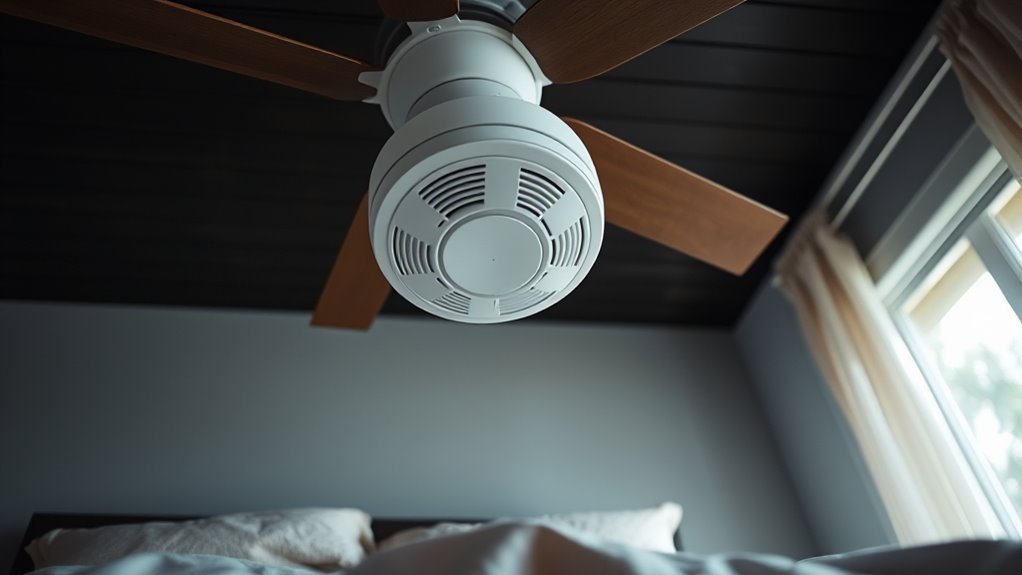
For maximum safety, placing smoke alarms near sleeping areas is essential because it guarantees you receive early warning during a fire. Proper bedroom placement assures that alarms are close enough to wake you, even when you’re asleep. Install alarms on the ceiling or high on the wall inside each bedroom and outside sleeping areas, such as hallways. Avoid placing alarms in dead zones, like close to windows or vents, which can interfere with detection. Positioning smoke alarms near sleeping areas allows you to respond quickly, giving you precious extra minutes to escape. Remember, effective placement directly impacts your safety, so prioritize bedrooms and sleeping zones to make certain you’re alerted in time to act. Additionally, understanding navigation and mapping in smart devices can help optimize alarm placement for comprehensive coverage.
First Alert Smoke Alarm, Battery-Operated Detector with Test & Silence Button, SMI100, 1-Pack
First Alert's Precision Detection advanced sensing technology complies with new industry standards to reduce cooking nuisance alarms and…
As an affiliate, we earn on qualifying purchases.
As an affiliate, we earn on qualifying purchases.
Keep Smoke Alarms Away From Kitchens and Bathrooms
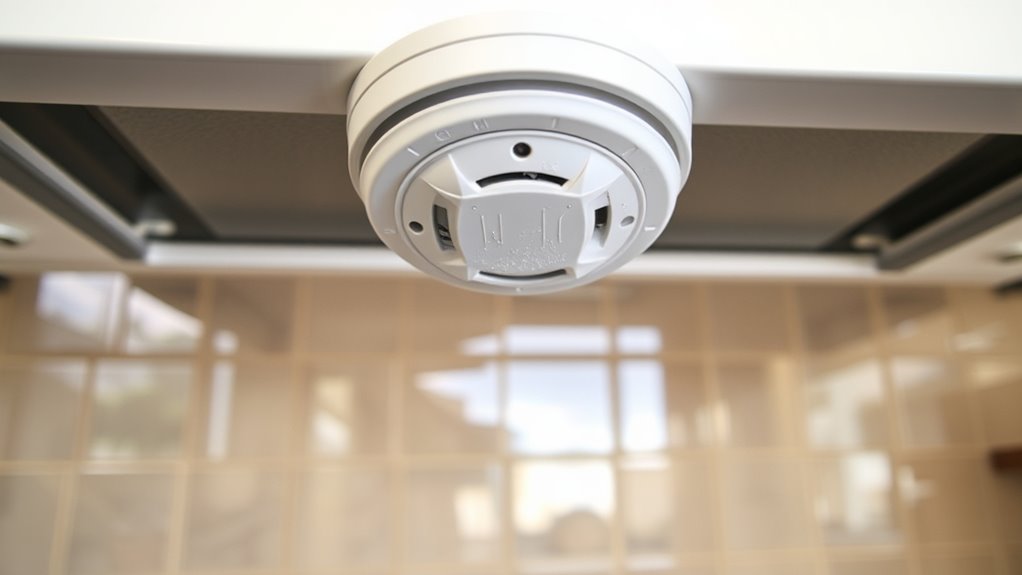
To guarantee your smoke alarms function effectively, keep them away from kitchens and bathrooms, where steam, smoke, and cooking fumes can trigger false alarms. Kitchen fumes from cooking can set off alarms if placed too close, leading to unnecessary noise and confusion. Similarly, bathroom humidity from showers creates moisture that can mimic smoke particles, causing false alerts. These triggers can desensitize you to real danger or cause alarm fatigue. To prevent this, install smoke alarms at least 10 feet from cooking appliances and bathrooms. This placement ensures they won’t react to steam or fumes but will still detect smoke promptly during emergencies. Properly positioning your alarms helps maintain their reliability and reduces false alarms, keeping your home safe and your peace of mind intact. Additionally, proper placement techniques can further enhance alarm effectiveness and longevity.

First Alert BRK SMI100-AC Hardwired Smoke Detector with Battery Backup, 6-Pack
6 pack of hardwired smoke alarms, includes battery backup for power outages
As an affiliate, we earn on qualifying purchases.
As an affiliate, we earn on qualifying purchases.
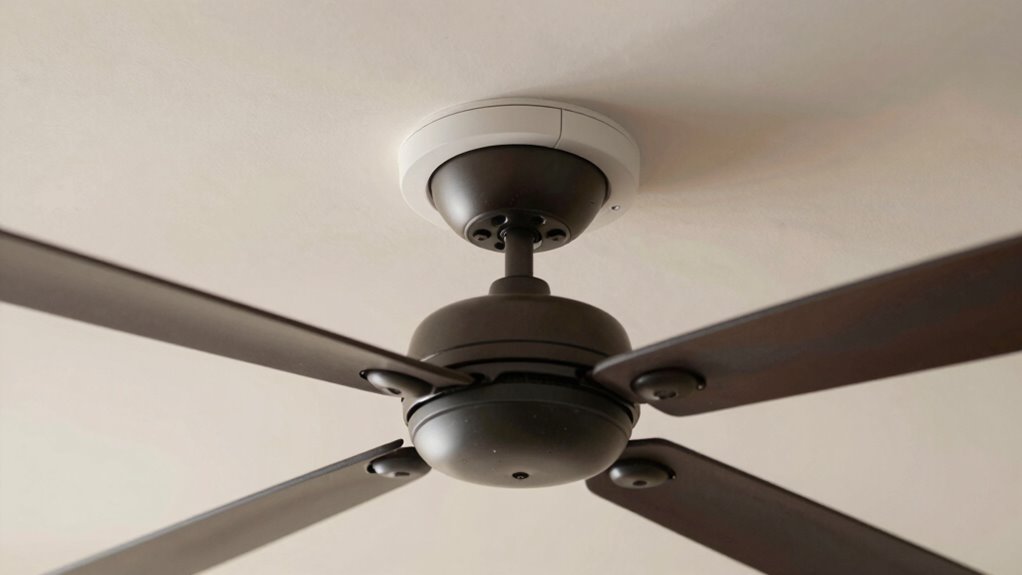
Mount Smoke Alarms on Ceilings Instead of Walls
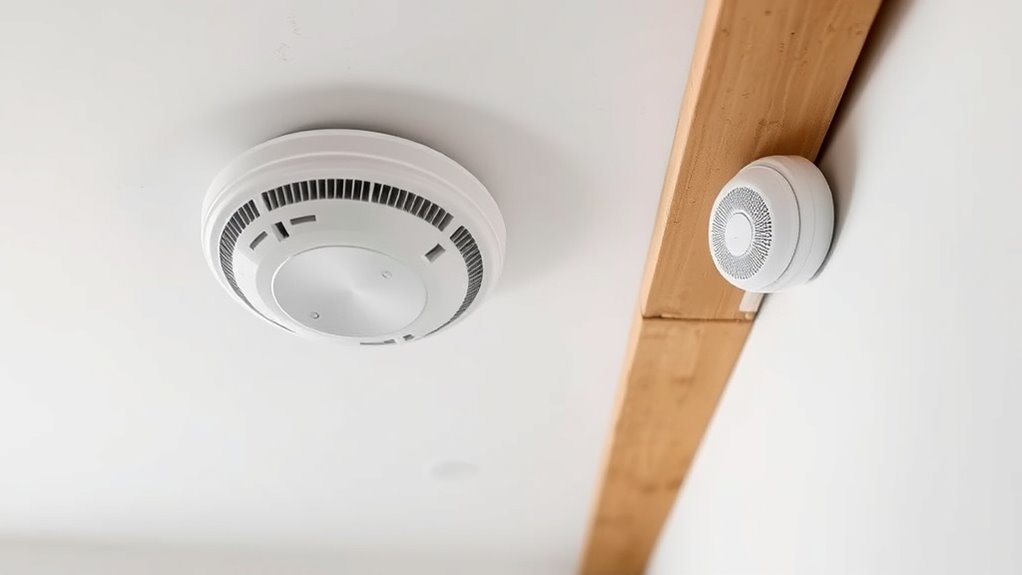
Mounting smoke alarms on ceilings guarantees they’re in the ideal detection zone, where smoke naturally rises. Building codes also specify ceiling placement for compliance and safety. Proper placement improves alarm effectiveness, giving you earlier warning in case of fire. Additionally, color accuracy can influence how well you interpret smoke and fire detection indicators on the alarm’s display.
Optimal Smoke Detection Zones
Placing smoke alarms on ceilings rather than walls guarantees the earliest detection of smoke and fire. This ideal smoke detection zone aligns with fire alarm technology and smoke detection standards, ensuring maximum safety. Smoke rises naturally, so alarms mounted on ceilings catch smoke sooner, reducing response time. To visualize this, consider:
- Mounting alarms at least 4 inches from the wall’s corner for proper airflow
- Avoiding placement near vents or windows that can disrupt smoke detection
- Installing alarms in the center of the ceiling for even coverage
- Ensuring alarms are on every level, especially bedrooms and hallways
- Proper placement is essential to maximize the effectiveness of smoke detection systems.
Building Code Compliance
Building codes specify that smoke alarms must be installed on ceilings rather than walls to guarantee compliance and peak safety. This requirement aligns with building regulations designed to enhance fire safety. Mounting alarms on ceilings ensures they detect smoke early, as smoke rises naturally and accumulates there first. Installing alarms on walls, even if near the ceiling, can lead to delayed detection, compromising safety and violating code. Adhering to these regulations not only keeps you compliant but also maximizes the effectiveness of your fire safety measures. Staying within building codes demonstrates your commitment to safety standards and helps prevent legal issues. Remember, proper placement on the ceiling is a key component of a reliable fire alarm system, ensuring you and your loved ones are protected when it matters most. Additionally, understanding fire safety best practices can further enhance your preparedness.
Alarm Effectiveness
Positioning smoke alarms on ceilings markedly improves their ability to detect smoke quickly and reliably. Proper alarm placement ensures smoke reaches the detection zones faster, minimizing delay in alerting you to danger. When alarms are mounted on ceilings, they are closer to where smoke naturally rises, enhancing their effectiveness. Walls, especially high ones, can create dead zones where smoke might not reach promptly. Proper placement also reduces false alarms caused by drafts or steam. Remember, alarms should be installed at least 4 inches from walls for ideal detection. Additionally, smart home integration can help monitor alarm status remotely and enhance overall safety. By adhering to correct alarm placement, you maximize their efficiency, ensuring faster alerts and better safety. This simple adjustment makes a significant difference in early smoke detection and overall fire safety.
Clear Obstructions and Clutter Around Smoke Alarms
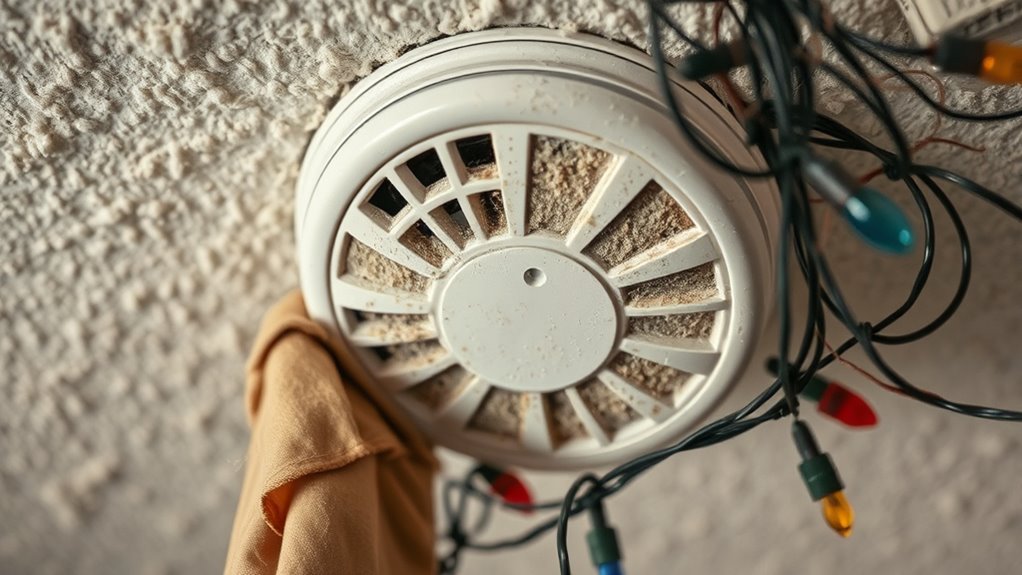
To make certain your smoke alarm functions properly, it’s vital to keep the area around it free of obstructions and clutter. Objects like decorative coverings or furniture can block smoke from reaching the sensor, leading to dangerous delays. Clutter also creates ventilation issues, preventing smoke from dispersing evenly. Ensure there’s a clear space at least 3 feet around the alarm, avoiding anything that could interfere with detection. Regularly check for dust or cobwebs that can hamper sensitivity. Remember, even small items or curtains can be a barrier. Staying vigilant keeps your alarm responsive when it matters most. Here’s a reminder:
| Obstruction Type | Potential Effect | Solution |
|---|---|---|
| Decorative Coverings | Delay detection | Remove or relocate |
| Furniture | Block airflow | Clear surrounding area |
| Dust & Cobwebs | Reduce sensitivity | Clean regularly |
| Clutter | Obstruct smoke | Keep area tidy |
| Ventilation Issues | Impede smoke flow | Improve airflow |
Additionally, ensuring proper air circulation around the alarm can enhance its effectiveness and quicken response times.
Install Multiple Alarms in Large or Open Spaces
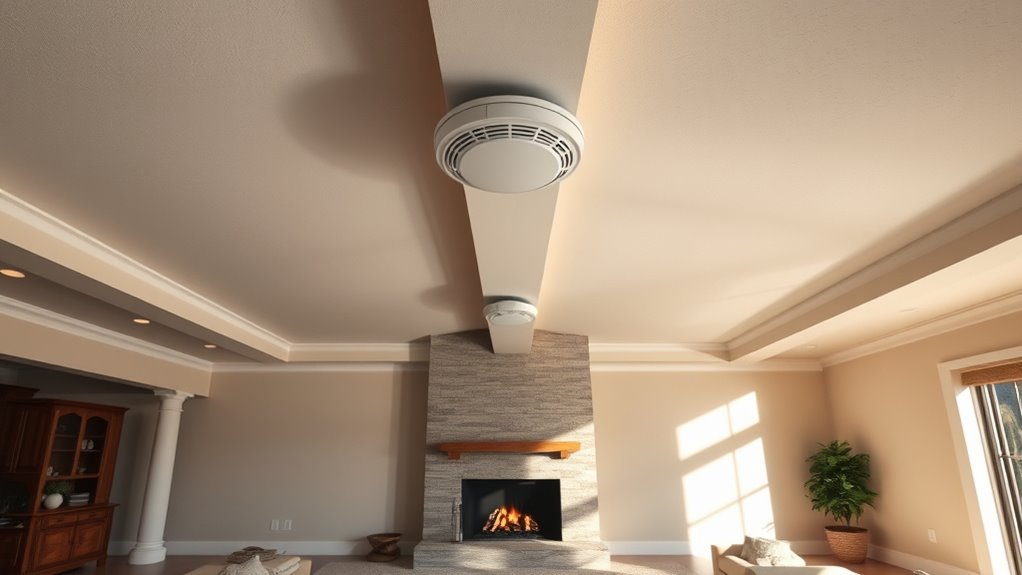
In large or open spaces, relying on a single smoke alarm may not provide adequate coverage. Open floor plans and outdoor areas can create blind spots where smoke might not reach a lone detector. To guarantee your safety, install multiple alarms strategically. Think about placing alarms:
- Near the kitchen and laundry room to catch cooking or appliance fires
- In hallways connecting different sections of the space
- At the top of stairways for proper detection on multiple levels
- Outdoors or near outdoor areas where fire hazards might originate
This setup helps ensure comprehensive coverage, especially in open floor plans or outdoor zones. Multiple alarms work together to alert you promptly, reducing the risk of undetected fires in large or expansive areas. Additionally, fire safety equipment such as interconnected alarms can enhance overall detection and response.
Maintain Proper Spacing Between Multiple Smoke Alarms
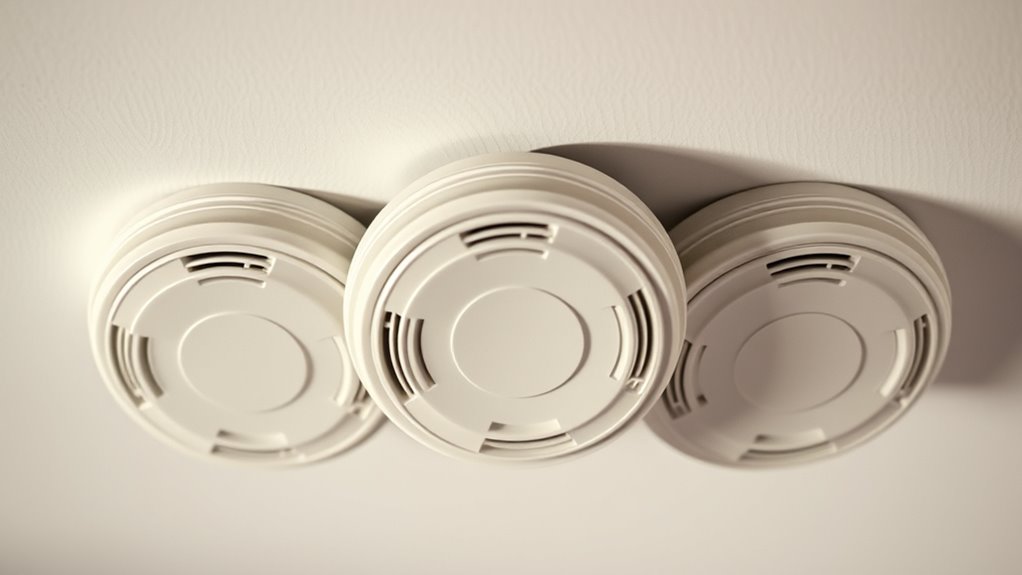
Proper spacing between smoke alarms is essential to guarantee early detection of smoke across your home or space. Following correct alarm placement and spacing guidelines ensures each alarm can detect smoke promptly without gaps. Place alarms at least 10 feet apart in large rooms and avoid installing them too close to corners, windows, or vents that could interfere with detection. In hallways and bedrooms, keep alarms on the ceiling or high on the wall, following the manufacturer’s recommended distances. Maintaining proper spacing prevents blind spots and overlapping coverage, which can delay alerts. Check the spacing guidelines specific to your alarms, as improper placement can compromise safety. Properly spaced alarms work together to provide thorough and reliable smoke detection throughout your home. Additionally, understanding alarm placement principles helps optimize coverage and safety.
Test and Replace Smoke Alarms Regularly for Reliability
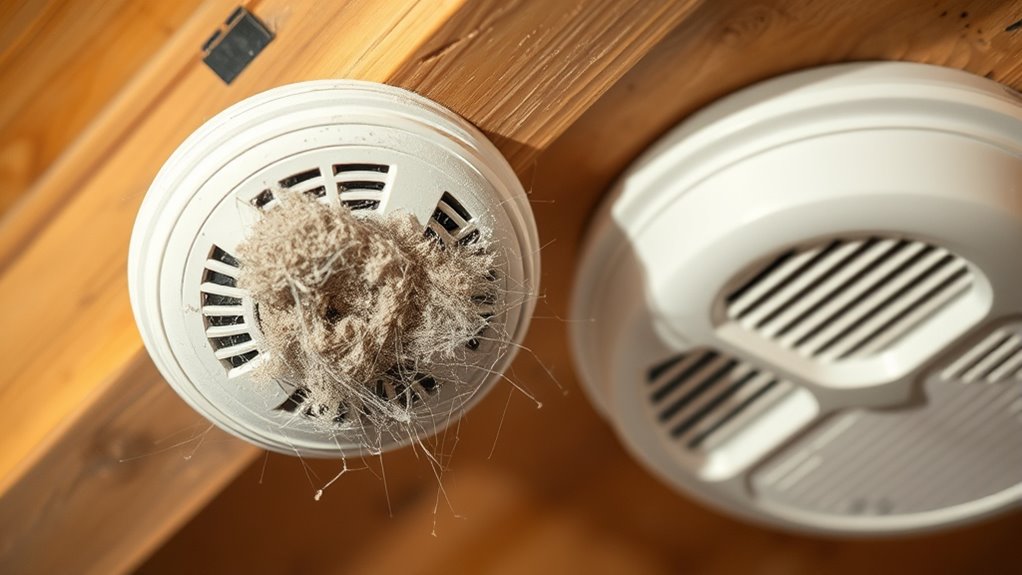
You should test your smoke alarms monthly to make certain they’re working properly. Remember to replace the batteries at least once a year, even if they haven’t chirped. After about 10 years, it’s best to upgrade to a new alarm for maximum safety.
Check Alarm Functionality Regularly
To guarantee your smoke alarm remains reliable, it’s essential to test it regularly and replace it when necessary. Regular checks ensure the sensor sensitivity stays ideal and that the alarm responds quickly when needed. Testing involves pressing the test button to hear the alert, confirming the alarm’s functionality. If it doesn’t sound, replace or service it immediately. Also, consider the alarm’s placement; alarms in the wrong spots can hinder detection.
- Visual inspection of the alarm’s sensor for dust or debris
- Confirming the alarm sounds during testing
- Ensuring alarm placement isn’t obstructed by furniture or walls
- Replacing alarms that are more than 10 years old or malfunctioning
Consistent checks keep your system trustworthy and alert you to potential issues early.
Replace Batteries Annually
Replacing your smoke alarm batteries every year is a simple yet essential step to guarantee continuous protection. Proper battery maintenance ensures your alarm functions correctly when it’s needed most. Set a reminder to change the batteries annually, even if they still seem operational. During battery replacement, perform alarm testing to confirm the device responds loud and clear. Regular testing helps identify issues early and maintains alarm reliability. Avoid neglecting this routine, as dead batteries are a common cause of alarm failure. Using fresh batteries and testing your smoke alarm regularly keeps it ready to alert you to danger. Remember, consistent battery maintenance and alarm testing are key to ensuring your smoke detector provides maximum safety for your home and loved ones.
Upgrade After 10 Years
Even if your smoke alarms seem to be functioning fine, they should be upgraded after 10 years to guarantee maximum safety. Over time, the battery lifespan decreases, and internal components degrade, reducing reliability. An alarm upgrade ensures you’re protected with the latest technology and standards. Regular testing is essential, but after a decade, even the best alarms can become unreliable. Consider these signs it’s time for an upgrade:
- The alarm chirps or malfunctions frequently
- It’s more than 10 years old
- Battery replacements no longer resolve issues
- The alarm’s sensitivity seems diminished
Investing in a new smoke alarm provides peace of mind, improved detection, and compliance with current safety codes. Upgrading after 10 years is a vital step in maintaining an effective fire safety system in your home.
Consider Ceiling and Wall Materials That Could Block Detection
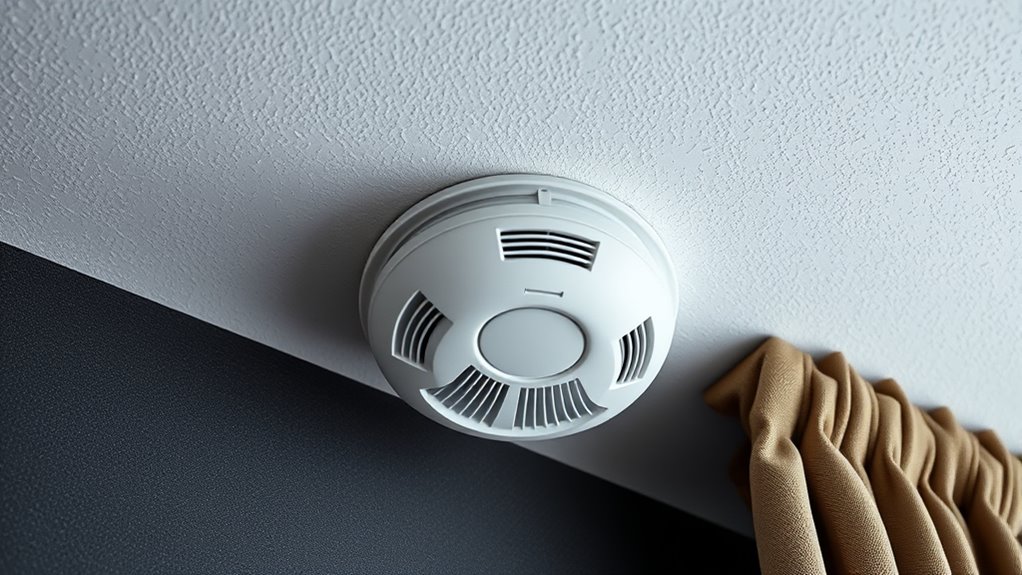
Certain ceiling and wall materials can substantially hinder smoke detector performance by blocking or muffling smoke signals. If your ceilings are made of dense materials like plaster or popcorn texture, or if wall coverings include thick wallpaper or paneling, smoke might not reach the detector efficiently. To guarantee proper detection, avoid installing alarms behind or near these materials. Consider the impact of the following:
| Material Type | Effect on Detection |
|---|---|
| Acoustic ceiling tiles | Absorbs smoke, reduces detection |
| Thick wallpaper | Blocks or muffles smoke signals |
| Textured wall finishes | Obstructs smoke flow |
| Metal panels | Reflects or shields smoke signals |
| Heavy plaster walls | Dampens smoke movement |
Choose locations with minimal obstructions to maximize your smoke alarm’s effectiveness.
Frequently Asked Questions
How Often Should I Replace My Smoke Alarm Batteries?
You should replace your smoke alarm batteries at least once a year as part of your maintenance schedule. To guarantee continuous protection, test your smoke alarm monthly and change the batteries promptly if it chirps or doesn’t sound during tests. Using high-quality batteries can extend their life, but regular battery replacement is essential for reliable detection. Make this a routine to keep your home safe and your alarms working properly.
Can Pets Interfere With Smoke Alarm Operation?
Pet interference can subtly affect your smoke alarm’s sensitivity, but it usually doesn’t trigger false alarms unless animals are very close or active near the detector. You might notice your pets brushing against or startling the alarm, causing minor disruptions. To guarantee ideal detection, keep pets away from alarms and install them in spots less frequented by animals. This way, your alarm stays reliable and your home remains safe.
Are There Different Smoke Alarms for Specific Fire Types?
You can find smoke alarms designed for specific fire types, such as those for cooking, which help with fire suppression. These alarms often feature specialized sensors and require proper alarm calibration for accurate detection. By choosing the right alarm for your environment, you improve safety and guarantee quick response. Remember to regularly test and calibrate your alarms to maintain peak performance and prevent false alarms or missed detections during a fire.
What Are the Latest Technologies in Smoke Detection?
You’ll find the latest smoke detection tech includes wireless connectivity, allowing your alarms to sync and alert you instantly via smartphones. Photoelectric sensors are also common, detecting smoldering fires more effectively and reducing false alarms. These advancements guarantee quicker responses and better safety, making it easier to monitor your home remotely. Embrace these technologies to stay ahead in fire safety and ensure your alarms work efficiently when it matters most.
How Do I Determine the Best Placement Height?
You should place alarms at a height of 4 to 12 inches below the ceiling, following height guidelines for maximum detection. Even if your ceilings are higher, don’t install alarms too close to walls or corners, as this reduces effectiveness. Remember, proper alarm placement ensures quick detection, so always follow recommended height guidelines and position alarms on the ceiling or high on the wall for the best safety.
Conclusion
If you ignore these placement mistakes, your smoke alarm might fail when you need it most. Proper placement is essential, but even the best location won’t help if you neglect regular testing and maintenance. Will your alarms catch a fire in time? Don’t wait until it’s too late—review your smoke alarm setup now. The difference between safety and disaster could come down to a simple placement tweak. Are you ready to protect what matters most?