
Relying solely on BTU ratings when choosing an air conditioner might seem quick and simple, but it often leads to poor cooling and wasted energy. Oversized units cycle on and off too often, wasting power, while undersized ones struggle to cool effectively, causing continuous operation and faster wear. Proper sizing depends on more than just BTU; factors like insulation and sunlight matter. Keep going to discover how to avoid these common pitfalls and optimize your cooling system.
Key Takeaways
- Relying solely on BTU can cause selecting an improperly sized AC, leading to inefficient cooling.
- Oversized units cycle frequently, wasting energy and increasing costs, despite having the correct BTU rating.
- Underestimating room factors like insulation and sun exposure with just BTU results in inadequate cooling.
- BTU-based sizing neglects installation quality, which impacts system efficiency and cooling performance.
- Ignoring comprehensive assessments and additional factors increases the risk of poor cooling and higher energy bills.
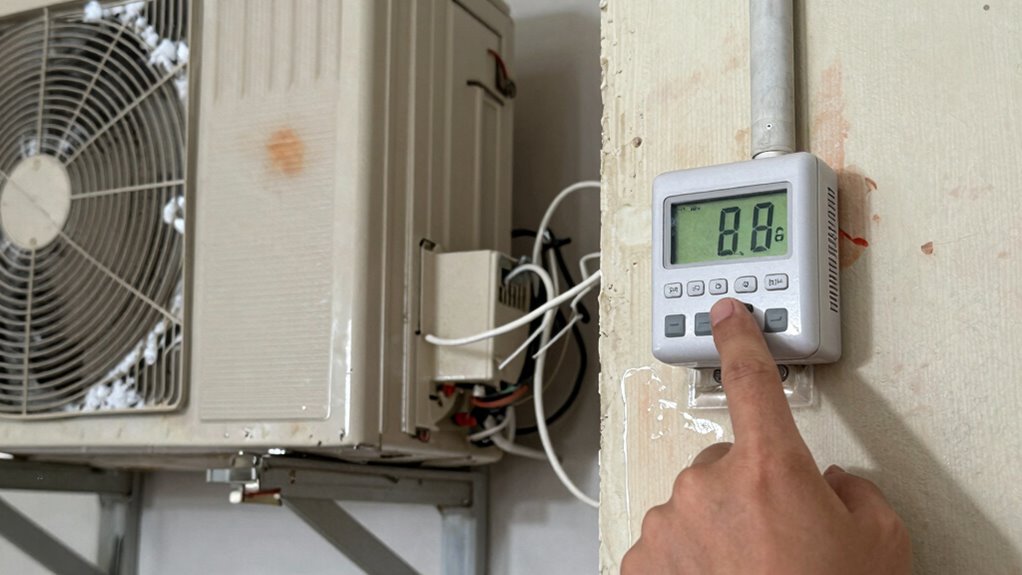
Many people rely on the BTU calculation to determine the right air conditioning units, but taking a shortcut with this number can lead to poor cooling choices. While BTU, or British Thermal Units, offers a quick way to gauge an AC’s capacity, it’s not the whole story. Choosing an AC based solely on BTU can result in systems that either underperform or waste energy. To guarantee your cooling system works efficiently, you need to take into account more than just the BTU rating.
Relying solely on BTU for AC sizing can lead to inefficiency and poor cooling performance.
When you focus only on BTU, you risk selecting an air conditioner that isn’t energy efficient. An oversized unit might cool your space quickly but will cycle on and off frequently, consuming more power and increasing your energy bills. Conversely, a unit that’s too small will struggle to cool the room adequately, forcing it to run constantly and wear out faster. Both scenarios are inefficient and costly. Proper sizing, which involves considering room size, insulation, sun exposure, and airflow, is vital for optimizing energy efficiency. This process often involves accurate assessment methods to ensure the right match for your space. These methods help identify factors like insulation quality and internal heat gain that influence cooling needs. Proper assessment can prevent common mistakes and ensure your system is tailored to your needs. Additionally, understanding home insulation factors can greatly impact the effectiveness of your cooling system. A thorough evaluation can also reveal other potential issues, such as drafts or ventilation problems, that might affect cooling performance.
Another common mistake comes from installation errors tied to misjudging the BTU needs. When you skip proper calculations or ignore installation guidelines, you open the door to several problems. For example, installing an AC that’s too powerful for the space might lead to frequent cycling, which not only wastes energy but also causes unnecessary wear and tear. On the other hand, improperly sealing ducts or vents can negate the benefits of a correctly sized unit, leading to uneven cooling and higher energy consumption. These installation mistakes often stem from relying solely on the BTU number without taking into account the specifics of your home’s layout and insulation. Using proper installation practices is crucial to ensure your system performs as intended and doesn’t become a source of additional issues. Additionally, understanding home insulation factors can greatly impact the effectiveness of your cooling system.
To avoid these pitfalls, you should consult professionals or use detailed sizing calculators that go beyond simple BTU estimates. They’ll factor in your home’s unique features to recommend a system that’s energy efficient and correctly installed. Remember, an air conditioner’s performance depends greatly on installation quality; even the best unit can underperform if installed incorrectly. Proper installation minimizes energy waste, improves comfort, and extends the lifespan of your system. Investing in comprehensive sizing assessments and professional installation is essential to ensure your cooling system is both effective and efficient. Ultimately, ignoring these details and relying solely on BTU numbers is a shortcut that can backfire, costing you more in energy bills and repairs.
energy efficient window air conditioner
As an affiliate, we earn on qualifying purchases.
As an affiliate, we earn on qualifying purchases.
Frequently Asked Questions
How Does Room Insulation Affect BTU Requirements?
Your room insulation markedly impacts BTU requirements because better insulation, like foam or fiberglass, acts as a thermal barrier, reducing heat transfer. This means you’ll need fewer BTUs to cool or heat the space effectively. Different insulation types vary in effectiveness, so choosing the right one guarantees your HVAC system isn’t overworked or underpowered, leading to more efficient cooling and energy savings. Proper insulation is key to accurate BTU calculations.
Can Multiple Small Units Outperform One Large Unit?
Multiple small units can outperform one large unit in some cases, especially when you prioritize energy efficiency and noise levels. Smaller units can be targeted to specific areas, reducing energy waste, and often operate more quietly. This setup allows better control over cooling zones, saving you money on energy bills and maintaining comfort. However, consider installation and maintenance costs, as well as overall system complexity, before choosing this approach.
What Are Signs of Over or Under Cooling?
You’ll notice over cooling if your space feels uncomfortably cold or if your energy bills skyrocket, wasting energy and money. Under cooling causes uneven temperatures, hot spots, and discomfort, making your space feel like a sauna or freezer. Both signs hurt energy efficiency and disrupt temperature consistency. Pay attention to these clues, and you’ll keep your cooling system running smoothly, saving energy and maintaining perfect comfort without overworking your unit.
How Often Should AC Units Be Serviced?
You should service your AC units at least once a year to maintain energy efficiency and peak cooling. Regular maintenance, including filter changes and coil cleaning, helps prevent issues that lead to over or under cooling. In high-use or extreme weather conditions, consider more frequent inspections. Proper maintenance frequency ensures your system runs efficiently, saves energy, and prolongs its lifespan—making sure you stay comfortable all season long.
Do Different Climates Require Different BTU Calculations?
Coincidences often highlight that different climates do require tailored BTU calculations. You should consider your local environment because energy efficiency and noise levels can vary considerably. In hotter, humid regions, you need higher BTU capacity for effective cooling without excessive energy use, while milder climates need less. Ignoring these factors can lead to inefficient operation, increased noise, and higher energy bills, so always customize your BTU choice based on your climate.
As an affiliate, we earn on qualifying purchases.
Conclusion
So, next time you see that BTU shortcut, remember it’s not a quick fix. Relying solely on those numbers can lead you astray, making you overlook the real needs of your space. Often, it’s coincidence — or just luck — that guides good decisions, not shortcuts. Keep in mind, understanding your room’s unique requirements will always serve you better than quick, misleading rules of thumb. Trust the process, and your cooling will thank you.
As an affiliate, we earn on qualifying purchases.
As an affiliate, we earn on qualifying purchases.