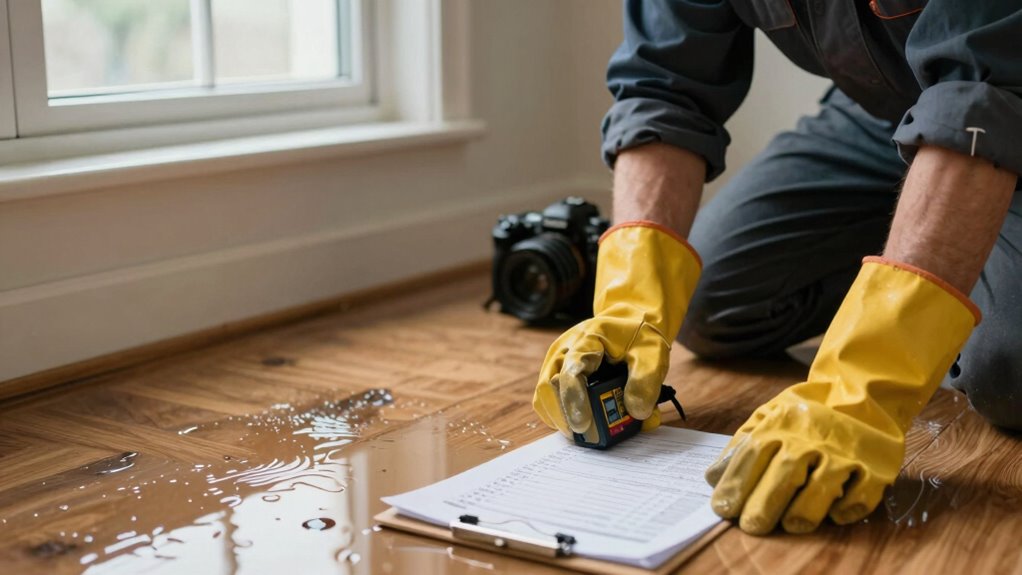
In the first hour after water damage occurs, prioritize safety by turning off electrical power, gas, and ventilating the space. Quickly locate and stop the water source to prevent further flooding. Use pumps and absorbents to remove standing water, then open windows and utilize fans for drying. Take photos for insurance, set up barriers against additional water intrusion, and contact professionals promptly. Following these steps helps minimize damage—continuing guarantees you’re prepared for what’s next.

Prime made for students and young adults
- Fast, free delivery for dorm and study essentials
- Prime Video and Amazon Music included
- Member-only deals
Key Takeaways
- Ensure safety by turning off electricity and gas, and wear protective gear before entering the affected area.
- Identify and shut off the water source to prevent further flooding or damage.
- Remove standing water using pumps and absorbent materials, then start drying with fans and ventilation.
- Set up barriers to prevent water from spreading to unaffected areas and protect inventory.
- Document damage thoroughly with photos and notes for insurance claims and future reference.
As an affiliate, we earn on qualifying purchases.
Ensure Safety Before Anything Else
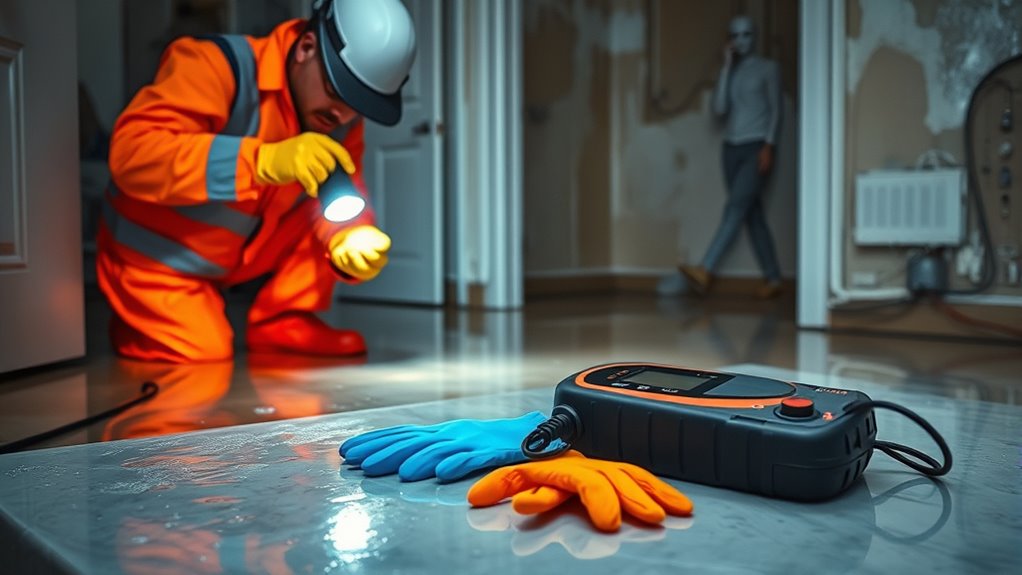
Before you begin any water damage cleanup, it’s crucial to guarantee your safety first. Start by wearing appropriate safety equipment, such as gloves, waterproof boots, and eye protection, to shield yourself from contaminants and electrical hazards. Next, conduct hazard identification—look for structural damage, exposed wiring, or mold growth that could pose risks. Avoid entering areas with standing water until you’ve confirmed it’s safe. Remember, electrical outlets and appliances might still be energized, so turn off the power at the breaker if needed. Your priority is preventing injury or health issues. By evaluating hazards and equipping yourself properly, you create a safe environment to proceed with the cleanup process confidently and efficiently. Incorporating connected safety devices can help monitor environmental hazards during recovery efforts.
As an affiliate, we earn on qualifying purchases.
Find and Stop the Water Source Quickly
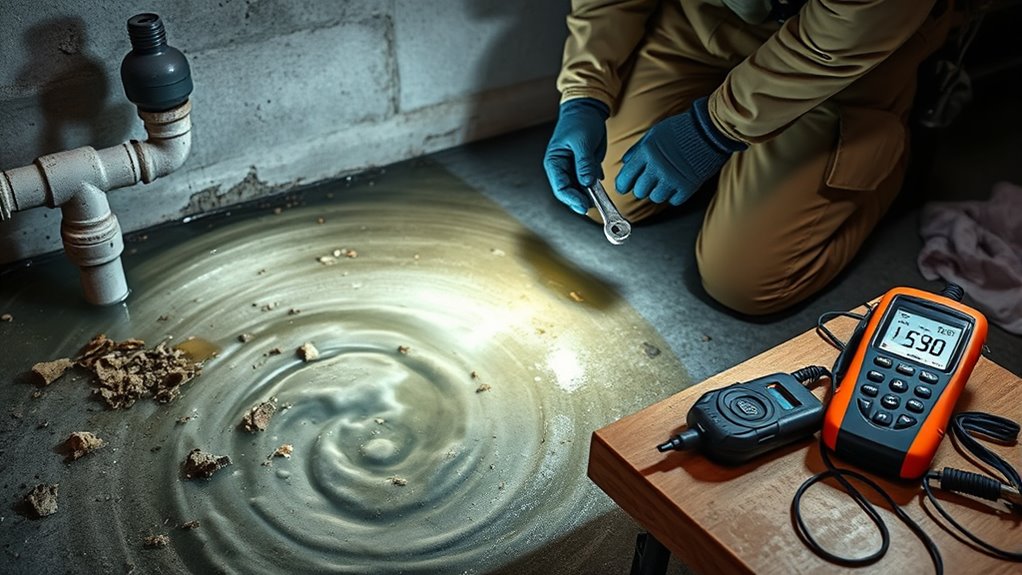
Once you’ve taken steps to guarantee safety, your next priority is locating and stopping the water source. Water source identification is vital to prevent further damage. Start by inspecting obvious areas:
- Check the toilets, sinks, and appliances for visible leaks or drips.
- Trace pipes along walls and ceilings for signs of moisture or damage.
- Look for pooled water or damp spots on floors and walls.
- Identify any burst or broken pipes that need immediate leak containment.
- Monitoring the contrast ratio of your setup can help assess the severity of water damage on electronic equipment.
Act quickly to shut off the main water valve if possible, or isolate the affected area to minimize further flooding. Precise water source identification helps you contain the leak effectively and limits additional damage.
As an affiliate, we earn on qualifying purchases.
Turn Off Power and Gas Safely
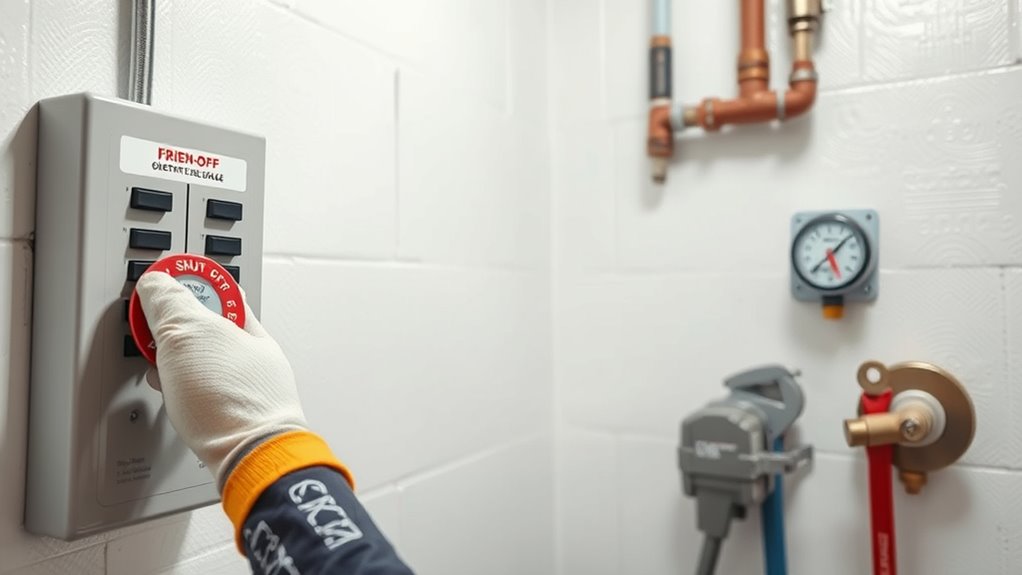
Turning off the power and gas supplies is a crucial step to guarantee safety during a water emergency. Electrical safety should be your top priority, so locate your main circuit breaker and switch it off to prevent electrical shocks or fires. Avoid touching electrical appliances or outlets that may be submerged. For gas safety, identify and shut off the gas valve to prevent leaks or explosions. Gas leak detection is essential, so listen for hissing sounds or smell for gas odors. If you suspect a leak, leave the area immediately and avoid using any electrical switches or flames. Always wear rubber gloves and use a flashlight to avoid sparks. Ensuring these supplies are safely turned off helps protect you and minimizes further damage. Additionally, understanding water damage prevention techniques can help mitigate the impact of flooding and reduce repair costs.
As an affiliate, we earn on qualifying purchases.
Remove Water Using Pumps and Absorbents
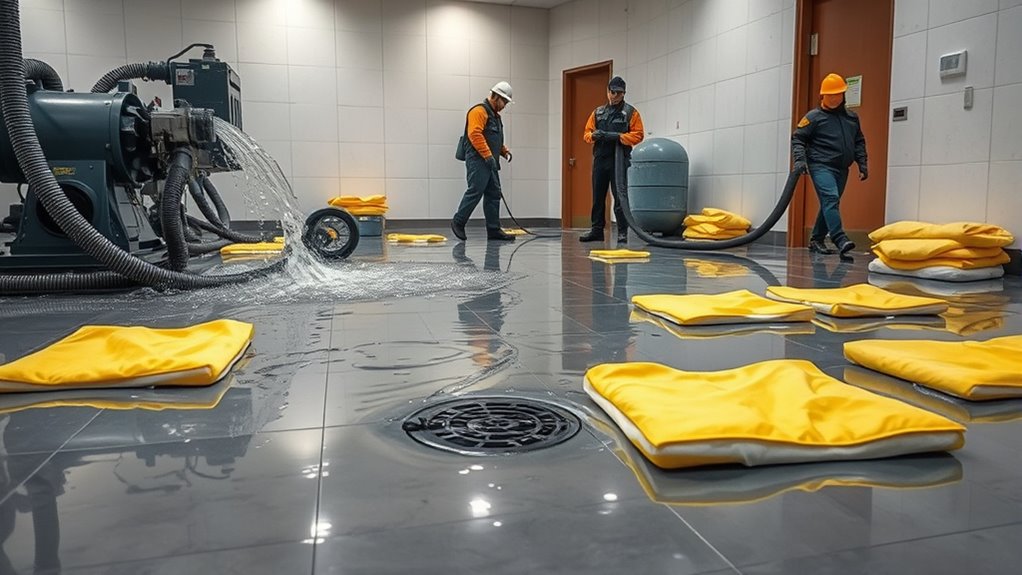
To effectively remove water from the affected area, start by using pumps to quickly extract large amounts of standing water. This is a crucial step in dewatering methods to prevent further damage. Once you’ve removed the bulk water, consider these steps:
- Position submersible or centrifugal pumps at strategic points to maximize efficiency.
- Use hoses to direct water away from the property toward drainage areas.
- Employ absorbent materials like towels, rags, or commercial absorbents to soak up residual moisture.
- Focus on high-traffic or low-lying areas where water tends to accumulate.
- Ensure that all electrical components are safely managed to prevent electrical hazards during the water removal process.
These methods help accelerate water removal and prepare the space for drying and restoration. Combining pumps with absorbent materials ensures thorough dewatering, reducing the risk of mold and structural issues.
Take Photos and Notes for Insurance Claims
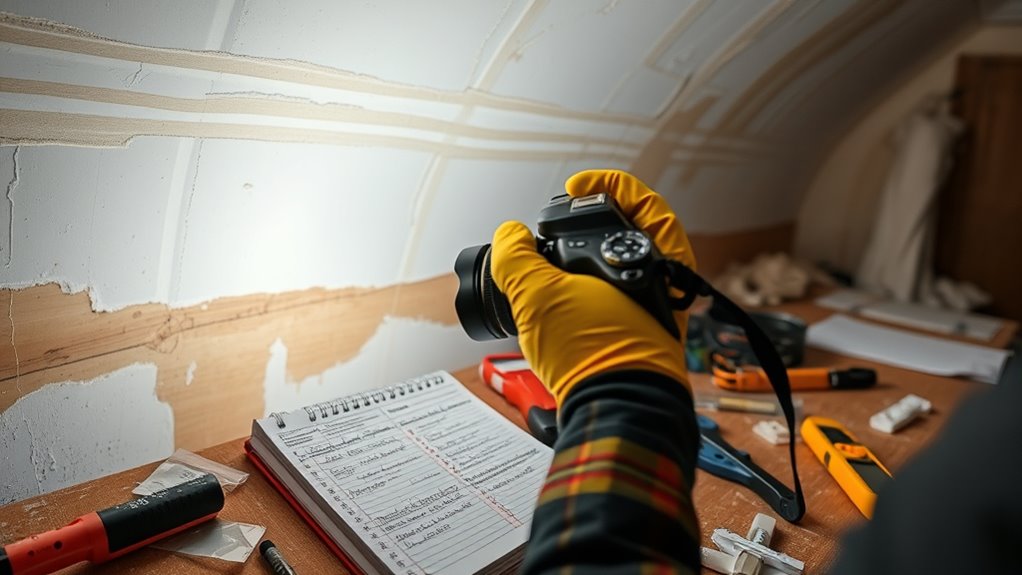
When documenting water damage, you need to take clear photos quickly to capture all affected areas. Be sure to record detailed notes about the extent of the damage and any important observations. Organize your photos and notes systematically so you can easily present them to your insurance company. Additionally, consider noting whether the water is free floating, which can impact the severity and necessary response actions.
Capture Clear Images Quickly
Capturing clear images quickly is essential to documenting water damage effectively. Your goal is to guarantee accurate photo documentation for insurance claims. To do this efficiently, focus on these steps:
- Use your phone or camera to take high-quality, well-lit photos of affected areas immediately.
- Capture wide shots that show the scope of the damage, including entire rooms or sections.
- Take close-up images of specific damage, such as water stains, soaked materials, or mold.
- Record notes alongside each photo, noting the date, time, and location for context.
- Ensure your images are properly organized and stored securely to prevent loss or confusion later.
Quick image capture helps preserve the damage’s details before conditions change. By prioritizing clear, thorough photos, you create a reliable record that supports your insurance claim and streamlines the process.
Record Damage Details Accurately
Accurately recording damage details is essential for ensuring your insurance claim is processed smoothly. Take detailed notes on the extent of water damage, including affected areas and items. Capture clear photos from multiple angles to document water quality issues and visible damage. Focus on areas prone to mold growth, like damp walls or saturated carpets, since thorough documentation aids mold prevention efforts later. Record the date and time of each incident and note any specific conditions, such as leaks or standing water. Keep a list of damaged belongings, their value, and any immediate actions you take. Additionally, understanding the importance of documentation in insurance claims can significantly impact the success of your claim. Precise photos and notes create a solid record for your insurer, helping verify claims and support your case, especially when addressing water quality concerns and mold prevention measures.
Organize Documentation Effectively
Organizing your documentation effectively guarantees that all your efforts are clear and accessible when you submit your insurance claim. Use solid organization strategies and reliable documentation tools to keep track of everything. First, take clear, timestamped photos of all affected areas, capturing every detail. Second, jot down notes describing the damage, including specific items and locations. Third, compile receipts, estimates, and relevant paperwork in a dedicated folder—digital or physical. Fourth, create an inventory list of damaged belongings with descriptions and values. By systematically collecting and storing this evidence, you assure your claim process runs smoothly. Proper organization helps prevent lost information and accelerates the insurance review, giving you peace of mind during a stressful time. Additionally, understanding warranty coverage and maintenance records can provide further support for your claim and help ensure proper repairs.
Move Valuables and Sensitive Items Out of the Way

When you notice water damage happening or about to happen, quickly move valuable and sensitive items out of its path. Your valuable belongings, such as electronics, jewelry, and important documents, need protection from water exposure. Don’t forget sentimental items like photographs, heirlooms, or keepsakes, which can be irreplaceable. Clearing these items minimizes damage and saves you from costly repairs or replacements later. Act swiftly to gather and relocate belongings to a safe, dry area. Be cautious to avoid further damage or injury while moving items quickly. This simple step can substantially reduce the overall impact of water damage, helping preserve your most important possessions and easing the cleanup process. Time is critical—don’t delay in protecting your valuables. Navigation and mapping techniques used by household robots can assist in quickly identifying and moving these items if automated options are available.
Open Windows and Use Fans to Dry the Area

Opening windows helps ventilate the space and allows fresh air to circulate. Using fans speeds up the drying process by moving moisture out of the air and surfaces. Together, these steps effectively reduce water damage and prevent mold growth. Incorporating proper ventilation can further improve air quality and speed up drying.
Ventilate for Airflow
Have you considered how proper ventilation can speed up the drying process after water damage? Ventilation improves airflow management and enhances moisture control, preventing mold growth. To maximize effectiveness, focus on these steps:
- Open windows on opposite sides of the room to create cross-ventilation.
- Position fans to direct fresh air into the space and move moist air out.
- Use exhaust fans or portable air movers to boost airflow.
- Keep doors open to allow air to circulate freely throughout the area.
Accelerate Drying Process
To speed up the drying process after water damage, actively open windows and use fans to increase airflow. Enhancing ventilation helps reduce water absorption in affected materials and accelerates drying techniques. By opening windows, fresh air circulates through the space, helping moisture escape faster. Fans create a continuous flow of air, which promotes evaporation and prevents mold growth. Position fans strategically to target wet areas, ensuring efficient drying. Keep doors open to improve overall ventilation, and consider using dehumidifiers alongside fans for even quicker results. These steps work together to eliminate excess moisture, minimize damage, and restore your space more rapidly. Consistent airflow is essential for effective water absorption management, making your drying process more efficient and less time-consuming.
Call Emergency Water Damage Experts
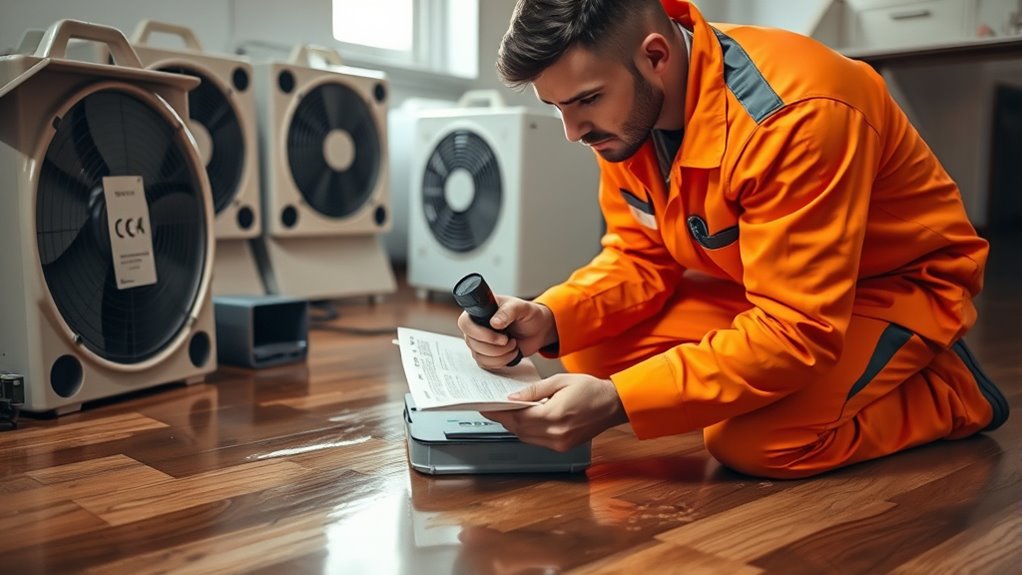
When water damage occurs, calling emergency water damage experts immediately can make all the difference in minimizing damage and preventing long-term issues. These professionals have the right water damage equipment to quickly assess and contain the situation. Imagine 1) professionals arriving with powerful pumps ready to extract water, 2) high-tech moisture meters pinpointing hidden dampness, 3) industrial dehumidifiers beginning to dry the affected areas, and 4) specialized tools stopping water intrusion before it causes further damage. Their expertise in water damage prevention guarantees that every step is efficient and effective. Acting swiftly with expert help reduces the risk of mold growth, structural deterioration, and costly repairs down the line. Don’t delay—call emergency water damage experts now to safeguard your property.
Set Up Barriers to Keep Water Out
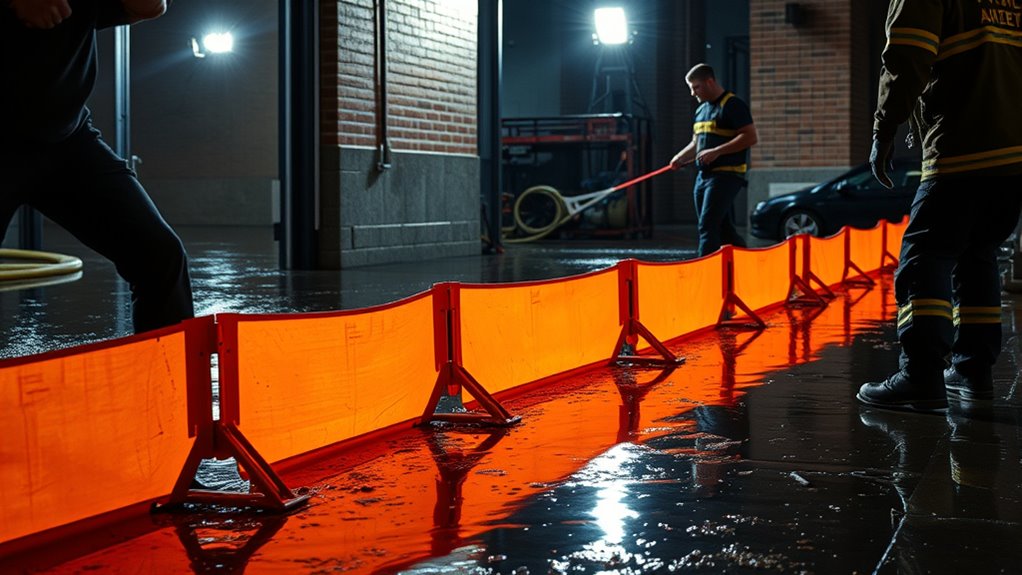
Once emergency water damage experts have started extracting water and drying the affected areas, your next priority is to prevent further intrusion. Setting up barriers to keep water out is vital. You can use temporary barriers like sandbags, plastic sheeting, or plywood to block water entry points. Proper barrier installation helps minimize additional water intrusion, protecting unaffected areas and reducing overall damage. Focus on sealing cracks, doorways, and vents where water might seep in. Guarantee the barriers are secure and weatherproof to withstand ongoing water movement. Acting quickly to establish these barriers can considerably limit the extent of water damage, making cleanup easier and faster. Always prioritize safety during barrier setup, and follow expert guidance for the most effective results.
Keep Records and Contact Your Insurance Company
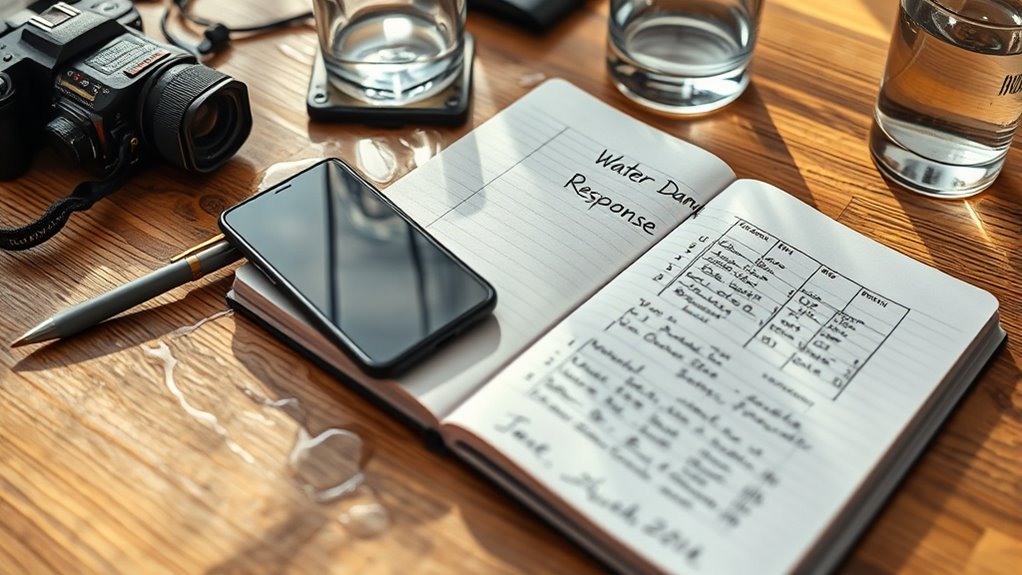
Document everything related to the water damage as soon as possible, including photos of affected areas, damaged belongings, and any repairs you make. Proper document organization helps streamline insurance communication later. Keep a detailed record of:
- Photos and videos capturing the extent of the damage
- Receipts for repairs, cleanup, and replacements
- Notes of conversations with contractors or insurance agents
- Copies of all correspondence and claim forms
Contact your insurance company promptly to report the damage, providing them with your organized records. Clearly explain the situation, and follow their instructions for next steps. Staying proactive and thorough with your documentation ensures a smoother claims process and helps you recover faster from the water damage.
Frequently Asked Questions
How Long Should I Wait Before Attempting to Clean up After a Water Leak?
You should wait until water extraction is complete and moisture detection confirms the area is dry. Act quickly, ideally within the first hour, to prevent mold growth and further damage. Use moisture detection tools to assess hidden dampness and start water extraction immediately. Don’t delay, as the sooner you begin cleanup, the better your chances of minimizing damage and ensuring a safe, dry environment.
What Safety Gear Should I Wear During Water Damage Cleanup?
Ever wonder what safety gear you should wear during water damage cleanup? You should don protective equipment like gloves, goggles, and waterproof boots to shield yourself from contaminants and mold. Follow safety protocols by wearing a respirator if there’s mold or strong odors. Is your safety gear ready? Proper protective equipment minimizes health risks and ensures you handle the cleanup efficiently and safely. Always prioritize your safety first.
How Do I Identify Hidden Water Damage Behind Walls or Flooring?
You can identify hidden water damage behind walls or flooring by performing thorough wall inspections and using moisture detection tools. Look for signs like discoloration, warping, or musty odors. Use a moisture meter to detect hidden moisture levels in walls or under flooring, which helps pinpoint areas needing further inspection. Always check thoroughly, as unseen damage can worsen if left untreated, risking further structural issues or mold growth.
Can DIY Drying Methods Prevent Mold Growth Effectively?
DIY drying methods can help prevent mold growth if you act quickly and thoroughly. Use fans and dehumidifiers to remove moisture from affected areas, guaranteeing proper air circulation. Keep the space well-ventilated and continue drying until all moisture is gone. Regularly check for damp spots or lingering humidity, as these can lead to mold. While DIY drying is helpful, consider professional assessment for extensive damage to ensure complete mold prevention.
What Are Common Mistakes to Avoid During Early Water Damage Response?
To prevent mold and guarantee safety, avoid rushing cleanup or ignoring minor leaks. Don’t delay addressing water sources, as mold can develop quickly. Avoid using high heat or open flames near water-damaged areas, which can cause fires. Also, don’t forget to wear protective gear—gloves and masks—to prevent health risks. Remember, proper early response minimizes damage and prevents mold growth, keeping you and your home safe.
Conclusion
Remember, acting swiftly and thoughtfully can help you navigate this unexpected chapter with confidence. By following these initial steps, you’re gently guiding the situation toward calmer waters. Keep your safety at the forefront, document everything, and don’t hesitate to call in the experts when needed. With patience and care, you’ll help restore your space, turning a turbulent moment into a story of resilience and recovery. You’re not alone—help is just a step away.
Fall Picks
fall essentials
As an affiliate, we earn on qualifying purchases.