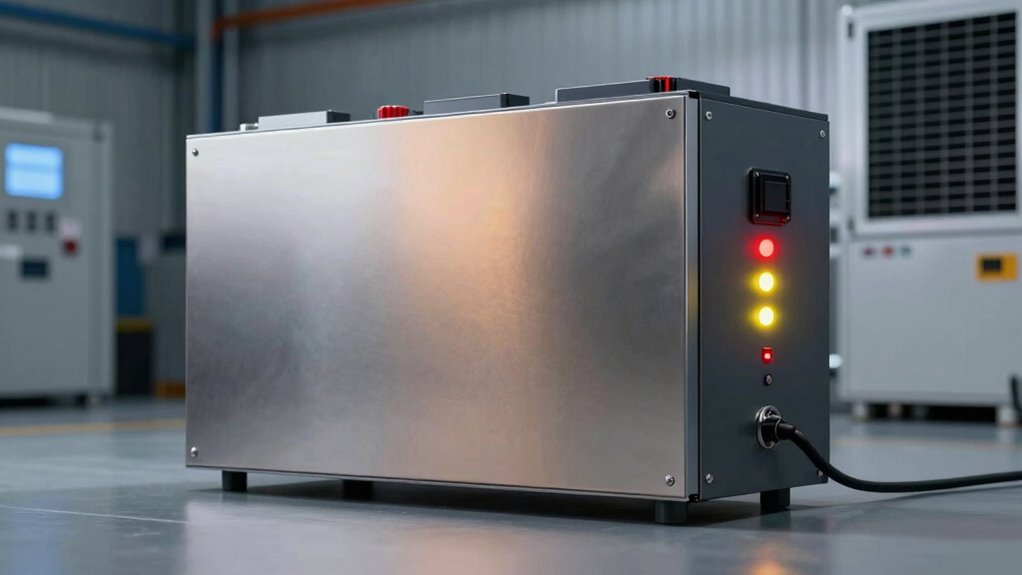

The heat rule for lithium battery storage emphasizes keeping batteries within a safe temperature range to prevent damage, degradation, or safety risks like fires and explosions. Excessive heat speeds up chemical reactions, shortens lifespan, and can cause thermal runaway, while cold temperatures reduce efficiency and capacity. Proper thermal management—including insulation, cooling systems, and climate control—is essential to make certain of safety and longevity. Continue exploring to learn how to implement effective heat regulation strategies.

Prime made for students and young adults
- Fast, free delivery for dorm and study essentials
- Prime Video and Amazon Music included
- Member-only deals
Key Takeaways
- Maintain lithium batteries within their recommended temperature range to prevent capacity loss, degradation, and safety risks like thermal runaway.
- Proper thermal insulation and heat dissipation are essential to control heat buildup and avoid overheating during storage.
- Extreme heat accelerates internal reactions, electrolyte breakdown, and increases fire or explosion risks; cold temperatures reduce performance and capacity.
- Use thermal management technologies such as cooling systems, sensors, and insulation to regulate battery temperature effectively.
- Store batteries in cool, dry environments and monitor temperatures regularly to ensure safe and optimal storage conditions.
Popular right now

Shark Rocket Pet Plus Corded Stick Vacuum, Bordeaux, HV322

Dyson Car+Boat Cordless Handheld Vacuum

Ninja Flip Toaster Oven and Air Fryer, 8-in-1, Stainless Steel, SP151
As an affiliate, we earn on qualifying purchases.
What Is the Heat Rule and Why Does It Matter?
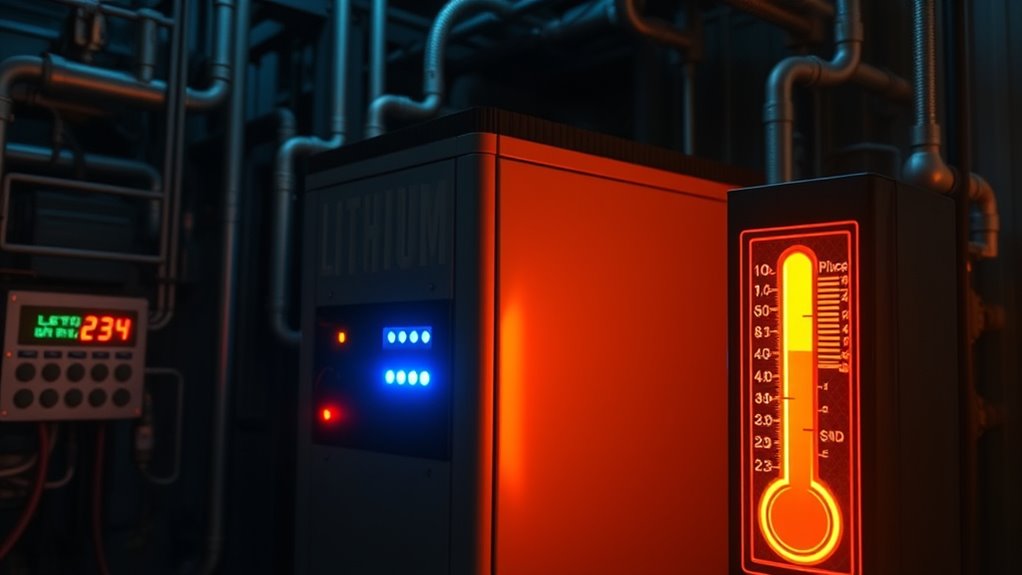
Have you ever wondered why temperature control is so critical for lithium batteries? The heat rule emphasizes that managing heat buildup is essential to prevent damage and guarantee safety. Proper thermal insulation helps keep batteries within safe temperature ranges, reducing the risk of overheating. Simultaneously, effective heat dissipation allows excess heat to escape, avoiding dangerous temperature spikes. Without these measures, batteries can quickly become unstable, degrading faster or even causing fires. The heat rule guides storage practices by balancing insulation and dissipation, maintaining an ideal environment. Additionally, local automation can help monitor and regulate temperature conditions in real-time, further enhancing safety. By understanding this principle, you guarantee your lithium batteries stay safe, perform reliably, and last longer. Proper temperature management isn’t just about comfort — it’s about protecting your investment and safety.
How Hot and Cold Temperatures Affect Battery Performance

Extreme temperatures can reduce your battery’s capacity and overall lifespan, so it’s important to stay within the ideal operating range. When it gets too hot or cold, your battery may suffer from capacity loss or even damage from temperature shocks. Knowing these effects helps you protect and maximize your battery’s performance in different conditions. Maintaining proper temperature is essential for ensuring your battery remains reliable and efficient over time.
Temperature and Capacity Loss
Temperature considerably impacts lithium battery performance; when it’s too hot or cold, your battery’s capacity can decline and its lifespan shortens. Heat causes rapid capacity loss and accelerates degradation, so good thermal insulation helps keep temperatures stable. Cold temperatures reduce chemical activity, limiting power output and causing capacity loss. Proper heat dissipation is essential to prevent heat buildup during operation or charging, which can damage cells. If your battery gets too cold, it can become temporarily unusable until warmed, while excessive heat accelerates aging. Maintaining a balanced temperature minimizes capacity loss and prolongs battery life. Using insulation and ensuring effective heat dissipation can help stabilize temperatures, protecting your battery from the damaging effects of thermal extremes. Additionally, ventilation considerations are crucial to prevent heat buildup and ensure safe operation.
Optimal Operating Range
To guarantee your lithium battery performs reliably and lasts longer, it’s crucial to maintain it within its ideal operating temperature range. When temperatures stay within this range, your battery benefits from maximum capacity and efficiency. Imagine: 1. A snug layer of battery insulation keeping cold out and heat in. 2. Effective heat dissipation, allowing excess warmth to escape quickly. 3. Consistent temperatures preventing thermal stress. 4. Proper ventilation that prevents hotspots and overheating. Maintaining this balance ensures the battery doesn’t get too cold or hot, which can hinder performance or cause damage. Proper insulation helps retain heat in cold environments, while efficient heat dissipation prevents overheating in hot conditions. Keeping within the optimal range extends your battery’s lifespan, preserves capacity, and ensures dependable performance. Additionally, monitoring temperature fluctuations is essential to avoid thermal runaway and maintain safe operation.
Temperature Shock Risks
Maintaining your lithium battery within its ideal operating range helps prevent sudden temperature changes that can cause damage. Rapid shifts from hot to cold or vice versa can create temperature shock, risking internal damage and reduced lifespan. Proper battery insulation helps buffer temperature swings, while efficient heat dissipation prevents overheating. To better understand, consider this table:
| Temperature Effect | How It Impacts Your Battery |
|---|---|
| Hot Temperatures | Accelerate degradation, risk thermal runaway |
| Cold Temperatures | Reduce capacity, slow performance |
| Sudden Shocks | Cause internal stress and cracks |
| Proper Management | Extends battery life, maintains safety |
Additionally, understanding thermal management techniques can help optimize battery longevity and safety.
Why Heat Shortens Lithium Battery Lifespan

Heat accelerates the chemical reactions inside lithium batteries, causing their components to degrade faster. When exposed to excessive heat, the battery struggles with thermal insulation, trapping heat inside. Poor heat dissipation worsens this effect, leading to faster wear. Visualize this process as:
- The electrolyte breaking down prematurely
- The separator becoming brittle
- Lithium plating forming on the anode
- The overall capacity shrinking over time
These issues are worsened by sustained high temperatures, which cause irreversible damage. As heat builds up, it accelerates chemical reactions that weaken internal parts. Proper thermal management, including effective heat dissipation, is vital to extend your battery’s lifespan and prevent rapid deterioration. Effective thermal management helps mitigate these risks and maintain optimal battery performance over time.
How Cold Temperatures Reduce Battery Efficiency
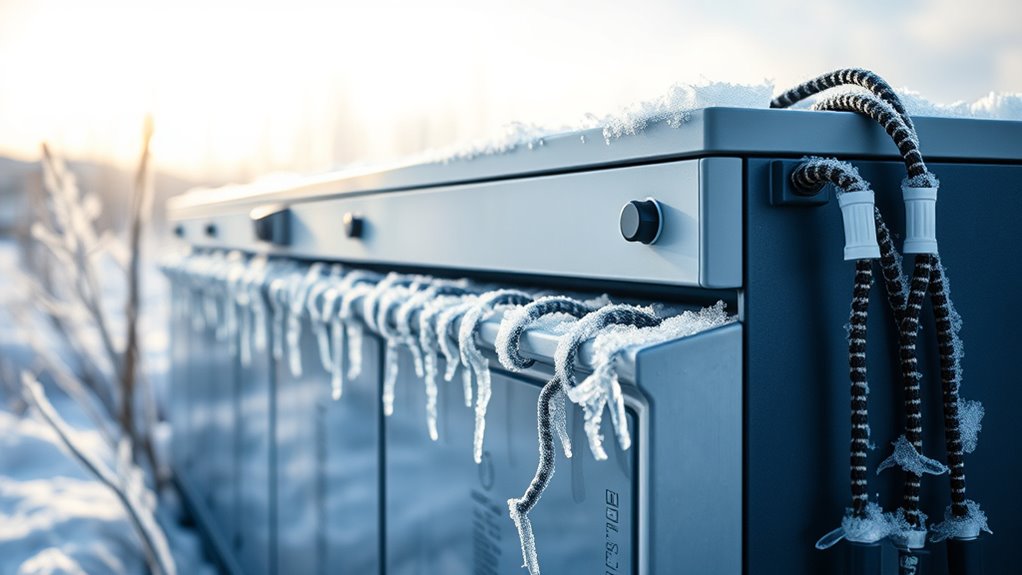
Cold temperatures slow down the chemical reactions inside lithium batteries, making them less efficient. When it’s cold, the movement of ions and electrons decreases, reducing power output. To combat this, proper battery insulation helps retain heat and maintain performance. Thermal conductivity plays a key role; materials with high thermal conductivity transfer heat more effectively, preventing the battery from chilling too much. Here’s a quick comparison:
| Material Type | Effect on Battery Efficiency |
|---|---|
| Low Thermal Conductivity | Insulates, but can trap cold, reducing performance |
| High Thermal Conductivity | Transfers heat efficiently, maintaining temperature |
| Battery Insulation | Protects against cold, preserves thermal balance |
Understanding thermal management is essential for optimizing battery performance in cold environments.
How Thermal Management Keeps Batteries Safe

Effective thermal management is essential to keep your batteries safe and functioning at their best. You’ll want to understand cooling techniques and how temperature monitoring systems prevent overheating. Excess heat can cause damage or safety issues, making proper temperature control vital. Incorporating innovative cooling solutions can further enhance battery safety and efficiency.
Cooling System Techniques
Proper thermal management is essential for keeping lithium batteries safe and ensuring ideal performance. Cooling system techniques focus on controlling heat through methods like: 1. Battery insulation that prevents external heat from entering or internal heat from spreading. 2. Heat dissipation via heat sinks or cooling fins, which draw heat away from the cells. 3. Air cooling using fans or airflow channels that carry heat out of the battery pack. 4. Liquid cooling systems, where coolant circulates around batteries to absorb and remove excess heat. These techniques work together to maintain optimal temperatures, reduce the risk of overheating, and prevent thermal runaway. Effective cooling not only prolongs battery life but also keeps you safe by reducing heat-related failures. Additionally, implementing thermal sensors can provide real-time temperature monitoring to optimize cooling performance and early detection of potential issues.
Temperature Monitoring Systems
How do you guarantee your lithium batteries stay safe during operation? The key is using effective temperature monitoring systems. These systems track temperature changes in real-time, alerting you to potential overheating. Proper thermal insulation helps contain heat and prevents external factors from affecting battery temperature. Simultaneously, efficient heat dissipation ensures excess heat is released quickly, reducing the risk of thermal runaway. Sensors embedded within the battery pack constantly measure temperature levels, providing data to a control system that can activate cooling or shut down the system if necessary. This continuous monitoring maintains ideal operating temperatures, safeguarding your batteries. Additionally, implementing cybersecurity measures protects your thermal management systems from potential digital threats. By combining thermal insulation, heat dissipation, and precise temperature tracking, you ensure your lithium batteries remain safe, reliable, and long-lasting during use.
Impact of Excess Heat
Ever wondered what happens when lithium batteries overheat? Excess heat can trigger dangerous reactions. First, the battery’s internal temperature rises, risking thermal runaway. Second, battery insulation may fail, allowing heat to spread unchecked. Third, heat conduction accelerates, damaging internal components and reducing lifespan. Fourth, the increased temperature can cause the electrolyte to degrade, increasing fire or explosion risks. Proper thermal management minimizes these dangers by controlling heat flow and insulating sensitive parts. Efficient heat conduction disperses excess warmth, while battery insulation prevents heat from reaching critical areas. Without this balance, your battery’s safety and performance are compromised, making thermal management essential to prevent catastrophic failures and extend battery life.
What Are the Safety Risks of Temperature Extremes?
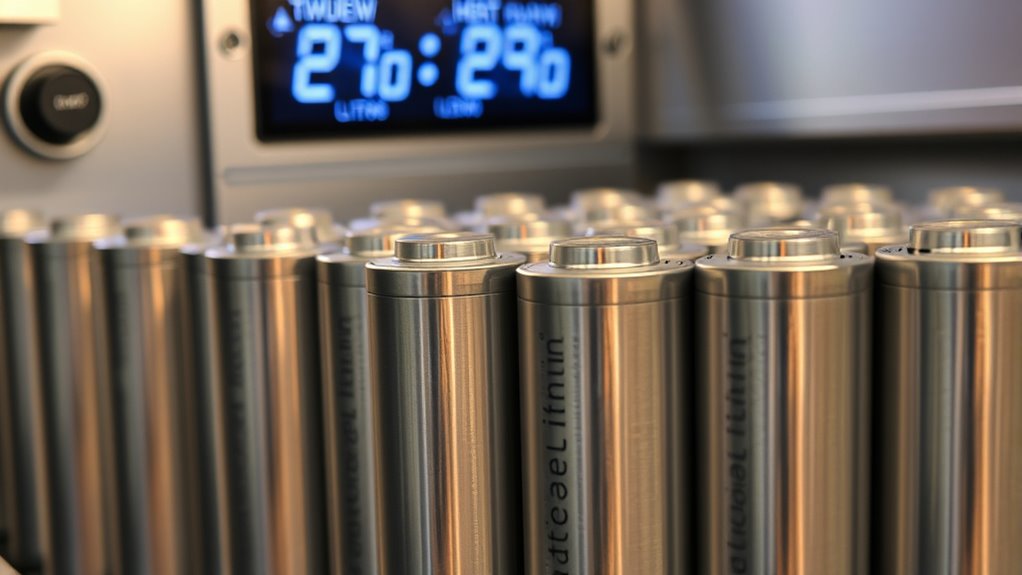
Have you ever wondered how extreme temperatures can impact lithium battery safety? When temperatures get too high or low, thermal expansion can cause internal components to loosen or crack, risking short circuits. Excess heat hampers heat dissipation, making it harder for the battery to cool itself effectively. Overheating can lead to thermal runaway, where the battery’s temperature rapidly spirals out of control, potentially causing fires or explosions. Conversely, extremely low temperatures reduce chemical activity, increasing the risk of capacity loss or internal damage. These temperature extremes compromise safety by increasing the likelihood of internal failures. Proper management of heat and cold is vital to prevent these hazards and ensure the safe operation of your lithium batteries.
Designing Batteries for Better Thermal Resilience

To enhance thermal resilience, engineers focus on innovative battery designs that better withstand temperature fluctuations. They optimize battery chemistry to improve stability across varied temperatures, ensuring consistent performance. Thermal insulation plays a pivotal role by creating barriers that slow heat transfer, protecting internal components. Visualize this process through these design elements:
Engineers improve battery thermal resilience with innovative designs and advanced insulation techniques.
- A layered thermal barrier that keeps heat out during high temperatures.
- Electrodes coated with insulating materials to prevent rapid temperature shifts.
- Ventilation systems that dissipate excess heat efficiently.
- Structural modifications that distribute heat evenly, avoiding hot spots.
New Technologies to Reduce Heat-Related Risks
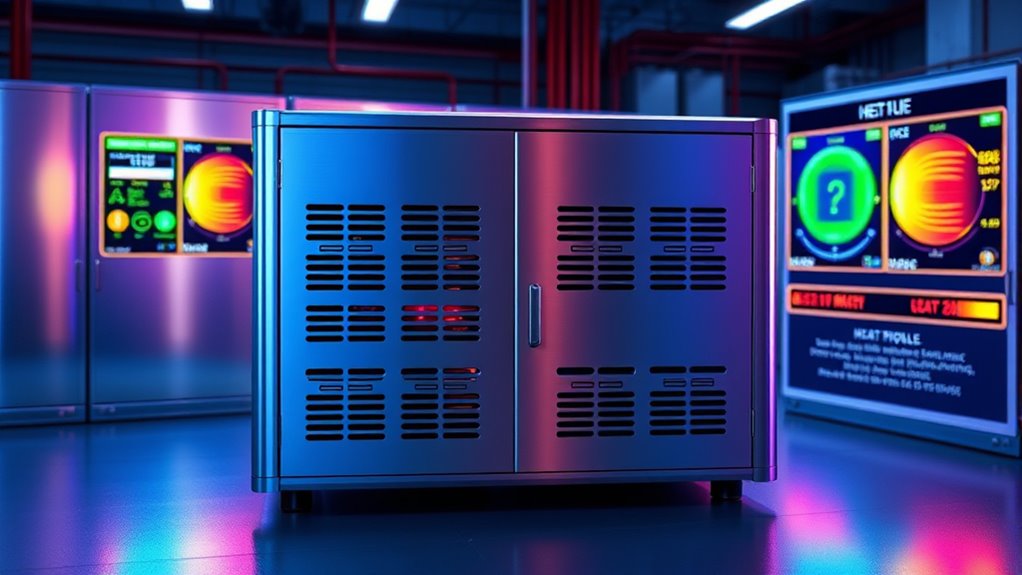
Advances in battery design not only improve thermal resilience but also integrate new technologies to actively manage heat-related risks. Innovative approaches include enhanced battery insulation and advanced thermal insulation materials that limit heat transfer, reducing the risk of overheating. These technologies help contain heat within the battery, preventing thermal runaway. Some systems incorporate active cooling with liquid or air flow, while others use smart sensors to monitor temperature in real-time. Here’s a quick overview:
| Technology | Purpose |
|---|---|
| Battery insulation | Limits heat transfer between cells |
| Thermal insulation | Protects surrounding environment |
| Active cooling | Manages excess heat actively |
| Smart sensors | Detects temperature spikes |
| Heat-resistant materials | Improves overall safety |
These improvements ensure safer, more reliable lithium battery storage.
Tips for Using Lithium Batteries in Different Climates
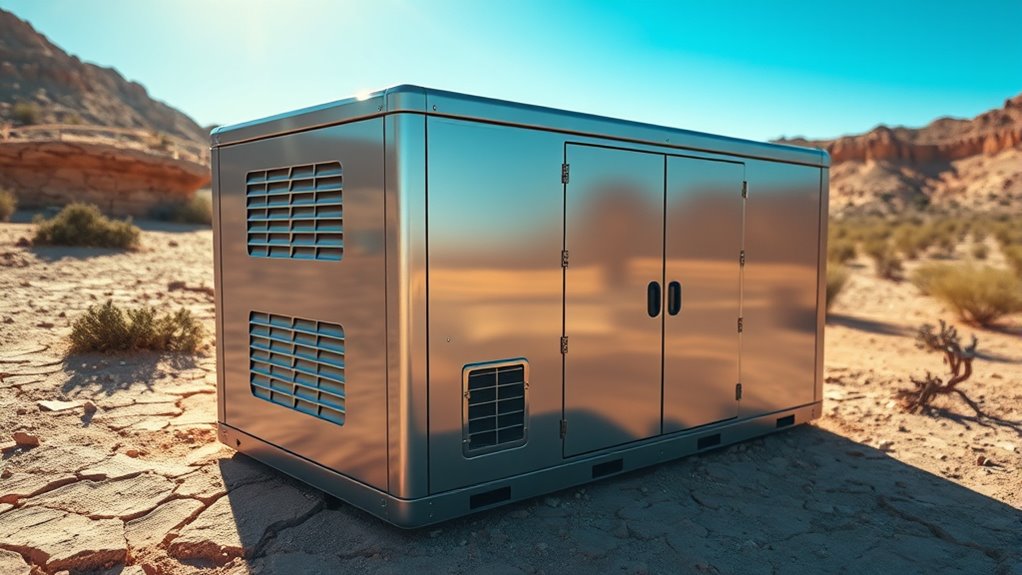
Using lithium batteries effectively across different climates requires understanding how temperature impacts their performance and safety. In cold environments, you might notice reduced capacity and slower charging. Conversely, high heat can cause overheating and degrade the battery faster. To optimize usage:
Proper temperature management ensures lithium battery safety and longevity across climates.
- Store batteries in a cool, dry place to prevent overheating.
- Use chargers compatible with your battery to avoid overcharging or undercharging.
- Monitor temperature during operation, especially in extreme weather, to prevent thermal runaway.
- Recycle batteries responsibly to reduce environmental impact and recover valuable materials.
Adapting to climate conditions also involves being mindful of battery recycling options and choosing chargers suited for your environment. Proper handling guarantees longevity, safety, and environmental responsibility.
Frequently Asked Questions
How Does Ambient Humidity Influence Lithium Battery Performance?
You might notice that ambient humidity affects lithium battery performance by increasing humidity effects, which can lead to moisture buildup inside the battery. This moisture accelerates battery degradation, reducing lifespan and efficiency. High humidity environments pose risks like corrosion and internal damage. To protect your batteries, keep them in dry conditions and avoid exposure to excessive humidity, ensuring ideal performance and longevity.
Can Thermal Cycling Damage Lithium Battery Cells Over Time?
Thermal cycling can severely damage lithium battery cells over time, risking what feels like an apocalyptic level of destruction. You might not notice it at first, but repeated heating and cooling cause thermal fatigue and heat stress, weakening the internal structure. This degradation accelerates capacity loss and increases safety risks, making it essential to manage temperature fluctuations carefully. Proper thermal management can extend your battery’s lifespan and keep it operating safely.
What Are the Best Storage Practices for Lithium Batteries in Humid Environments?
To store lithium batteries in humid environments, you should keep them in a cool, dry place with good ventilation strategies to prevent moisture buildup. Guarantee the electrolyte stability remains intact by avoiding temperature extremes and sealing the batteries properly. Using desiccants can help absorb excess moisture, and storing them in airtight containers minimizes humidity exposure, ensuring longevity and safety for your lithium batteries.
How Do Packaging Materials Affect Thermal Regulation in Batteries?
Ever wondered how packaging materials influence thermal regulation in batteries? You’ll find that effective packaging design, especially with thermal insulation, plays a key role in managing heat. Good packaging minimizes temperature fluctuations, preventing overheating or chilling. By choosing insulating materials and smart designs, you help maintain ideal battery performance and safety. So, selecting the right packaging isn’t just about protection—it’s about controlling heat for longevity and reliability.
Are There Specific Maintenance Routines to Optimize Battery Heat Management?
You should regularly inspect battery insulation to guarantee it remains intact and effective, preventing heat buildup. Implement proper ventilation strategies to dissipate excess heat and maintain ideal temperature levels. Keep vents clean and unobstructed, and consider adding cooling systems if necessary. Routine checks help identify potential issues early, ensuring your batteries stay cool and operate safely, ultimately extending their lifespan and maintaining peak performance.
Conclusion
By understanding the gentle dance of heat and cold, you can help your lithium batteries stay happy and healthy longer. Proper thermal management acts like a caring touch, guiding your batteries through life’s temperature swings. With thoughtful care and awareness of climate challenges, you’ll keep your power sources running smoothly and safely. Embrace these tips, and you’ll discover that a little warmth and coolness go a long way in safeguarding your energy future.