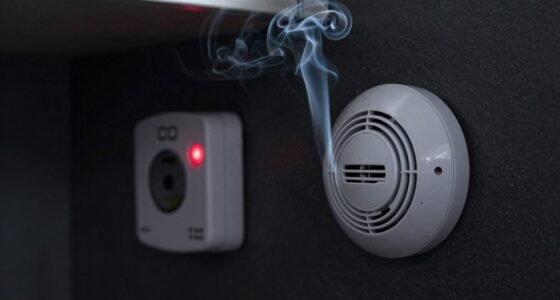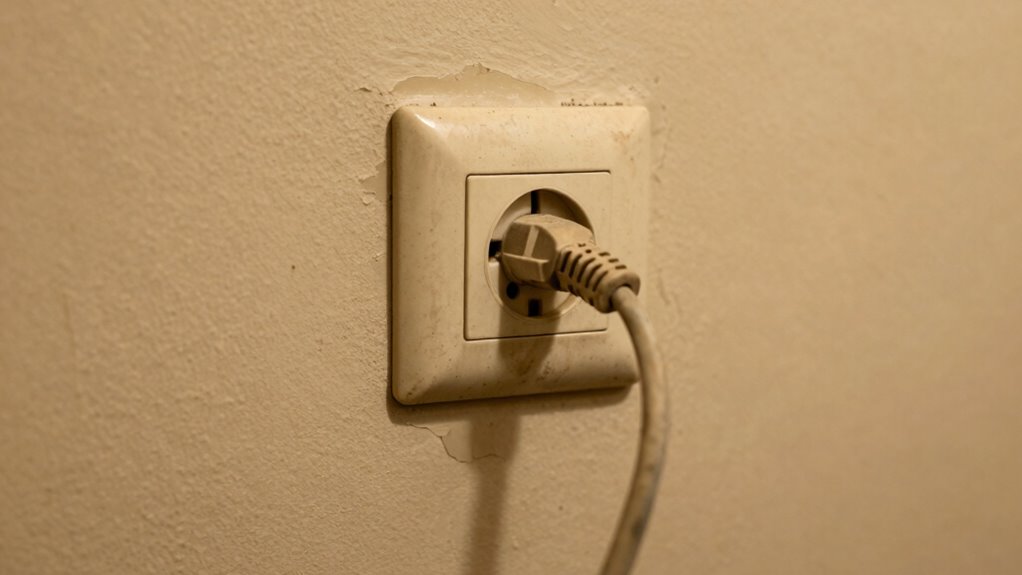
Plugging too many devices into one outlet causes hidden risks like overheating, circuit failures, and even fires. Overloading overloads the wiring and can trip breakers or damage equipment. Common culprits are space heaters, kitchen gadgets, and multiple smart devices. To stay safe, spread out your devices, avoid daisy-chaining power strips, and inspect outlets regularly. Want to learn how to prevent these hazards and keep your home secure? Keep going for essential safety tips.
Key Takeaways
- Overusing a single outlet with multiple devices can cause overload and overheating, increasing fire risk.
- Plugging many devices into one outlet often exceeds its electrical capacity, leading to circuit failure.
- Relying on one outlet for several high-wattage devices can cause wiring damage and potential fires.
- Repeatedly overloading a single outlet can damage cords, devices, and the outlet itself over time.
- Proper load distribution across multiple outlets reduces overload risks and enhances electrical safety.
The Mechanics of Electrical Load and Overuse

When you plug multiple devices into a single outlet, you’re increasing the electrical load on that circuit. This surge causes more electrical current to flow through the wiring than it was designed to handle, risking overheating. Overloading disrupts load balancing, which is how electrical systems distribute current evenly across circuits. When load balancing isn’t maintained, certain outlets or circuits bear excessive stress, leading to potential failures or fire hazards. Your devices draw power based on their needs, but too many connected at once can cause the circuit to become overburdened. Recognizing how increased electrical current from multiple devices impacts the wiring helps you understand why limiting the number of devices plugged into one outlet is essential for safety and preventing damage. Additionally, understanding electrical load capacity of your circuits can help prevent unintended overloads. Being aware of body jewelry materials and their compatibility with your skin can also prevent irritation or complications when piercing or wearing jewelry. Maintaining proper circuit load safety protocols is crucial for avoiding hazards in your home or workspace. Proper knowledge of load capacity ensures you do not exceed safe electrical limits and helps maintain overall safety.
Signs That Your Outlet Is Overburdened
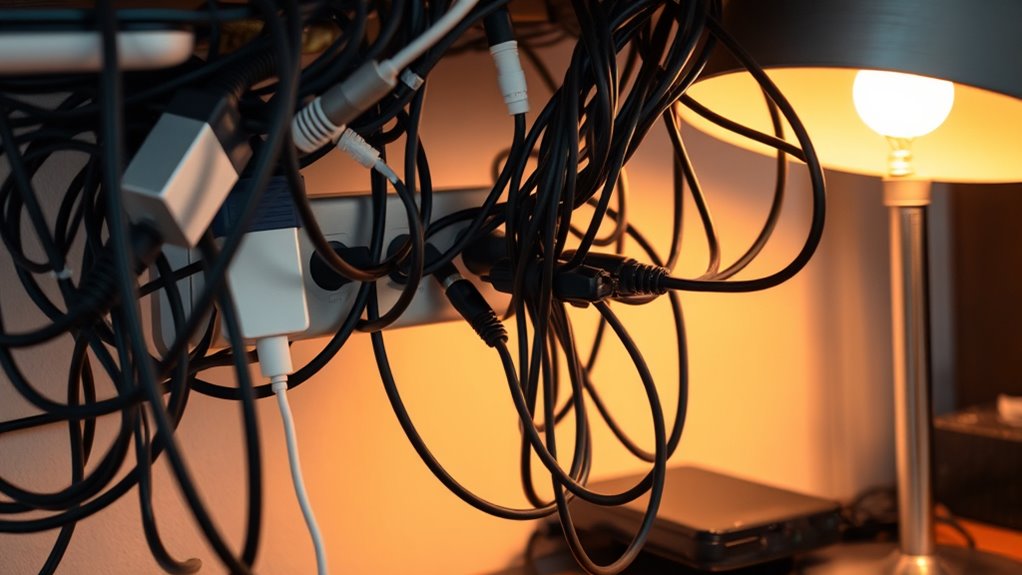
If your outlet shows signs of distress, it’s likely overburdened with too many devices drawing power. Common indicators include frequent tripped circuit breakers, scorch marks, or a burning smell near the outlet. You might notice the outlet feels warm or slightly hot to the touch, which raises electrical safety concerns. Flickering lights or a loose-fitting plug can also signal overload issues. Proper outlet management is vital to prevent hazards; avoid plugging multiple high-wattage devices into a single outlet. Overloading not only risks electrical fires but also damages your appliances. Recognizing these symptoms helps you maintain a safer home environment and ensures your outlets are used responsibly. Monitoring your electrical system regularly can help identify warning signs early before serious problems develop. Additionally, understanding thermal behavior can guide you in preventing overheating and potential hazards, emphasizing the importance of electrical safety in everyday use. Conducting regular inspections can also help you identify hidden risks that may not be immediately apparent but could pose safety threats over time, especially if you are unaware of overcurrent risks associated with improper outlet use.
Common Devices That Contribute to Overloading

Certain household devices are more likely to cause outlet overloading due to their high power consumption. These devices often draw significant current, especially when multiple are plugged into the same outlet or extension cord. For example, a smart home hub connected to several sensors can quickly overload a circuit. Wireless charging stations for multiple devices also draw steady power, increasing the risk. Other common devices include:
- Space heaters or electric blankets
- High-wattage kitchen appliances like blenders and toasters
- Multiple smart devices sharing one outlet
- Large entertainment systems with several components
Being aware of these devices helps you prevent overloads, especially when using only one outlet for multiple gadgets. Distributing power loads reduces risks and protects your home wiring. Additionally, understanding net worth can provide insight into the resources available for home safety upgrades. Regularly inspecting your electrical system can help identify potential overload issues before they become hazards. Utilizing circuit breakers properly can further prevent dangerous overload situations. Recognizing home security systems as a deterrent can also contribute to overall household safety.
Risks Associated With Overloading Outlets
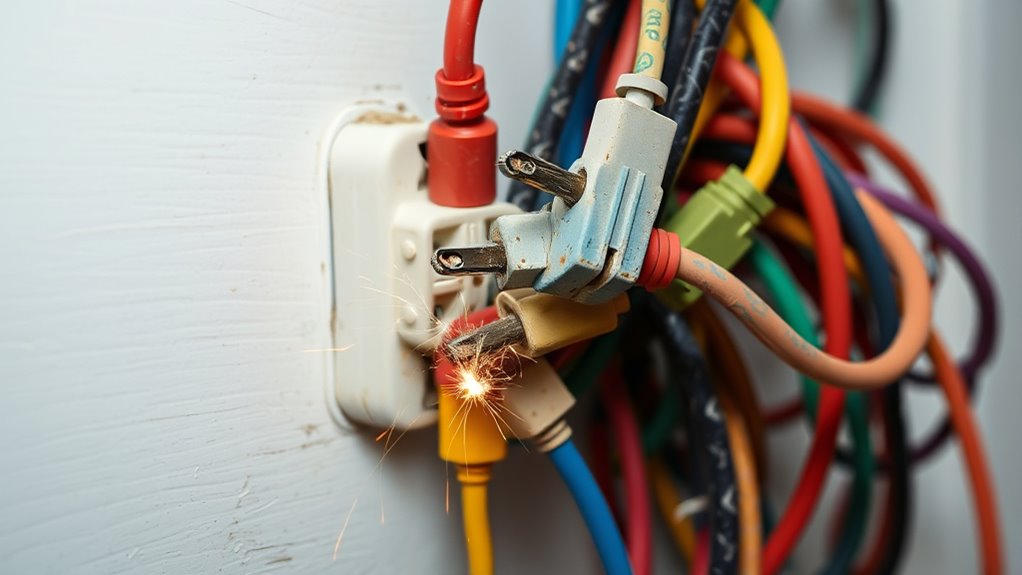
Overloading an outlet increases the risk of electrical fires and damage to your wiring. When too many devices draw power through a single socket, circuits can become overwhelmed. This not only jeopardizes your safety but also risks costly repairs to your electrical system. Proper circuit management and understanding load capacities can help prevent these hazards electrical load management. Additionally, being aware of the power distribution limits of your outlets can further reduce the risk of overload and potential electrical failures. Recognizing circuit capacity is essential to prevent exceeding the safe load threshold and ensuring your electrical system remains secure. Understanding electrical safety precautions can also play a vital role in avoiding dangerous overload situations, especially when considering household electrical demands and how they impact circuit safety.
Fire Hazard Risks
Overloading a single outlet can considerably increase the risk of electrical fires. When too many devices draw power, the outlet and wiring become overheated, raising the chance of a ground fault or arc flash. These events can ignite surrounding materials or cause sparks that start fires. To understand the danger, consider:
- Excess heat buildup from overloaded circuits
- Frayed or damaged wiring caused by persistent overheating
- Sparks from arc flashes igniting nearby combustibles
- Ground faults that occur when insulation wears down or connections fail proper wiring practices. Proper wiring and circuit design are critical in preventing these hazards. Additionally, many homes lack adequate circuit protection, which can leave outlets vulnerable to overloads. Recognizing electrical load capacity is essential for safe appliance use. These risks highlight why overloading outlets is dangerous. Ignoring this habit can lead to unnoticed fires, putting your home and loved ones at serious risk. Always verify outlets aren’t overloaded and use proper extension cords or circuit breakers. Regular maintenance and understanding electrical safety measures can further reduce these dangers.
Circuit Overload Damage
When you overload an outlet, the electrical system faces excessive current flow that can cause immediate and long-term damage. This overload strains circuit components, increasing the risk of overheating wires and damaging your wiring infrastructure. Poor circuit management can lead to tripped breakers or even electrical fires. Overloading also reduces electrical safety, risking shocks or short circuits that threaten your home’s safety. Consistently pushing outlets beyond their capacity weakens the entire electrical system, making future repairs more costly. To protect yourself, avoid plugging too many devices into a single outlet or power strip. Distributing your electrical load and using properly rated extension cords can help prevent overloads. Remember, good circuit management is essential for maintaining electrical safety and preventing costly damage. Regularly inspecting circuit breakers and understanding the electrical system in your home can further help prevent overloads.
How to Safely Manage Multiple Devices

To keep your devices safe, make sure you distribute power evenly across outlets and avoid overloading any single one. Using surge protectors adds a layer of safety and helps prevent electrical damage. Additionally, limit how many devices you use at once to reduce the risk of tripping circuits or causing a fire.
Distribute Power Efficiently
Using multiple devices safely requires smart power distribution. To maximize outlet efficiency and prevent overloads, follow these steps:
- Avoid plugging too many devices into one outlet or power strip. Spread out your devices across multiple outlets.
- Use appropriately rated power strips with built-in circuit breakers to handle your total load.
- Check the wattage of each device and add them up to ensure they don’t surpass outlet capacity.
- Regularly inspect cords and plugs for damage, replacing any that show signs of wear.
Use Surge Protectors
Surge protectors are essential tools for safeguarding multiple devices from power surges and voltage spikes. They offer significant surge protector benefits, protecting your electronics from unexpected damage and extending their lifespan. When choosing a surge protector, look for one with adequate joule ratings and multiple outlets to meet your needs. Always follow outlet safety tips, such as not overloading the surge protector and avoiding daisy-chaining multiple strips. Verify the surge protector is plugged directly into a wall outlet and not into another extension cord, which can cause overheating. Regularly inspect the device for damage or wear, and replace it if you notice any issues. Proper use of surge protectors helps you manage multiple devices safely, reducing the risk of electrical fires and equipment failure.
Limit Device Usage
While surge protectors help keep your devices safe from power spikes, managing how many devices you connect at once is equally important. Overloading outlets can cause overheating, damage, or fire risks. To safely manage multiple devices, consider these steps:
- Ensure device compatibility with your surge protector’s capacity before plugging in.
- Distribute high-power devices across different outlets to avoid overloading one outlet.
- Check outlet placement to prevent stretching cords or creating tripping hazards.
- Limit the number of devices plugged into a single outlet or power strip to avoid exceeding recommended load limits.
The Role of Power Strips and Extension Cords

Power strips and extension cords often seem like convenient solutions for expanding a single outlet, but relying on them can encourage the “one outlet” habit. While they help you plug in multiple devices, improper use can pose risks. To guarantee power strip safety, never overload them—check the maximum wattage and avoid daisy-chaining multiple strips together. Use extension cord tips such as choosing cords with proper insulation, avoiding damaged or frayed cords, and keeping them away from water or heat sources. Remember, extension cords are meant for temporary use only; using them as permanent wiring can lead to overheating and fires. By following these guidelines, you reduce the risk of electrical hazards and help break the cycle of over-reliance on a single outlet.
Preventative Measures and Best Practices
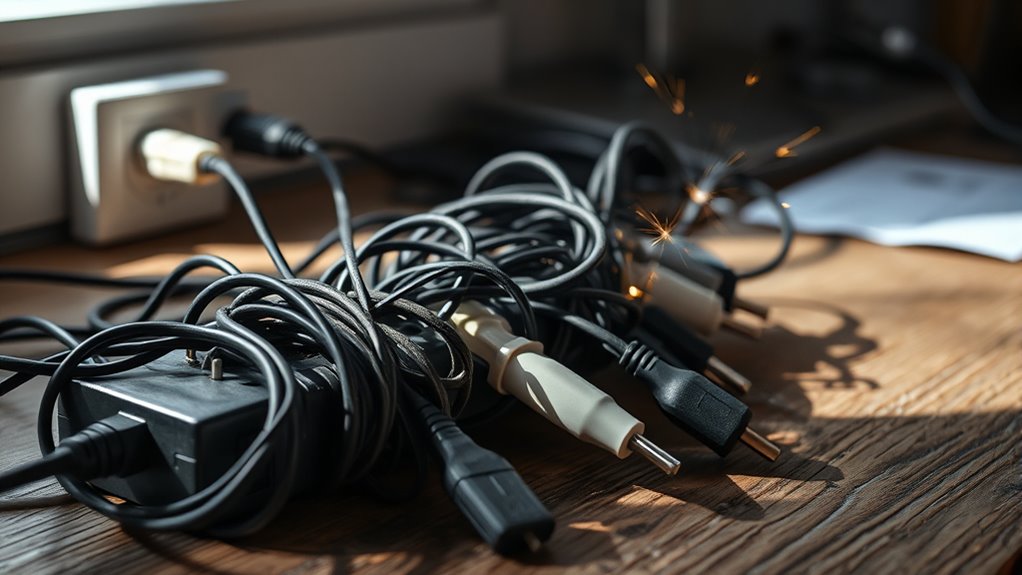
To prevent electrical hazards and reduce dependence on a single outlet, adopting best practices is essential. First, regularly inspect outlets for signs of damage or wear, guaranteeing safe outlet maintenance. Second, avoid overloading outlets by plugging in only what’s necessary, and use power strips with surge protection when needed. Third, keep outlets clean and free of dust or debris to maintain electrical safety. Fourth, plan your electrical setup to distribute devices across multiple outlets, minimizing the risk of overheating. Following these steps helps you prevent potential hazards, prolong outlet lifespan, and ensure safe electrical use. Prioritizing outlet maintenance and safety awareness keeps your home or workspace secure and reduces the risk of electrical accidents.
When to Call a Professional Electrician

Knowing when to call a professional electrician is essential for your safety and the integrity of your electrical system. If you notice frequent tripping, flickering lights, or outlets that feel warm, it’s time to seek expert help. During home renovations or upgrades, always verify work complies with electrical code standards. Attempting complex repairs without proper training can lead to fire hazards or code violations.
| Situation | Action |
|---|---|
| Unfamiliar with electrical code | Call a licensed electrician |
| Upgrading your home’s wiring | Hire a professional |
| Outlets or switches feel hot | Seek immediate assistance |
| Planning a home renovation | Consult an electrician beforehand |
When in doubt, professional guidance ensures safety and code compliance.
Frequently Asked Questions
How Can I Tell if My Outlet Is Overloaded Without Visible Signs?
You can’t always tell if your outlet is overloaded without visible signs, but you should check the circuit capacity and load distribution. Use a circuit tester or a multimeter to see if the circuit is overloaded. If multiple devices are plugged into one outlet or if the breaker trips frequently, it’s a sign your load distribution is uneven. Avoid overloading outlets to prevent potential fire hazards.
Are Some Devices More Likely to Cause Electrical Overloads Than Others?
Did you know that space heaters and large kitchen appliances are responsible for over 60% of electrical overloads? Some devices are more likely to cause overloads because they exceed outlet capacity or aren’t compatible with certain outlets. Always check appliance compatibility and avoid plugging too many high-wattage devices into one outlet. This helps prevent overloads and keeps your home’s electrical system safe and efficient.
What Specific Safety Measures Should I Take With Extension Cords?
You should always practice good cord management by avoiding tangles and keeping cords away from high-traffic areas. Use extension cords safely by plugging only one device into each cord and never overloading outlets. Regularly check cords for damage, and never daisy-chain multiple extension cords. For outlet safety, make sure cords are fully inserted and avoid using damaged or frayed cords to prevent electrical hazards.
How Often Should I Have My Home’s Electrical System Inspected?
You should have your home’s electrical system inspected at least every 3 to 5 years. During these inspections, professionals will check your electrical panel maintenance and verify your surge protector effectiveness is ideal. Regular inspections help identify potential hazards, prevent overloads, and maintain safety. If you notice flickering lights or frequent circuit breaker trips, consider scheduling an inspection sooner to address issues before they become serious.
Can Using Multiple Power Strips Increase the Risk of Fire?
Using multiple power strips can dangerously overload your circuit capacity, risking electrical fires. When you plug too many devices into one outlet, it’s like trying to fit a whale into a teacup—your wiring can’t handle the surge protection needs. Always distribute your appliances across multiple outlets, and avoid daisy-chaining power strips. Protect your home by respecting circuit limits and investing in quality surge protection, preventing hidden risks from escalating.
Conclusion
Remember, don’t put all your eggs in one basket—or in this case, overload a single outlet. Spreading out your devices and using power strips wisely can prevent hazards. Regularly check your outlets for signs of strain, and don’t hesitate to call a professional if you’re unsure. Staying proactive protects your home and loved ones. As the saying goes, “Better safe than sorry”—a little caution today can save you a lot of trouble tomorrow.