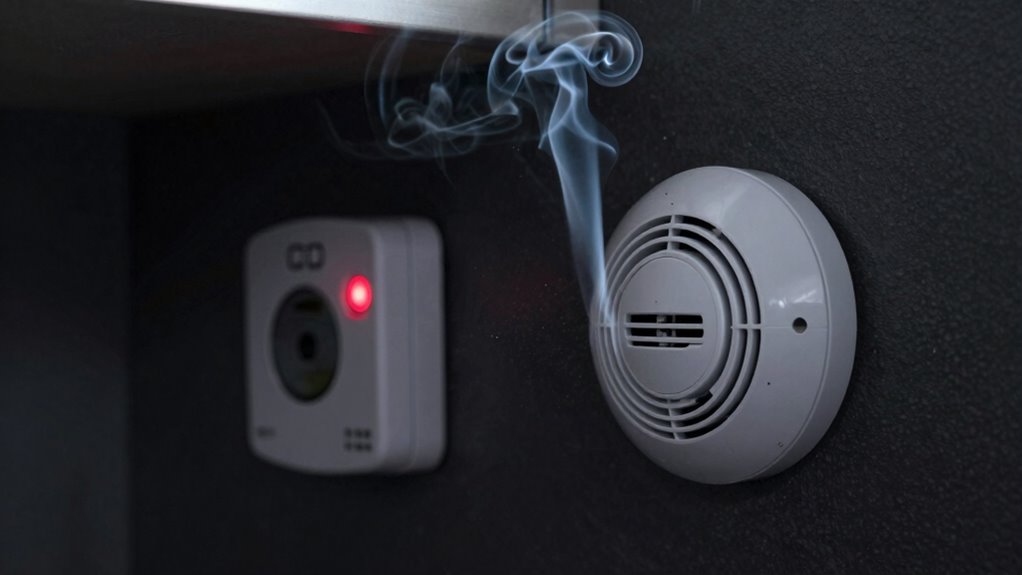

Understanding the key differences between smoke and CO alarms can save your life. Smoke detectors use photoelectric sensors to detect visible fire particles, while CO alarms rely on electrochemical sensors to sense invisible carbon monoxide gas. Placing the wrong alarm or ignoring their specific functions can leave you unprotected. Proper placement, regular maintenance, and knowing how each alarm works are essential—continue to explore these details to guarantee your safety in emergencies.
Key Takeaways
- Smoke alarms detect visible smoke particles using photoelectric sensors; CO alarms sense carbon monoxide with electrochemical sensors.
- They serve different hazards; using only one type leaves safety gaps—both are essential for comprehensive protection.
- Proper placement, regular testing, and maintenance are vital to ensure each alarm functions correctly and reduces false alarms.
- False alarms often result from poor placement, dust, or humidity, not just nuisance, emphasizing correct installation.
- Immediate evacuation and professional help are critical when either alarm sounds, as they indicate dangerous, potentially life-threatening conditions.
The Technologies Behind Smoke and CO Detectors
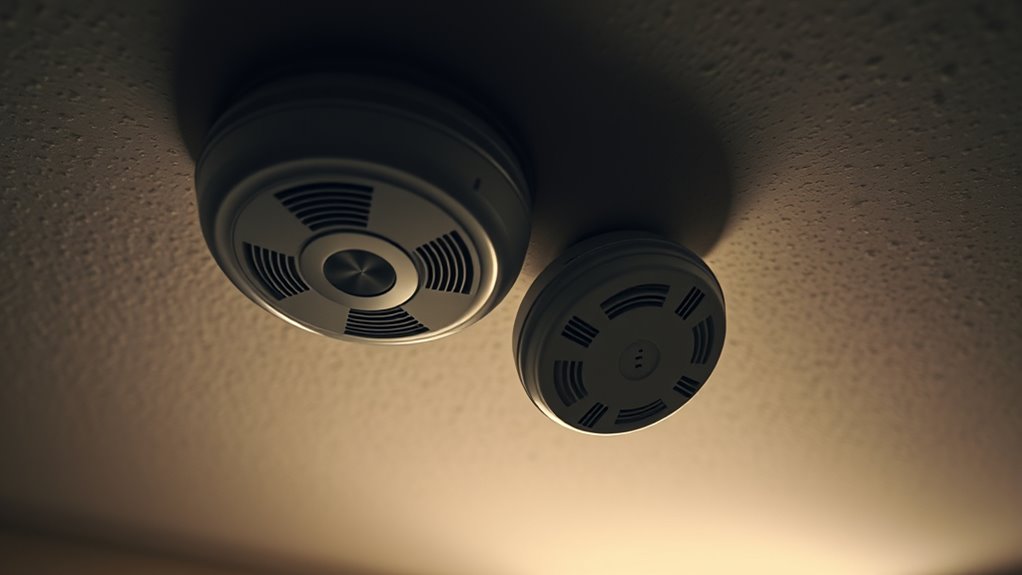
Understanding how smoke and CO detectors work is essential for choosing the right safety devices for your home. Smoke detectors typically use photoelectric sensors that detect smoke particles in the air, while CO detectors rely on electrochemical sensors that sense carbon monoxide levels. Sensor sensitivity plays a vital role in their effectiveness. If sensors are too sensitive, they may trigger false alarms, causing unnecessary panic and inconvenience. Conversely, if they’re not sensitive enough, they might fail to alert you promptly in an emergency. Modern detectors are designed to balance sensitivity with reliability, reducing false alarms while maintaining prompt detection. Knowing how these detection technologies function helps you select devices that protect your home without frequent false alarms, ensuring your safety and peace of mind. Sensor sensitivity is a key factor in determining how well these alarms perform and how confidently you can rely on them during emergencies. Additionally, advancements in smart alarm systems now enable integration with other home automation devices, enhancing overall safety and responsiveness. Understanding the detection technology behind these alarms allows homeowners to make informed decisions about their safety equipment and avoid unnecessary alarm triggers. A deeper understanding of sensor technology can also aid in maintenance and troubleshooting, ensuring optimal performance of your detectors. Moreover, being aware of the alarm placement can significantly improve their effectiveness in emergency situations.
Key Differences in Their Detection Methods
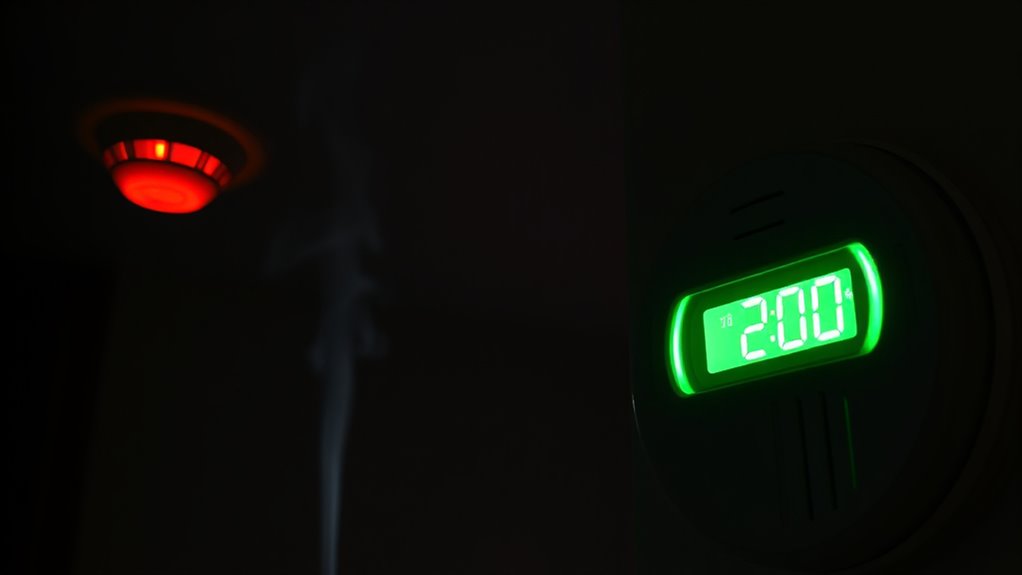
Smoke and CO detectors use fundamentally different methods to identify dangers, which directly impacts their effectiveness and response times. Smoke detectors typically sense particles from combustion, triggering alarms quickly during fire incidents. CO detectors, on the other hand, detect the presence of carbon monoxide gas, which can build up without visible smoke. This distinction affects fire prevention strategies and alarm interoperability, making certain each device responds to specific threats. Additionally, understanding the affiliate disclosure and privacy policies of alarm brands can help consumers make informed safety choices. Key differences include: – Smoke alarms respond faster to visible smoke, aiding early fire detection. – CO alarms detect invisible, odorless gas, preventing poisoning. – Smoke detectors often use ionization or photoelectric sensors. – CO detectors rely on electrochemical sensors for accuracy. Recognizing the sensor technology used in each device can improve your overall safety strategy, ensuring you select the appropriate alarms for your environment. Incorporating a detection method that aligns with your safety needs is essential for comprehensive protection. Being aware of detection methods also helps in understanding the limitations and advantages of each alarm type. An understanding of the detection processes involved can further enhance your ability to choose the right safety devices for your home. Understanding these detection methods helps you optimize safety and ensures your alarms work together effectively.
Common Myths and Misconceptions
Many people believe that smoke and CO alarms are interchangeable or that one can serve both functions, but this isn’t true. A common myth is that placing one alarm in the same spot will cover both hazards, which can lead to dangerous gaps in protection. Proper alarm placement is essential to guarantee each device effectively detects its specific danger. Another misconception is that false alarms are always a nuisance and should be ignored, but frequent false alarms often result from poor alarm placement or dust and humidity, which can cause you to disable alarms altogether. Knowing where to install each alarm and understanding their limitations helps prevent dangerous delays in detection. Additionally, integrating smart alarm systems can enhance early warning capabilities and reduce false alarms through better sensitivity and monitoring. Proper installation practices and maintenance are crucial to ensure alarms function correctly and provide reliable protection. Relying on myths can lead to dangerous situations—always follow manufacturer guidelines for placement and maintenance. Regular testing and awareness of alarm limitations are vital for effective safety. Recognizing the specific dangers each alarm addresses ensures comprehensive protection and minimizes risks. Implementing advanced detection technologies can significantly improve overall safety and responsiveness.
Proper Placement and Maintenance Tips
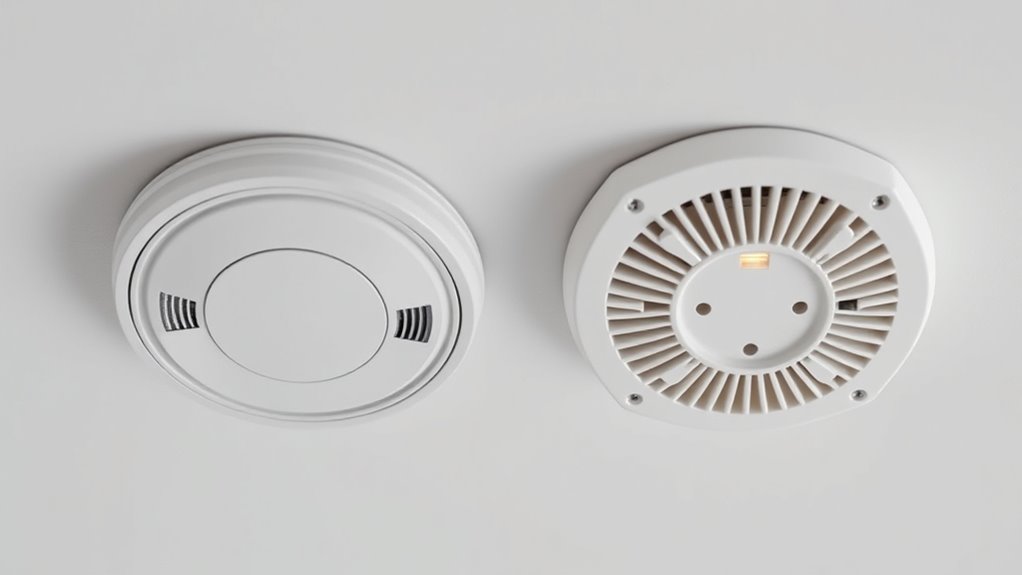
Proper placement and regular maintenance of smoke and CO alarms are essential to guarantee they function correctly when needed. Correct alarm placement ensures alerts are effective and reach everyone in case of danger. Follow these maintenance routines to keep alarms in top shape:
- Install alarms on every level and outside sleeping areas.
- Test alarms monthly to confirm they work properly.
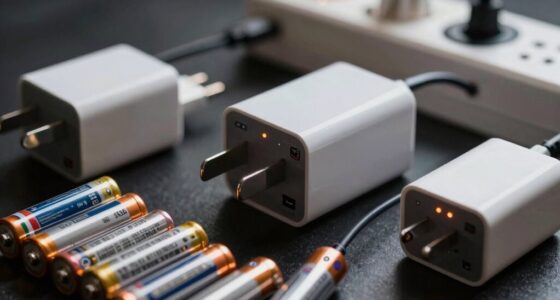
- Replace batteries at least once a year or as needed.
- Clean alarms regularly to prevent dust and debris buildup.
- Be aware that air quality can influence the performance of your alarms and should be monitored regularly. Regularly checking for dust accumulation can also improve alarm reliability and responsiveness. Additionally, using proper alarm placement can significantly reduce false alarms and ensure prompt detection during emergencies. Maintaining a consistent alarm maintenance routine helps ensure the alarms remain reliable over time. Incorporating regular inspections can further enhance alarm performance and safety.
Recognizing When and How to Respond
Knowing how to recognize the signs of a fire or carbon monoxide leak and responding quickly can save lives. If your smoke alarm or CO detector sounds, don’t ignore it. Immediately activate your fire escape route, ensuring everyone knows the plan. If the alarm is a false alert, perform regular alarm testing to confirm proper function, but always stay cautious. When an alarm goes off, don’t delay—evacuate calmly and immediately. If you suspect a CO leak, get outside and call emergency services. Remember, silence or frequent false alarms may mean it’s time to replace batteries or alarms. Regular testing keeps your alarms reliable, so you’re prepared when it counts. Effective preparation can make all the difference in emergency situations. Quick, decisive responses are key to protecting yourself and your loved ones. It’s also essential to ensure your alarms are properly maintained, such as replacing batteries or upgrading units when needed. Proper alarm functionality is crucial for early detection and safety. Additionally, understanding the importance of reliable alarms can help prevent deadly misunderstandings during emergencies. Regularly checking your alarms’ thermal behavior and sensor responsiveness can further enhance your safety measures.
Frequently Asked Questions
Can Smoke and CO Alarms Be Installed Together on the Same Circuit?
Yes, you can install smoke and CO alarms on the same circuit, but you must consider wiring compatibility. Check the alarm specifications to guarantee they match your circuit’s voltage and wiring type. Use appropriate wiring considerations, like dedicated circuits or proper wiring methods, to prevent interference or malfunction. Always follow manufacturer instructions and local electrical codes to ensure safe, reliable operation and effective detection.
How Long Do Smoke and CO Detectors Typically Last Before Replacement?
Battery life lasts about 5 to 10 years for smoke and CO detectors, so you should schedule timely replacements. Follow manufacturer guidelines to maintain maximum safety and guarantee detectors detect danger effectively. Regularly check batteries, especially if your alarms have a replace-by date. Don’t delay replacing alarms when their lifespan ends—staying vigilant can prevent tragedy. Trust these timelines to keep your home safe, sound, and secure.
Are There Any Health Risks Associated With False Alarms From These Detectors?
False alarms from smoke and CO detectors can cause health concerns like stress, anxiety, and increased heart rate. Repeated false alarm effects might lead you to disable or ignore the alarms, risking safety. While these alarms are designed to protect you, false alarms can temporarily disrupt your health and peace of mind. Regular maintenance and proper placement help reduce false alarms, ensuring you stay protected without unnecessary stress.
What Should I Do if My Alarm Goes off Unexpectedly?
If your alarm goes off unexpectedly, stay calm and follow alarm response procedures. First, identify false alarm causes like cooking fumes or steam. If it’s a false alarm, open windows, turn off the alarm, and ventilate the area. Never ignore a suspicious smell or sound. If you’re unsure, evacuate and call emergency services. Always test your alarms regularly to prevent false alarms and guarantee they work properly when needed.
Do Different Brands of Alarms Have Varying Levels of Reliability?
Different brands of alarms are like stars in the night sky—some shine brighter than others. You’ll find that reliability varies based on brand reputation and sensor technology. Established brands with positive reviews often use advanced sensors, providing more accurate detection. Cheaper or lesser-known options might not be as dependable, so it’s worth investing in proven models to guarantee your safety. Always check reviews and specifications before making a choice.
Conclusion
Did you know that smoke alarms cut the risk of death in a home fire by nearly 50%, but carbon monoxide alarms save lives from invisible, odorless gas? Understanding the differences and proper use of both detectors is essential for your safety. By ensuring they’re correctly placed and maintained, you’re taking critical steps to protect yourself and loved ones. Don’t wait—make sure your alarms are working today and stay safe from preventable tragedies.