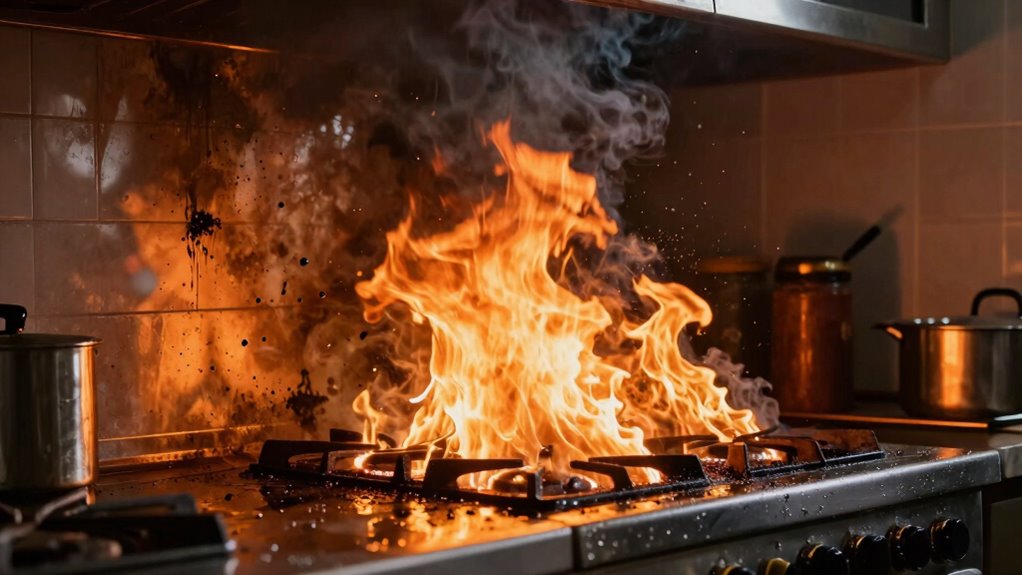

If you try to move the pan or pour water on a grease fire, you’ll make it much worse. Water causes the oil to splatter, spreading flames and risking burns or an explosion. Covering the fire with a glass lid or using flour can also backfire, increasing heat or causing dangerous reactions. Instead, turn off the heat and smother the flames with a metal lid or fire extinguisher—continue to learn how to handle these fires safely.
Key Takeaways
- Pouring water on a grease fire causes rapid splattering and intensifies flames, making the fire worse.
- Moving the pan during a fire risks spreading hot oil and increasing fire severity.
- Using flour or baking powder can ignite or explode, worsening the fire instead of extinguishing it.
- Covering a grease fire with a glass lid traps heat and may cause the lid to shatter.
- Attempting to carry or shift the pan spreads hot oil, escalating the fire hazard.
Why Water Makes Grease Fires Worse
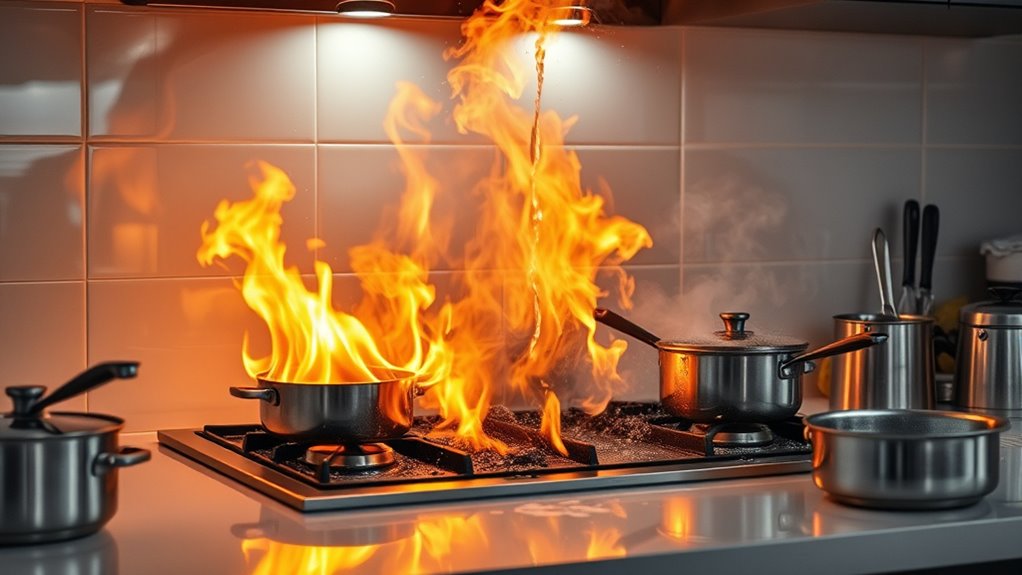
When a grease fire erupts, pouring water on it can be extremely dangerous because water and burning oil don’t mix. Instead of putting out the fire, water causes the oil to rapidly spread, intensifying the flames. This happens because water sinks below the hot oil, instantly vaporizing and creating steam. The rapid formation of steam leads to vigorous chemical reactions that propel burning oil outward, causing the fire to spread quickly. These violent reactions not only make the fire larger but also increase the risk of burns and property damage. Water’s inability to extinguish grease fires stems from its failure to neutralize the oil’s heat and its tendency to escalate the fire’s intensity through these dangerous chemical reactions. Understanding fire safety protocols and proper fire suppression methods can help prevent such dangerous incidents from escalating, especially in environments where cooking safety is crucial. Additionally, using the correct fire extinguishers designed for grease fires is essential for safe and effective suppression. Recognizing the importance of fire prevention strategies can further reduce the risk of accidents, particularly in commercial kitchens and home cooking areas.
The Dangers of Using a Glass Lid or Cover
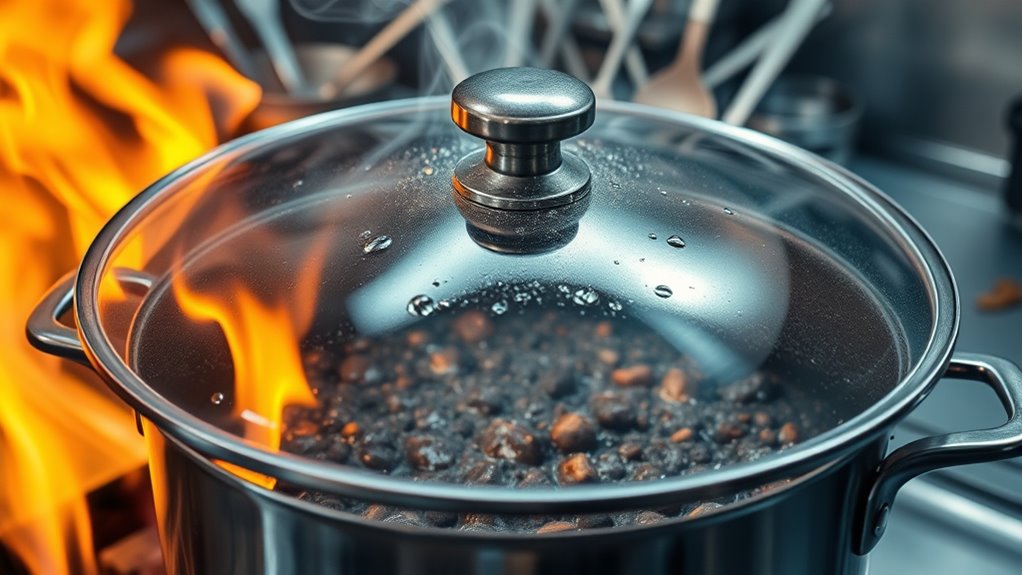
Using a glass lid or cover to smother a grease fire might seem like a safe solution, but it can actually be dangerous. Glass lids traps heat, increasing the temperature inside the pan rapidly. This heat trapping can cause the fire to flare up unexpectedly or even shatter the lid due to thermal stress. Additionally, the thermal behavior of glass means it can become extremely hot and compromise its integrity under rapid temperature changes. Instead of smothering the fire, you risk making it worse by creating a sealed environment where the flames can grow stronger. If you use a glass lid, don’t forget that it retains heat and pressure, which can lead to dangerous situations. Proper fire safety techniques are essential to prevent escalation and injury during a kitchen fire. Always remember, the best approach is to turn off the heat and use a proper fire extinguisher or smother the flames with a metal lid, not glass. Understanding the risks of heat trapping can help you make safer decisions during a kitchen fire emergency. Being aware of safe fire response techniques is essential to avoid escalation or injury in such situations. Additionally, understanding the thermal properties of materials used in cookware can help prevent accidents.
Why Using Flour or Baking Powder Can Backfire

While covering a grease fire with a glass lid can sometimes seem like a quick fix, pouring flour or baking powder on the flames often does more harm than good. Many people turn to kitchen remedies or home remedies in panic, thinking these powders will smother the fire. However, flour and baking powder are combustible and can actually ignite or intensify the flames. They may create a spreading fire or cause a dangerous flare-up. Using these substances gives a false sense of control and delays proper fire suppression. Instead, rely on a fire extinguisher specifically rated for grease fires or smother the flames with a metal lid. Understanding fire safety principles for kitchen fires can help prevent escalation and ensure proper response. Proper training and awareness are key to avoiding dangerous mistakes during emergencies. Remember, quick and correct action is essential—avoid using kitchen remedies that could make the situation worse.
The Risks of Attempting to Move the Pan
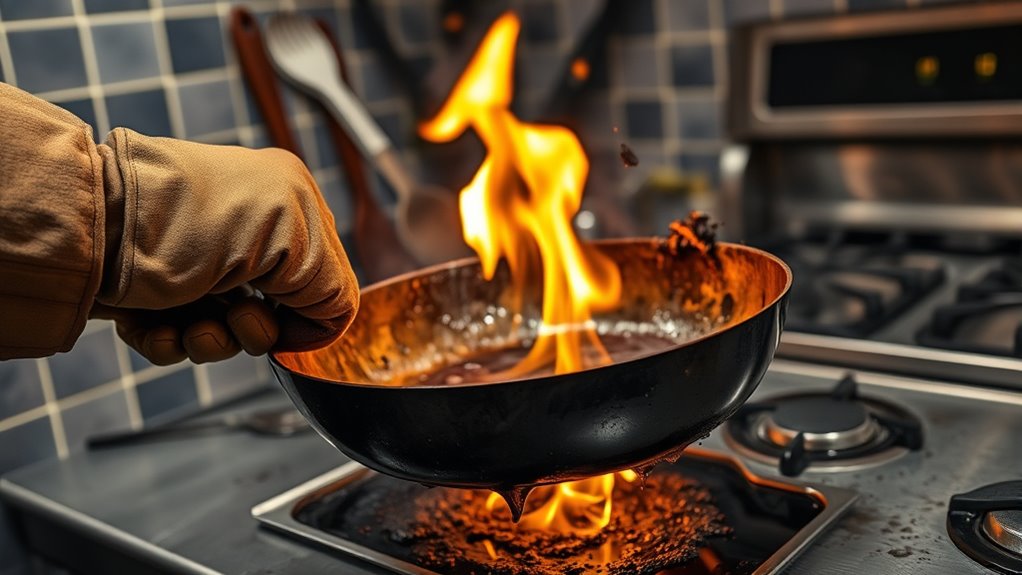
Attempting to move a grease fire pan can be extremely dangerous because the flames and hot oil can spill or splash, causing burns or spreading the fire. Pan movement increases the risk escalation, as shifting the pan can cause hot oil to splatter onto you or nearby surfaces. Even a slight nudge can ignite surrounding materials, making the fire uncontrollable. If you try to relocate the pan, you might accidentally knock it over, worsening the situation rapidly. The risk of burns from hot oil or flames rising higher is significant. Moving the pan distracts you from the immediate danger and can turn a manageable fire into a full-blown emergency. It is crucial to recognize fire safety techniques to prevent such accidents. Proper fire safety techniques emphasize that attempting to move a grease fire can worsen the situation and should be avoided at all costs. Additionally, understanding the importance of fire prevention measures can help you avoid such hazardous situations altogether. Being aware of fire suppression methods can also be vital if an emergency arises.
How Using a Fire Extinguisher Improperly Can Escalate the Fire
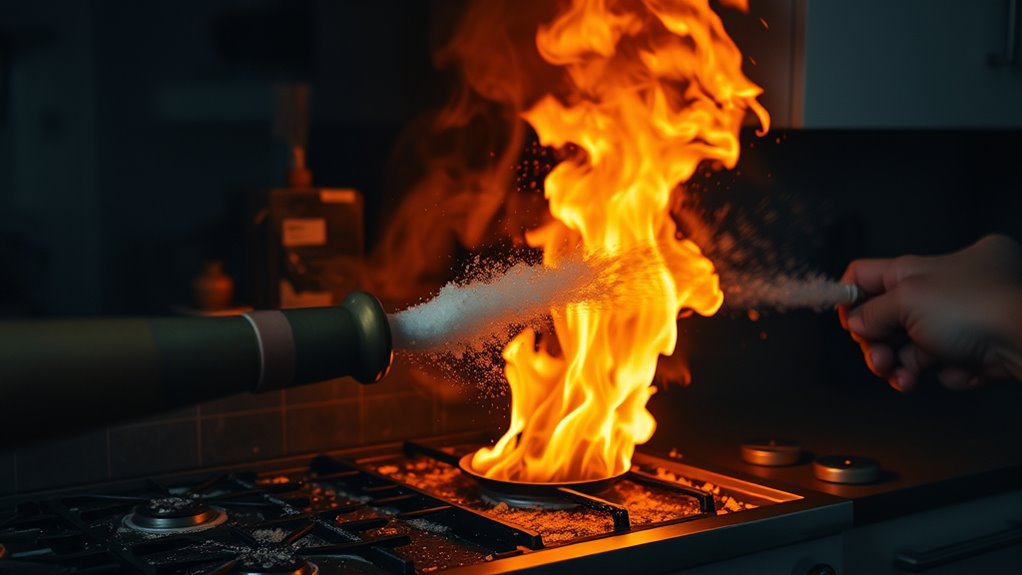
If you don’t use a fire extinguisher correctly during a grease fire, you risk making the fire worse instead of putting it out. Fire extinguisher mishaps often happen because of improper technique, like spraying directly at the flames or using the wrong type of extinguisher. This can spread burning oil or cause the fire to flare up unexpectedly. Instead of smothering the flames, your actions might fan the fire or cause hot grease to splatter, increasing the danger. Proper training on how to use a fire extinguisher is essential; aim at the base of the fire and use a steady, sweeping motion. Remember, misusing an extinguisher can escalate the fire, making the situation more hazardous.
Common Myths About Extinguishing Grease Fires
Many people believe they know how to handle a grease fire, but some common myths can lead to dangerous mistakes. Myth debunking is essential for safety practices in the kitchen. For example, many think water will put out a grease fire, but it causes the fire to flare up. Others believe you should throw flour or baking powder on it—these can ignite or worsen the fire. Some assume covering the fire with a lid suffices, but flames can reignite if grease continues to heat. Additionally, understanding fire safety is crucial because using the wrong approach can escalate the danger. Proper knowledge of fire extinguishers rated for grease fires is also vital to prevent further hazards. In fact, having the correct fire extinguisher rating can make a significant difference in safely extinguishing a grease fire. Knowing how to properly operate a fire extinguisher** ensures you can respond effectively during an emergency. Finally, many think using a fire extinguisher designed for general fires is safe, but specific extinguishers are needed for grease fires. Knowing these myths helps you avoid dangerous actions and promotes proper safety practices during an emergency. It’s also important to verify safety equipment** and ensure you have the right type of fire extinguisher rated for grease fires.
Safe Alternatives and Proper Fire Extinguishing Techniques
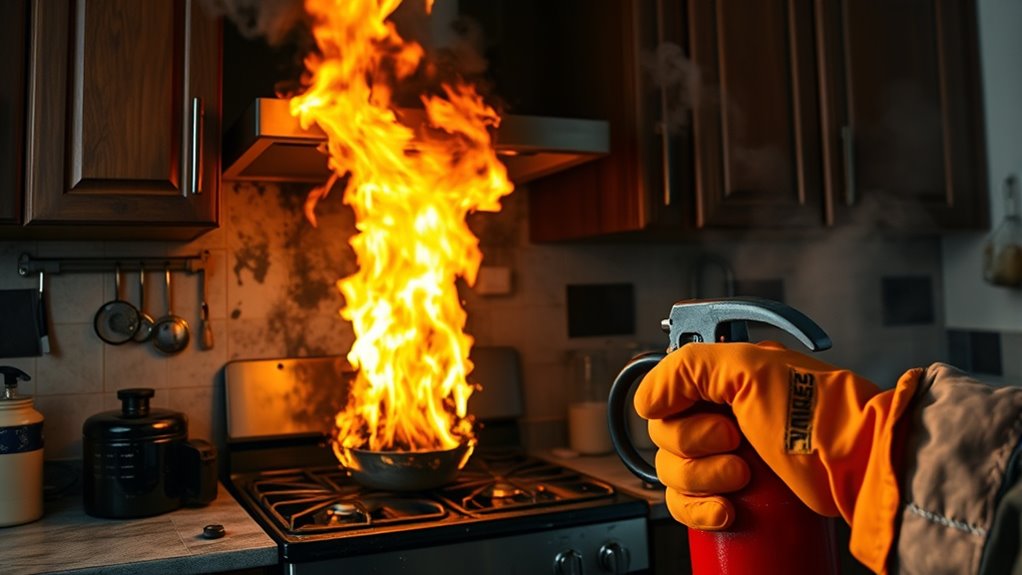
When fighting a grease fire, use baking soda to smother the flames safely. You should also cover the pan with a metal lid to cut off oxygen and extinguish the fire. Never pour water on a grease fire, as it can make the flames worse. Additionally, water parks often have safety protocols and staff trained to handle emergencies, emphasizing the importance of proper fire safety techniques. Understanding fire safety protocols can help prevent escalation during such emergencies. Remember that knowing European travel tips such as local safety practices can also be invaluable in unexpected situations. Proper fire extinguisher use and regular maintenance are crucial in effectively handling kitchen fires and avoiding dangerous escalation.
Use Baking Soda
Baking soda is a safe and effective alternative for smothering small kitchen grease fires. When fire suppression is needed, tossing a generous handful of baking soda directly onto the flames can quickly cut off the oxygen supply, preventing the fire from spreading. Unlike water, baking soda doesn’t react violently with grease fires, making it a safer option. Keep a box nearby in your kitchen for emergencies. Remember, never use flour or baking powder, as they can ignite or worsen the fire. Baking soda works by releasing carbon dioxide when heated, which helps extinguish the flames. It’s simple, accessible, and effective for small fires before they escalate. Always ensure your kitchen fire extinguisher is within reach and know how to use it properly.
Smother With Lid
Covering a grease fire with a metal lid or baking sheet is one of the safest and most effective ways to extinguish it. This method cuts off the oxygen supply, smothering the flames quickly. Keep a fire blanket nearby, as it’s another excellent tool for smothering small fires safely. If the fire persists or grows, use a fire extinguisher rated for kitchen fires (Class K or ABC). Never attempt to move the pan or use water, as that can worsen the fire. Always stay calm, keep the lid or fire blanket ready, and act swiftly. Remember, the goal is to cut off oxygen and prevent the fire from spreading or reigniting. Properly using these tools can save your kitchen and prevent injury.
Never Use Water
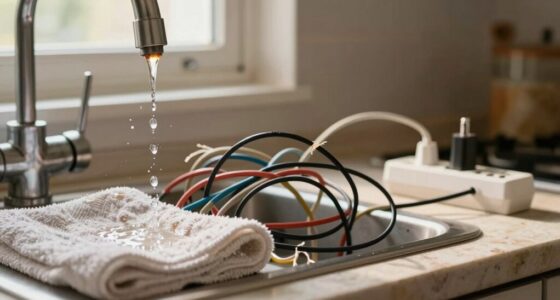
Using water to extinguish a grease fire is dangerous because it can cause the burning oil to splatter and spread flames rapidly. Water hazards are significant; when poured on hot oil, it instantly turns into steam, forcing oil to splash and ignite further. This quick fire spread can quickly become uncontrollable. Instead, use a class K fire extinguisher designed for kitchen fires or smother the flames with a metal lid or baking soda. Never attempt to move the pot or pour water on the fire, as it worsens the situation. Remember these safe alternatives:
- Use a fire extinguisher approved for kitchen fires
- Cover the fire with a metal lid or baking sheet
- Turn off the heat immediately
- Keep a fire blanket nearby for quick response
Frequently Asked Questions
Can You Use a Fire Blanket on a Grease Fire?
Yes, you can use a fire blanket on a grease fire. Fire blanket effectiveness is high when used promptly, as it smothers the flames by cutting off oxygen. Just make certain you follow safety precautions: turn off the heat, carefully place the blanket over the fire without throwing it, and avoid using water or other liquids. Always keep a fire extinguisher nearby and call emergency services if the fire worsens.
What Household Items Are Safest to Smother a Grease Fire?
You should use baking soda or a fire extinguisher rated for grease fires to smother a grease fire safely. Avoid using water or fire retardant sprays, as they can make the fire worse. Keep a box of baking soda nearby, and if a fire blanket is available, use it carefully. Never try to move the pan or use flour, as these can intensify the flames.
How Do Professional Firefighters Extinguish Large Grease Fires?
Imagine a restaurant fire where firefighters use specialized fire suppression methods. They typically employ dry chemical extinguishers or foam to smother large grease fires quickly. Firefighter techniques include using Class K extinguishers designed for kitchen fires, which cut off oxygen and suppress flames effectively. These methods prevent the fire from spreading, ensuring safety and minimizing damage. Always trust trained professionals to handle such dangerous fires.
Is It Safe to Use a Fire Extinguisher on Small Kitchen Fires?
Using a fire extinguisher on small kitchen fires is generally safe if you follow fire extinguisher safety and kitchen fire protocols. Make sure the fire is contained and not spreading, then aim the extinguisher at the base of the flames. Always keep an exit behind you, and if the fire grows or you feel unsafe, evacuate immediately and call emergency services. Proper use prevents the fire from worsening and keeps you safe.
What Are the Signs That a Grease Fire Is Out of Control?
You’ll know a grease fire is out of control when you see rapid fire growth and thick, dark smoke indicators. If flames spread beyond the pan or if smoke fills the kitchen quickly, it’s a sign you need to evacuate and call emergency services. Don’t attempt to move the pan or use water, as this can make the fire worse. Recognizing these signs helps you act quickly and safely.
Conclusion
Now that you know what not to do, imagine the fire roaring higher, flames licking dangerously close. The wrong move could turn a small flare into a disaster. But with the right knowledge, you’ll be ready. Picture yourself grabbing a fire extinguisher, steady and confident, ready to silence the inferno before it spreads. Stay alert, stay safe—your quick action could be the difference between control and catastrophe. Will you be prepared when it counts?