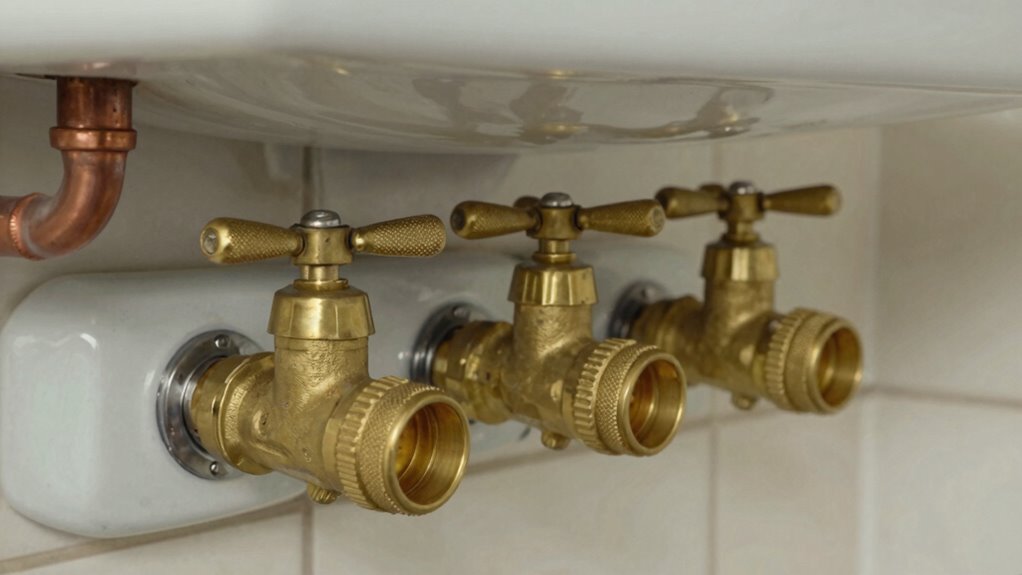

Knowing where your main water shutoff valve is located is key to preventing costly water damage during emergencies. Look near where the water line enters your home, often in the basement, garage, or utility area. Check outside walls near outdoor faucets and crawl spaces. For fixtures, find individual valves under sinks or behind toilets. Regularly test, label, and inspect your valves to make sure quick action when needed. Keep exploring to learn more about finding and maintaining your shutoff valves.
Key Takeaways
- Locate the main shutoff valve near where the water line enters your home, typically in the basement, garage, or utility area.
- Familiarize yourself with individual fixture shutoff valves near sinks, toilets, and appliances for quick control.
- Regularly inspect and test all valves for proper operation, leaks, and corrosion to ensure they function when needed.
- Use clear labels and color-coding to identify valves quickly during emergencies, improving response time.
- Develop and practice a household shutoff plan to ensure swift action during leaks or water emergencies.
Understanding the Importance of Water Shutoff Valves
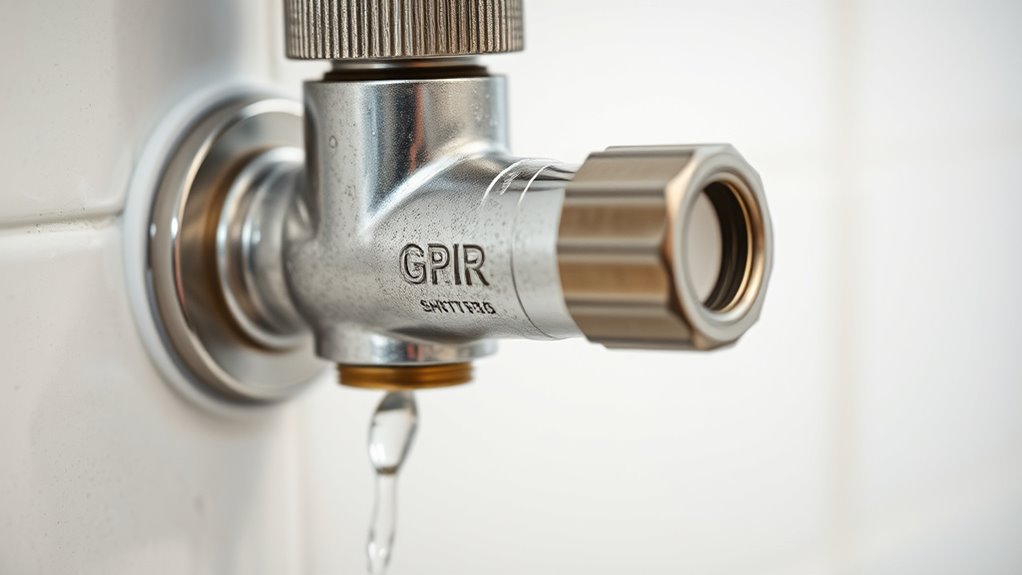
Water shutoff valves are essential safety devices that give you control over your home’s water supply. They allow you to stop water flow quickly during leaks, repairs, or emergencies. Knowing the different pipe materials helps you understand which valve types suit your plumbing system. For example, brass valves work well with copper pipes, while plastic valves are common with PVC or PEX piping. Choosing the right valve type—ball valves, gate valves, or globe valves—ensures reliable shutoff and durability. Properly installed shutoff valves provide peace of mind, preventing water damage and costly repairs. Recognizing their importance means you’re prepared for unexpected plumbing issues and can act swiftly to protect your home. Understanding these components keeps your plumbing system safe and functional. Additionally, proper installation techniques are crucial to ensure the valves operate correctly and last longer. Being aware of valve compatibility with your specific plumbing setup can help you select the most effective solutions for your home. Regular inspection and maintenance of your shutoff valves can also extend their lifespan and ensure they work when needed. For added security, understanding the history and standards of haute couture can provide insights into craftsmanship and quality benchmarks that influence product durability and design. To further enhance your home’s safety, consider the integration of smart plumbing solutions that can alert you to leaks or valve malfunctions remotely.
Common Locations for Main Water Shutoff Valves
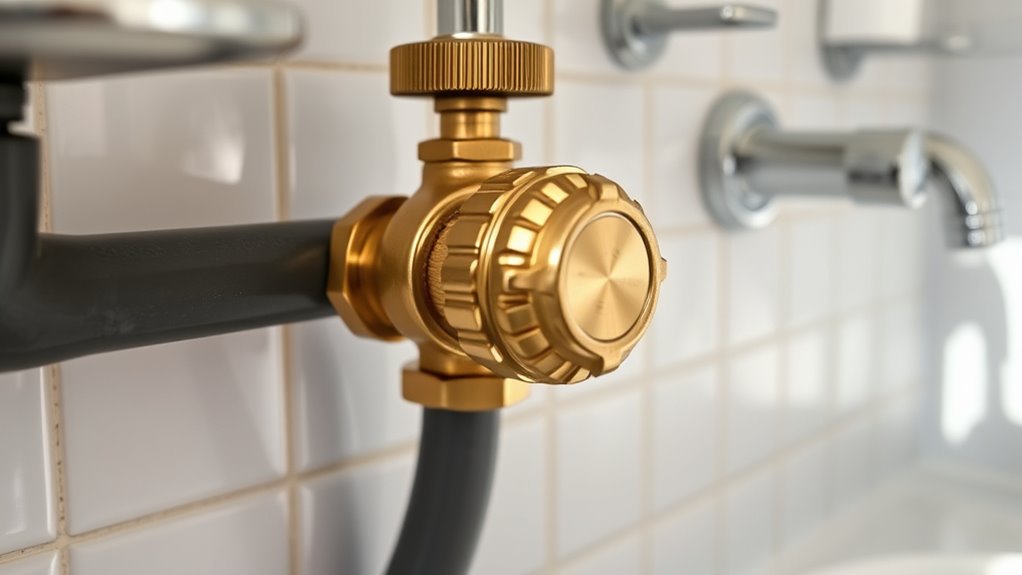
Knowing where to find your main water shutoff valve is essential for quick action during emergencies. Typically, it’s located near where the main water line enters your home, often in the basement, garage, or utility area. If you have outdoor faucets or garden hoses, check outside walls or near the foundation, as shutoff valves often control outdoor water access. These locations help prevent water damage from leaks or bursts. Use this quick reference to identify common spots:
| Location | Description | Key Features |
|---|---|---|
| Basement or cellar | Often near the main water line | Close to where pipes enter |
| Garage | Near utility sink or water heater | Usually accessible and visible |
| Exterior walls | Outdoor faucets or garden hoses | Usually on exterior walls |
| Crawl spaces | Underneath or near the foundation | Often hidden but accessible |
A helpful tip is to familiarize yourself with the water supply system in your home, so you can quickly locate the valve when needed. Additionally, understanding the plumbing layout can make it easier to find the shutoff in an emergency. It’s also beneficial to periodically inspect and test your shutoff valves to ensure they function properly when needed. Becoming aware of common valve locations can also save precious time if a leak occurs.
Identifying Individual Fixture Shutoff Valves
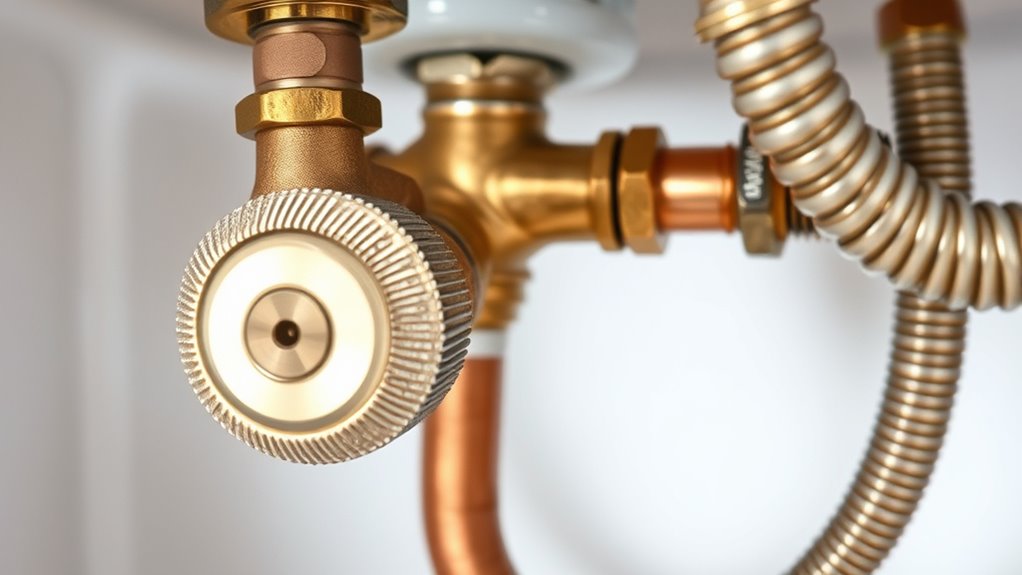
To quickly stop water flow at a specific fixture, you need to locate its individual shutoff valve. Identifying these valves depends on understanding valve types and fixture identification. Look for valves near sinks, toilets, or appliances. Common valve types include ball valves, gate valves, and angle stops, each with distinctive handles or shapes. Knowing valve types helps ensure proper operation and prevents damage when shutting off water. Recognizing the valve shape and handle style can assist you in identifying the correct shutoff quickly. Additionally, understanding fixture identification can help you locate the appropriate shutoff more efficiently. Check under sinks for small round or lever handles labeled with fixture names. Look behind toilets for shutoff valves connected to supply lines. Inspect appliances like dishwashers and water heaters for dedicated valves. Being familiar with plumbing layouts can further streamline the process of locating shutoff valves during emergencies. Moreover, valve placement often follows common plumbing conventions, making it easier to anticipate their locations based on the fixture type.
How to Test Your Water Shutoff Valves
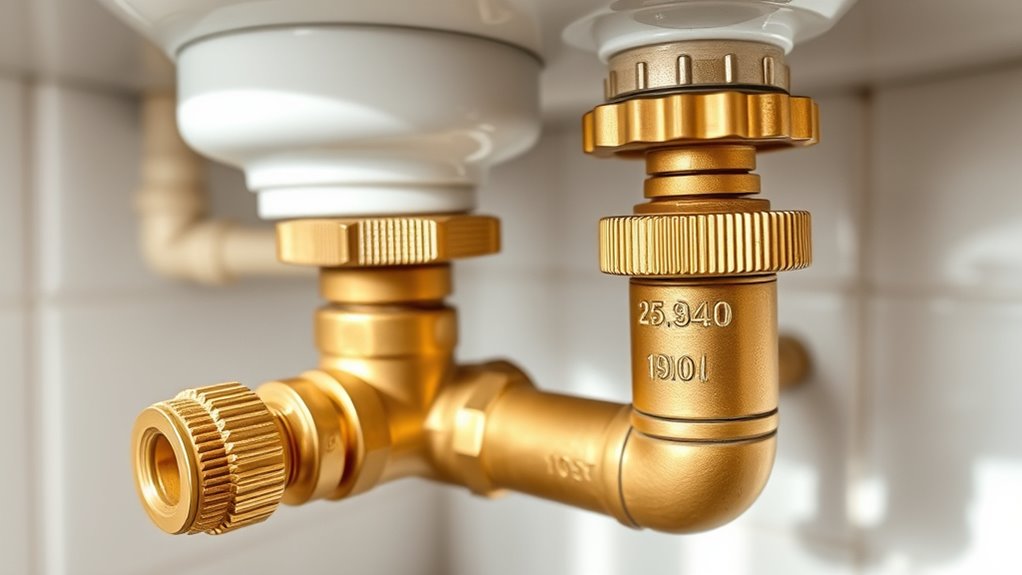
Wondering if your shutoff valves will work properly during an emergency? You should test them regularly to confirm valve durability and proper function. Start by turning each valve off and on to check for smooth operation. Next, perform water pressure testing by opening the main shutoff and observing if the flow stops completely. If there’s any hesitation or leakage, the valve may need replacement. Routine maintenance helps ensure your home remains safe and functional. Regular testing can also reveal signs of wear before a leak develops, which is crucial for preventing water damage. Additionally, knowing the types of shutoff valves in your home can help you identify the correct procedures for testing and replacement. Understanding the proper testing techniques can extend the lifespan of your valves and prevent costly repairs. Use the table below to record your test results:
| Valve Location | Functionality Test | Notes |
|---|---|---|
| Main Shutoff | Smooth operation | No leaks observed |
| Kitchen Valve | Stops water flow | Valve feels stiff or stuck |
| Bathroom Valve | Complete shutoff | Needs replacement if faulty |
Regular testing ensures you’re prepared when it counts. 1023 Jack
Tips for Labeling and Marking Your Valves
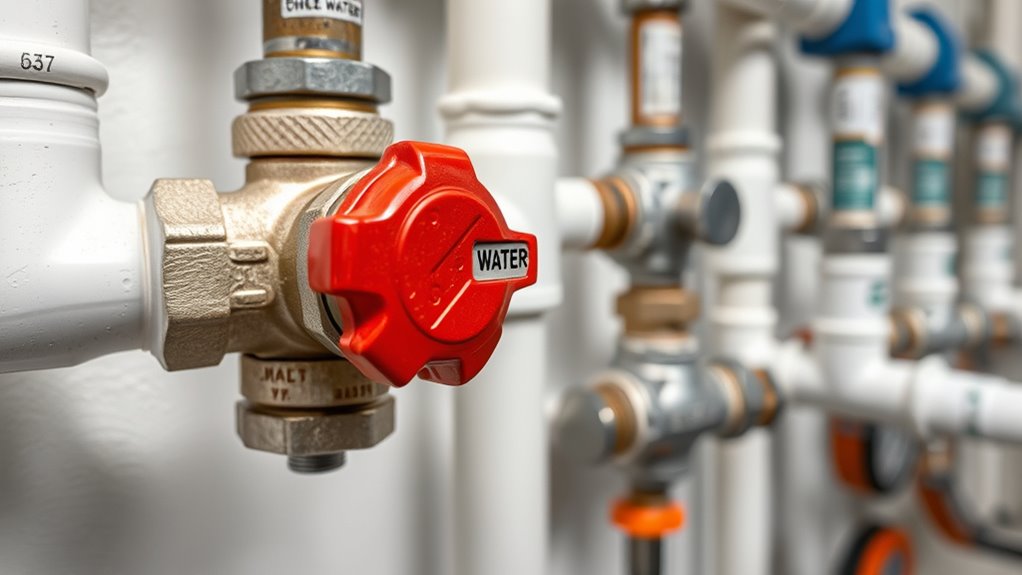
Label your valves clearly so you can identify them quickly during an emergency. Use color coding to distinguish between main, secondary, and other valves for easy recognition. Remember to update your labels regularly to keep them accurate and effective. Additionally, consider incorporating high-quality materials to ensure labels stay legible and durable over time. Proper labeling is an essential part of document management, making it easier to locate important valves when needed. To improve ownership responsibility, establish a routine inspection schedule to verify that labels remain intact and clearly visible. Regularly reviewing labeling procedures can help maintain safety standards and prevent confusion during urgent situations. Recognizing the significance of net worth can also motivate proactive maintenance and safety measures.
Use Clear Labels
Are you making it easy to identify your water shutoff valves? Clear labels help you quickly locate the right valve during emergencies. Use durable labels that can withstand moisture and temperature changes, considering the valve material and environment. Make sure labels are large enough to read easily and include key details like valve size, material, and function. Position labels directly on or near the valve handle for quick visibility. Consistent labeling across all valves prevents confusion, especially if you have multiple shutoff points. Regularly check and update labels if you replace or modify any valves. Clear, well-placed labels save you time and reduce stress when every second counts. Proper labeling ensures you’ll find the right valve fast, keeping your water system safe and functional.
Color-Code Valves
Color-coding your valves adds an immediate visual cue that makes identification faster and easier, especially in emergencies. Using color coding for valve identification helps you quickly locate the correct shutoff. Assign specific colors to different functions or areas, such as red for hot water and blue for cold water. This system reduces confusion during urgent situations. To organize your color coding, consider a simple chart like this:
| Color | Function | Location |
|---|---|---|
| Red | Hot Water Supply | Kitchen, Bathroom |
| Blue | Cold Water Supply | Basement, Garage |
| Green | Irrigation | Garden, Lawn |
Regularly Update Tags
To guarantee your valve identification system remains reliable, you need to regularly update tags and markings. Over time, labels can fade, become damaged, or shift, making it harder to quickly identify the right valve during an emergency. This is especially important for outdoor faucets and irrigation systems, where quick access is essential. Regular updates ensure your labels stay clear and accurate.
- Check for faded or damaged tags and replace them promptly
- Use weather-resistant materials for outdoor and irrigation system labels
- Confirm that labels match current valve functions and positions
Keeping your markings current minimizes confusion, saves time, and helps prevent costly mistakes when shutting off water in urgent situations.
Maintenance and Inspection of Shutoff Valves
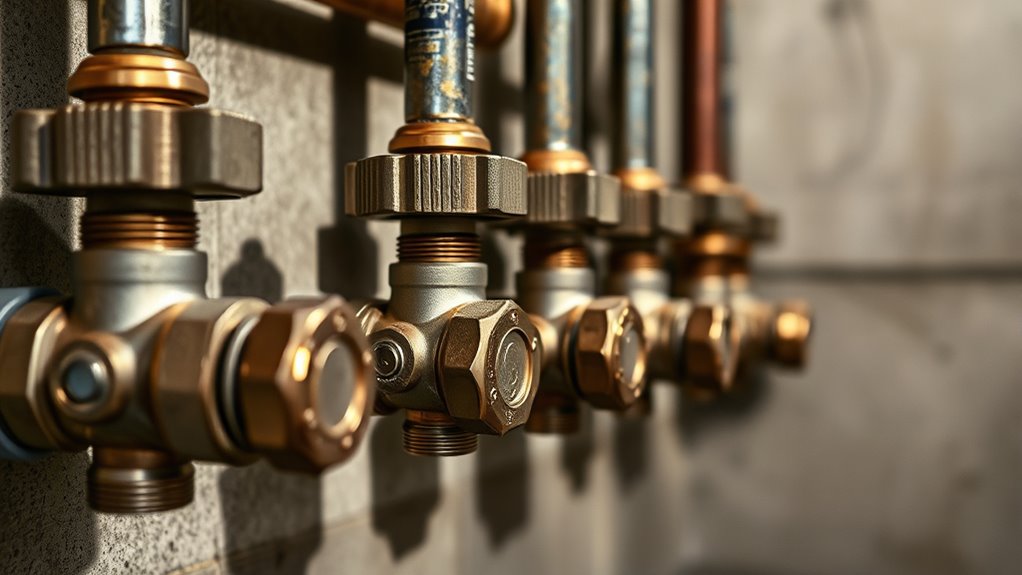
Regular maintenance and inspection are essential to guarantee your shutoff valves function properly when you need them most. Valve maintenance involves checking for corrosion, leaks, or stiffness that could hinder operation. Use inspection techniques like turning the valve handle periodically to ensure smooth movement and listening for any unusual sounds. Look for signs of wear, such as rust or mineral buildup, and address these issues promptly. If you notice resistance or difficulty turning the valve, it may need lubrication or replacement. Regularly exercising your shutoff valves helps prevent sticking and prolongs their lifespan. Keep a record of inspection dates and any repairs. Staying proactive with valve maintenance ensures your shutoff valves will perform reliably during emergencies, avoiding costly water damage.
When to Call a Professional for Assistance
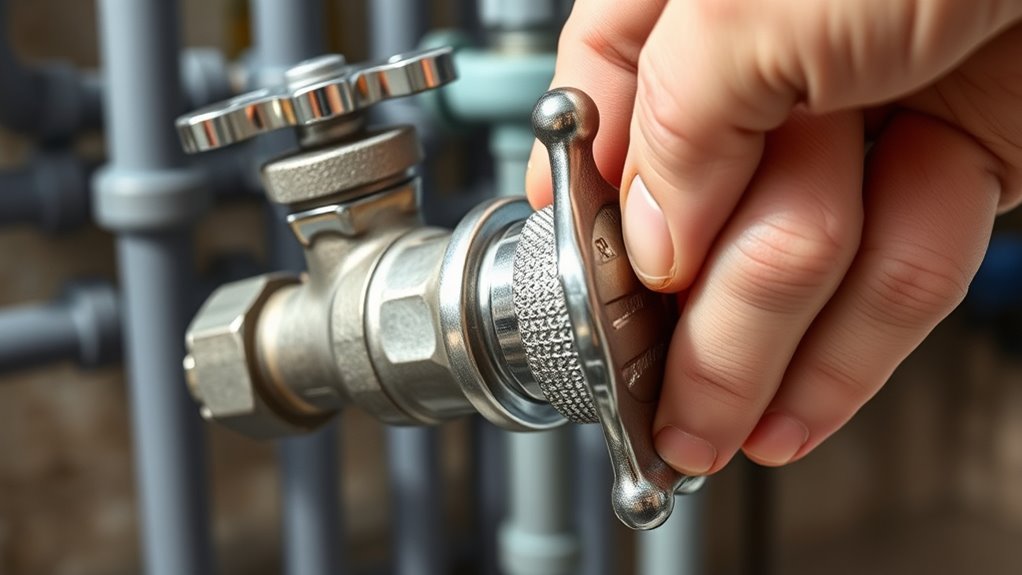
Knowing when to call a professional can save you time, money, and potential water damage. If you notice signs of pipe corrosion around your shutoff valves or struggle to turn them off, it’s time to seek expert help. A professional can assess whether the valve needs replacement or if corrosion has compromised the pipe’s integrity. Don’t attempt complex repairs yourself if you’re unsure of the problem.
- The valve is leaking despite effort to tighten or close it
- You see significant corrosion or mineral buildup around the valve
- The valve won’t respond or turns only partially when operated
Calling a plumber ensures proper valve replacement and prevents further damage, keeping your plumbing system safe and reliable.
Creating an Emergency Shutoff Plan
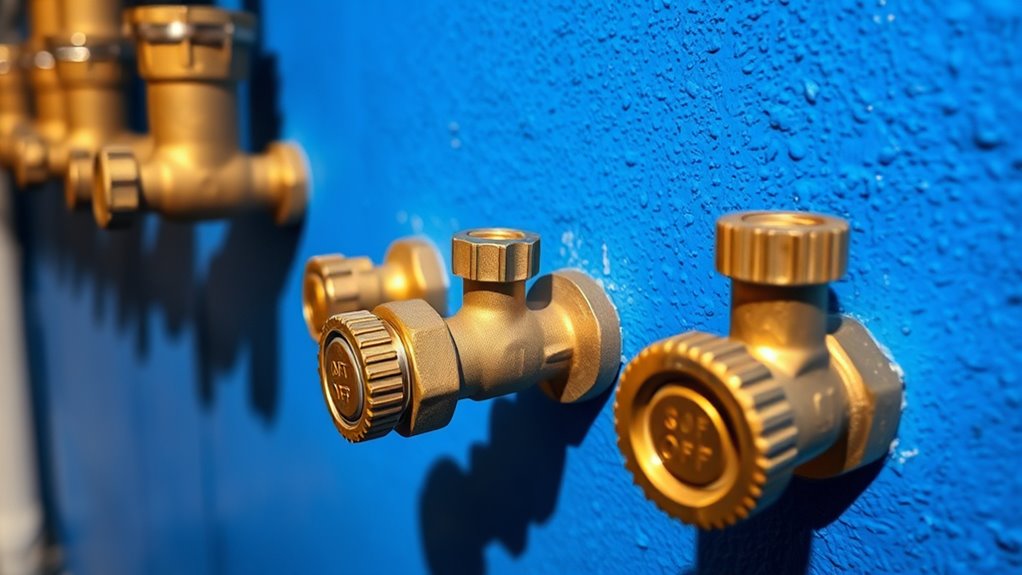
To create an effective emergency shutoff plan, you need to identify your key water valves and know exactly how to turn them off quickly. Practice shutting them off so you can act confidently if a leak or burst occurs. Being prepared can prevent major water damage and save you time in a crisis.
Identify Key Valves
Have you identified the main water shutoff valves in your home? Knowing their locations is essential for quick action during emergencies. You should familiarize yourself with different valve types, such as ball valves and gate valves, so you can operate them confidently. Pay attention to valve materials like brass, copper, or plastic, which affect durability and ease of use.
- Locate all primary shutoff points, including those under sinks and near the main water line
- Recognize different valve types to ensure proper operation when needed
- Check the materials to confirm they’re in good condition and easy to turn
Practice Shutoff Procedures
Practicing shutoff procedures makes sure you’re prepared to act quickly in an emergency. Start by reviewing the location of your main shutoff valve, considering its valve material to verify you know how to operate it smoothly. Understanding the shutoff valve history in your home can help you identify older valves that might require extra force or maintenance. Regularly practicing turning the valve off and on builds confidence and speeds up your response if a leak or burst occurs. Make a clear plan with everyone in your household, including how to access and operate the valve quickly. This preparation minimizes water damage and prevents further issues. Familiarity with your shutoff procedures ensures you can act swiftly and effectively during a crisis.
Frequently Asked Questions
How Often Should I Inspect My Water Shutoff Valves?
You should inspect your water shutoff valves at least once a year to guarantee they work properly. Regular valve maintenance helps prevent leaks and makes emergency preparedness easier if a pipe bursts. Turn the valves off and on to check for smooth operation, and address any corrosion or stiffness promptly. Keeping your shutoff valves in good condition saves you time and money during emergencies, ensuring reliable control when you need it most.
Can Shutoff Valves Freeze in Winter?
Yes, shutoff valves can freeze in winter if not prepared. Imagine a homeowner in Minnesota who left their outdoor valve uninsulated; a cold snap caused it to freeze, preventing water flow and leading to costly repairs. To prevent freezing risks, winter preparedness is essential. Insulate your shutoff valves, especially outdoor ones, and consider shutting them off and draining lines during extreme cold to avoid freezing damage.
Are There Different Types of Shutoff Valves for Specific Fixtures?
Yes, there are different types of shutoff valves for specific fixtures, like angle valves for sinks and ball valves for main lines. When you perform valve installation, make sure you select the right type for each fixture. Regular valve maintenance helps prevent leaks and ensures smooth operation. Knowing which valve suits each fixture allows you to shut off water quickly when needed, saving you time and potential water damage.
What Signs Indicate a Shutoff Valve Needs Replacement?
When your shutoff valve starts acting up, it’s time to replace it. Look for signs like valve corrosion, which weakens its structure, and leaks that won’t stop despite tightening. If you notice difficulty turning the valve or persistent leaks, it’s a clear sign it’s on its last legs. Don’t ignore leak detection signals—these issues can escalate, so act now before you’re caught in a real jam.
Do All Homes Have a Main Shutoff Valve?
Most homes do have a main shutoff valve, but it’s a good idea to double-check your home plumbing. Knowing its location is vital for emergency preparedness, especially if a leak or burst pipe occurs. If you’re unsure, inspect near the water meter or where the main water line enters your house. Being familiar with your main shutoff valve ensures you can act quickly and minimize damage when emergencies happen.
Conclusion
Knowing where your water shutoff valves are is like holding the keys to your home’s safety. Don’t wait for a crisis to discover they’re hidden or difficult to operate. Regularly inspect, label, and test them—because in an emergency, they become your first line of defense. Remember, prevention is the best medicine; be proactive now, so you’re prepared when it counts most. After all, the easiest way to avoid a flood is to turn the tide before it starts.