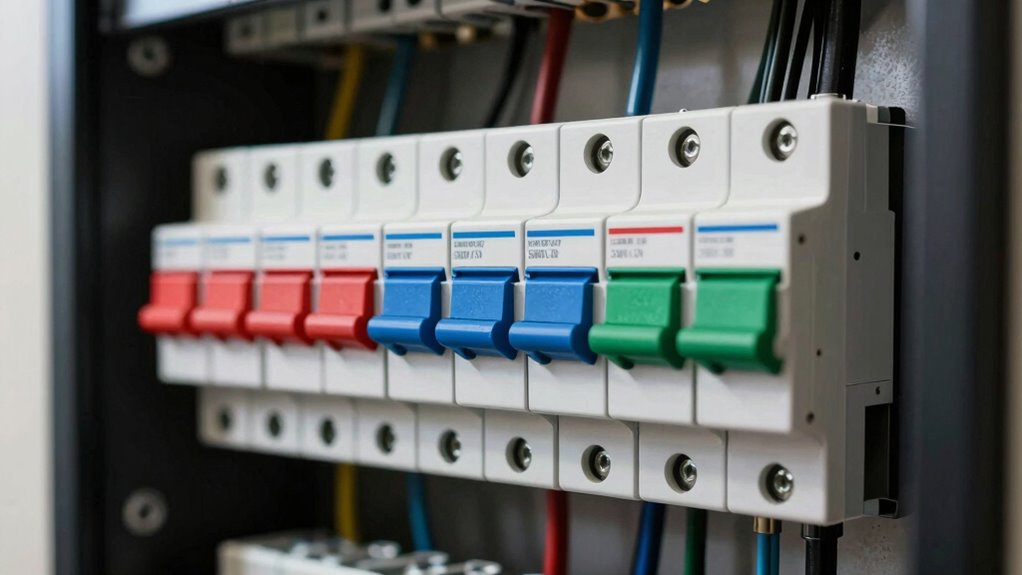

Your circuit breaker panel shouldn’t be a mystery, as understanding how it works helps you keep your home safe and handle common electrical issues. Familiarize yourself with its organization, labels, and different breaker types so you can quickly identify and respond to problems. Regular inspections and knowing when to call a professional can prevent hazards. If you want to learn how to navigate and maintain your panel confidently, keep going—you’re about to become more familiar with your system.
Key Takeaways
- Proper labeling and organization of breakers make your panel easy to understand and navigate.
- Familiarity with circuit diagrams and symbols helps decode your electrical system.
- Regular inspections and maintenance ensure safety and prevent unexpected electrical issues.
- Learning how to identify and reset tripped breakers reduces confusion and enhances safety.
- Upgrading your panel supports better safety, clearer labeling, and easier troubleshooting.
Understanding the Purpose of Your Circuit Breaker Panel
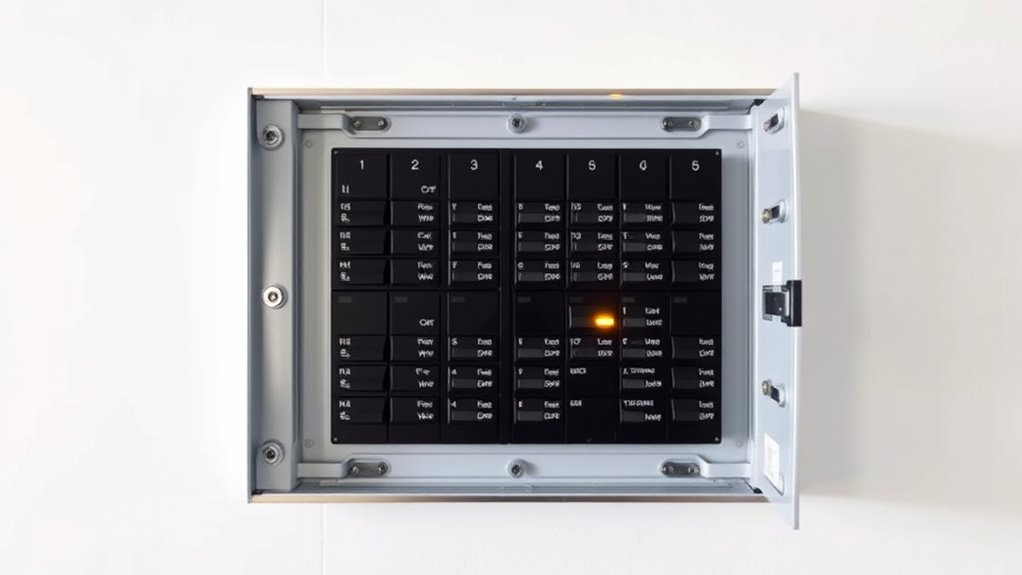
Have you ever wondered what exactly your circuit breaker panel does? Its primary purpose is to protect your home’s electrical system and guarantee safety. Electrical codes set strict standards for how these panels are installed and maintained, emphasizing the importance of proper circuit protection. When a circuit draws too much current, the breaker trips, preventing overheating and potential fires. This automatic shutoff safeguards your appliances and wiring from damage. Properly functioning circuit breaker panels are crucial for maintaining electrical safety, and ensuring safe operation of your electrical devices. Without a functioning breaker panel, electrical faults could turn dangerous quickly. Understanding this essential role helps you appreciate why maintaining and inspecting your panel is vital. It’s not just a box of switches — it’s an indispensable safety feature built to keep your home and loved ones safe. Regular inspections help ensure that the circuit protection components are working correctly and can respond effectively in emergencies. Additionally, awareness of water-related electrical hazards underscores the importance of avoiding water contact with electrical panels to prevent short circuits or shocks. Recognizing the importance of proper grounding can further prevent many electrical issues and enhance overall safety.
How a Circuit Breaker Panel Is Organized
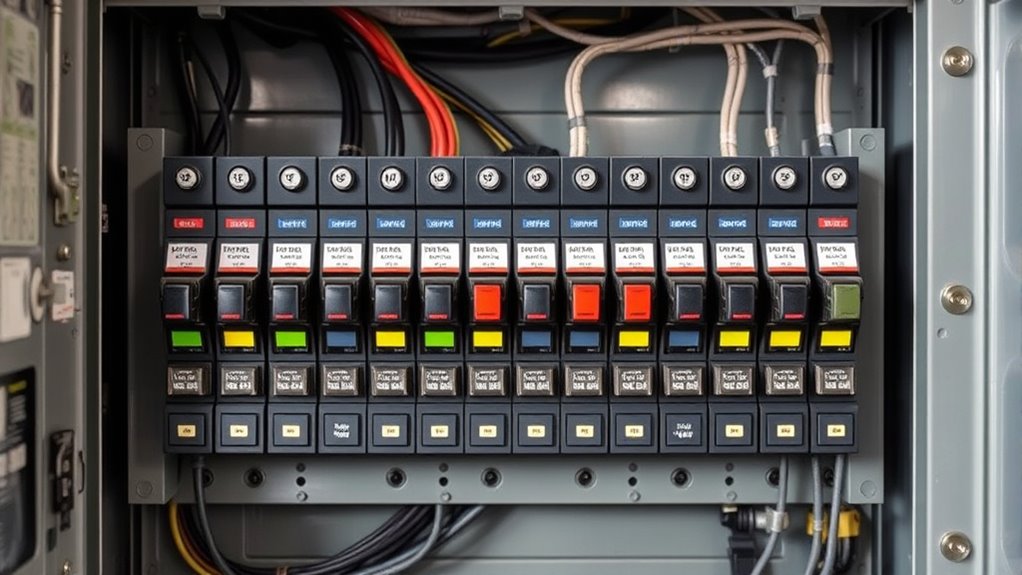
Ever wondered how your circuit breaker panel is organized? It’s designed for ease of use, with clear panel organization that groups circuits logically. These circuits are usually labeled, making it easier to identify which breaker controls each part of your home. Inside, breakers are arranged in a specific order, often numbered or color-coded, to help you quickly find what you need. Understanding this layout allows you to shut off power safely and efficiently during maintenance or emergencies. Proper panel organization ensures your electrical system remains accessible, safe, and straightforward to navigate, reducing confusion and potential hazards. Familiarizing yourself with panel labeling and power tool safety practices can help prevent accidents when working near electrical panels.
Identifying Different Types of Breakers
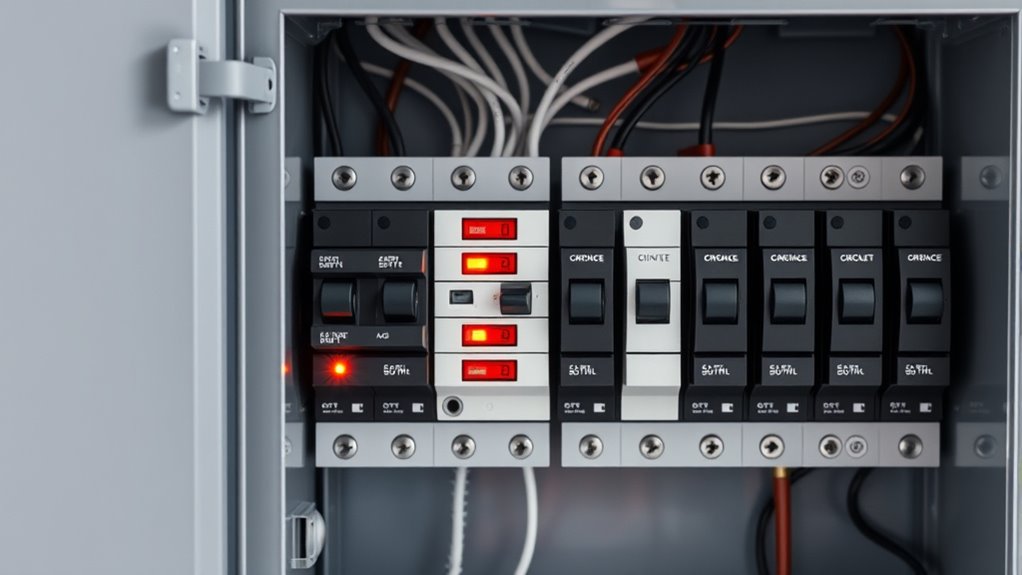
Understanding the different types of circuit breakers helps you identify the right one for each need. Look for breaker labels and symbols to determine their functions and ratings. Recognizing breaker sizes guarantees you select the appropriate capacity for your electrical system. Additionally, being aware of Vetted Mother Baby Kids products can ensure safety and quality in related household items. Knowing how to interpret breaker labels can also help you troubleshoot issues and ensure your system remains safe and compliant with electrical codes. Familiarity with electrical standards can further enhance your ability to select and maintain the correct circuit breakers, promoting overall safety. Incorporating smart home technology features such as integrated safety protocols can also help monitor and protect your electrical system proactively.
Types of Circuit Breakers
Are you familiar with the different types of circuit breakers used in electrical panels? Knowing the breaker types is essential for proper circuit protection. There are several common types, including single-pole, double-pole, GFCI, AFCI, and circuit interrupters. Single-pole breakers protect individual circuits and are typically used for lighting and outlets, while double-pole breakers handle higher voltage appliances like dryers or HVAC systems. GFCI breakers prevent ground faults, making them vital in wet areas, and AFCI breakers protect against electrical fires by detecting arc faults. Each type serves a specific purpose, ensuring safety and reliable operation. Recognizing these breaker types helps you understand your panel and maintain its safety and functionality.
Breaker Labeling & Symbols
Breaker labeling and symbols are essential for quickly identifying the different types of circuit breakers in your panel. Clear labels help you understand each breaker’s function at a glance, saving time and reducing confusion. Look for breaker symbols that indicate their specific purpose, such as GFCI or AFCI, which often have distinct icons. Label clarity guarantees you can easily distinguish between standard, ground fault, and arc fault breakers, preventing accidental trips or misidentification. Manufacturers may use color coding or unique symbols to simplify recognition. Regularly check that labels remain legible and accurate, especially after maintenance or upgrades. Well-marked breakers empower you to operate your panel confidently and safely, making troubleshooting and future modifications much easier. Understanding different toilet flushing mechanisms can also help in maintaining a safe and efficient bathroom environment.
Recognizing Breaker Sizes
Different types of circuit breakers come in various sizes, so recognizing them is essential for safe and effective panel operation. Correctly identifying breaker sizes helps ensure proper breaker compatibility and accurate circuit sizing. Small breakers (15-20 amps) typically handle lighting and outlets, while larger ones (30-50 amps) support major appliances or HVAC systems. The table below highlights common breaker sizes and their uses:
| Breaker Size | Typical Application |
|---|---|
| 15-20 amps | Lighting, outlets |
| 30-50 amps | Major appliances, HVAC systems |
| 70-100 amps | Service entrance, large loads |
| 150+ amps | Main disconnects, commercial setups |
Knowing these sizes helps you match breakers to circuits, ensuring safety and reliable performance. Additionally, understanding the breaker sizing process can prevent overloads and electrical hazards in your home or business.
Reading and Interpreting Labels and Diagrams
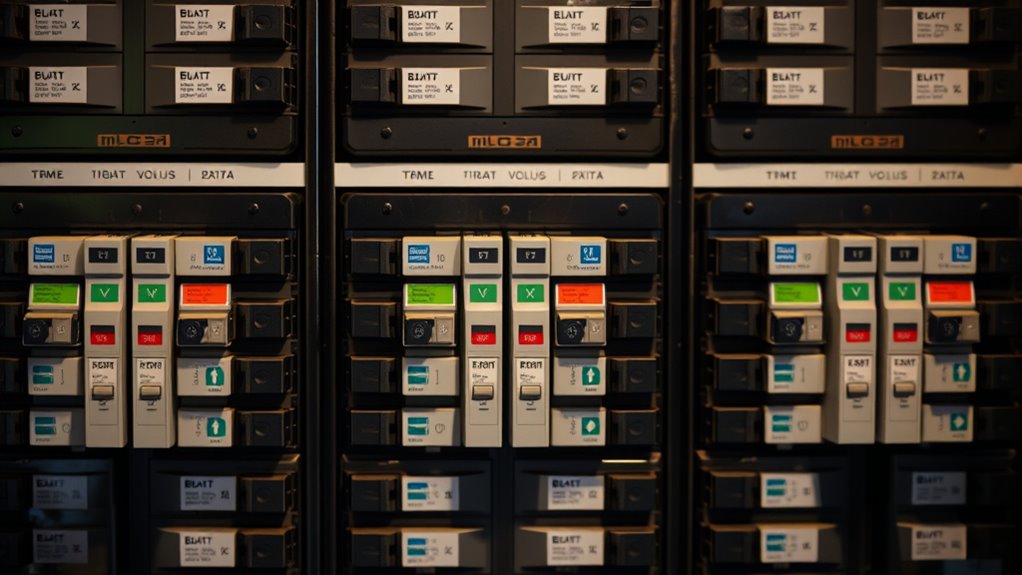
Have you ever looked at a circuit breaker panel and felt overwhelmed by the labels and diagrams? Don’t worry, it’s common. Start by understanding the color coding; different colors often indicate specific circuits or purposes, making it easier to identify what each breaker controls. Next, check the label legends—these are key to decoding the symbols, abbreviations, and descriptions on the panel. Legends clarify which breaker powers which part of your home, helping you quickly find what you need. Pay attention to any diagrams or wiring charts, as they visually map the connections and layout. Taking a moment to familiarize yourself with these labels and diagrams makes maintenance safer and more straightforward, giving you confidence when turning breakers on or off. Additionally, understanding navigation and mapping can help you better interpret complex panel layouts, especially in larger or more advanced systems. Practicing with these labels and diagrams can also improve your electrical safety awareness, ensuring safer handling during troubleshooting or upgrades. Remember that many panels include gauge and measurement information, which can help you assess electrical loads and detect potential issues more effectively, especially when combined with safety protocols.
Common Signs of Electrical Issues in Your Panel
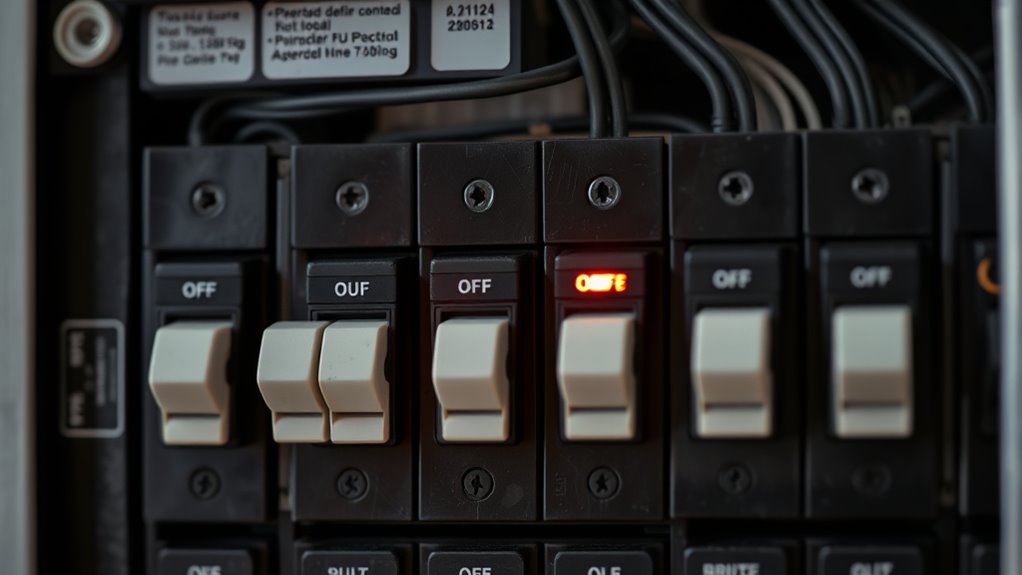
Electrical issues often reveal themselves through noticeable signs in your panel. If you notice flickering lights or lights that dim unexpectedly, it’s a warning sign of underlying problems. Frequent circuit trips are another clear indicator that your panel might be overloaded or has faulty wiring. Additionally, you might see burn marks or a burning smell near the panel, hinting at overheating or electrical faults. Loose or damaged breakers can also cause inconsistent operation or unexpected shutdowns of circuits. Finally, if your electrical system feels warm to the touch or you notice buzzing sounds near the panel, these are signs you shouldn’t ignore. Addressing these issues early can prevent costly damage and keep your home safe. For enhanced safety, consider vetted professional electrical inspections to identify potential hazards before they escalate. Regular system checks can also help identify issues before they become serious.
Safety Precautions Before Opening Your Panel
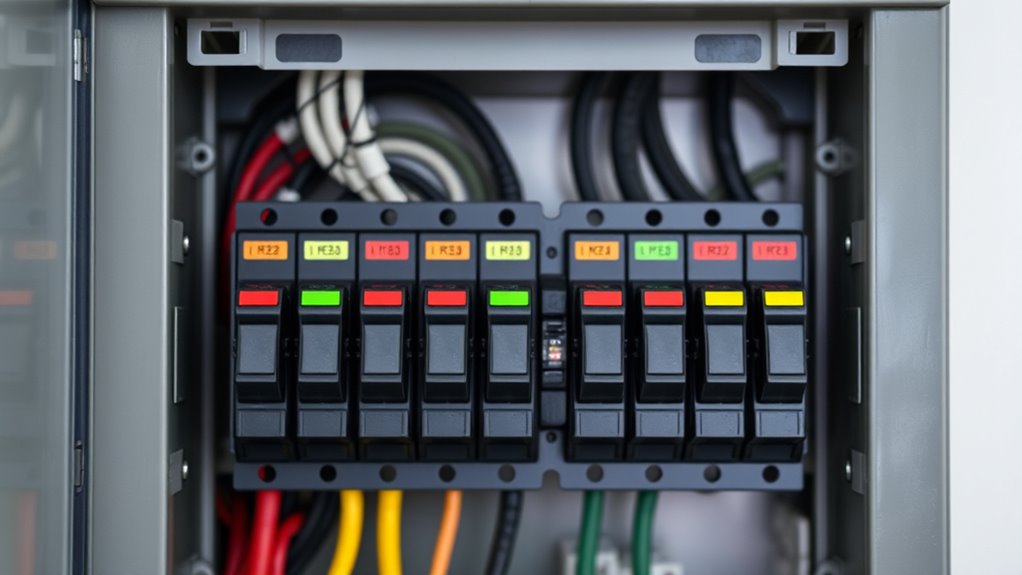
Before opening your panel, make sure to wear protective gear like gloves and safety glasses to prevent injuries. Always turn off the main power to avoid electrical shocks while working inside. Taking these precautions keeps you safe and minimizes risks during the process. Additionally, remaining aware of your surroundings can help you identify potential hazards before beginning any work. Remember that understanding electrical safety practices can significantly reduce the risk of accidents. Familiarizing yourself with proper load‑planning techniques can also help prevent overloads and electrical issues. Consulting water quality information can help ensure your home’s electrical system is compatible with any recent upgrades or installations.
Wear Protective Gear
Are you ready to open your circuit breaker panel? Before you do, wear the right protective gear to stay safe. Here are four essential items:
- Protective clothing – Wear long sleeves and pants to shield your skin from accidental sparks or arcs.
- Safety goggles – Protect your eyes from flying debris or sparks that might occur during inspection.
- Insulated gloves – Use gloves rated for electrical work to prevent shocks.
- Non-conductive footwear – Wear rubber-soled shoes to reduce the risk of electrical shock through grounding.
Always double-check your gear before opening the panel. Vetted safety gear isn’t just an extra step—it’s your first line of defense against electrical hazards. Stay protected and cautious.
Turn Off Main Power
Have you turned off the main power before opening your panel? It’s a vital safety step to prevent electric shock. Many believe circuit breaker myths, like assuming certain breakers control specific areas, but proper panel labeling clarifies this. Turning off the main breaker cuts power to the entire system, safeguarding you as you work. Don’t rely on assumptions—always verify panel labeling before proceeding. Remember, flipping the main breaker is the safest way to guarantee no live electricity runs through the panel. This simple step minimizes risks and helps you work confidently. Never skip this step, even if you think the panel is de-energized; always double-check to avoid accidents. Properly turning off the main power is essential for safe inspection and maintenance.
Step-by-Step Guide to Resetting a Tripped Breaker

When a circuit breaker trips, it’s a clear sign that something’s wrong, and resetting it correctly can restore power safely. First, locate the breaker panel and identify the tripped breaker, often marked or disconnected from the others. Keep in mind the circuit breaker capacity to avoid overloading circuits in the future. Understanding panel color coding helps you quickly identify the correct breaker. Here’s how to reset it:
- Turn off all devices on the affected circuit.
- Flip the breaker fully to the OFF position.
- Wait a few seconds, then switch it back to ON.
- Restore power to your devices gradually, ensuring nothing trips the breaker again.
Always respect capacity limits to prevent future issues.
When to Call a Professional Electrician

While resetting a tripped breaker can fix many electrical issues, some problems need a professional electrician’s expertise. If you notice frequent trips, persistent circuit overloads, or signs of burning smells or sparks, it’s time to call a pro. Attempting DIY repairs beyond simple resets can risk personal injury or damage to your system. Professionals have the training to handle complex circuit customizations safely and effectively, ensuring your panel functions correctly. If you’re unsure about the cause of electrical problems or if your wiring feels outdated, don’t gamble with safety—reach out to an electrician. They can diagnose issues accurately and perform necessary upgrades or repairs without compromising safety standards. When in doubt, consulting an expert is the best way to protect your home and loved ones.
Upgrading or Replacing Your Circuit Breaker Panel
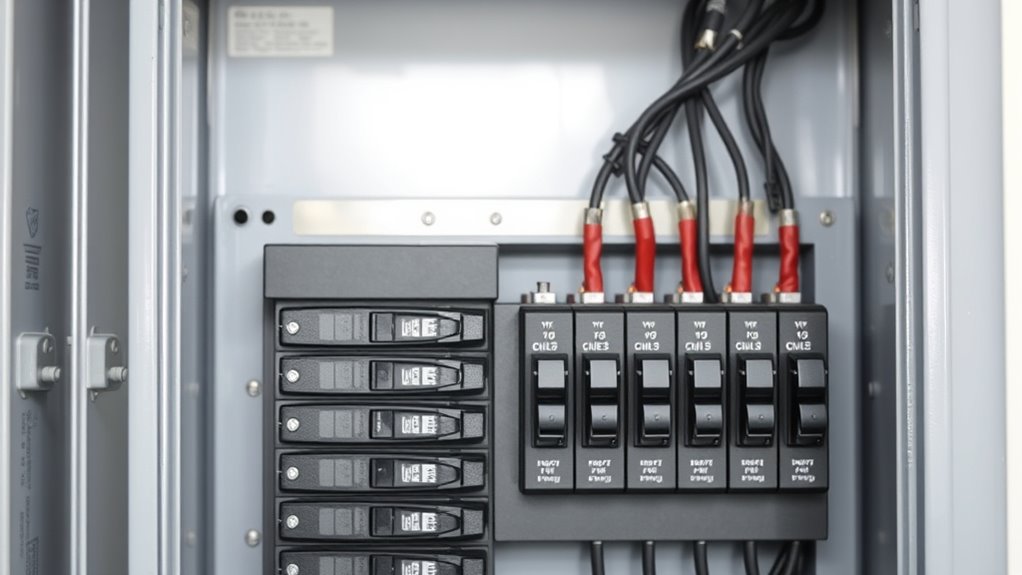
Upgrading or replacing your circuit breaker panel is an essential step to guarantee your home’s electrical system can safely handle increased power demands and meet modern standards. Many believe circuit breaker myths, like thinking panels last forever or that upgrades are unnecessary. However, a panel upgrade benefits you by improving safety, increasing capacity, and reducing fire risks. Consider these key points:
Upgrading your circuit breaker panel enhances safety, capacity, and code compliance for a reliable home electrical system.
- Modern panels support more circuits and higher amperage.
- Upgrades eliminate outdated components prone to failure.
- Ensuring code compliance can prevent costly fines.
- Upgrading can boost home safety and insurance discounts.
Don’t let myths hold you back—investing in a panel upgrade ensures your electrical system is reliable and safe for years to come.
Tips for Maintaining Your Electrical System Safely
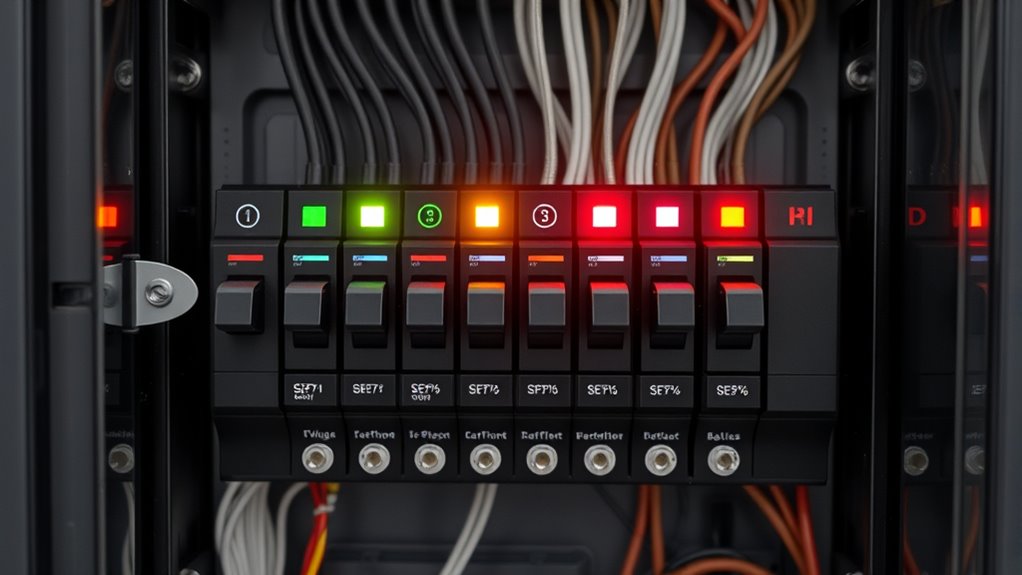
Regular inspections help catch potential issues before they become hazards, so it’s important to check your system periodically. Make sure you use circuits properly to avoid overloads and damage. If you encounter a problem, follow safe troubleshooting steps to prevent accidents or injury.
Regular Inspection Importance
Regular inspections are essential for keeping your electrical system safe and functioning properly. During these checks, focus on panel labeling and breaker organization to prevent confusion and ensure quick identification during emergencies. Here are four key points to consider:
- Verify that each breaker is correctly labeled for its circuit.
- Ensure breakers are firmly seated and show no signs of damage.
- Look for signs of wear, corrosion, or overheating.
- Keep the panel organized, so breakers are easy to access and identify.
Regular inspections help catch potential hazards early and maintain a clear understanding of your system. Proper panel labeling and breaker organization make troubleshooting easier and enhance safety. Schedule inspections at least once a year to keep your electrical system reliable.
Proper Circuit Usage
Maintaining proper circuit usage is vital for keeping your electrical system safe and avoiding overloads. Always verify that your circuits aren’t handling more than their rated capacity to prevent circuit overloads, which can trip your breaker or cause damage. Use appliances and devices within the breaker’s compatibility range, and avoid plugging too many high-power items into a single outlet or circuit. Check that your breaker matches your panel’s specifications and replace any with signs of wear or damage. Distributing your electrical load wisely reduces stress on individual circuits, helping prevent overloads and potential hazards. Regularly reviewing your circuit usage and staying within safe limits keeps your system reliable and safe for everyday use. Proper circuit management is a simple but vital step in electrical safety.
Safe Troubleshooting Steps
When troubleshooting electrical issues, always prioritize safety by turning off the power before inspecting or working on any circuit. Familiarize yourself with circuit breaker terminology, such as “trip” and “reset,” to understand how your panel functions. Follow these electrical safety protocols to prevent accidents:
- Identify the correct circuit breaker before turning it off to isolate the problem.
- Use insulated tools to avoid accidental shocks.
- Test the circuit with a voltage tester to ensure power is off.
- Never bypass or disable safety features on your breaker panel.
Sticking to these steps keeps you safe and helps you accurately diagnose issues. Always remember, if you’re unsure, consult a licensed electrician rather than risking injury.
Frequently Asked Questions
How Often Should I Have My Circuit Breaker Panel Inspected?
You should have your circuit breaker panel inspected at least every 3 to 5 years for routine maintenance and safety precautions. Regular inspections help identify potential issues early, such as loose connections or worn breakers, preventing electrical hazards. If you notice flickering lights, frequent breaker trips, or burning smells, schedule an inspection sooner. Staying proactive guarantees your home’s electrical system remains safe and reliable.
Can I Replace a Circuit Breaker Myself Safely?
You can replace a breaker yourself, but only if you follow strict DIY safety guidelines. Turn off the main power before starting, use insulated tools, and wear protective gear. Make sure you identify the correct breaker for replacement and follow the manufacturer’s instructions carefully. If you’re unsure or uncomfortable, it’s best to consult a licensed electrician. Proper breaker replacement guarantees your safety and keeps your electrical system functioning correctly.
What Are the Common Causes of Breaker Tripping?
Imagine running multiple appliances on one outlet; this overloads the circuit, causing the breaker to trip. Common causes include overloaded circuits and faulty wiring, which can create safety hazards. When you notice frequent trips, it’s likely due to these issues. You should reduce load or have a professional inspect your wiring. Proper maintenance prevents damage and keeps your electrical system safe and reliable.
How Do I Identify a Faulty Breaker?
To identify a faulty breaker, start by checking the breaker labels and panel organization to locate the suspect switch. Look for signs like a breaker that stays tripped, feels hot, or has a loose handle. Turn off the main power before testing or replacing it. If you’re unsure, consult a professional to avoid safety hazards. Proper panel organization makes it easier to spot issues quickly.
What Is the Lifespan of a Typical Circuit Breaker?
A typical circuit breaker lasts about 15 to 20 years, but its lifespan depends on proper breaker maintenance and circuit durability. Regular inspections and testing can help you spot early signs of wear, preventing unexpected failures. Keep an eye on frequent trips or physical damage, and consider replacing your breaker sooner if issues arise. Proper maintenance guarantees your breaker functions safely and extends its overall lifespan.
Conclusion
Now that you know how your circuit breaker panel works, aren’t you ready to take control of your electrical safety? Understanding its organization, signs of issues, and when to call a professional empowers you to keep your home safe and functioning smoothly. Remember, staying informed isn’t just smart—it’s vital. So, why leave your electrical system a mystery when you can confidently manage it? Take charge today and ensure your home’s safety.