Lawn soil and garden soil differ mainly in purpose and composition. Lawn soil is typically finer, with less organic matter, and needs regular fertilizer to stay healthy, while garden soil contains more organic matter, nutrients, and supports a wider variety of plants. Texture, pH, and water drainage also vary, influencing plant growth. To create a thriving landscape, understanding these differences helps you choose or amend soils effectively—keep exploring to learn more.
Key Takeaways
- Lawn soil typically has a finer texture with fewer organic materials, while garden soil is richer in organic matter and nutrients.
- Garden soil supports diverse plants and benefits from mulching and composting, unlike lawn soil which requires regular fertilization.
- Lawn soil often has lower fertility and may need amendments, whereas garden soil generally has higher organic content for better plant growth.
- Proper soil structure and pH are essential; lawn soil can be more compacted, while garden soil usually has better aeration and pH balance.
- Water management differs: lawn soil may require aeration to improve drainage, whereas garden soil is prepared for optimal moisture retention.

Walensee Lawn Aerator Spike Metal Manual Dethatching Soil Aerating Lawn with 15 Iron Spikes, Pre-Assembled Grass Plug Aerator Tools for Yard, Lawn Aeration, Garden Tool, Revives Lawn Health, Patented
EFFECTIVE LAWN REVIVAL TOOL:Walensee manual lawn aerator helps you loosen soil and thatch to let air, water, and…
As an affiliate, we earn on qualifying purchases.
As an affiliate, we earn on qualifying purchases.
Why Lawn Soil and Garden Soil Serve Different Purposes
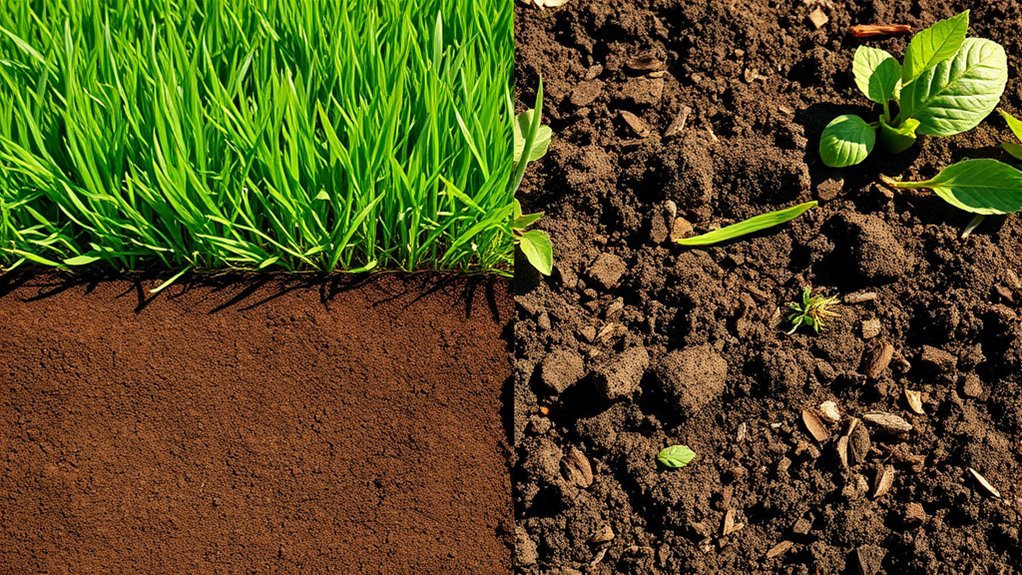
Lawn soil and garden soil serve different purposes because they are formulated to support distinct types of plants and growth conditions. For lawns, aeration is essential; it loosens compacted soil, allowing air, water, and nutrients to reach grass roots effectively. This process helps maintain a lush, healthy appearance. Garden soil, on the other hand, benefits from garden mulching, which conserves moisture, suppresses weeds, and gradually enriches the soil as it decomposes. Garden soil is often richer and more textured to support diverse plantings like vegetables and flowers, whereas lawn soil focuses on a balanced, firm foundation suitable for grass. Knowing these differences helps you choose the right soil and maintenance practices for each area, ensuring ideal growth and health. Additionally, understanding the role of color accuracy in home cinema projectors can help you select the best display for your entertainment setup.

Back to The Roots Organic Coir, 51 Quart Expanding Soil, Great for Seeds and Potting
Includes 10lb block of Back to the Roots compressed Coconut Coir that expands to 51qt of potting soil….
As an affiliate, we earn on qualifying purchases.
As an affiliate, we earn on qualifying purchases.
How Their Composition and Nutrients Differ
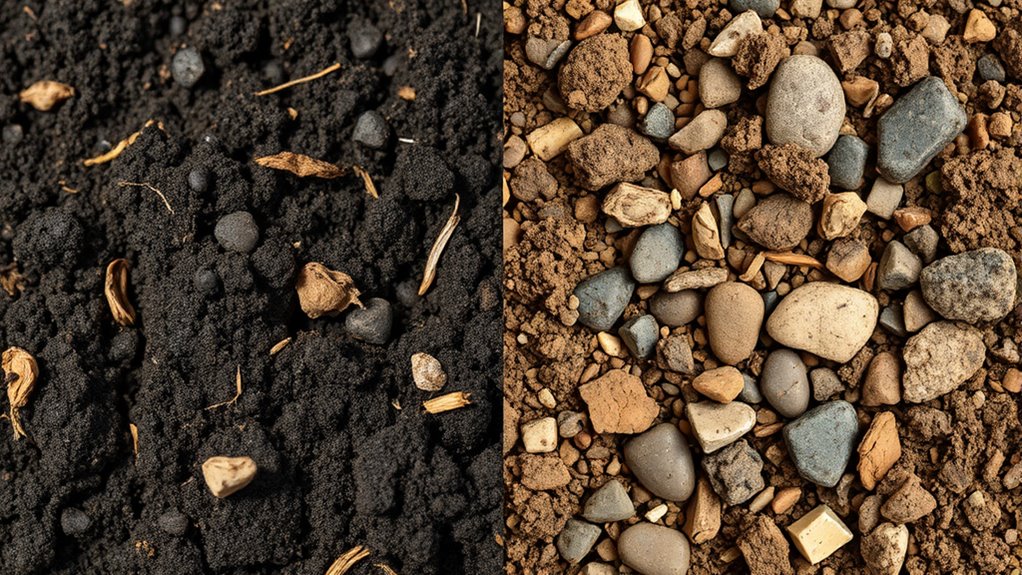
You’ll notice that lawn soil and garden soil differ in their composition and nutrient levels. Lawn soil typically has a finer texture with fewer organic materials, while garden soil contains more organic matter and nutrients for plant growth. Understanding these differences helps you choose the right soil for your specific needs. Additionally, auditory processing plays a key role in how plants respond to their environment, influencing their growth and health.
Soil Composition Variations
While both lawn soil and garden soil are essential for healthy plant growth, their compositions differ considerably. Lawn soil typically contains finer particles that promote soil aeration, ensuring roots get enough oxygen. It often has a more uniform texture, designed to support grass roots and withstand foot traffic. Garden soil, on the other hand, tends to be richer in organic matter, with larger particles like compost and mulch that improve drainage and nutrient retention. The pH levels also vary; lawn soil is usually neutral to slightly acidic, requiring pH adjustment for ideal grass growth. Garden soil’s pH can be more flexible, depending on plant needs. These composition differences influence how you manage and amend each soil type for best results. Additionally, the use of innovative European cloud servers can assist in soil data analysis and environmental monitoring to optimize soil management practices.
Nutrient Content Differences
The differences in soil composition between lawn and garden soils directly impact their nutrient content. You’ll notice that garden soil often contains a richer mix of soil nutrients, providing essential elements like nitrogen, phosphorus, and potassium. Lawn soil, on the other hand, may be less nutrient-dense, requiring regular fertilizer application to maintain health. Imagine:
- A garden bed bursting with vibrant, leafy plants thriving on nutrient-rich soil.
- A patch of lawn needing periodic fertilizer to restore its green vibrancy.
- Soil test results revealing higher levels of key nutrients in garden soil.
- Fertilizer application boosting soil nutrients where they’re lacking in lawn areas.
- Essential oils can be used to enhance soil health and promote plant growth when used properly.
Understanding these nutrient differences helps you optimize fertilizer use, ensuring your plants get what they need for healthy growth without overdoing it.
Organic Material Levels
Organic material levels differ markedly between lawn and garden soils, shaping their overall health and fertility. Garden soils typically contain higher organic matter, which enhances soil fertility by providing essential nutrients and improving structure. This organic matter comes from decomposed plant material, compost, and other organic inputs that support a thriving ecosystem. In contrast, lawn soils often have lower organic content, making them less fertile and more prone to compaction and erosion. The rich organic matter in garden soils promotes better water retention, root growth, and nutrient availability. Maintaining adequate organic material levels is vital for ideal soil fertility, ensuring your plants and grass receive the nutrients they need to grow strong and healthy. Understanding these differences helps you tailor your soil management practices effectively, especially when considering soil amendments to boost organic content.

SONKIR Soil pH Meter, MS02 3-in-1 Soil Moisture/Light/pH Tester Gardening Tool Kits for Plant Care, Great for Garden, Lawn, Farm, Indoor & Outdoor Use (Green)
Kindly NOTE: This soil tester can not be applied to test pH value of any other liquid. If…
As an affiliate, we earn on qualifying purchases.
As an affiliate, we earn on qualifying purchases.
What Their Textures and Structures Mean for Your Plants
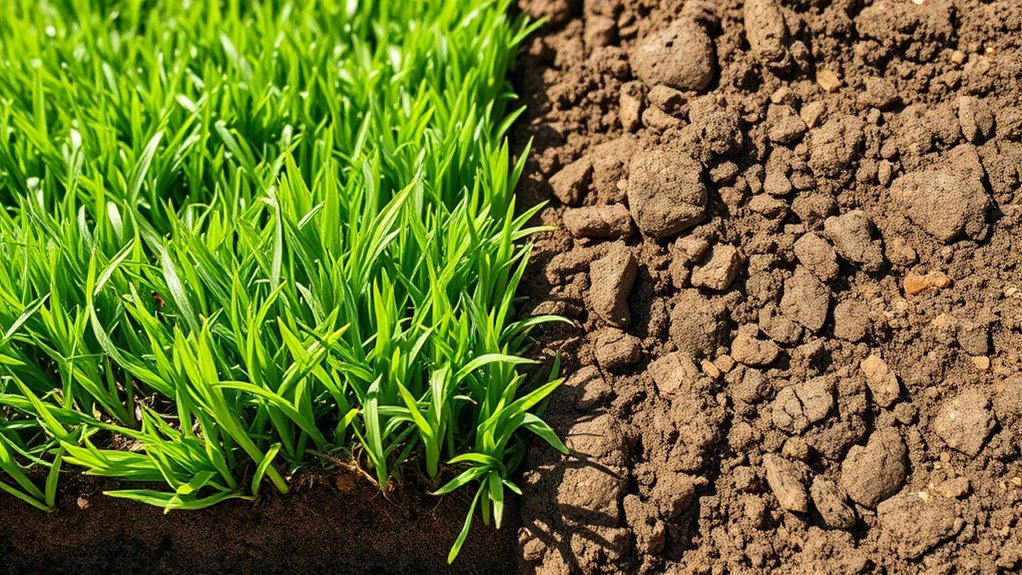
Understanding the textures and structures of your soil is essential because they directly influence how well your plants grow. Well-structured soil promotes healthy root development and consistent moisture retention. When soil has good texture, it allows for proper soil aeration, giving roots access to oxygen and supporting microbial activity. Poorly structured soil, like heavy clay, can suffocate roots, while overly sandy soil drains too quickly. Imagine:
- Loamy soil with crumbly, airy texture supporting thriving roots
- Compact clay preventing air pockets and slowing growth
- Sandy soil that drains rapidly, risking dehydration
- Well-mixed soil balancing moisture retention and aeration
These textures determine how your plants access nutrients and oxygen, directly impacting their overall health and growth. Additionally, understanding soil texture can help you choose the right amendments to improve your garden’s health and productivity.

Michigan Peat Compost and Manure Blend, Garden Magic Mix with Odor-Free Blend, 40 Lbs – Outdoor Lawn and Gardening Mixture with Nutrients and Minerals for Soil Potting and Planting
Organic Compost Blend: Enhance the nutrient content and soil quality of lawns and raised garden beds with this…
As an affiliate, we earn on qualifying purchases.
As an affiliate, we earn on qualifying purchases.
How Ph Levels Affect Lawn and Garden Soils
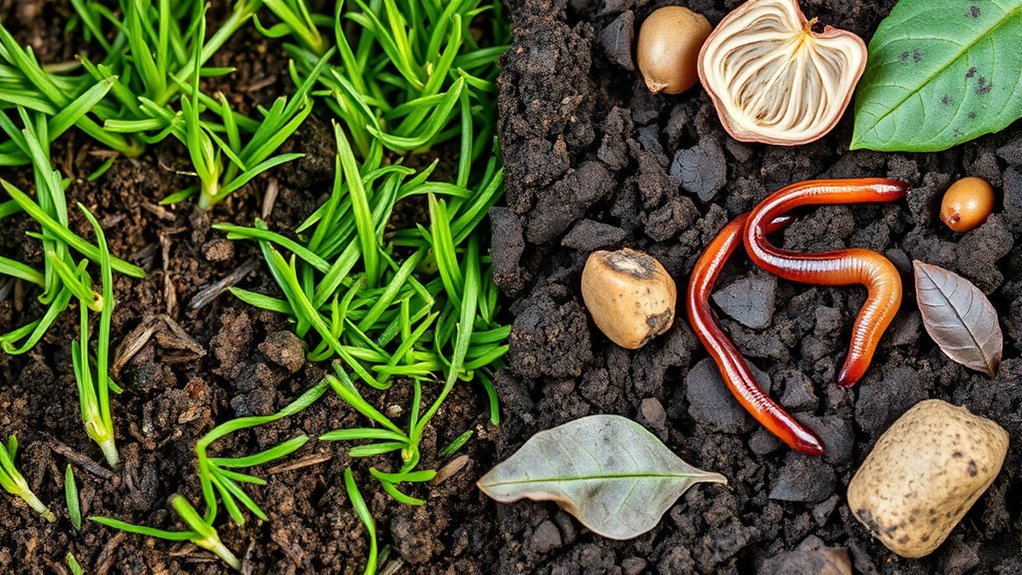
Soil pH levels substantially influence how well your lawn and garden plants absorb nutrients and stay healthy. When you perform soil testing, it reveals whether your soil is too acidic or alkaline. If the pH isn’t ideal, plants can struggle to access essential nutrients, leading to poor growth. To maintain *suitable* pH, you might need to adjust it through pH adjustment techniques, such as adding lime to raise pH or sulfur to lower it. Regular testing helps you monitor changes and *guarantee* your soil remains in the right range for your plants. Proper pH balance enhances nutrient availability, promotes healthy root development, and results in a vibrant, thriving lawn or garden. Keeping an eye on pH levels is key to successful soil management. Additionally, understanding the key traits of successful soil testing can help you interpret results more accurately and make better adjustments.
The Role of Organic Matter and Amendments
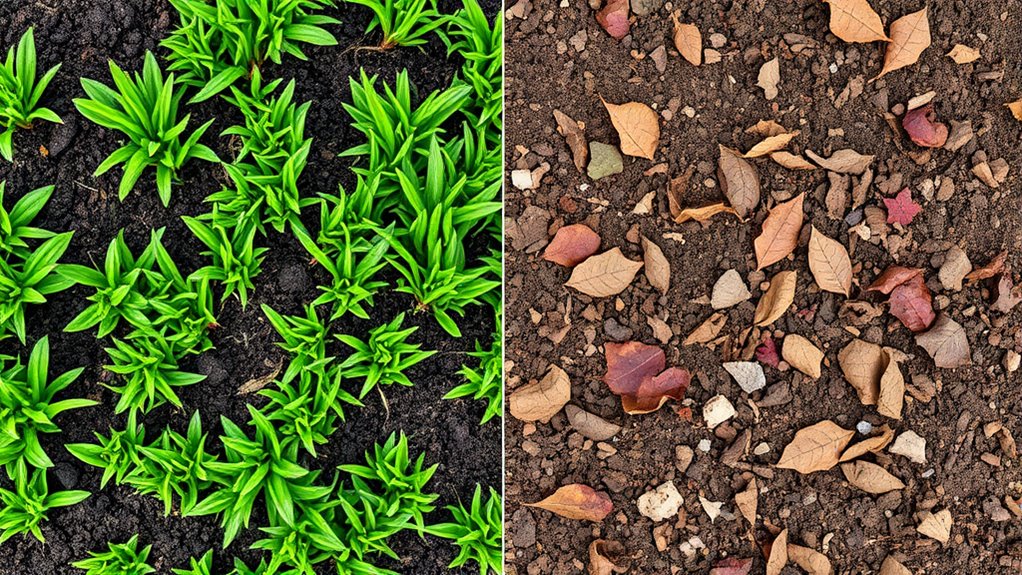
Adding organic matter and amendments to your soil is essential for improving its structure, fertility, and water retention. When you incorporate compost addition, you enhance nutrient availability and encourage beneficial microbes. Organic fertilizers supply essential nutrients, boosting plant growth naturally. Imagine your soil as a sponge, absorbing water like:
- Rich compost layered into the earth, breaking down slowly
- Organic fertilizers mixed in, releasing nutrients steadily
- Fine organic matter improving aeration and drainage
- Microbial life thriving, transforming organic materials into plant food
Why Drainage and Water Retention Matter
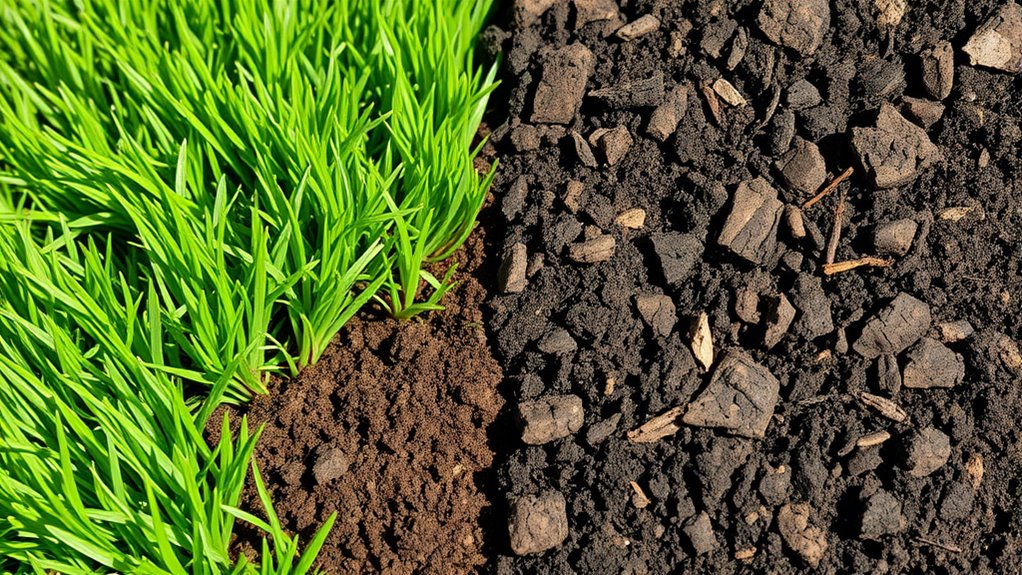
Drainage and water retention are essential because they directly affect plant health and growth. Proper drainage prevents water from pooling around roots, reducing the risk of root rot and encouraging healthy soil aeration. When soil drains too quickly, plants may struggle to get enough moisture, leading to drought stress. Conversely, good water retention ensures plants have a consistent water supply, especially during dry periods. This balance promotes strong root systems and helps prevent erosion, which can wash away valuable topsoil. Both lawn and garden soils need appropriate drainage and water retention properties to support ideal plant development. Understanding these factors helps you choose or amend your soil to create a stable environment that nurtures healthy, vigorous plants. Sizing and load‑planning tools can help you assess your soil’s capacity to retain water and drain effectively.
Tips for Using Lawn and Garden Soil Effectively

To use lawn and garden soil effectively, start by choosing the right soil type for your needs. Proper soil preparation, like loosening and enriching the soil, guarantees better plant growth. Taking these steps helps you get the most out of your soil investments. Additionally, understanding the importance of consistent storytelling can help you communicate your gardening successes and build a community of fellow enthusiasts.
Choosing the Right Soil
Choosing the right soil is essential for ensuring your plants thrive, whether you’re working with lawn or garden soil. To do this effectively, start with soil testing to determine pH levels and nutrient content. Once you know what’s needed, consider these steps:
- Visualize your soil as a sponge, ready to absorb water and nutrients.
- Imagine mixing in the right fertilizer application to boost growth.
- Picture adjusting soil amendments to improve drainage or fertility.
- Think about layering soil to create the perfect environment for roots.
- Be aware of the history of pinball machines to understand how game design and technology have evolved to influence modern pinball experiences.
Proper Soil Preparation
Whether you’re preparing lawn or garden soil, proper soil preparation is key to ensuring healthy plant growth. Start by aerating the soil to improve airflow and encourage microbial activity, which helps break down organic matter. Incorporate organic compost to boost nutrients and microbial life. Avoid compacted soil by loosening it with a garden fork or tiller. Regularly test soil pH to maintain ideal conditions for plants. Use the following table to visualize typical soil needs:
| Soil Type | Key Preparation Step | Focus Area |
|---|---|---|
| Lawn Soil | Aeration | Soil structure |
| Garden Soil | Composting | Nutrient content |
| Both | pH Testing | Balanced environment |
| Both | Organic Amendments | Microbial activity |
| Both | Proper Drainage | Prevent waterlogging |
Effective preparation fosters healthy roots and vibrant growth.
Frequently Asked Questions
Can Lawn Soil Be Used for Vegetable Gardening?
Yes, you can use lawn soil for vegetable gardening, but you’ll want to check its soil pH and nutrient content first. Lawn soil often has a neutral to slightly acidic pH suitable for many vegetables, but it may lack essential nutrients or have imbalanced levels. Consider amending it with compost or fertilizers to improve nutrient content. Testing the soil helps guarantee your vegetables get the best environment they need to thrive.
How Often Should I Amend Garden Soil?
To keep your garden thriving, you should amend your soil about once a year, ideally after soil testing reveals its needs. This process helps you add organic amendments tailored to your plants, enriching the soil’s nutrients and structure. Regular amendments ensure healthy growth and prevent nutrient depletion. Keep an eye on your soil’s condition, and adjust your amendments as needed to maintain a vibrant, productive garden.
What Are Signs My Lawn Soil Needs Improvement?
If your lawn soil shows signs like poor drainage, thin or patchy grass, or slow growth, it likely needs improvement. You might notice soil compaction, making it hard for roots to grow, or nutrient deficiency, causing yellowing or weak grass. To fix this, aerate your lawn and test the soil’s nutrients. Adding organic matter or fertilizer can help restore healthy soil, improving your lawn’s overall condition.
Are There Specific Fertilizers for Lawn Versus Garden Soil?
Yes, there are specific fertilizer types for lawn versus garden soil. For lawns, you typically use fertilizers with higher nitrogen content to promote lush, green growth. Garden soil benefits from a mix of fertilizers and soil amendments tailored to the plants you’re growing, like phosphorus and potassium. Using the right fertilizer types guarantees your soil gets the nutrients it needs, helping your lawn stay healthy and your garden thrive.
How Do Climate Changes Impact Soil Quality?
Climate effects, like increased temperatures and changing rainfall patterns, can accelerate soil degradation, impacting your soil quality. You might notice erosion, loss of nutrients, or reduced fertility, which makes it harder for plants to grow. These changes can also lead to drought stress or flooding, further damaging your soil. To protect your soil, consider implementing erosion control measures and adjusting your watering and fertilization strategies to adapt to the shifting climate conditions.
Conclusion
Understanding the differences between lawn and garden soil helps you make smarter planting choices, ensuring your plants thrive. Remember, just like a well-worn quill needs the right ink, your soil needs proper amendments and pH balance. By selecting the right soil for each purpose, you’re setting the stage for lush lawns and vibrant gardens. So, don’t be a daft at a ball; equip yourself with knowledge and tend your soil wisely for a flourishing landscape.