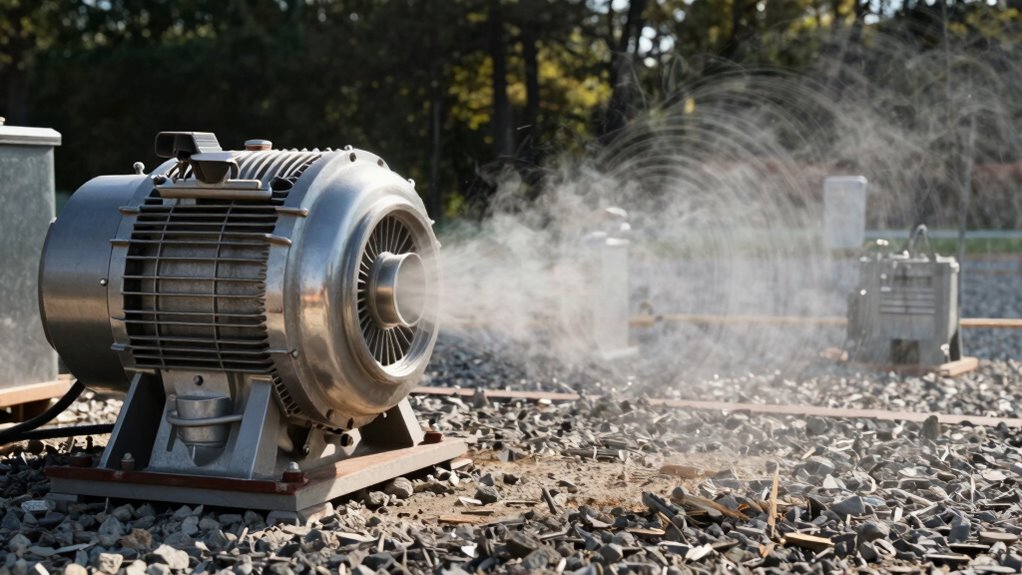
Generator noise levels listed in decibels reflect the sound right at the source, but your actual experience varies with distance, environment, and barriers. Noise decreases roughly 6 dB with each doubling of distance in open space, and walls or trees can further block sound. Proper placement and insulation can considerably reduce perceived noise, making it quieter where you need it most. To understand how to best minimize noise around your generator, keep exploring the factors that impact real-life sound levels.
Key Takeaways
- Manufacturer dB ratings indicate noise at the source, not the actual sound experienced at various distances.
- Noise levels decrease roughly 6 dB with each doubling of distance in open environments.
- Environmental factors like walls, trees, and barriers can significantly reduce perceived generator noise.
- Proper placement and soundproofing measures can lower the actual noise impact beyond manufacturer ratings.
- Real-world noise depends on distance, environment, and barriers, making actual sound levels often lower than rated dB at the source.
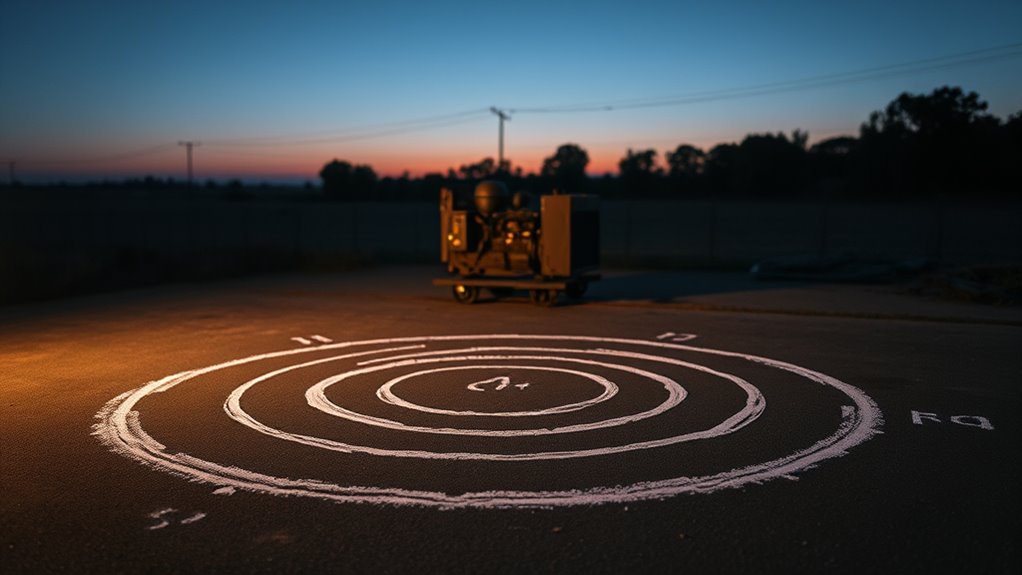
Generator noise can be more than just a minor annoyance; it often disrupts your daily activities and peaceful environment. When you rely on a generator, whether for backup power or outdoor use, understanding how noise levels diminish over distance is essential. Many manufacturers provide decibel (dB) ratings, suggesting how loud their units are at a specific point, typically at the source. However, these ratings don’t always reflect what you’ll experience in real-life situations. The actual noise you hear depends heavily on how far you are from the generator and the environment surrounding it.
Generator noise impact varies with distance and environment, so real-life sound levels often differ from manufacturer ratings.
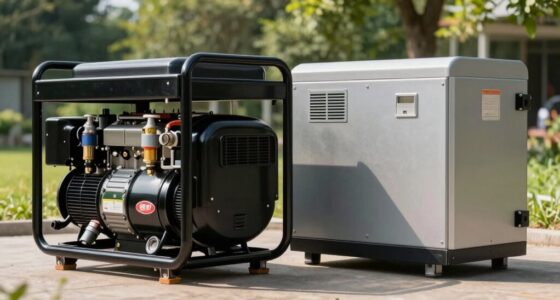
It’s important to realize that sound travels and disperses, meaning the closer you are to the source, the louder it will seem. At the same time, environmental factors, like walls, trees, and other structures, can help block or absorb sound, influencing how much noise reaches your ears. This is where noise mitigation strategies come into play. Installing sound insulation around the generator can considerably reduce the amount of noise that escapes into your living space or work area. Soundproof enclosures or barriers are designed to contain and absorb the sound waves, making the environment more tolerable.
Understanding the relationship between dB ratings and distance helps you plan better. For example, a generator rated at 70 dB at the source may sound much louder when you’re standing right next to it. But at a distance of 50 or 100 feet, the perceived noise drops considerably. This drop-off follows a general rule: sound intensity decreases as the distance from the source increases, roughly by 6 dB for each doubling of distance in open spaces. But in real-world environments, the presence of reflective surfaces and structures can alter this pattern, sometimes amplifying or dampening sound unexpectedly.
To improve noise mitigation, you might consider placing your generator in a location that naturally distances it from your living or working areas. Combining this with sound insulation measures, like acoustic barriers or enclosures, can make a noticeable difference. These solutions don’t just lower the noise; they also help contain vibrations and reduce sound transmission through walls and floors. Ultimately, knowing your generator’s dB rating is just the starting point. The actual reduction in noise depends on how far you are from the source and what barriers or insulation you put in place. Proper placement and noise barriers] can significantly enhance noise reduction. By paying attention to these factors, you’ll create a more peaceful environment despite the presence of a noisy generator nearby.

Hudson Generator Box, SD Aluminum Generator Enclosure with Ventilation, Heat Dissipation & Reduce Noise, Accommodates The Maximum Size of 39.4"x32"x31.7", White
【Efficient Ventilation, Goodbye Overheating】Still dealing with your generator overheating during long hours of operation? Our generator enclosure features…
As an affiliate, we earn on qualifying purchases.
As an affiliate, we earn on qualifying purchases.
Frequently Asked Questions
How Does Wind Affect Generator Noise Levels Outdoors?
Wind can notably amplify generator noise outdoors, making it harder to gauge actual sound levels. It interacts with outdoor acoustics, carrying and sometimes increasing noise, especially during strong gusts. You might notice that on windy days, generator sounds seem louder or travel farther than usual. To manage this, consider positioning your generator away from wind paths or using barriers to reduce wind amplification and better control noise levels.
Can Noise-Canceling Technology Significantly Reduce Generator Sound?
Your noise-canceling tech can cut generator sound considerably, but it’s no magic wand. Soundproof enclosures and muffler effectiveness play a bigger role in quieting noise. While advanced noise-canceling headphones might make you feel like you’re in a bubble, real-world solutions like quality enclosures and mufflers reduce decibels at the source. For truly silent operation, combine these strategies—your neighbors will thank you!
What’s Considered an Acceptable Noise Level for Residential Areas?
You should aim for a noise level below 55 dB in residential areas, as it’s generally considered acceptable and won’t disturb neighbors. To attain this, focus on sound insulation and noise mitigation techniques, like installing barriers or enclosures around your generator. Using noise-canceling technology can help, but combining it with soundproofing methods ensures a quieter environment, keeping noise levels within comfortable limits for everyone nearby.
How Does Generator Size Impact Perceived Noise at a Distance?
You’ll notice that larger generators tend to produce louder noise levels, which can be more noticeable at a distance. Proper generator placement is vital; positioning it further away or behind barriers helps with noise mitigation. Keep in mind, even smaller units can be disruptive if placed too close. To minimize noise impact, consider strategic placement and soundproofing options, ensuring your generator’s size doesn’t overly affect your neighbors’ comfort.
Are There Legal Noise Restrictions for Generators in Different Zones?
Think of zoning laws as fences guarding your neighborhood’s peace. Yes, there are noise ordinances that restrict generator sounds, and they vary by zone—residential, commercial, industrial. These laws set maximum noise levels to keep everyone comfortable. You must follow local regulations, which might limit decibel levels during certain hours or in specific zones. Verify with your local authorities to confirm your generator stays within legal noise limits and avoids penalties.
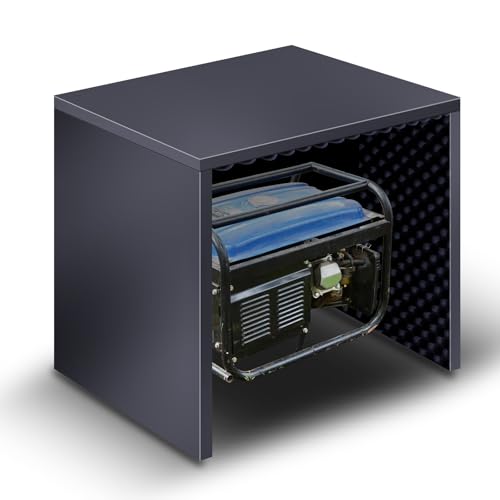
Otoolling Generator Running Cover with Acoustic Panels for Most 3500w-12000w Generators Noise Reduction Quiet Box Heavy Duty Generator Shelter All Weather Outdoor Enclosure, 36 x 33 x 32 Inch
Packing List: generator running cover with acoustic panels set are consists of 4 heavy metal plates, 8 corrugated…
As an affiliate, we earn on qualifying purchases.
As an affiliate, we earn on qualifying purchases.
Conclusion
So, next time you check a generator’s decibel rating, remember it’s just a number—nothing guarantees how loud it really feels at your door. Ironically, the official dB might make it sound tame, but real-life noise can surprise you, especially when you’re trying to sleep or enjoy a quiet afternoon. So, don’t be fooled by the ratings; sometimes, what’s loud in theory is downright deafening in practice. Stay prepared, and maybe keep earplugs handy!

Generator Exhaust Extension Silencer Kit with Three Universal Adapters Compatible ALL Portable Generators with ALL-IN-ONE KIT,Insulated Through-Wall Mounting Plate Safely Vent Exhaust Reduce Noise 55%
【ENHANCED COMPATIBILITY & CUSTOM FIT】Our upgraded generator exhaust extension kit is designed to fit most makes and models…
As an affiliate, we earn on qualifying purchases.
As an affiliate, we earn on qualifying purchases.
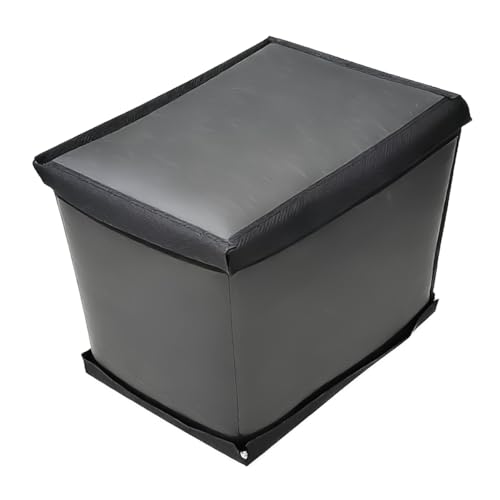
Three-layer Sound Proof Box for Pool Pump, Sound Proof Foam Box for Water Pump, Generator Noise Reduction Cover, Soundproof Cover For Household Appliances
Ultimate Noise Reduction: If has no sound insulation measures, the noise of water pump or generator will be…
As an affiliate, we earn on qualifying purchases.
As an affiliate, we earn on qualifying purchases.