If you’re choosing between a single-stage and two-stage snow blower, consider your snow removal needs. Single-stage models are lightweight, affordable, and great for light to moderate snowfall on small areas, while two-stage units are more powerful, handle heavy, wet snow, and cover larger spaces. The two-stage design is heavier and costs more but offers better durability. If you’d like to understand which type suits your situation best, keep exploring the differences and features further.

Get school and study supplies delivered free — and shop member deals
- Fast, free delivery on millions of items
- Access to Prime Big Deal Days deals on October 6–7
- Prime Video, Amazon Music and more included
Key Takeaways
- Single-stage blowers are best for light to moderate snow, while two-stage models handle heavy, wet snow more effectively.
- Single-stage units are lightweight and simple, using a rubber paddle, whereas two-stage blowers have an auger and impeller for powerful removal.
- Electric start is common in both, but two-stage blowers often include advanced features like adjustable chutes and heated handles.
- Two-stage blowers are heavier, more expensive, and designed for larger areas and tougher snow conditions; single-stage models are more affordable.
- Choose a single-stage blower for light snowfall and ease of use; opt for two-stage if you face frequent heavy or deep snow.
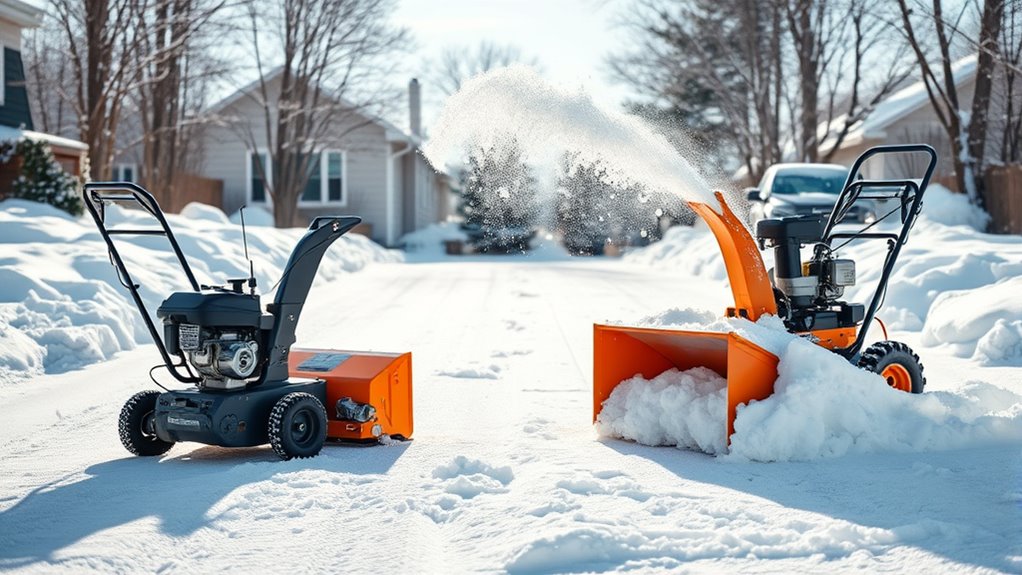
Are snow blowers worth the investment for clearing winter storms? If you frequently face heavy snowfall, they can be a real game-changer. But understanding the differences between single-stage and two-stage snow blowers can help you make the right choice. One key feature to contemplate is whether the snow blower offers an electric start. An electric start makes it easier to get your machine running on cold mornings, saving you from the hassle of pulling a recoil cord repeatedly. This feature is especially handy if you have limited strength or want a quick, hassle-free start, allowing you to get to snow removal techniques faster and more efficiently.
Single-stage snow blowers are designed for light to moderate snowfalls. They are lightweight, easy to maneuver, and typically more affordable. These models use a single rubber paddle to scoop up snow and throw it out through a chute. Because of their simplicity, they usually feature an electric start option, making them convenient to begin regardless of the weather conditions. They are ideal for driveways, walkways, and small to medium-sized areas. Their compact design means you won’t strain yourself when operating them, and they’re generally easier to store. However, they do have limitations—they can struggle in deep, heavy snow or on uneven surfaces. Still, their simplicity makes them a popular choice for homeowners who prefer straightforward snow removal techniques without complex features.
Two-stage snow blowers are built for more demanding conditions. They are more powerful, capable of handling heavy, wet snow and larger areas with greater efficiency. These models use an auger to break up the snow and a separate impeller to throw it out, which allows them to manage snow more effectively than single-stage models. An electric start is common in many two-stage units, making the initial start-up quick and easy even in frigid temperatures. Their robust design makes them suitable for larger driveways, sidewalks, and commercial use. They often include features like adjustable chutes, heated handles, and advanced controls, giving you better control over snow removal techniques. While they are generally heavier and more expensive, their increased capacity and durability make them worth the investment if you regularly face heavy snowfall or need to clear large areas.
As an affiliate, we earn on qualifying purchases.
Frequently Asked Questions
Which Snow Blower Is Better for Uneven Terrain?
For uneven terrain, a two-stage snow blower is better because it offers superior terrain adaptability and maneuverability in uneven surfaces. Its larger, more robust auger and powerful motor handle rough, irregular surfaces more effectively. You’ll find it easier to navigate slopes and uneven patches, making it ideal for challenging terrain. A single-stage blower may struggle with these conditions, so opt for a two-stage for better performance and control.
How Noisy Are Single-Stage Versus Two-Stage Models?
Single-stage snow blowers are generally gentler, producing a quieter, more manageable noise level, making them preferable for those seeking a softer operational sound. Two-stage models tend to be louder, with increased noise levels due to their powerful engines and dual processes. If you’re sensitive to sound, you’ll find single-stage blowers produce a markedly softer, less invasive operational sound. Conversely, two-stage machines deliver louder, more robust noise for heavy-duty snow clearing.
Can I Use a Two-Stage Blower on Gravel Driveways?
Yes, you can use a two-stage blower on a gravel driveway, but it’s not ideal. Two-stage models tend to be less gravel-friendly because their metal augers can pick up and throw gravel, causing damage or scattering. For gravel driveways, look for a model specifically designed for gravel, or consider a single-stage blower, which is gentler and more compatible with loose surfaces.
What Is the Typical Lifespan of Each Type?
You can expect a single-stage snow blower to last around 8-10 years, while a two-stage typically lasts 15-20 years with proper care. In a durability comparison, two-stage models are often more robust but require more maintenance, like regular lubrication and belt checks. Single-stage units are simpler, with fewer parts needing attention, but they may wear out sooner. Proper maintenance extends both types’ lifespan markedly.
Are Electric Snow Blowers as Effective as Gas-Powered Ones?
Electric snow blowers can be quite effective, especially for light to moderate snowfalls, thanks to their good electric performance. However, they generally don’t match the power of gas-powered models, which excel in heavy, deep snow and prolonged use. If you prefer a quieter, eco-friendly option for smaller jobs, electric works well. For heavy-duty snow clearing, gas power remains more reliable and efficient.
two-stage snow blower with adjustable chute
As an affiliate, we earn on qualifying purchases.
As an affiliate, we earn on qualifying purchases.
Conclusion
Choosing between a single-stage and a two-stage snow blower is like picking the right key for a song—you need the one that resonates with your needs. Think of the snow blower as your partner in winter’s symphony, clearing your path and restoring harmony. Whether you need swift agility or powerful endurance, select the tool that symbolizes confidence and readiness. Let your choice be the key to a smooth, worry-free winter season.
lightweight single-stage snow blower
As an affiliate, we earn on qualifying purchases.
As an affiliate, we earn on qualifying purchases.
heavy-duty snow blower for large driveways
As an affiliate, we earn on qualifying purchases.
As an affiliate, we earn on qualifying purchases.
Halloween Picks
halloween
As an affiliate, we earn on qualifying purchases.