
Overloading your fridge blocks proper air circulation, causing cold spots that lead to uneven cooling and food spoilage. When packed too tightly, cold air can’t flow freely, creating hot and cold zones in your fridge. This not only wastes energy but also risks your food’s safety. Keeping items organized with space around them helps prevent cold spots. Curious how to fix this? Stick around to uncover practical tips for maintaining even temperatures.

Prime made for students and young adults
- Fast, free delivery for dorm and study essentials
- Prime Video and Amazon Music included
- Member-only deals
Key Takeaways
- Overloading blocks airflow, causing cold air to settle unevenly and create cold spots.
- Dense packing prevents cold air from circulating, leading to temperature fluctuations.
- Cold spots can cause food to freeze or spoil prematurely, hiding underlying circulation issues.
- Poor airflow from overload increases energy use and reduces fridge efficiency.
- Proper organization and spacing help maintain even temperatures, preventing hidden cold spots.
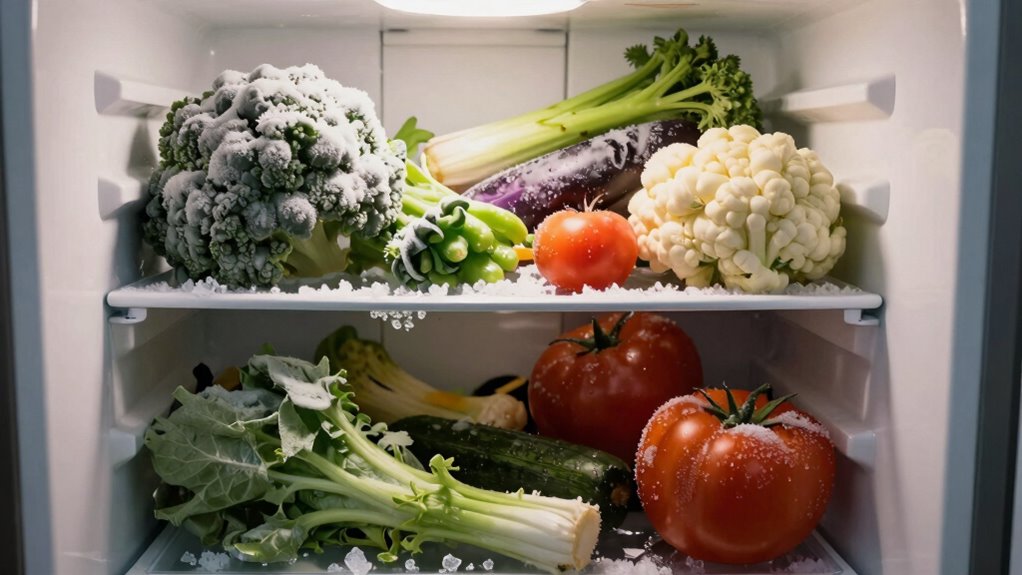
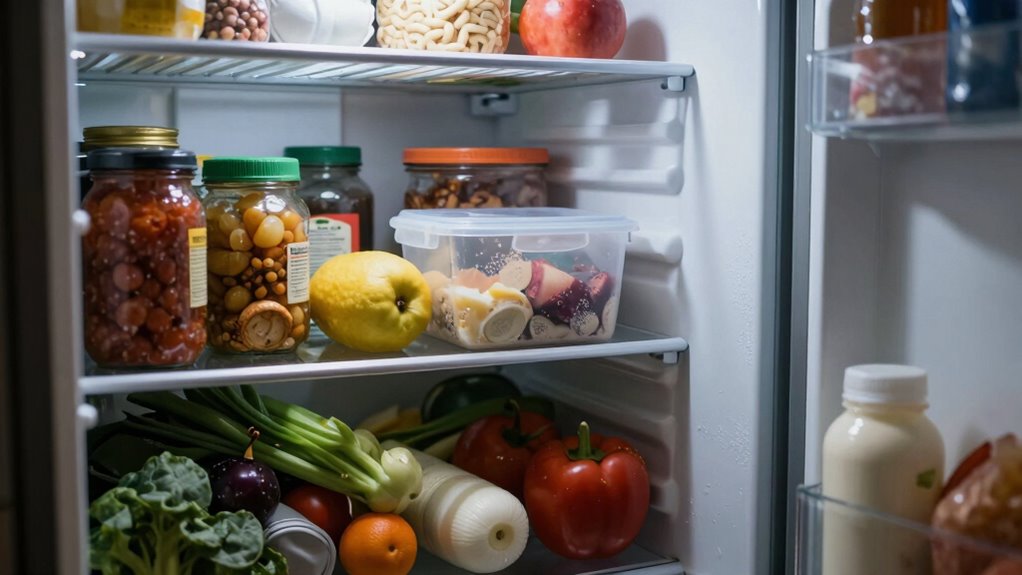
Overloading your fridge might seem like a way to maximize storage, but it often leads to the cold spot problem, where certain areas become unnecessarily cold while others remain warm. When you cram too much into your fridge, you disrupt its natural air circulation, which is essential for maintaining consistent temperatures. Poor air circulation causes temperature fluctuations across different sections of the fridge, making some spots excessively cold and others not cold enough. This uneven cooling not only wastes energy but also compromises food safety and freshness.
Overloading disrupts air circulation, causing uneven temperatures that waste energy and threaten food safety.
When shelves and compartments are packed tightly, the cold air can’t flow freely. Instead of circulating evenly, the cold air tends to settle in certain areas, creating pockets of extreme cold—these are your cold spots. Meanwhile, other parts of the fridge, especially near the door or in densely packed corners, may not receive enough chilled air, leading to inconsistent temperatures that can promote spoilage. You might find that leftovers in one corner freeze while produce in another starts to spoil because it doesn’t stay cold enough.
To prevent these issues, it’s essential to give your fridge some breathing room. Overloading reduces the effectiveness of air circulation, which is necessary for maintaining stable temperatures. When air can circulate freely, cold air reaches all areas evenly, avoiding high temperature fluctuations that can cause uneven cooling. Keep items spaced out enough so that air can move around them, especially around vents and fans. Regularly check the airflow pathways and clear any blockages to guarantee the cold air reaches every shelf and compartment. Additionally, proper fridge organization can help improve airflow and reduce cold spot formation. Recognizing the importance of air circulation is key to maintaining an efficient and safe refrigeration environment. Improving airflow pathways inside your fridge can further prevent airflow obstructions and promote more consistent cooling. Understanding that temperature fluctuations are often caused by poor air circulation helps you see why overstuffing is problematic. Instead of squeezing in more food, focus on organizing your fridge efficiently. Use containers and shelf dividers to create space for air to flow. Also, avoid placing hot or warm items directly into the fridge, as this can raise internal temperatures and disrupt the cooling cycle, resulting in more pronounced cold spots. Maintaining a tidy, well-organized fridge not only improves air circulation but also enhances its overall efficiency and longevity.
As an affiliate, we earn on qualifying purchases.
Frequently Asked Questions
Can Overloaded Fridges Cause Food Spoilage Even if Cold Spots Exist?
Yes, overloaded fridges can cause food spoilage even if cold spots exist. When you pack your fridge too full, air circulation gets blocked, leading to uneven temperature distribution. This disrupts temperature consistency, making some areas warmer than others. As a result, perishable foods in less cooled spots may spoil faster, risking food safety. To prevent this, avoid overloading and guarantee proper air flow for consistent cooling.
How Can I Detect Cold Spots Without Opening the Fridge Frequently?
You can detect cold spots without opening your fridge often by using temperature monitoring sensors placed strategically. Position sensors in different areas, especially where you suspect cold spots, to get accurate readings. These sensors continuously monitor temperature, alerting you if certain zones are too warm or cold. This way, you avoid frequent opening and closing, keeping food safe while efficiently managing your fridge’s temperature.
Do Different Fridge Models Have Varying Risks of Cold Spots?
You bet different fridge models have varying risks of cold spots. Some fridges have better insulation and more even airflow, ensuring temperature consistency, while others may struggle. Cheaper models often have uneven cooling, leading to cold spots. It’s like a level playing field — if your fridge’s insulation isn’t up to snuff or airflow isn’t well-designed, you’ll face more cold spots. Picking a model with good insulation helps keep temperatures steady throughout.
What Is the Ideal Way to Organize Items to Prevent Cold Spots?
To prevent cold spots, you should organize your fridge to promote air circulation by avoiding overcrowding. Use storage containers to keep items neat and guarantee airflow remains unobstructed. Place items evenly across shelves, keeping frequently used foods near the front for easy access. Regularly check and rotate items, and avoid stacking too high, so cool air can circulate effectively, maintaining consistent temperatures throughout your fridge.
How Often Should I Defrost My Fridge to Avoid Cold Spot Issues?
You should defrost your fridge at least once a year, or more often if you notice ice buildup. This keeps temperature sensors working properly and guarantees ideal air circulation, preventing cold spots that can turn your fridge into a freezer maze. Regular defrosting helps maintain consistent temperatures, so your food stays fresh and safe. Think of it as a mini spa day for your fridge—keeping everything running smoothly!
As an affiliate, we earn on qualifying purchases.
Conclusion
So, next time you cram your fridge full, ask yourself—are you really helping your food stay fresh? Overloading can create cold spots that waste energy and spoil your groceries. By giving your fridge some breathing room, you guarantee even cooling and better efficiency. Don’t let the cold spot problem sneak up on you—are you ready to keep your fridge running smoothly and your food fresher longer? The choice is yours.
As an affiliate, we earn on qualifying purchases.
As an affiliate, we earn on qualifying purchases.
Fall Picks
fall essentials
As an affiliate, we earn on qualifying purchases.