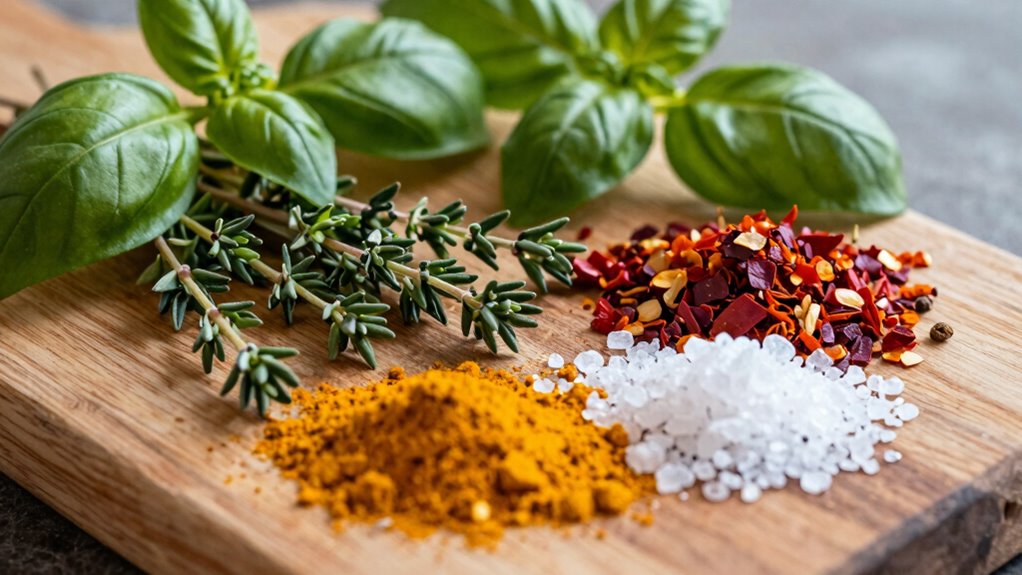

To master flavor layering before cooking, focus on ingredient pairing and diversity to create a harmonious base. Think about contrasting textures and complementary flavors, and plan interactions that enhance each component. Apply seasonings thoughtfully at different stages—such as pre-salting, incorporating herbs, or acids—to develop depth. When you prepare with intention, you set the stage for complex, balanced dishes. Keep exploring, and you’ll discover more ways to refine this flavorful approach.

Prime made for students and young adults
- Fast, free delivery for dorm and study essentials
- Prime Video and Amazon Music included
- Member-only deals
Key Takeaways
- Plan ingredient interactions and pairings beforehand to create a cohesive flavor foundation.
- Layer seasonings during prep, such as herbs, spices, and aromatics, to develop depth from the start.
- Pre-assemble complementary ingredients that will enhance each other’s flavors during cooking.
- Use contrasting textures and flavors intentionally to build complexity before heat is applied.
- Consider acidity and freshness elements, like lemon juice or vinegar, to brighten flavors early in the process.
Ever wondered how to elevate your dishes with more complex flavors? It all begins before you even turn on the stove. The secret lies in a simple yet powerful approach called the flavor layering trick, which starts with intelligent ingredient pairing and refined seasoning techniques. When you select ingredients thoughtfully, you set the foundation for a harmonious taste profile that will shine through every bite. Think about contrasting textures and complementary flavors—pairing sharp, tangy elements with rich, creamy ones or balancing savory with sweet can make your dish stand out. For example, pairing roasted chicken with citrus and herbs creates a vibrant flavor foundation that’s hard to beat.
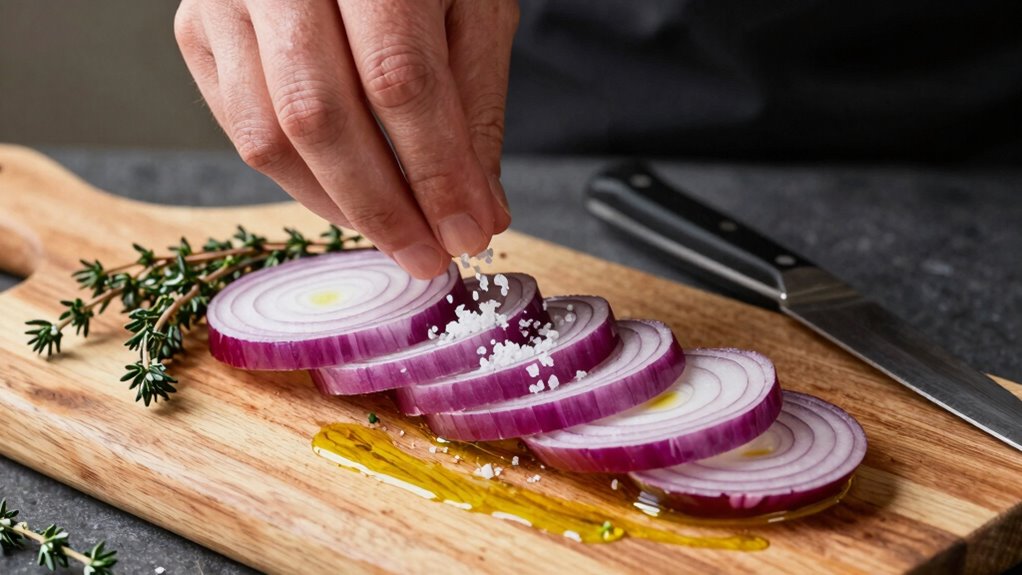
Seasoning techniques are equally essential; they’re your tools for building depth. Instead of sprinkling salt randomly, consider applying salt at different stages—some at the beginning to enhance the natural flavors, and some at the end for a finishing touch. Layering seasonings like garlic, onions, herbs, and spices thoughtfully during the prep process allows their flavors to meld gradually, resulting in a more complex and satisfying dish. Using acids like vinegar or lemon juice during cooking can brighten flavors and add a subtle tang that balances richness. You might also experiment with toasted spices or freshly ground pepper to introduce warm, aromatic notes that deepen the overall flavor profile.
Prepping your ingredients with a mindful eye towards ingredient pairing helps you create a cohesive dish. For example, combining sweet and savory components, such as caramelized onions with a touch of balsamic vinegar, enhances both flavors. Similarly, selecting herbs that complement the main ingredient, like thyme with poultry or basil with tomatoes, strengthens the dish’s overall harmony. When you think about how these ingredients interact before cooking, you’re fundamentally setting the stage for a layered taste experience. This proactive approach ensures each element contributes to the whole, rather than competing or getting lost. Additionally, considering biodiversity in your ingredient choices can introduce unique flavors and promote sustainable practices in your kitchen, enriching the overall flavor profile. Embracing ingredient diversity not only supports environmental resilience but also opens up new avenues for flavor exploration.
Ultimately, the key to mastering the flavor layering trick is to be intentional. Every seasoning choice and ingredient pairing should serve a purpose—building complexity and depth. By planning ahead and applying seasoning techniques thoughtfully, you transform simple ingredients into a rich, multi-dimensional dish. Incorporating ingredient harmony can further elevate your culinary creations by ensuring all components work seamlessly together. The more you practice this strategy, the more intuitive it becomes, turning your cooking into a creative process that consistently yields flavorful results. Remember, great flavor starts before the heat hits the pan, and that’s where your culinary journey truly begins.
As an affiliate, we earn on qualifying purchases.
Frequently Asked Questions
Can Flavor Layering Be Applied to Vegetarian Dishes?
Yes, flavor layering works perfectly in vegetarian dishes. You can enhance flavor by using vegetarian seasoning like smoked paprika, soy sauce, or miso to boost plant-based umami. Start with a savory base, then add herbs, spices, and acidity to build depth. This approach creates complex, satisfying dishes that taste rich and well-rounded, proving that you don’t need meat to achieve robust, layered flavors.
What Are Common Mistakes to Avoid in Flavor Layering?
Did you know that improper seasoning balance is a common mistake in flavor layering? You should avoid overusing strong ingredients, which can overpower subtle flavors, and neglecting ingredient harmony, leading to a dish that feels disjointed. To master flavor layering, focus on balancing spices and ingredients thoughtfully, ensuring each adds depth without overwhelming the others. This approach creates a cohesive, flavorful dish that delights the palate.
How Long Should I Marinate Ingredients for Better Flavor?
For better flavor infusion, marinate your ingredients for at least 30 minutes to 2 hours, depending on the ingredient. Thinner cuts or delicate items like fish need less time, around 30 minutes, while tougher cuts benefit from 4-24 hours. Keep in mind, longer marination can sometimes overpower delicate flavors. Adjust your marinade timing based on the ingredients and desired flavor intensity to achieve the best results.
Does Flavor Layering Work With Quick-Cook Recipes?
Flavor layering works surprisingly well with quick-cook recipes, like adding toppings to a pizza just before baking. It’s like painting with quick, bold strokes to create depth. You can build flavor complexity by carefully selecting ingredients, using quick marinades, or finishing with fresh herbs. This approach enhances your dish’s taste without lengthy prep, ensuring you get rich, layered flavors even in fast-cooking meals.
Are There Specific Tools That Enhance Flavor Layering Techniques?
Yes, specific tools can enhance your flavor layering techniques. Use a mortar and pestle to better blend spice combinations and improve ingredient pairing, revealing deeper flavors. A microplane zester helps release essential oils from herbs and citrus, intensifying taste. A good quality chef’s knife guarantees clean cuts, which aid in even flavor distribution. These tools help you build layers more effectively, making your quick-cook recipes richer and more complex.
As an affiliate, we earn on qualifying purchases.
Conclusion
Remember, Rome wasn’t built in a day, and neither is a perfect dish. By starting your flavor layering before cooking, you’re setting yourself up for success. Each step builds on the last, creating depth and richness that’ll impress every palate. So don’t rush the process—trust the journey and let those flavors develop naturally. With patience and intention, your meals will tell a story that’s as memorable as it is delicious.
As an affiliate, we earn on qualifying purchases.
As an affiliate, we earn on qualifying purchases.
Fall Picks
fall essentials
As an affiliate, we earn on qualifying purchases.