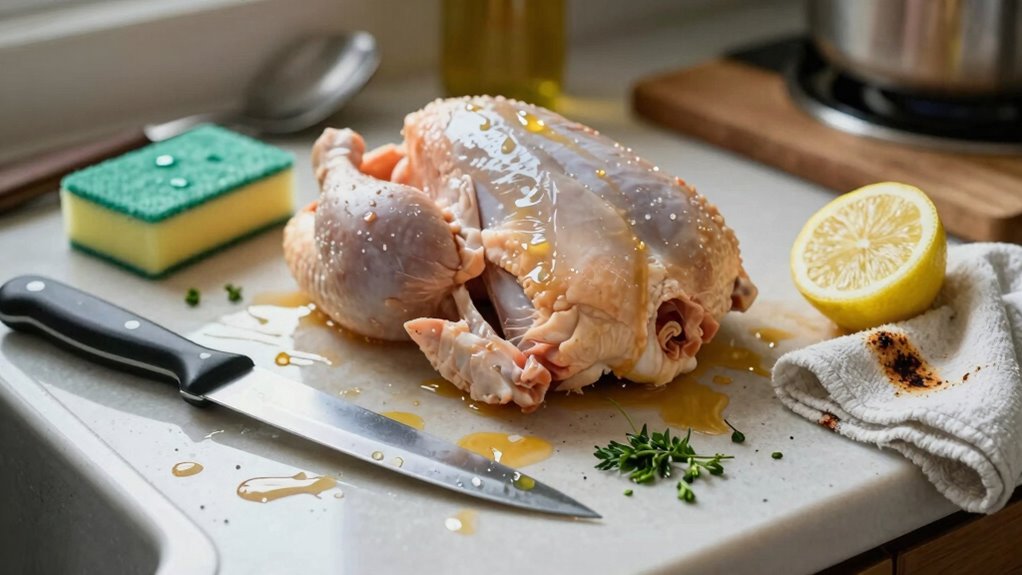

Leaving your countertops cluttered during food prep increases the risk of cross-contamination and bacteria spread. When you don’t keep your workspace organized, it’s harder to clean thoroughly, and items can easily come into contact with sources of germs, like raw meat or unwashed produce. This chaos makes it more likely that bacteria will transfer to foods and utensils, raising your risk of foodborne illness. Keep an eye on how clutter worsens safety—there’s more to understand.
Key Takeaways
- Leaving countertops cluttered hampers proper cleaning and increases bacterial spread.
- Using the same utensils or cutting boards without sanitizing promotes cross-contamination.
- Neglecting to disinfect surfaces after raw food handling allows bacteria to persist.
- Storing raw and cooked foods together on cluttered counters raises contamination risk.
- Overlooking cleaning and organizing creates an environment conducive to bacterial growth.
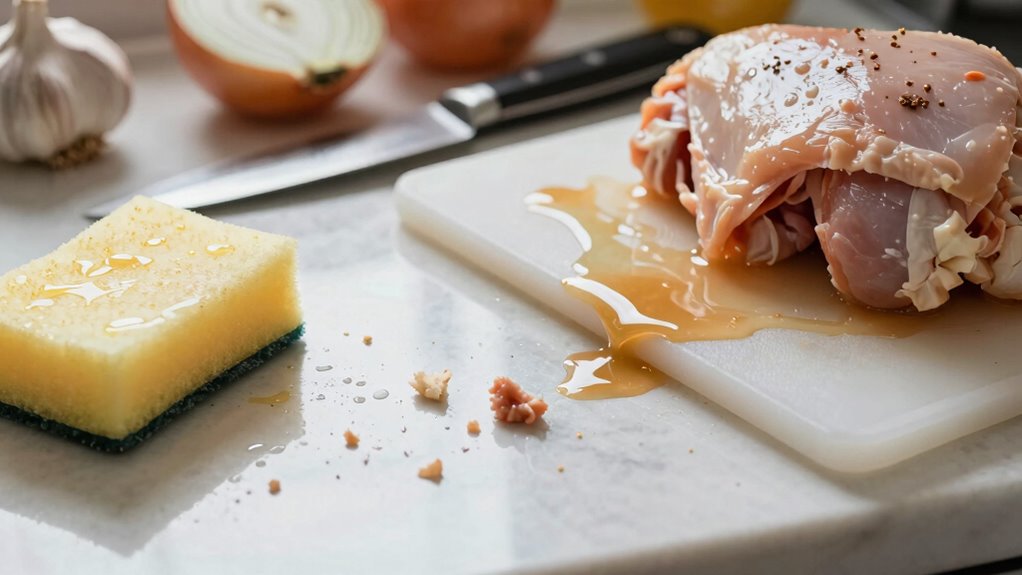
Many people unknowingly put themselves at risk by neglecting safe countertop habits, which can lead to foodborne illnesses. One common mistake is allowing kitchen clutter to pile up on your counter. When your workspace is crowded with utensils, dishes, groceries, and other items, it becomes harder to maintain cleanliness and organization. Clutter invites chaos, making it easier for bacteria to spread and for you to overlook potential hazards. When your countertop is cluttered, you might accidentally cross-contaminate foods, especially when switching between raw meat, vegetables, and cooked items. The more objects you have in your workspace, the higher the chance that bacteria from raw meat or unwashed produce can transfer to ready-to-eat foods. Proper organization can significantly reduce the risk of cross-contamination by helping you keep track of which areas are safe for food preparation.
Cluttered counters increase the risk of cross-contamination and foodborne illnesses. Keep your workspace tidy and organized.
Cross contamination is the silent threat lurking in many kitchens. It occurs when bacteria or pathogens from one surface or food transfer to another, often through direct contact or via contaminated utensils and sponges. Many people underestimate how easily cross contamination can happen, especially when they don’t clean their countertops thoroughly between tasks. For instance, if you prepare raw chicken on a crowded counter and then move straight to slicing vegetables without sanitizing the surface, you risk transferring harmful bacteria to foods that won’t be cooked or eaten raw. This simple oversight can cause serious foodborne illnesses, which is why it’s essential to keep your workspace tidy and clean.
Your habit of neglecting to clear and disinfect your countertop after preparing each item contributes markedly to these risks. When you skip cleaning, bacteria linger on the surface, waiting to transfer to your next ingredient or utensil. A cluttered kitchen makes this even worse because it’s easy to forget what’s been prepared where, leading to accidental cross contamination. Also, using the same cutting board or knife for raw meat and vegetables without proper cleaning spreads bacteria directly onto your food. The combination of kitchen clutter and poor cleaning practices creates a perfect environment for cross contamination to thrive, putting you and your family at risk.

Lysol All Purpose Cleaner Spray, Multi-Purpose Disinfecting Spray, Kitchen & Bathroom Cleaner, Lemon Breeze Scent, 32 Fl Oz
- Kills 99.9% of viruses and bacteria: Includes COVID-19 virus protection
- Deep cleans and removes germs: Eliminates 99.9% of germs, soap scum, grease
- Multi-surface cleaner and degreaser: Suitable for counters, sinks, stoves, and more
As an affiliate, we earn on qualifying purchases.
As an affiliate, we earn on qualifying purchases.
Frequently Asked Questions
How Often Should I Disinfect My Kitchen Countertops?
You should disinfect your kitchen countertops at least once a day, especially after preparing raw meat, seafood, or vegetables. Regular disinfection helps maintain good kitchen air quality and prevents bacterial growth. Keep your countertops organized to make cleaning easier and more effective. If you notice spills or messes, disinfect immediately. Proper cleaning habits guarantee a safer cooking environment and reduce the risk of cross-contamination, keeping your kitchen healthier overall.
Are Certain Countertop Materials More Prone to Harbor Bacteria?
Certain countertop materials are more prone to harbor bacteria, impacting material safety. For example, porous surfaces like wood or bamboo can trap bacteria within their fibers, making them harder to sanitize effectively. Non-porous surfaces like granite, quartz, or stainless steel are generally safer, as they resist bacteria buildup and are easier to disinfect. To minimize countertop bacteria, choose materials that promote better hygiene and clean them regularly.
What’s the Best Way to Clean up Raw Meat Spills?
When dealing with raw meat spills, you should act quickly to prevent bacterial spread. Use disposable paper towels or a clean cloth to carefully absorb the spill, then disinfect the area with hot, soapy water followed by a sanitizing solution. Proper meat handling includes thorough cleanup to eliminate bacteria. Always wash your hands afterward and avoid cross-contamination by cleaning utensils and surfaces immediately after spill cleanup.
Can Cutting Directly on Countertops Spread Germs?
Did you know that germs can transfer onto your countertops within seconds of contact? When you cut directly on surfaces, germs from raw meat or other foods can spread, increasing surface contamination. This transfer of germs can lead to cross-contamination, risking foodborne illnesses. To stay safe, always use separate cutting boards for raw meats and wash your countertops thoroughly afterward. This simple habit helps prevent the spread of harmful bacteria.
How Do I Prevent Cross-Contamination During Food Prep?
To prevent cross-contamination during food prep, focus on proper food handling and kitchen organization. Always wash your hands before handling food, use separate cutting boards for raw meat and vegetables, and sanitize surfaces regularly. Keep raw foods away from cooked ones, store ingredients properly, and clean utensils immediately after use. These practices help minimize germs transfer, ensuring a safer cooking environment and reducing foodborne illness risks.

Airtight Food Storage Containers with Lids, Vtopmart 24 pcs Plastic Kitchen and Pantry Organization Canisters for Cereal, Dry Food, Flour and Sugar, BPA Free, Includes 24 Labels,Black
- Kitchen Organization: Neatly organize pantry and kitchen
- Space-Saving Design: Stackable and efficient use of space
- Four Size Options: Includes 4 different container sizes
As an affiliate, we earn on qualifying purchases.
As an affiliate, we earn on qualifying purchases.
Conclusion
By now, you see how that simple habit—leaving raw meat on the countertop—can lead to serious food safety issues. Imagine preparing a salad afterward, unknowingly spreading bacteria like Salmonella. To stay safe, always keep raw meats refrigerated and wash your hands thoroughly. Small changes, like cleaning your countertop after handling raw foods, make a big difference. Protect yourself and your loved ones by being mindful of these habits—your health depends on it.

LEXX® Food Contact Surface Sanitizer & Cleaner Spray, EPA Registered, 32 oz
- Powerful Sanitizing Performance: Kills 99.999% of bacteria in one minute
- Food Contact Safe: No rinsing required, leaves no residues
- Natural, Gentle Formula: Eco-friendly, safe for users and environment
As an affiliate, we earn on qualifying purchases.
As an affiliate, we earn on qualifying purchases.

1 Bottle Steramine Sanitizer Tablets w/15x QT-10 Test Strips – Multi Purpose Steramine Sanitizing Tablets for Food Contact Surface, Kitchen, Restaurant & Commercial Use by FryOilSaver (150 Count)
- Complete Sanitizing Kit: Includes tablets and test strips
- Food Contact Surface Disinfection: Eliminates harmful microorganisms
- Effective for Food Service: Suitable for restaurants and bars
As an affiliate, we earn on qualifying purchases.
As an affiliate, we earn on qualifying purchases.