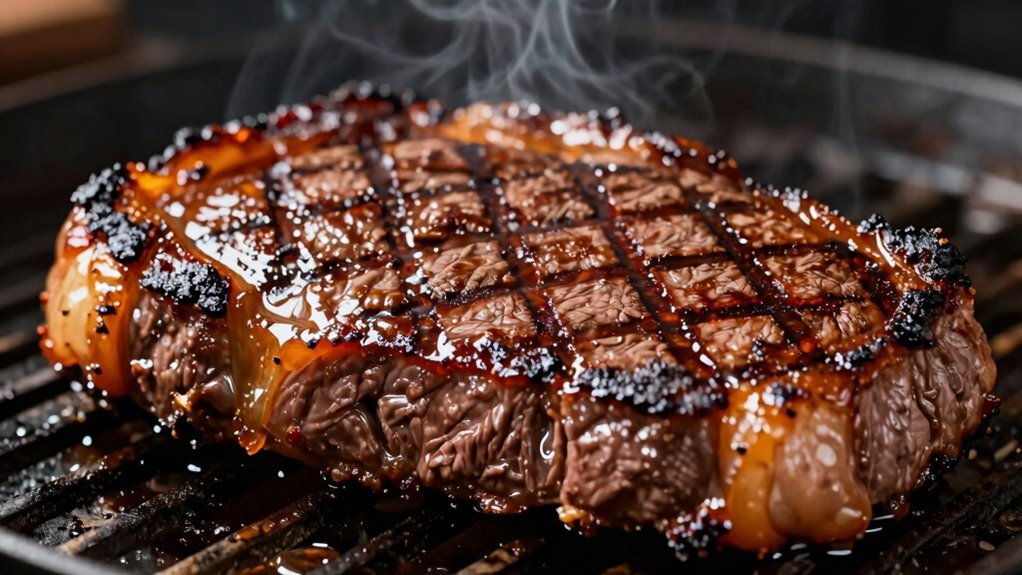

The biggest mistake that makes meat dry every time is overcooking it. When you cook meat too long or at too high a temperature, the juices evaporate, leaving it tough and dry. Relying solely on visual cues can lead to overdone results. Using a meat thermometer to hit the right internal temperature and giving your meat time to rest are key steps to keep it juicy. Keep going, and you’ll discover more ways to perfect your cooking.
Get ready for Prime Big Deal Days — try Prime free
Exclusive member deals on October 6–7, plus fast free delivery. Cancel anytime.
As an affiliate, we earn on qualifying purchases.
Key Takeaways
- Overcooking meat beyond the proper internal temperature causes excessive moisture loss and dryness.
- Skipping the resting period prevents juices from redistributing, leading to drier meat.
- Relying solely on visual cues without measuring internal temperature risks overcooking.
- Using the wrong cut or improper preparation can result in meat drying out during cooking.
- Not basting or covering meat during cooking allows moisture to evaporate, causing dryness.
As an affiliate, we earn on qualifying purchases.
Overcooking: The Primary Culprit
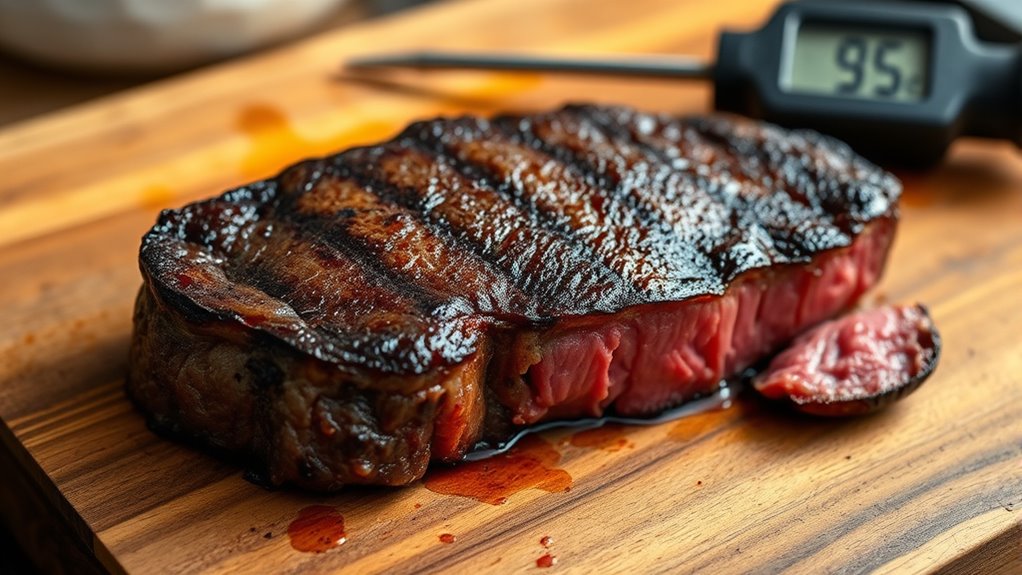
Overcooking is the most common reason meat turns out dry every time. When you cook meat too long, the juices evaporate, leaving it tough and flavorless. To prevent this, use marinade techniques that include acidic ingredients like lemon juice or vinegar, which help tenderize the meat and improve moisture retention. Proper meat tenderization also involves piercing or pounding the meat to break down fibers, making it less prone to drying out. Keep a close eye on cooking times, and use a meat thermometer to ensure you reach the perfect internal temperature without going over. Remember, removing meat from heat promptly allows residual heat to finish the job. This way, you preserve juiciness and keep every bite tender and flavorful.
As an affiliate, we earn on qualifying purchases.
Ignoring Resting Time for Meat
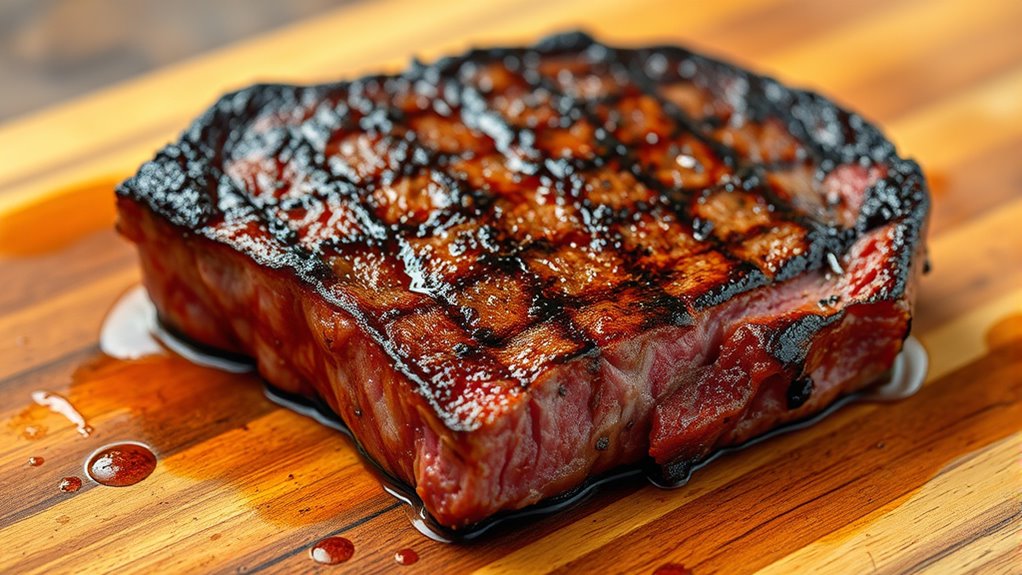
Ignoring resting time after cooking is a common mistake that can cause meat to turn out dry and tough. When you skip the resting period, you miss out on the benefits of carryover cooking and juice redistribution. During resting, the meat continues to cook slightly, allowing juices to settle evenly. Utilizing modern kitchen technology can assist in monitoring and managing resting times more precisely for optimal results. Additionally, understanding the culinary science behind resting can help you better grasp why this step is essential for tender meat. Resting also helps the protein structure relax, which is key to achieving tender meat. To avoid this mistake, keep these tips in mind:
- Rest meat for at least 5-10 minutes, depending on size.
- Cover loosely with foil to retain heat.
- Use a thermometer to check internal temperature before resting.
- Remember that carryover cooking can raise the temperature by a few degrees, ensuring perfect doneness.
- Proper resting allows the muscle fibers to reabsorb juices, enhancing moisture and flavor.
As an affiliate, we earn on qualifying purchases.
Using the Wrong Cooking Temperature
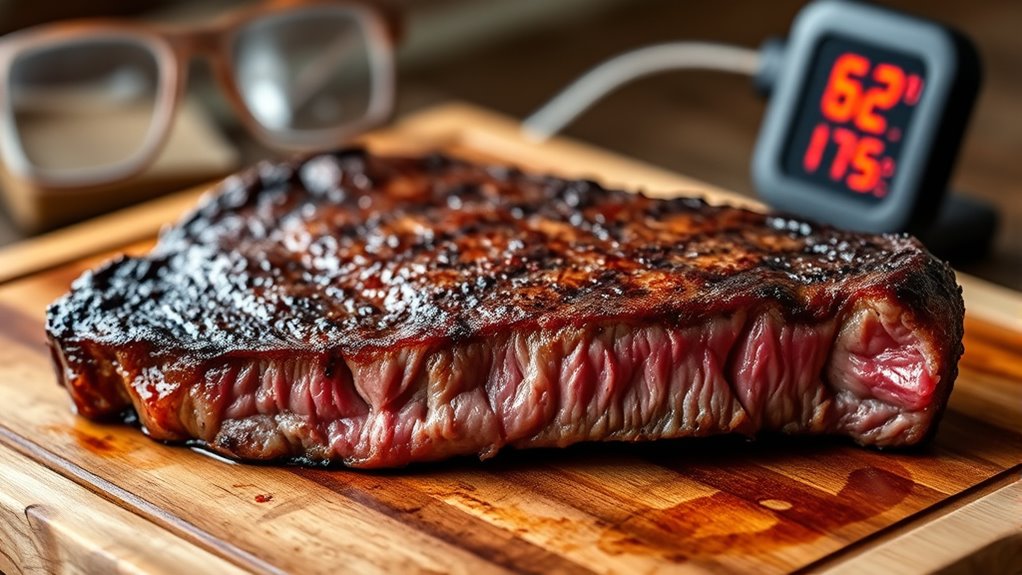
Cooking at the wrong temperature can quickly turn juicy meat into a dry disappointment. Overcooking leads to moisture loss, while undercooking risks food safety. Finding the right temperature keeps your meat tender, flavorful, and safe to eat. Additionally, using a properly calibrated thermometer ensures precise temperature control, helping you avoid common mistakes that cause dryness. Paying attention to wave and wind conditions can also influence cooking times and temperature stability, especially when grilling outdoors. Incorporating temperature control techniques can further optimize your cooking results and prevent dryness. Recognizing ambient conditions that affect heat transfer can help you make better adjustments during cooking. Being aware of piercing care and hygiene can also prevent complications that might interfere with your cooking process.
Overcooking Causes Moisture Loss
When you set the heat too high or too low, your meat can easily become dry because of improper temperature control. Overcooking causes moisture loss, turning juicy meat into a tough, dry piece. To prevent this, consider these tips:
- Use marinade techniques that help retain moisture and enhance flavor.
- Monitor internal temperature carefully to avoid overcooking.
- Rest your meat after cooking to let juices redistribute.
- Avoid cutting into meat immediately; slicing releases moisture and dries it out.
- Understanding proper cooking temperature is essential for keeping meat moist and tender. Additionally, utilizing precise temperature control can significantly improve your cooking results by preventing moisture loss. Mastering temperature management is crucial for achieving consistently moist and flavorful meat, especially with the help of modern kitchen smart appliances that can assist in maintaining optimal cooking conditions. Proper food safety practices also ensure that meat is cooked thoroughly without sacrificing moisture.
Undercooking Risks Safety
Using the wrong cooking temperature can substantially compromise food safety, as undercooked meat may harbor harmful bacteria like Salmonella or E. coli. When you don’t use proper cooking techniques, such as checking the internal temperature with a reliable thermometer, you risk serving meat that isn’t fully cooked. Undercooking not only affects taste but also increases the chance of foodborne illness. To ensure safety, follow recommended temperature guidelines for different types of meat. Avoid relying solely on visual cues, which can be misleading, and instead focus on precise temperature measurements. Properly cooked meat at the right temperature destroys bacteria and makes your meal both safe and enjoyable. Remember, mastering the correct cooking temperature is essential for food safety and a successful, healthy dish. Additionally, using proper cooking techniques helps you achieve consistent results and ensures your meat is cooked to the ideal temperature every time. Implementing accurate temperature control is a crucial step in preventing undercooking and ensuring food safety. Being aware of cooking temperature guidelines for various meats can help you prevent common mistakes and improve your cooking outcomes. Moreover, understanding the scientific principles behind heat transfer can further refine your cooking precision.
Proper Temperature Ensures Juiciness
Achieving juicy, tender meat hinges on selecting the right cooking temperature. If you use the wrong internal temperature, your meat can lose moisture and become dry. To prevent this, keep these tips in mind:
- Use a reliable meat thermometer to monitor internal temperature accurately.
- Know the ideal temperature for your cut—overcooking pushes moisture out.
- Rest your meat after cooking to allow juices to redistribute and maximize moisture retention.
- Avoid high heat for too long, which can dry out meat even if the internal temperature isn’t reached.
- Understanding cooking techniques can help you better control heat and preserve moisture. Proper heat management is essential for maintaining optimal meat temperature and ensuring a juicy result.
As an affiliate, we earn on qualifying purchases.
Not Using a Thermometer to Gauge Doneness
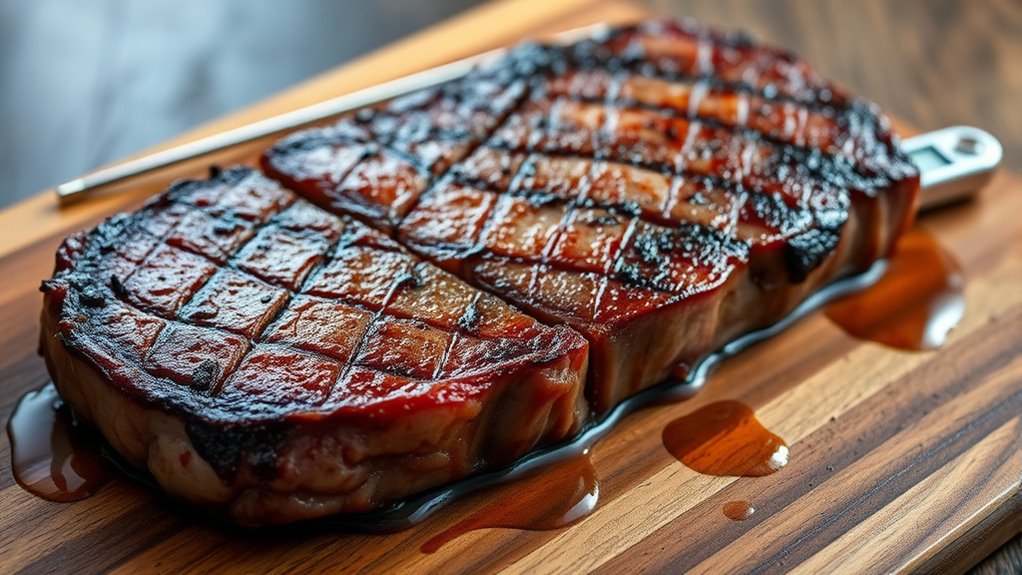
Without a thermometer, your results can be all over the place, making it hard to cook meat perfectly. Using one guarantees you hit the right internal temperature every time. This precision helps prevent dryness and guarantees juicy, tender meat.
Inconsistent Results Without It
Many home cooks rely on visual cues and guesswork to determine when meat is cooked, but this often leads to inconsistent results. Without a thermometer, you risk overcooking or undercooking, which affects texture variations and flavor development. Here’s what happens:
- Your meat’s interior may be underdone, resulting in a raw or chewy texture.
- Overcooking can lead to dry, tough meat that loses moisture.
- The absence of precise temperature control hampers your ability to achieve the ideal doneness.
- Fluctuations in timing cause inconsistent results, making each cook unpredictable.
- Relying solely on visual cues ignores the importance of internal temperature, which is the most reliable indicator of meat doneness.
- Proper temperature monitoring provides peace of mind and helps prevent food safety issues.
- Using a thermometer is an easy way to develop cooking confidence and improve your skills in the kitchen.
Using a thermometer helps you hit the perfect temperature every time, ensuring consistent texture and flavor. Without it, you’re relying on guesswork, and that’s a recipe for uneven, disappointing outcomes.
Precise Cooking Temperatures
How can you accurately judge doneness without a thermometer? The key is mastering precise cooking temperatures through careful techniques. Start by understanding the ideal internal temperature for each meat type, based on its cut and thickness. Your cooking techniques should include visual cues like color, firmness, and juices, but these can be inconsistent. Meat selection plays a role too; choose cuts with predictable doneness signs. For example, a well-marbled steak may be more forgiving, but relying solely on appearance can lead to dryness. Instead, learn to estimate doneness by touch and timing, adjusting heat accordingly. Combining knowledge of meat selection with proper cooking techniques will help you achieve perfect doneness without a thermometer, preventing overcooking and dryness.
Cutting Into Meat Too Soon
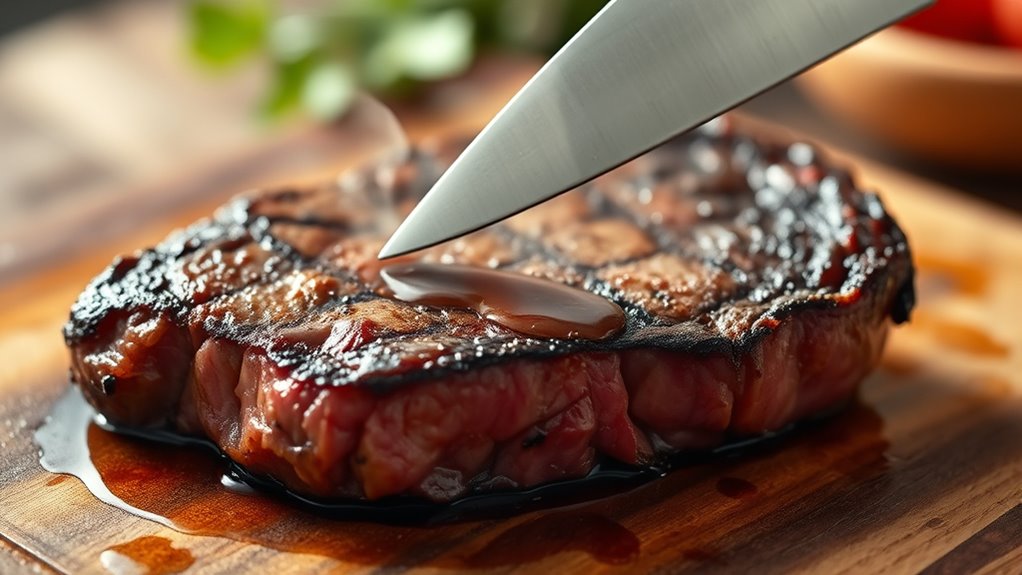
If you cut into your meat too soon after cooking, you risk losing its juices and ending up with a dry, tough piece. Resting allows the juices to redistribute, keeping your meat moist and flavorful. When slicing, use proper techniques to enhance presentation aesthetics and guarantee each slice is tender. Here are four tips to avoid this mistake:
Allow meat to rest before slicing to retain juices and ensure tenderness.
- Let the meat rest for at least 5-10 minutes before cutting.
- Use a sharp knife for cleaner, more precise slices.
- Slice against the grain for maximum tenderness.
- Pay attention to slicing techniques that highlight presentation aesthetics.
Choosing the Wrong Cut for Your Cooking Method
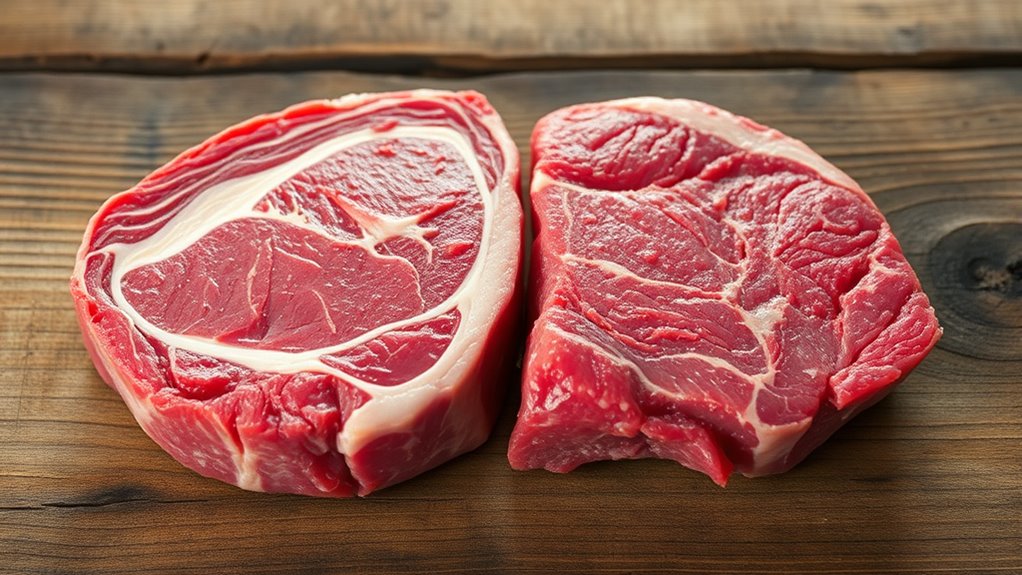
Choosing the right cut of meat is essential to ensuring your cooking method yields the best results. If you select a cut that’s too lean for slow roasting or grilling, it can dry out quickly. Conversely, tougher cuts need longer, slower cooking methods to become tender. Always consider meat sourcing tips to find fresh, high-quality options that match your recipe. Proper cutting board hygiene is vital when handling different cuts to prevent cross-contamination, especially if you switch between raw poultry and beef. Using the right cut saves you from overcooking or undercooking, which leads to dryness or toughness. By choosing the appropriate cut for your method, you set yourself up for juicy, flavorful meat every time.
Forgetting to Properly Season and Marinate
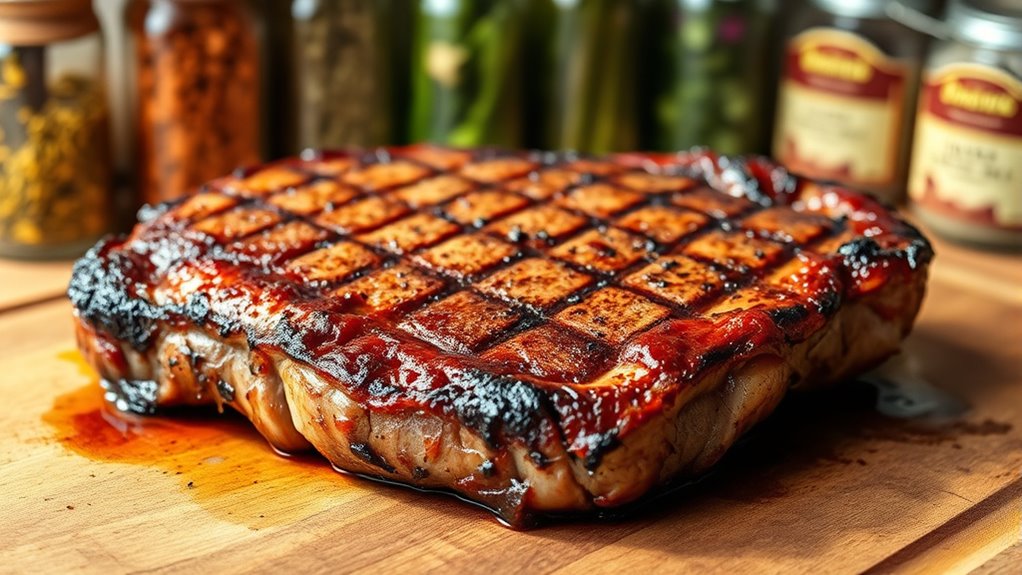
Even the best-cut meat can turn out dry if you neglect to season or marinate it properly. Seasoning mistakes, like under-seasoning or using too little salt, can cause meat to lack flavor and moisture. Marination tips, such as using an acid or oil-based marinade, help tenderize and boost juiciness. To avoid dryness, consider these steps:
- Always salt your meat generously before cooking to enhance moisture retention.
- Marinate for at least 30 minutes, or longer for tougher cuts, to improve tenderness.
- Use flavorful marinades with acids, like vinegar or citrus, to break down muscle fibers.
- Don’t forget to pat meat dry before cooking to ensure proper searing and flavor absorption.
- Incorporating proper seasoning techniques can make a significant difference in the juiciness and flavor of your meat. Additionally, understanding the importance of resting meat after cooking allows the juices to redistribute, ensuring moist and tender results.
Proper seasoning and marination are key to juicy, flavorful meat every time.
Improper Meat Preparation and Handling
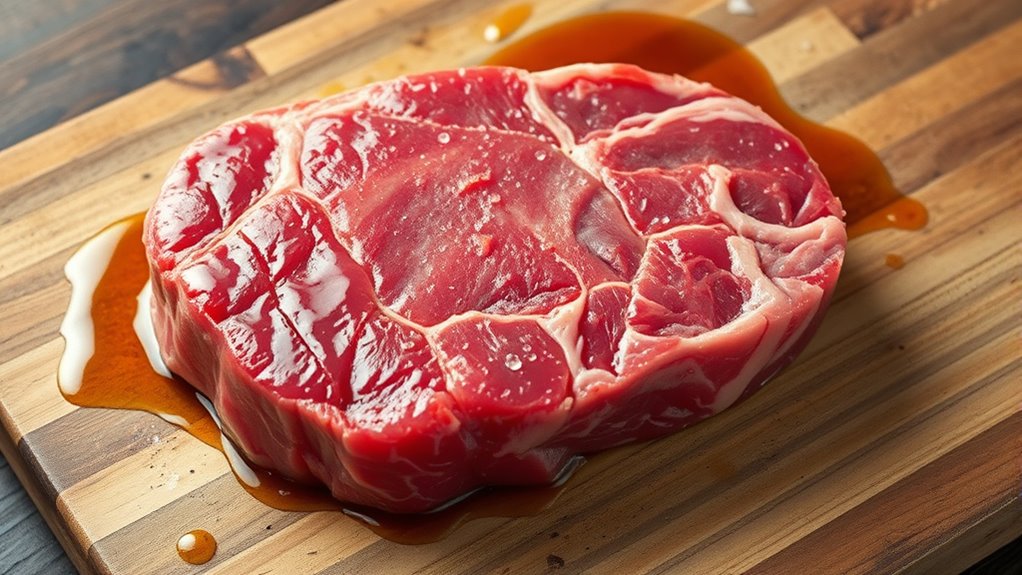
Proper meat preparation and handling play a significant role in preventing dryness, often overlooked after seasoning and marination steps. If you don’t store meat correctly, it can dry out or spoil, so always keep it refrigerated or frozen until ready to cook. Handling hygiene is equally important; wash your hands and utensils thoroughly to prevent bacteria that can compromise meat quality. When you’re ready to cook, avoid leaving meat at room temperature too long, as fluctuating temperatures can affect moisture retention. Additionally, improper meat storage can lead to freezer burn, which dehydrates the meat. By maintaining proper storage practices and practicing good handling hygiene, you ensure your meat stays moist and tender, reducing the risk of dryness caused by preparation mistakes.
Neglecting to Use Moisture or Basting Techniques
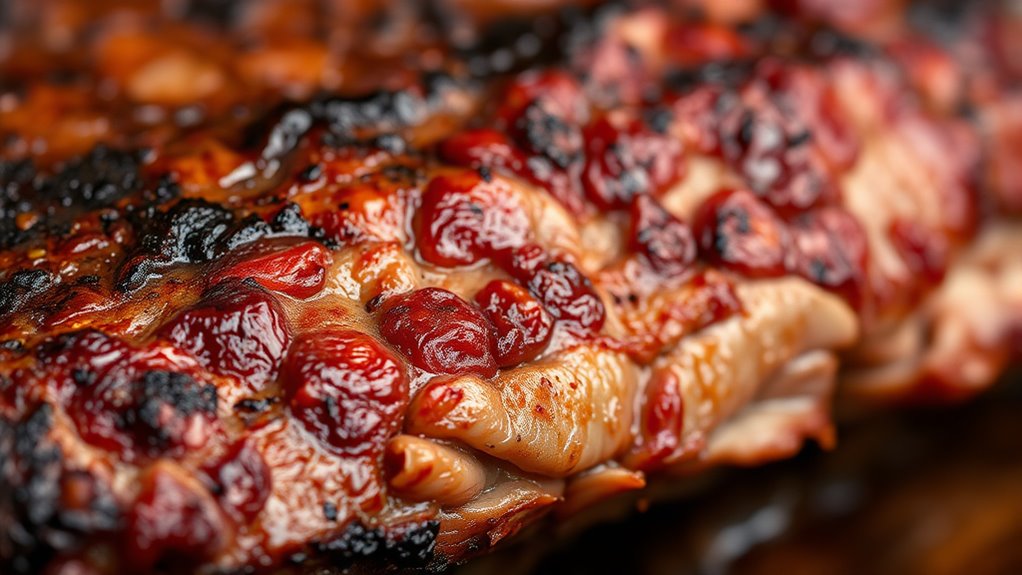
Neglecting to use moisture or basting techniques is a common mistake that can turn juicy meat into a dry, tough dish. Without proper basting techniques, you miss out on essential moisture retention, which keeps meat tender and flavorful. To avoid this, consider these tips:
Neglecting basting can dry out and toughen your meat—keep it juicy with regular moisture application.
- Regularly baste your meat with its juices or marinade during cooking.
- Use a brush or spoon to apply liquids evenly, preventing dryness.
- Cover the meat with foil if it starts to dry out, locking in moisture.
- Incorporate a flavorful marinade or broth to enhance moisture retention from the start.
Frequently Asked Questions
Can Marinades Prevent Meat From Drying Out During Cooking?
Marinades can help prevent meat from drying out during cooking by enhancing marinade effectiveness and promoting flavor penetration. When you soak meat in a well-balanced marinade, it absorbs moisture and tenderizes, reducing the chance of dryness. Make sure to marinate for at least 30 minutes to a few hours, depending on the cut. This process keeps the meat moist, juicy, and flavorful, ensuring a delicious, tender result every time.
Does the Thickness of Meat Affect Its Likelihood of Drying Out?
Yes, meat thickness affects its likelihood of drying out because thicker cuts tend to retain moisture better, reducing the risk of dryness. When you cook thicker meat, it’s easier to control the internal temperature and prevent overcooking, which helps with moisture retention. Conversely, thin cuts can dry out quickly if not monitored closely. To keep your meat juicy, adjust your cooking time based on thickness and aim for proper internal temperature.
Are There Specific Cooking Methods Better for Preventing Dry Meat?
To prevent dry meat, try using braising techniques or sous vide cooking. Braising slowly in liquid keeps meat moist and tender, while sous vide allows precise temperature control, avoiding overcooking. These methods help maintain moisture and flavor, ensuring your meat stays juicy. You’ll find that combining these techniques with proper seasoning and resting times results in perfectly tender, moist meat every time.
How Does Meat Age Influence Its Moisture Retention?
Meat aging influences moisture retention through enzymatic changes that break down muscle fibers, enhancing tenderness and flavor. During aging, these enzymatic processes develop richer flavors and improve tenderness, but they can also cause some moisture loss. To optimize juiciness, control aging conditions carefully. Longer aging can deepen flavor, but if not managed properly, it might lead to dryness. Balance aging time and temperature for the best moisture and flavor.
Can Resting Meat at Different Temperatures Impact Dryness?
Did you know resting meat at different temperatures can affect its juiciness? Temperature variations during resting impact moisture retention, making your meat either juicy or dry. Using proper resting techniques, like tenting with foil and allowing it to sit at room temperature, helps redistribute juices. Avoid cooling it too quickly or resting in a cold environment, which can cause moisture loss and dryness, ensuring your meat stays tender and flavorful.
Conclusion
Remember, the secret to juicy meat isn’t just in the technique, but in avoiding that one mistake—overcooking. It’s a silent thief that steals moisture and flavor, leaving your dish dry and disappointing. Think of your meat as a delicate dance; timing and temperature are your partners. Master these, and you’ll never fall into the trap of dry meat again. After all, isn’t it worth the effort to preserve that perfect, succulent bite?
NFL season / tailgating Picks
team gear
As an affiliate, we earn on qualifying purchases.