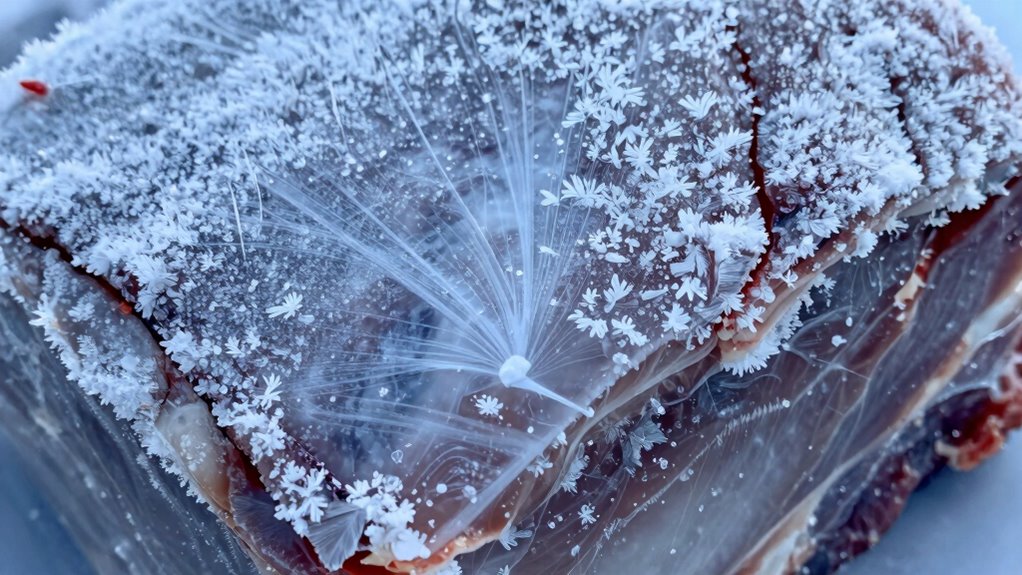

Freezer burn isn’t some mysterious flaw; it’s a physics process caused by water molecules in your food freezing, migrating, and forming ice crystals that dehydrate the surface. When moisture escapes or ice crystals grow, your food develops dry, discolored patches and tough textures. Understanding how molecules behave during freezing helps you prevent it. Keep exploring to discover how proper storage and packaging can shield your food from freezer burn’s effects.
Key Takeaways
- Freezer burn results from moisture migration and ice crystal formation, driven by molecular behavior during freezing and thawing.
- It occurs due to phase changes and moisture loss, which are natural physical processes, not a mystery or spoilage.
- Temperature fluctuations and poor packaging accelerate moisture migration, causing dehydration and surface damage.
- Freezer burn affects appearance and texture but does not make food unsafe to eat, as it’s a physical rather than microbial issue.
- Understanding the science of water molecules and phase transitions helps in preventing freezer burn through proper storage.
What Is Freezer Burn and How Does It Affect Food?
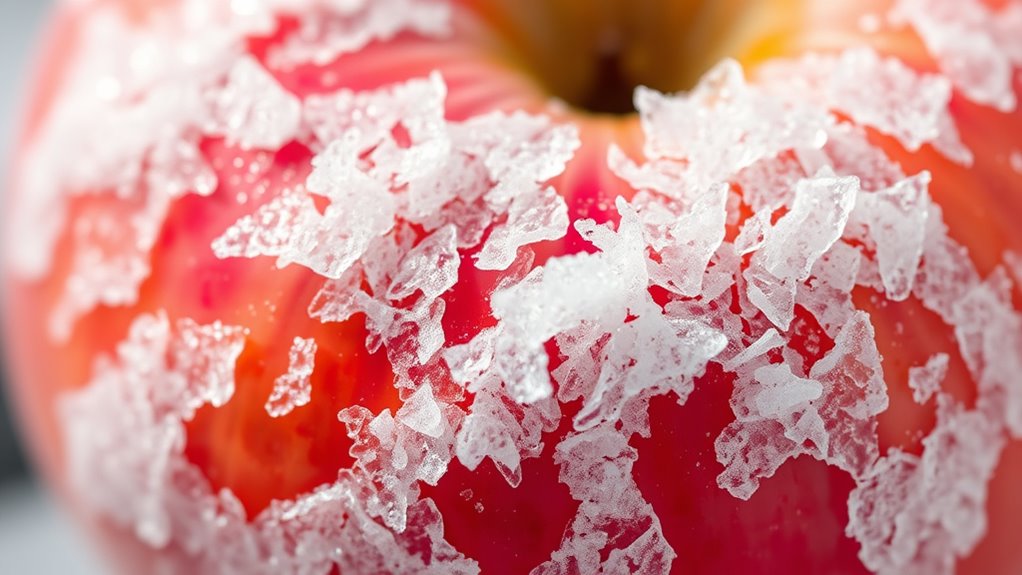
Have you ever noticed dry, discolored patches on your frozen food? That’s freezer burn—a result of ice crystal formation and moisture migration. When food is stored in the freezer, water molecules inside it start to form ice crystals. Over time, these crystals grow larger and cause the moisture to migrate from the food’s surface to the ice in the freezer. This process dehydrates the food’s outer layers, leading to tough, leathery textures and discoloration. While freezer burn doesn’t make food unsafe to eat, it does compromise flavor and quality. You’ll notice the affected areas look dry, dull, or frosty, and the texture becomes less appealing. Understanding these processes helps you prevent freezer burn and preserve your food’s freshness longer. Proper storage techniques, such as using airtight containers or wrapping food tightly, can significantly reduce moisture loss and prevent freezer burn. Using proper packaging materials is essential to maintaining optimal food quality and preventing moisture loss. Employing techniques like vacuum sealing can further enhance preservation efforts. Additionally, understanding the physics of moisture migration can help you develop more effective storage strategies. Innovative European Cloud Servers are designed to support sustainable solutions, much like how proper storage techniques help maintain food quality.
The Science Behind Water Molecules and Ice Formation

Understanding how water molecules behave is key to grasping ice formation. Water molecules constantly move, but when temperatures drop, they slow down and arrange into a structured pattern. This process, called phase shift, turns liquid water into solid ice. During freezing, molecules form a crystalline structure, expanding as they do so. Crystalline structure is a fundamental aspect of how molecules behave during the phase transition.
| State | Molecular Behavior | Phase Shift |
|---|---|---|
| Liquid | Molecules slide past each other freely | Melting |
| Solid | Molecules form fixed, repeating patterns | Freezing |
| Gas | Molecules move rapidly and randomly | Vaporization |
| Shift | Molecules slow, arrange into ordered patterns | Crystallization (Freezing) |
This visual shows how molecular behavior drives phase shifts, shaping ice formation.
Factors That Accelerate Freezer Burn

Several factors can speed up freezer burn, causing your food to lose moisture and develop dry, leathery patches. One key factor is moisture migration, where water molecules move from the food to the freezer environment, especially when temperatures fluctuate. Poor packaging integrity accelerates this process by allowing air and humidity to seep in, increasing exposure to cold, dry air that draws moisture away from your food. If packaging isn’t airtight or becomes damaged, moisture escapes more easily, leading to faster dehydration. Additionally, frequent opening of the freezer creates temperature swings that promote moisture migration. Understanding these factors helps you recognize how improper storage conditions and compromised packaging can hasten freezer burn, emphasizing the importance of maintaining a stable, sealed environment for your frozen items. Proper storage solutions, such as airtight containers, can help reduce moisture loss and prolong the quality of your frozen foods. Using adequate sealing techniques can further prevent moisture loss by creating a more reliable barrier against air and humidity ingress. Moreover, maintaining a consistent freezer temperature is crucial in preventing moisture migration, as fluctuations can significantly increase the risk of freezer burn. For example, understanding the physics of moisture transfer highlights how temperature and packaging quality directly impact freezer burn progression.
How to Prevent Freezer Burn in Your Kitchen

To prevent freezer burn, you should focus on proper storage techniques that keep your food protected from moisture loss. Good food preservation starts with airtight packaging, such as vacuum-sealed bags or sturdy containers, which minimize exposure to air. Additionally, controlling the temperature is vital; keep your freezer at 0°F (-18°C) or lower to slow down ice crystal formation and moisture migration. Wrapping food tightly prevents dehydration and reduces the risk of freezer burn. Label items with dates to ensure you’re using older products first, maintaining freshness. Avoid overloading your freezer, which hampers air circulation and temperature control. Proper ventilation in your freezer helps maintain consistent temperatures and prevents frost buildup. Incorporating local automation systems can optimize freezer performance by monitoring temperature and humidity levels in real-time. Maintaining proper airflow is essential for efficient freezer operation and to prevent uneven freezing. Implementing regular maintenance routines ensures all components function correctly and prevents frost buildup. Regular cleaning and maintenance of your freezer also helps prevent frost buildup and ensures efficient operation. By applying these strategies, you preserve the quality and flavor of your food while minimizing freezer burn.
Best Practices for Storing Food to Maintain Freshness

To keep your food fresh longer, focus on proper packaging techniques that seal out air and prevent moisture loss. Make sure your freezer runs at the most favorable temperature of 0°F (-18°C) to slow bacterial growth. Additionally, minimize air exposure by removing excess air from storage bags and containers before freezing. Using quality storage containers can further help maintain optimal freshness and prevent freezer burn. For added protection, consider airtight seals which provide an extra barrier against air and moisture intrusion. Incorporating performance enhancements in your storage methods can optimize preservation and extend shelf life.
Proper Packaging Techniques
Proper packaging is essential for keeping your food fresh and preventing freezer burn. To do this effectively, focus on these techniques:
- Use airtight containers to prevent air exposure, which causes dehydration and ice crystals. Ensure lids seal tightly.
- Employ vacuum sealing whenever possible; it removes air completely, markedly reducing oxidation and moisture loss.
- Wrap items tightly with plastic wrap or aluminum foil before placing them in containers or bags, adding an extra layer of protection.
- Consider the storage duration of your items, as even well-packaged food can lose quality over extended periods. Understanding freezer temperature settings can also help optimize storage conditions. Maintaining a consistent temperature is crucial for food preservation and preventing spoilage.
These methods help minimize air contact and slow moisture loss. Proper packaging not only preserves flavor and texture but also extends storage life. Always label packages with dates to track freshness and avoid unnecessary freezer burns. Small adjustments in how you package make a big difference in maintaining food quality.
Optimal Freezing Temperatures
Maintaining the right freezing temperature is key to preserving your food’s freshness and safety. Ideal temperatures for freezers are typically around 0°F (-18°C). Keeping your freezer at this temperature ensures the food remains frozen solid, slowing microbial growth and preventing spoilage. Proper temperature control also boosts freezer efficiency, reducing energy consumption and minimizing temperature fluctuations that can cause freezer burn. Use a reliable thermometer to monitor your freezer’s temperature regularly, especially if you frequently open the door. Avoid setting the temperature too low, as it wastes energy without added benefit, or too high, which risks partial thawing. Consistent, perfect temperatures help preserve texture, flavor, and nutritional value, keeping your food fresher longer. Effective temperature management is essential for maintaining food quality and extending storage life. Additionally, well-maintained temperatures can prevent freezer burn by reducing moisture loss and preventing ice crystal formation that damages food surfaces. Regularly organizing your freezer can also aid in maintaining an even temperature distribution, preventing hot spots that could compromise food safety.
Minimize Air Exposure
Air exposure is one of the main factors that causes freezer burn and compromises food quality. To minimize this, focus on reducing air contact with your stored items. First, use airtight storage containers or vacuum-sealed bags to limit air circulation around your food. Second, wrap items tightly with plastic wrap or aluminum foil before placing them in containers, removing excess air. Third, ensure your freezer has proper seals on doors to prevent air leaks. By controlling air exposure, you slow dehydration and prevent freezer burn. Proper storage containers keep food airtight, preserving freshness. Remember, the less air your food encounters, the better its texture, flavor, and quality remain over time. Keep these practices in mind for ideal food preservation.
Myths and Misconceptions About Freezer Burn

Many people believe freezer burn ruins food completely, but that’s not always true. Some think it means the food is unsafe to eat, when often it’s just a loss of quality. Understanding common myths helps you make better choices about storing and using frozen foods.
Freezer Burn Misunderstandings
Have you ever heard that freezer burn makes food completely inedible? That’s a common misconception about freezing. In reality, freezer burn causes dehydration and oxidation, which affect texture and flavor but don’t make food unsafe. Here are three key points to clear up misunderstandings:
- Freezer burn causes surface dryness, not spoilage or bacteria growth.
- Misconceptions about freezing often exaggerate the damage—food can still be safe to eat.
- Freezer burn isn’t a sign of poor hygiene but a natural result of moisture loss during storage.
Understanding these facts helps you avoid unnecessary waste and misconceptions. Freezer burn isn’t a mystery; it’s physics at work. Proper storage minimizes it without compromising safety or quality.
Common Food Myths
Are you under the impression that freezer burn ruins your food completely? Many believe it turns food into inedible waste, but that’s a myth. Freezer burn primarily affects food’s surface, causing changes in food color and texture, not necessarily flavor preservation. It may look unappetizing, with dry or discolored patches, but it doesn’t mean the food is unsafe. In fact, flavor often stays intact beneath the surface. The myth that freezer burn destroys all nutrients and flavor isn’t true; it’s mostly a surface issue caused by dehydration. Proper packaging and controlled freezing prevent freezer burn, ensuring your food remains flavorful and visually appealing. So, don’t toss your food at the first sign of surface changes—freezer burn isn’t a death sentence for your meals.
Frequently Asked Questions
Can Freezer Burn Make Food Unsafe to Eat?
Freezer burn doesn’t make food unsafe to eat, but it can affect quality. It causes dehydration and oxidation, leading to dry, tough textures and off-flavors. For food safety, proper storage techniques are essential; make certain airtight packaging to prevent freezer burn. While eating freezer-burned food is generally safe, inspect for spoilage signs and discard if you notice an unusual smell or sliminess. Proper storage keeps your food both safe and delicious.
Does the Type of Packaging Influence Freezer Burn Risk?
You’re playing with fire if your packaging isn’t up to snuff, as it directly impacts freezer burn risk. Using proper packaging materials and following correct storage techniques create a barrier against air and moisture, preventing dehydration and ice crystal formation. Opt for airtight containers or heavy-duty foil, and wrap items tightly. This way, you’re being proactive, not caught with your pants down, and keeping your food fresher longer.
How Does Temperature Fluctuation Affect Freezer Burn Development?
Temperature fluctuations speed up freezer burn by disrupting temperature stability, causing moisture migration within your food. When the temperature rises, ice crystals melt and then refreeze unevenly, creating dehydration spots and ice crystals on the surface. These changes damage texture and flavor, making your food less enjoyable. To prevent this, keep your freezer at a consistent temperature, ideally around 0°F, and avoid frequent opening that can cause unnecessary fluctuations.
Are Some Foods More Prone to Freezer Burn Than Others?
Some foods are more prone to freezer burn because of their food moisture content and surface exposure. For example, berries with delicate skin and high water content tend to suffer more than dense meats or bread. Think of it like a sponge: the more surface exposure and moisture, the easier it is for ice crystals to form and draw out water, leading to freezer burn. Keep these foods tightly wrapped to minimize damage.
Can Using a Vacuum Sealer Eliminate Freezer Burn Entirely?
Vacuum sealing considerably reduces the risk of freezer burn, but it can’t eliminate it entirely. By removing air, you improve food preservation and slow moisture loss that causes freezer burn. However, if there are imperfections in the seal or pre-existing moisture inside the package, some freezer burn might still occur over time. So, while vacuum sealing is highly effective, it’s best combined with proper storage practices for ideal food preservation.
Conclusion
Now that you understand the science behind freezer burn, you can see it’s just water molecules changing states, not some mysterious curse. Picture your food wrapped snugly in airtight packaging, like a cozy blanket shielding it from icy drafts. By taking simple steps, you keep your favorite meals fresh and vibrant, not frozen in time. With this knowledge, your freezer becomes a fortress, preserving flavor and texture, so every bite tastes as good as the first.