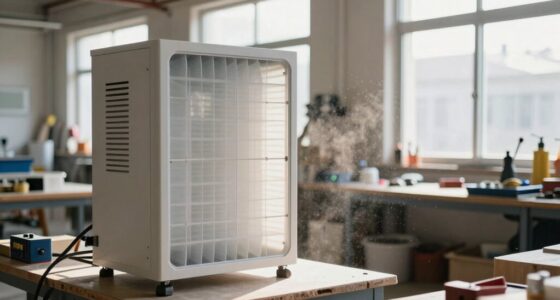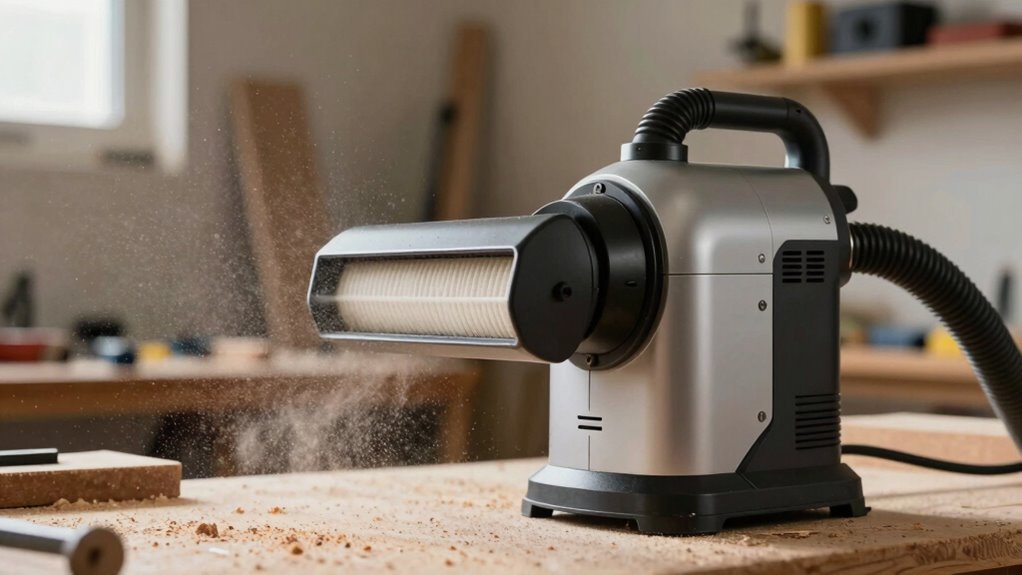

Fine dust from woodworking or construction can easily become airborne and reach deep into your lungs, causing health issues like coughing, wheezing, and long-term damage. HEPA dust extractors are essential because they actively trap these tiny particles before you breathe them in, protecting your respiratory health. Ignoring this risk can lead to chronic conditions or worsened asthma. To learn how effective filtration safeguards your lungs and workspace, keep exploring this important topic.

Prime made for students and young adults
- Fast, free delivery for dorm and study essentials
- Prime Video and Amazon Music included
- Member-only deals
Key Takeaways
- Fine dust particles are tiny enough to bypass traditional filters and reach the lungs, causing health issues.
- HEPA filters effectively trap particles as small as 0.3 microns, preventing lung inhalation.
- Inhaled fine dust can cause respiratory problems like coughing, wheezing, and worsen conditions such as asthma.
- Long-term exposure to airborne dust can lead to chronic respiratory damage and lung diseases.
- HEPA dust extractors improve air quality, reducing the risk of lung problems caused by inhaling fine dust.
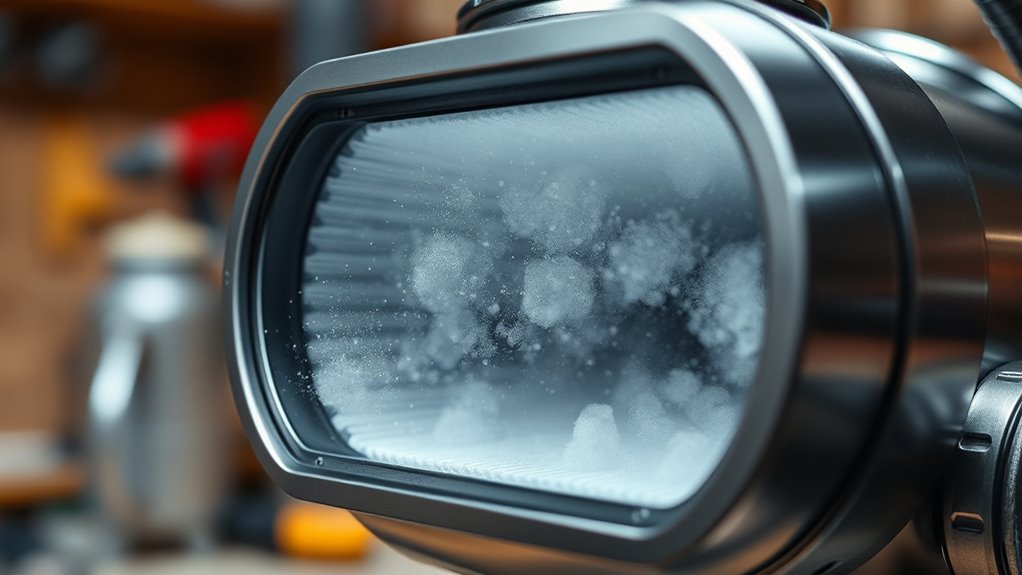
Are you looking for an effective way to keep your workspace clean and safe? If so, understanding the importance of air quality is essential. Fine dust particles generated during sanding, cutting, or grinding can quickly become airborne, contaminating the air you breathe. Without proper filtration, these tiny particles settle into your lungs, posing serious risks to your respiratory health. That’s where HEPA dust extractors come in—they’re designed to capture even the smallest particles, ensuring cleaner air and healthier lungs.
Protect your health with HEPA dust extractors—capture tiny particles and breathe cleaner, safer air every day.
You might not realize how insidious fine dust can be until you experience persistent coughing, wheezing, or shortness of breath. These symptoms often stem from inhaling microscopic particles that bypass traditional filters. HEPA filters, with their advanced technology, trap particles down to 0.3 microns, including the dangerous fine dust that can aggravate respiratory conditions like asthma or bronchitis. By using a HEPA dust extractor, you markedly improve your air quality, reducing your exposure to these harmful contaminants. This not only protects your current respiratory health but also prevents long-term damage that can develop from chronic inhalation of fine dust.
Keeping your workspace free of airborne dust isn’t just about cleanliness; it’s a health imperative. Dust particles that remain airborne can circulate throughout your environment, settling on surfaces or being inhaled repeatedly. These tiny particles are small enough to bypass your body’s natural defenses, embedding deep into your lungs and contributing to inflammation or other respiratory issues. A HEPA dust extractor actively pulls air through its high-efficiency filters, capturing particles before they escape into your breathing zone. This continuous process creates a safer, healthier environment, especially in workplaces where dust generation is unavoidable. Additionally, understanding basic auditory processing concepts can help in designing comprehensive safety protocols in noisy or dust-heavy environments.
Investing in a HEPA dust extractor isn’t just about compliance or cleanliness—it’s about prioritizing your health and well-being. When you maintain high air quality standards, you’re less likely to experience work-related respiratory problems. Plus, it benefits everyone around you, from coworkers to family members, by reducing overall airborne contaminants. Regular use of a HEPA extractor also prolongs the lifespan of your tools and equipment by preventing dust buildup, which can otherwise impair performance and cause damage.
In the end, protecting your respiratory health starts with controlling what you breathe. HEPA dust extractors are a proven, effective solution for removing fine dust from the air, ensuring that your workspace remains safe and your lungs stay healthy. Don’t underestimate the impact of microscopic particles—invest in a HEPA filter system today and breathe easier tomorrow.
HEPA dust extractor for woodworking
As an affiliate, we earn on qualifying purchases.
As an affiliate, we earn on qualifying purchases.
Frequently Asked Questions
Can HEPA Dust Extractors Remove All Types of Dust Particles?
HEPA dust extractors are highly effective at removing most dust particles, especially those larger than 0.3 microns, thanks to their high filter efficiency. However, they can’t capture all particle sizes perfectly, especially ultra-fine particles smaller than 0.3 microns. So, while HEPA filters markedly reduce dust and improve air quality, some very tiny particles may still pass through, making complete removal impossible with standard HEPA units.
How Often Should I Replace HEPA Filters for Optimal Performance?
You should replace the HEPA filter regularly to maintain peak performance, typically every 6 to 12 months, depending on usage and environment. If you notice a decrease in suction or increased dust in the air, it’s a sign to do a filter replacement sooner. Regularly checking and replacing filters ensures your dust extractor effectively captures fine dust particles, protecting your lungs and maintaining the device’s efficiency.
Are HEPA Dust Extractors Safe for Allergy Sufferers?
Yes, HEPA dust extractors are generally safe for allergy sufferers because they effectively trap allergens and fine dust particles. However, keep in mind HEPA filter limitations, such as reduced efficiency over time and the need for regular replacements to maintain ideal allergy management. To maximize safety, make sure you replace filters according to manufacturer instructions and keep your extractor well-maintained, reducing airborne allergens and improving overall air quality.
What Maintenance Is Required for HEPA Dust Extractors?
You should regularly inspect the filter to guarantee it’s free of clogs and replace it when necessary. Additionally, clean the motor periodically to prevent dust buildup that can impair performance. Check for any damage or wear and keep the extractor’s components dry and clean. Proper maintenance guarantees your HEPA dust extractor works efficiently, helping you maintain a healthier environment and protecting your lungs from fine dust.
Do HEPA Dust Extractors Produce Any Harmful Emissions?
Think of HEPA dust extractors as silent guardians, silently filtering your air. They don’t produce harmful emissions because they meet strict air filtration and emission standards. Instead, they trap fine dust and particles, preventing lung hazards. You can rely on them to keep your environment safe, knowing they’re designed to filter out contaminants without releasing any dangerous substances back into the air, making your workspace healthier and safer.
As an affiliate, we earn on qualifying purchases.
Conclusion
Using HEPA dust extractors keeps your workspace cleaner, your lungs healthier, and your environment safer. They trap fine dust, reduce health risks, and improve air quality—all at the same time. When you invest in quality filtration, you protect your health, your productivity, and your peace of mind. Clean air isn’t just a goal; it’s a necessity—so breathe easier, work smarter, and stay safe with HEPA dust extractors every step of the way.
As an affiliate, we earn on qualifying purchases.
HEPA filter vacuum for dust removal
As an affiliate, we earn on qualifying purchases.
As an affiliate, we earn on qualifying purchases.
Fall Picks
fall essentials
As an affiliate, we earn on qualifying purchases.