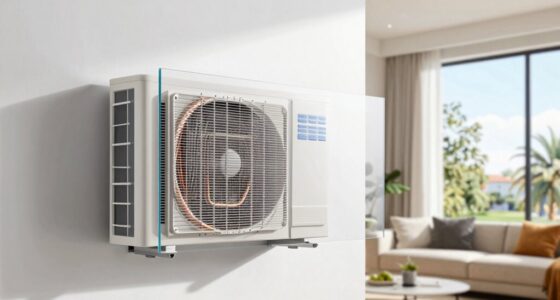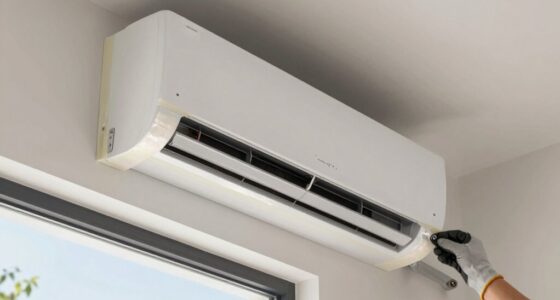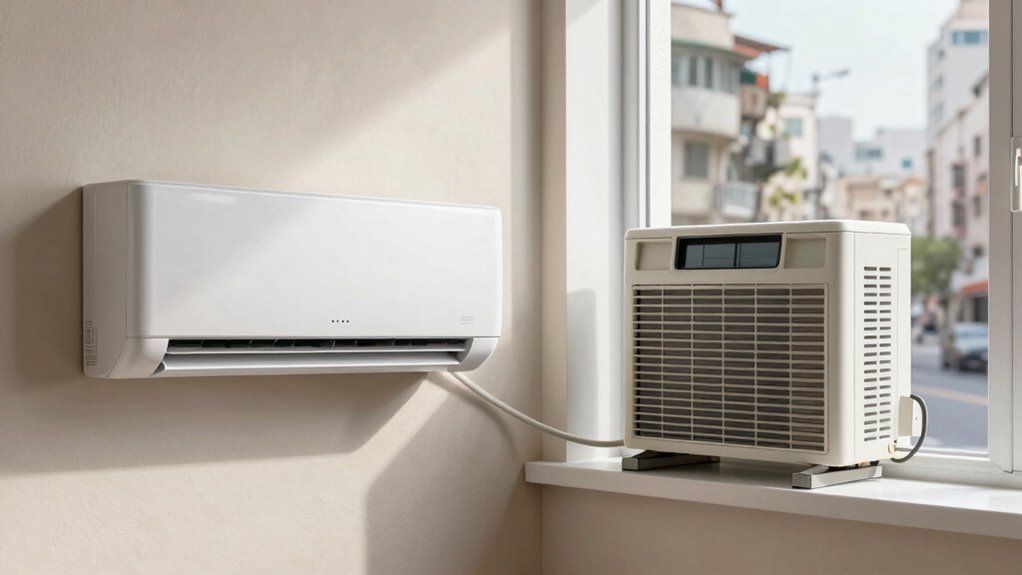

If you want a solution that’s energy-efficient, more permanent, and offers a sleek look, a through-the-wall AC makes sense—especially for long-term use. However, if you need something quick, portable, and easier to install with lower upfront costs, a window unit could be the better choice. Your decision depends on whether convenience or efficiency is your top priority. To understand more about when each option works best, keep exploring the details below.
Key Takeaways
- Window units are ideal for quick, budget-friendly installation and portability, while through-the-wall units suit permanent, energy-efficient setups.
- Through-the-wall ACs offer better insulation, lower energy costs, and a sleek appearance, making them preferable for long-term use.
- Window units are easier to install and move, making them suitable for temporary or rental spaces.
- For optimal energy savings and aesthetics, through-the-wall units are a better choice despite higher upfront costs.
- Consider installation complexity and permanence when choosing; window units are simpler, but through-the-wall units provide a more integrated look.

Are you trying to decide between a through-the-wall air conditioner and a window unit? It’s a common dilemma, and the right choice depends on several factors, especially energy efficiency and installation complexity. If you’re looking for a unit that consumes less power over time, through-the-wall ACs tend to be more energy-efficient. They generally have better insulation around the unit, reducing drafts and heat transfer, which means your cooling system doesn’t have to work as hard to maintain your desired temperature. This can lead to lower energy bills and a smaller carbon footprint. However, it’s important to remember that through-the-wall units typically come with a higher upfront cost and require more thoughtful installation. Understanding how filtration systems work can help you further optimize your cooling setup and improve indoor air quality.
When it comes to installation complexity, there’s a noticeable difference. Window units are usually straightforward to install. You just slide the unit into your window, secure it with brackets, and seal the gaps to prevent air leaks. This makes them ideal if you want a quick, DIY-friendly solution or need to move the unit between rooms. In contrast, through-the-wall air conditioners demand more effort. Installing them involves cutting a hole in your wall, which can be tricky if you don’t have experience. Proper framing and sealing are essential to prevent air leaks and water infiltration. If you’re not comfortable with carpentry or don’t want to hire a professional, this process might be intimidating. Additionally, once installed, a through-the-wall unit becomes a semi-permanent fixture, making it harder to relocate or remove without additional work.
Another aspect to consider is how each unit affects your room’s aesthetics. Window units protrude from the window, which can block your view and take up valuable space. They’re also more exposed to weather and potential damage. Through-the-wall units sit flush with the wall, offering a cleaner look and saving window space. This can be especially beneficial if you want to maximize natural light or have a more streamlined appearance.
Ultimately, your choice hinges on your priorities. If you value quick installation, portability, and lower initial costs, a window AC might be best. But if you’re looking for better energy efficiency, a more permanent solution, and a sleek appearance, a through-the-wall air conditioner could be the smarter investment. Just keep in mind that the installation complexity is higher with through-the-wall units, so plan accordingly and consider whether you’re comfortable handling the work yourself or if you’ll need professional help.
Frequently Asked Questions
How Energy-Efficient Are Through-The-Wall Versus Window Air Conditioners?
Through-the-wall air conditioners are generally more energy-efficient than window units because they often have better insulation impact, reducing air leaks. You’ll notice lower energy consumption with through-the-wall models since they maintain temperature better and lose less conditioned air. Window units tend to waste more energy due to gaps and poor insulation. If efficiency matters, opting for a through-the-wall AC makes sense for long-term savings and consistent cooling.
Which Type of Unit Is Easier to Install for a Novice Homeowner?
A window AC unit is easier for a novice homeowner to install because it involves less installation complexity. You can typically mount it yourself without specialized tools or extensive experience. Through-the-wall units, on the other hand, require more effort, including cutting a wall opening and ensuring proper sealing. If you’re a beginner, a window unit offers a straightforward, manageable option, making installation quicker and less stressful.
Can Through-The-Wall Units Be Moved Easily After Installation?
Through-the-wall units aren’t easy to move once installed. You’ll face removability challenges because they’re built into the wall, making relocation difficult. If you think you might want to change locations later, a window AC is a better choice since it’s portable and simple to remove. With through-the-wall units, expect significant effort and potential wall damage if you try to relocate them later.
What Are the Maintenance Differences Between the Two Types?
You’ll find that through-the-wall units often require more involved cleaning routines and filter replacements because they stay fixed in the wall, making access slightly harder. With window units, cleaning and filter changes are easier since you can remove the unit from the window. Regularly cleaning the filters and checking for dust buildup keeps both types running efficiently, but through-the-wall units may need more effort during maintenance.
How Do Noise Levels Compare Between Through-The-Wall and Window ACS?
Sound often seems softer with through-the-wall ACs because they’re built into the wall, offering better sound insulation. Window units tend to be louder since they sit outside or hang in your window, exposing you to more noise. While installation complexity varies—through-the-wall units require more work, but typically provide quieter operation—your choice impacts noise levels and comfort. So, if quiet is key, through-the-wall options tend to offer a calmer, quieter cooling experience.
Conclusion
Choosing between a through-the-wall AC and a window unit is like picking the right tool for the job. If you want a sleek, permanent solution that blends seamlessly into your wall, a through-the-wall AC is your best bet. But if you need quick cooling for a temporary space, a window unit is your trusty sidekick. Think of it as a helpful bridge—each has its moment to shine, depending on your needs.