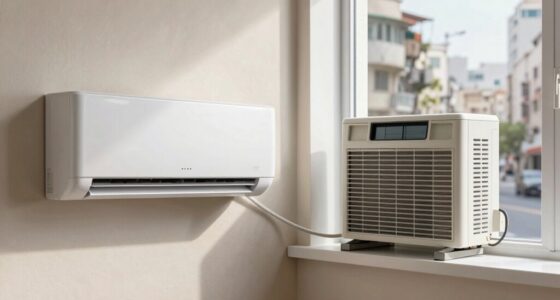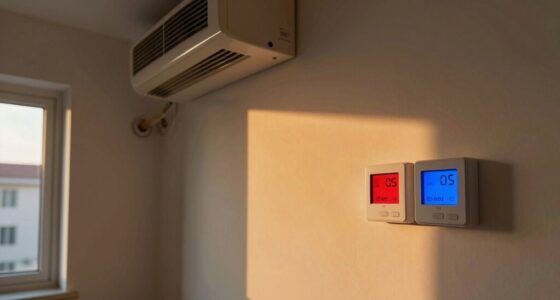
To prevent comfort problems, it’s essential to size your mini split correctly by calculating its BTU needs based on your space’s size, insulation, and sun exposure. Measure your room accurately, consider factors like ceiling height and windows, and avoid guessing. An appropriately sized unit will run efficiently, maintain consistent temperatures, and reduce energy bills. Keep in mind, small adjustments make a big difference—continue to learn how precise calculations guarantee your system works perfectly.
Listen free for 30 days with Audible
Thousands of audiobooks and originals — cancel anytime.
As an affiliate, we earn on qualifying purchases.
Key Takeaways
- Accurate BTU calculations based on room size, insulation, and sun exposure ensure proper mini split sizing for optimal comfort.
- Properly sized units prevent frequent cycling or constant running, maintaining consistent temperatures and reducing energy waste.
- Measure square footage and consider factors like ceiling height and window size to determine precise BTU needs.
- Correct installation placement enhances airflow and system efficiency, minimizing comfort issues and equipment wear.
- Avoid oversizing or undersizing to reduce energy bills, improve system longevity, and achieve reliable indoor climate control.
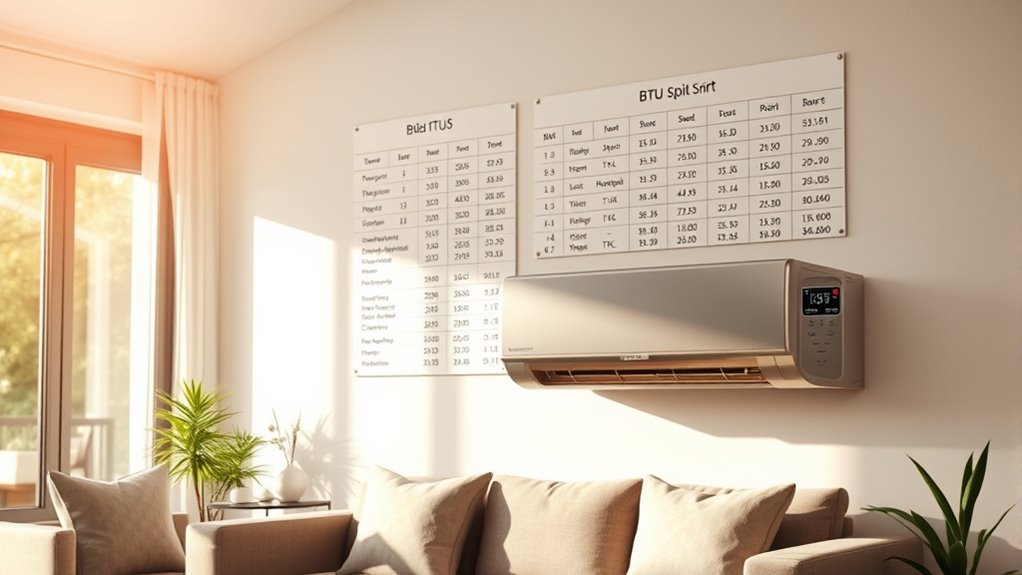
Choosing the right size for your mini split is *crucial* to ensuring efficient heating and cooling. When your unit is properly sized, it operates at *optimal* energy efficiency, saving you money on energy bills and reducing unnecessary wear on the system. Conversely, an undersized mini split will struggle to heat or cool the space adequately, leading to longer run times and higher energy consumption. Oversized units, on the other hand, tend to cycle on and off frequently, which also wastes energy and can cause uneven temperature control. To avoid these issues, understanding the BTU calculation is *key*.
Choosing the right mini split size is essential for energy efficiency and consistent comfort.
The basic rule of thumb for mini split sizing involves calculating the cooling or heating capacity needed based on the size and characteristics of your space. You’ll want to measure the square footage, but don’t forget to *consider* factors like ceiling height, insulation quality, window size, and sun exposure. These elements can *significantly* influence the BTU requirements. For example, a room with large windows or poor insulation may need a higher BTU capacity than a well-insulated space of the same size. It’s also wise to *account* for the number of occupants, as people generate heat and can impact the cooling load.
When it comes to energy efficiency, selecting a mini split with the right BTU rating *ensures* that your system doesn’t work harder than necessary. An oversized unit may cool or heat the room quickly but will cycle off and on frequently, wasting energy and increasing wear and tear. An undersized unit may run constantly without reaching your desired comfort level, which also means higher energy bills and potential system fatigue. *Therefore*, accurate sizing based on a thorough BTU calculation is *crucial* for maximizing energy efficiency and *ensuring* consistent comfort.
Installation tips also play a *vital* role in your mini split’s performance. Proper placement of the indoor and outdoor units, for example, can improve airflow and temperature distribution. *Ensuring* the unit isn’t obstructed by furniture or curtains allows it to operate more efficiently. Additionally, professional installation helps guarantee that refrigerant levels are correct and that the system is properly sealed. This not only boosts energy efficiency but also prolongs the lifespan of your mini split. Remember to follow manufacturer guidelines regarding clearance and airflow, as these small details can make a *significant* difference in how well your mini split performs.
As an affiliate, we earn on qualifying purchases.
Frequently Asked Questions
How Does Insulation Affect Mini Split Sizing?
Insulation affects mini split sizing like a shield, blocking unwanted heat transfer. Higher insulation R value improves thermal resistance, meaning your space stays cooler in summer and warmer in winter. If your insulation is poor, you’ll need a more powerful mini split to compensate for heat gain or loss. Proper insulation guarantees your mini split operates efficiently, prevents over-sizing, and keeps your comfort level steady year-round.
Can Oversized Units Save Energy?
Oversized units can seem like a quick fix, but they actually undermine your energy efficiency and reduce equipment lifespan. When a mini split is too big, it cycles on and off frequently, wasting energy and causing wear and tear. Instead, choosing the right size ensures consistent comfort, lowers energy bills, and extends your system’s life. Proper sizing helps you save money and enjoy reliable performance long-term.
What’s the Impact of Ceiling Height on BTU Calculation?
Ceiling height considerably impacts BTU calculation because higher ceilings increase room volume, requiring more cooling or heating power. You should adjust the BTU estimate with a volume adjustment factor to account for extra space. For instance, if your ceilings are taller than standard, multiply the base BTU by the appropriate volume adjustment. This ensures your mini split provides consistent comfort, even with higher ceilings.
How Do Window Sizes Influence Mini Split Requirements?
Ever wonder how window sizes influence your mini split needs? Larger windows let in more sunlight and heat, so you’ll need a higher BTU capacity to keep your space comfortable. Remember to take into account window placement and aesthetic considerations—south-facing windows, for example, can dramatically affect cooling requirements. Properly sizing your mini split ensures efficient performance and comfort, preventing overcooling or undercooling. Isn’t it worth optimizing for both function and style?
Are There Different Sizing Considerations for Outdoor Climates?
Yes, outdoor climates influence mini split sizing. In hotter or more humid areas, you need a unit with higher BTU capacity to handle outdoor temperatures and humidity control effectively. If you overlook these factors, your system might struggle to cool or heat efficiently, leading to discomfort and higher energy bills. Always consider your local climate conditions when selecting a mini split to guarantee ideal performance and comfort year-round.
best mini split air conditioner 9000 BTU
As an affiliate, we earn on qualifying purchases.
As an affiliate, we earn on qualifying purchases.
Conclusion
Mastering mini split sizing guarantees a comfortable, cool, and cozy space. When you carefully calculate and consider cooling needs, you prevent pesky problems like poor performance or persistent patches of heat. Proper planning prevents poor comfort, so take the time to size your system smartly. With the right BTU balance, you’ll enjoy efficient, effective cooling without costly mistakes. Stay savvy, stay satisfied, and keep your space perfectly cool with smart sizing!
As an affiliate, we earn on qualifying purchases.
energy efficient mini split system
As an affiliate, we earn on qualifying purchases.
As an affiliate, we earn on qualifying purchases.
Flea & tick season Picks
flea and tick prevention
As an affiliate, we earn on qualifying purchases.