If your home has hot and cold rooms, the issue often lies in how your radiators are positioned, affecting water flow and pressure. Poor placement can restrict circulation, leaving some areas underheated while others feel too warm. Installing radiators away from central zones or at high spots may cause uneven heating. Proper placement under windows or centrally can improve flow and balance. Keep exploring to discover how adjusting radiator positions can create a more consistent temperature throughout your home.
Key Takeaways
- Improper radiator placement can cause uneven water flow, leading to hot spots and cold zones in different rooms.
- Radiators installed away from central areas or at high positions restrict effective circulation and pressure.
- Poor positioning at system extremities can reduce flow, resulting in insufficient hot water reaching certain radiators.
- Cold rooms often occur when flow and pressure are restricted by suboptimal radiator placement or blocked pipes.
- Proper radiator positioning ensures balanced flow and pressure, promoting even heating throughout your home.
Ever wonder why some rooms in your home feel warm and cozy while others stay cold? The answer often comes down to how your heating system distributes heat, especially when it comes to zonal heating and radiator placement. Zonal heating allows you to control different areas of your home independently, which is great for comfort and energy efficiency. But even with a zonal system, if the radiators aren’t positioned correctly, some rooms will still struggle to stay warm.
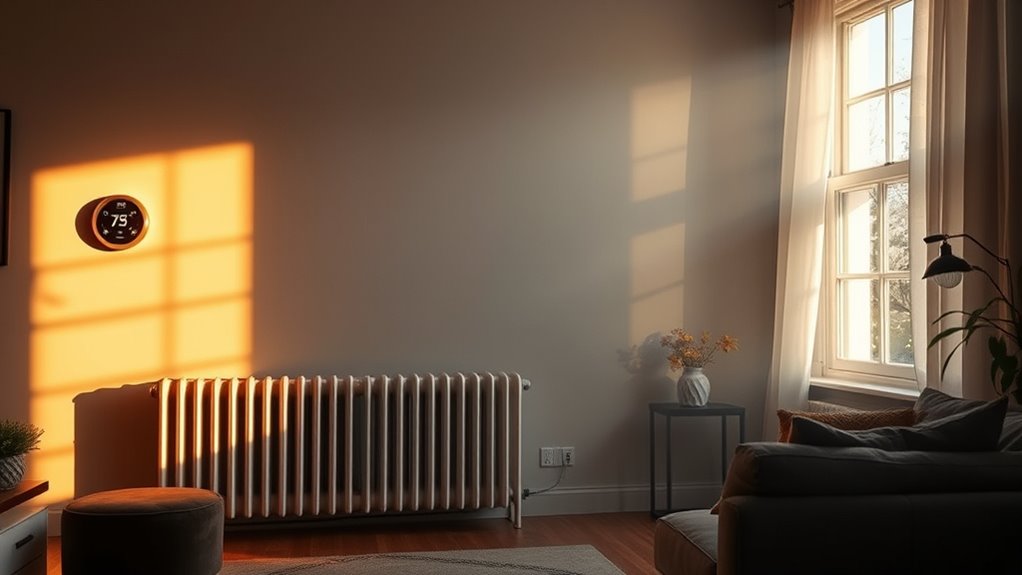
Radiator placement plays an essential role. Typically, radiators are installed under windows because that’s where cold air tends to enter, and placing heat sources there helps counteract drafts. However, if radiators are placed too far from the room’s central areas or positioned poorly on the wall, heat might not circulate evenly. This uneven distribution creates hot spots near the radiator but leaves other parts of the room cold. To maximize warmth, you should position radiators where they can effectively circulate warm air across the entire space, not just in one corner.
Proper radiator placement under windows ensures even warmth and prevents cold spots throughout your room.
Zonal heating systems work by dividing your home into different zones, each with its own thermostat and control valve. This setup ensures you don’t waste energy heating unoccupied rooms, but it also means that proper radiator placement within each zone becomes even more important. If radiators in one zone are placed in less strategic locations, that zone might not reach the desired temperature, or it might heat unevenly. Ensuring radiators are installed in central, accessible spots can greatly improve flow and pressure within the system, resulting in more consistent warmth.
Flow and pressure are tightly linked to radiator placement. Proper placement facilitates good water flow, which in turn ensures that hot water reaches each radiator with enough force to emit heat effectively. If radiators are placed at the far end of a system or too high on the wall, the flow might be restricted, causing cold spots and uneven heating. Sometimes, balancing valves are needed to adjust flow rates, but the initial placement is critical for maximum performance. When radiators are correctly positioned, they help maintain steady pressure and flow, leading to a more evenly heated home.
Frequently Asked Questions
How Can I Balance Temperature Differences Between Rooms?
To balance temperature differences, start by adjusting valve positioning on your radiators or vents to control flow. Check for airlocks in your pipes, as trapped air can cause uneven heating. Bleed your radiators to release air, ensuring proper circulation. If some rooms stay cold, consider installing thermostatic valves for better control. Consistently maintaining valve settings and removing airlocks helps create a more even temperature throughout your home.
Do Pipe Materials Affect Hot and Cold Room Temperature?
Yes, pipe materials affect hot and cold room temperatures. For example, metal pipes like copper can corrode over time, causing temperature inconsistencies, while plastic pipes resist corrosion better. Additionally, different materials expand at different rates when heated, impacting water flow and temperature stability. These factors influence how efficiently hot water reaches each room, so choosing the right pipe material helps maintain consistent temperatures and reduces issues caused by corrosion or expansion.
How Does Insulation Impact Pressure and Flow?
Think of thermal insulation as your home’s silent guardian, much like a barrier in a classic story. It helps maintain consistent pressure and flow by reducing heat loss and preventing air leaks. Proper insulation enhances air circulation, ensuring hot and cold water moves smoothly through pipes. Without it, temperature fluctuations cause pressure drops, leading to uneven flow and affecting your comfort. So, insulation keeps your system balanced and efficient.
Can Plumbing Layout Cause Uneven Heating?
Yes, your plumbing layout can cause uneven heating. If the water pressure isn’t balanced due to pipe configuration, some rooms may receive less hot water, resulting in uneven temperatures. Narrow or long pipe runs can restrict flow, making certain areas cooler. To fix this, you might need to adjust your pipe setup or improve water pressure distribution, ensuring each room gets the right flow for consistent, comfortable heating.
What Role Do Thermostats Play in Pressure Distribution?
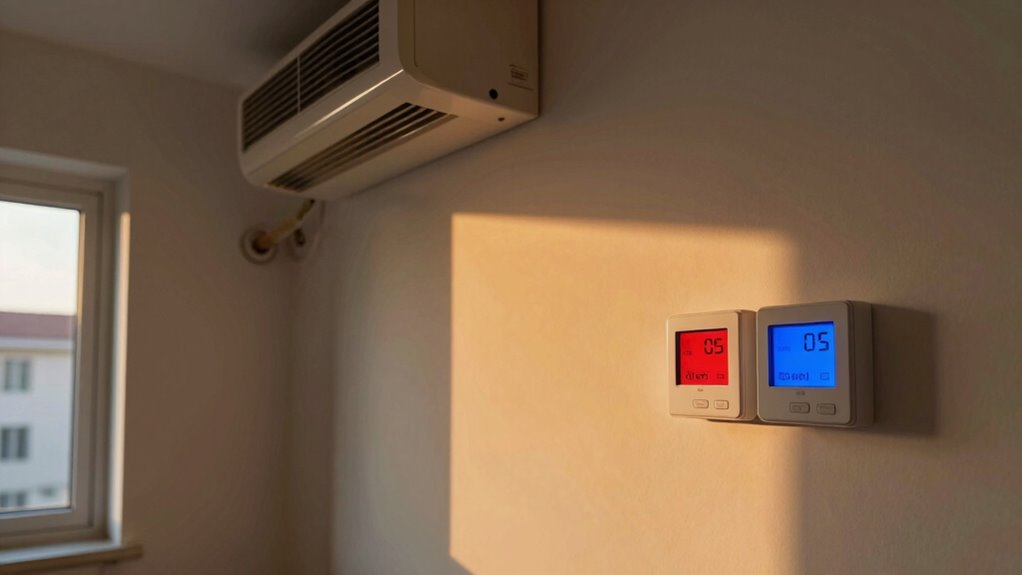
Thermostats play a key role in managing pressure zones by controlling when your heating or cooling systems activate. Proper thermostat placement ensures even temperature distribution, preventing pressure imbalances that cause hot and cold spots. When your thermostat is located in a drafty or sunny spot, it can misjudge the room’s needs, leading to uneven pressure flow. Position your thermostat centrally for ideal pressure regulation and consistent comfort throughout your home.
Conclusion
So, next time your home feels like a temperature lottery, remember it’s all about pressure and flow—nature’s little pranks. Don’t blame the thermostat; blame the universe’s cruel joke on your heating system. But hey, at least you get a free tour of your home’s hidden plumbing chaos. Who knew hot and cold rooms could be so dramatic? Enjoy the thrill, and maybe invest in a good blanket—your home’s just playing hard to get.