
Warm air primarily transfers heat through convection, moving around to distribute warmth evenly, while warm surfaces transfer heat mainly via conduction and radiation, directly warming objects and the air nearby. Convection currents circulate warm air, creating uniform temperatures, whereas warm surfaces impact their surroundings through direct contact and electromagnetic radiation. Understanding these differences helps you optimize heating methods and insulation. Keep exploring to discover how these mechanisms influence your indoor comfort and energy efficiency.
Key Takeaways
- Warm air transfers heat mainly through convection and radiation, while warm surfaces primarily transfer heat via conduction and radiation.
- Warm surfaces directly conduct heat to nearby objects, whereas warm air relies on fluid movement for heat distribution.
- Convection moves warm air to evenly distribute heat, unlike warm surfaces which create localized heating.
- Radiation from warm surfaces heats objects without contact, while warm air radiates and convects to warm surrounding areas.
- The effectiveness of heat transfer depends on whether energy moves through fluid motion or direct contact with surfaces.
Understanding the difference between warm air and warm surfaces is essential because they behave and influence their surroundings in fundamentally different ways. When dealing with heat, it’s important to recognize how each transfers energy and affects the environment. Warm air, being less dense than cold air, tends to rise, creating convection currents that distribute heat throughout a space. This movement relies heavily on heat transfer mechanisms like convection and radiation, which depend on temperature differences and fluid motion. Warm surfaces, on the other hand, transfer heat primarily through conduction, which involves direct molecular contact. The thermal conductivity of a material determines how efficiently heat moves through it; metals like copper have high thermal conductivity, making them excellent conductors, while insulators like wood or foam have low thermal conductivity, slowing down heat transfer.
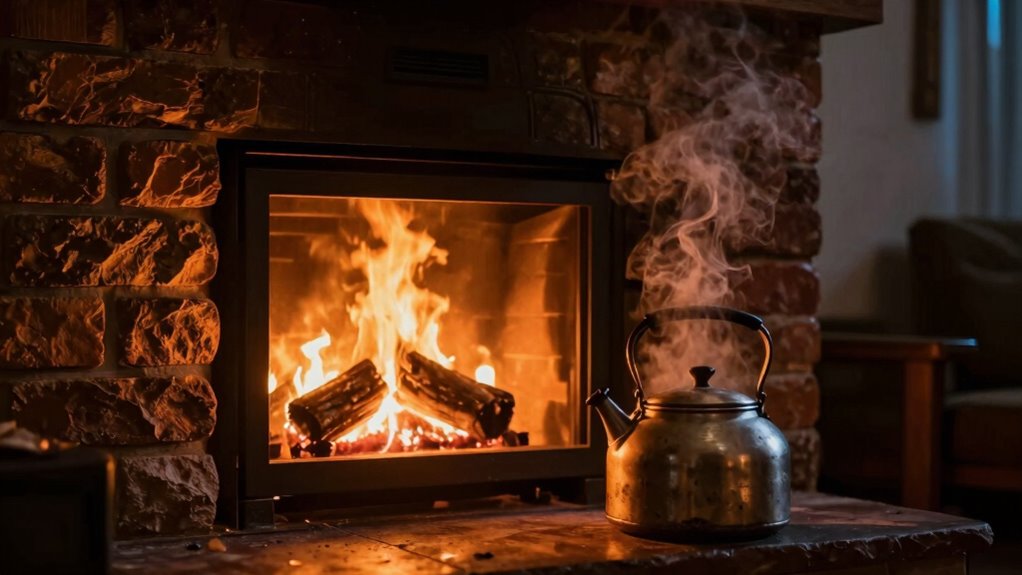
You’ll find that warm surfaces influence their surroundings differently because they conduct and radiate heat directly to nearby objects and air. When a surface is heated, it conducts energy to anything in contact and radiates infrared heat outward. This radiation can warm objects and people even without direct contact, which is why sitting near a warm wall or fireplace makes you feel cozy. The efficiency of this heat transfer depends on the surface’s temperature and its thermal properties. Conversely, warm air heats objects mainly through convection, where the movement of air molecules carries heat from one place to another. This process creates a more uniform temperature distribution in a room but can also cause drafts or uneven heating if the airflow isn’t controlled. Recognizing the role of thermal conductivity in heat transfer helps in selecting appropriate materials for insulation and heating solutions. Additionally, understanding how heat transfer mechanisms operate can assist in designing more energy-efficient heating systems.
Furthermore, the directionality of heat transfer plays a crucial role in how effectively a space is heated or cooled, influencing energy consumption and comfort levels. Recognizing the differences in heat transfer methods enables better control over indoor climates and energy use. The properties of materials involved in heat transfer, such as reflective surfaces or insulation, can significantly affect the overall efficiency of heating or cooling strategies. The way materials are arranged and their thermal properties can either enhance or hinder heat retention and dissipation. The key difference lies in how each mechanism operates: conduction requires physical contact and depends on thermal conductivity, while convection involves fluid movement, and radiation depends on electromagnetic waves. When you’re trying to warm a space efficiently, understanding these mechanisms helps you choose the right strategies. For example, heating a room with a radiant heater targets surfaces and objects directly, utilizing radiation, while forced-air systems rely on convection currents to circulate warm air. Recognizing that warm surfaces can transfer heat through conduction and radiation, and warm air does so mainly through convection, allows you to optimize heating methods and improve energy efficiency.
Ultimately, grasping these distinctions helps you understand how heat moves in your environment. Whether you’re designing a space, choosing heating appliances, or just trying to stay comfortable, knowing the roles of thermal conductivity and heat transfer mechanisms makes a significant difference. It’s not just about how warm something appears, but about how that warmth is generated, transferred, and distributed through different processes. This knowledge empowers you to make smarter decisions in managing heat, ensuring you stay cozy while using energy wisely.
infrared space heater
As an affiliate, we earn on qualifying purchases.
As an affiliate, we earn on qualifying purchases.
Frequently Asked Questions
How Do Warm Air and Warm Surfaces Affect Indoor Humidity Levels?
Warm air increases indoor humidity because it holds more moisture, making humidity regulation easier. Conversely, warm surfaces can cause surface condensation when they cool indoor air, leading to excess moisture buildup. You should monitor both to prevent issues like mold or dampness. Proper ventilation helps balance humidity levels, reducing surface condensation and maintaining comfortable indoor air quality. Managing both warm air and surfaces is key to healthy, balanced humidity indoors.
Can Warm Surfaces Cause Thermal Discomfort Differently Than Warm Air?
Imagine walking barefoot on a cold tile floor while the air feels warm; your thermal sensation is uncomfortable because the surface temperature is low. Warm surfaces can cause thermal discomfort differently than warm air because they directly influence how your skin perceives temperature. If a surface feels too hot or cold, it can create a stark contrast with the ambient air, making you feel uncomfortable despite the room’s overall warmth.
What Materials Best Retain Heat on Warm Surfaces?
You should choose materials with low thermal conductivity, like wood or foam, to best retain heat on warm surfaces. These materials slow heat transfer, keeping surfaces warmer longer. Additionally, opt for substances with low surface emissivity, such as reflective coatings or metallic finishes, which reduce heat loss through radiation. Combining these properties helps maintain warmth more effectively, ensuring your surfaces stay comfortable and energy-efficient.
How Does Insulation Impact the Effectiveness of Warm Surfaces Versus Warm Air?
Imagine wrapping warm surfaces and warm air in cozy blankets—insulation acts like that blanket, trapping heat and slowing its escape. It reduces thermal conductivity, so heat stays on surfaces longer, maintaining higher surface temperatures. When insulation is thick, warm surfaces stay hotter, while warm air’s temperature stability improves. Without proper insulation, heat escapes quickly, making both warm surfaces and warm air less effective at retaining heat.
Are There Health Risks Associated With Warm Surfaces Compared to Warm Air?
Yes, there are health risks associated with warm surfaces compared to warm air. When surface temperature gets too high, it can cause burns or skin damage through direct contact. Plus, excessive heat transfer from hot surfaces increases the risk of heat-related illnesses. You should observe surface temperatures carefully, especially in environments like kitchens or industrial settings, to prevent injuries and guarantee safe heat transfer levels.
thermal insulation materials
As an affiliate, we earn on qualifying purchases.
As an affiliate, we earn on qualifying purchases.
Conclusion
So, next time you’re sweating over whether warm air or warm surfaces are to blame for that uncomfortable heat, remember: it’s all just a fancy game of hide and seek with thermal energy. Warm surfaces might be the sneaky culprits, but warm air loves to take all the credit. Either way, you’re the one left fanning yourself. So, pick your heat villain wisely—your comfort depends on it.
convection heater fan
As an affiliate, we earn on qualifying purchases.
As an affiliate, we earn on qualifying purchases.
radiant wall heater
As an affiliate, we earn on qualifying purchases.
As an affiliate, we earn on qualifying purchases.