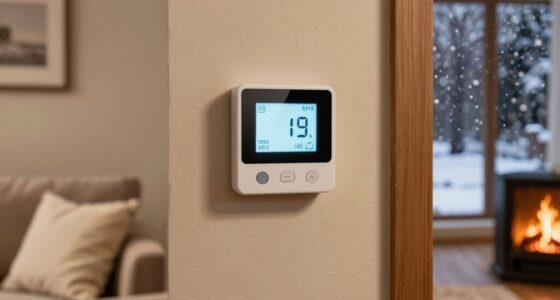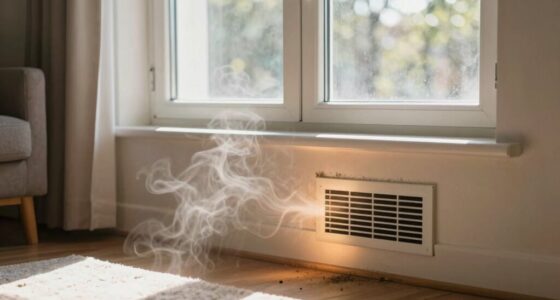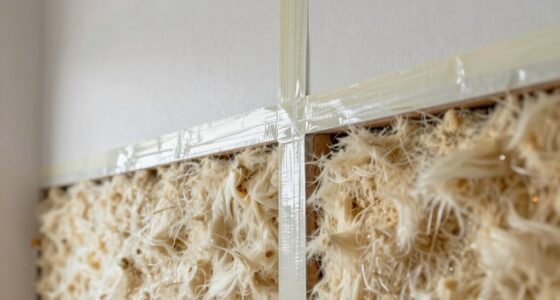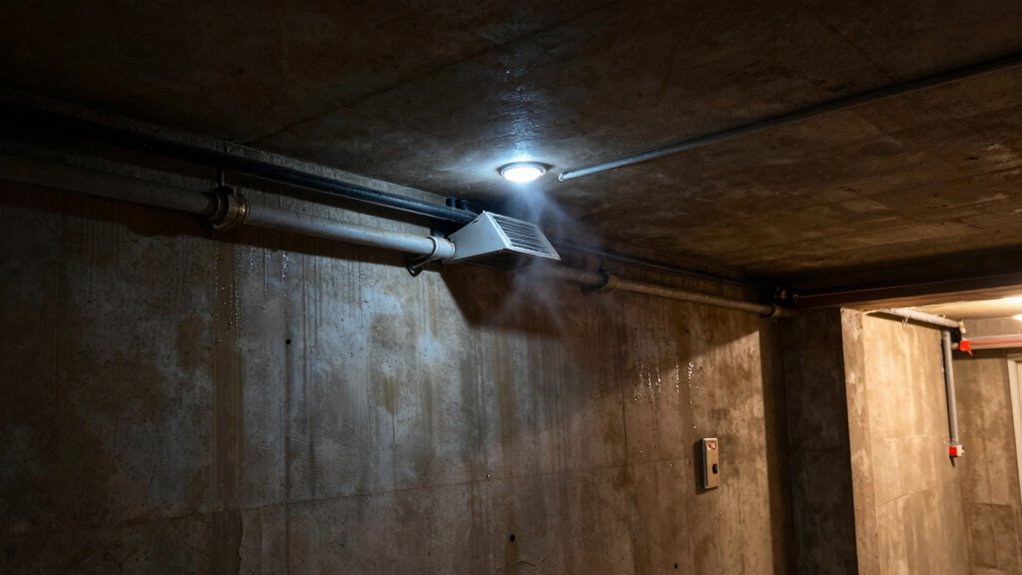
Moisture in your basement can cause damp, stale air that rises to your upstairs rooms, making your HVAC work harder. Leaks, poor drainage, or inadequate sealing around windows and pipes let water vapor enter, increasing humidity and promoting mold growth. This extra moisture pushes up energy bills as your system fights to dry the air. Understanding how air pressure influences moisture movement can help you manage airflow better. Keep exploring to discover effective strategies to keep your home comfortable and dry.
Key Takeaways
- Moisture from the basement rises into upper levels, increasing indoor humidity and making HVAC systems work harder.
- Excess basement humidity causes dampness upstairs, reducing energy efficiency and raising heating or cooling costs.
- Leaks and poor drainage in the basement allow water vapor to migrate upward, affecting indoor air quality and energy use.
- Improper air pressure differences drive moist air from the basement into living spaces, increasing cooling and heating demands.
- Enhancing ventilation and sealing leaks can reduce upstairs energy bills by preventing damp air migration from the basement.
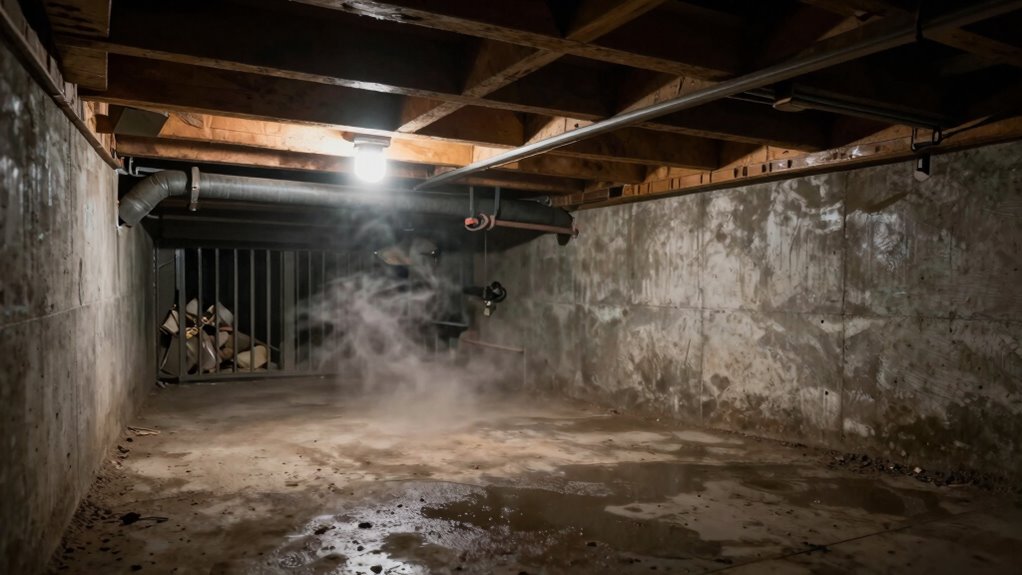
If your basement feels damp, musty, or stale, you’re not alone—many homeowners face the same issue. This lingering moisture can lead to poor air quality upstairs, raising your energy bills and making your home less comfortable. The key to solving this problem lies in effective moisture control and smart ventilation strategies. When moisture accumulates in your basement, it doesn’t stay confined; it rises through the walls, floors, and into the upper levels, forcing your HVAC system to work harder to maintain a comfortable temperature. This increased workload spikes your energy costs and can cause your system to wear out faster.
To address this, start with moisture control. Identify sources of excess humidity, such as leaks, poor drainage, or inadequate sealing around pipes and windows. Fixing these issues reduces the amount of water vapor that seeps into your basement air. Installing a dehumidifier can also help maintain ideal humidity levels—ideally between 30% and 50%. This not only prevents mold growth and structural damage but also keeps the air upstairs fresher and drier, easing the burden on your heating and cooling systems. Remember, controlling moisture is an ongoing process, so check your dehumidifier regularly and ensure your basement remains dry and well-sealed. Additionally, understanding the role of air pressure differences in moisture migration can help you develop more effective ventilation strategies. Recognizing how air pressure influences moisture movement allows for more targeted adjustments to your ventilation setup. Being aware of pressure-driven airflow can enable you to optimize your home’s ventilation to reduce damp air migration.
Furthermore, employing air pressure management techniques can significantly improve your home’s overall airflow and moisture control, leading to better energy efficiency.
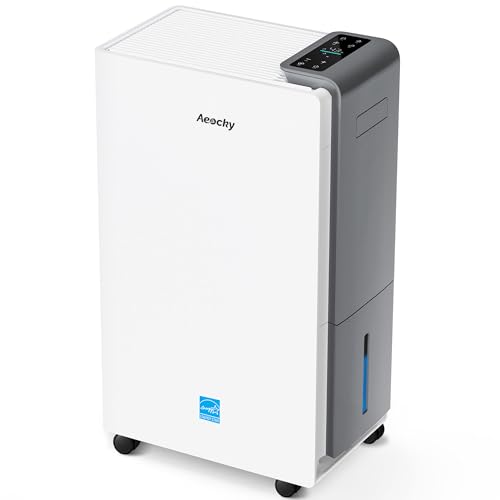
AEOCKY 4500 Sq.Ft Energy Star Most Efficient 2025 Dehumidifier, Max 80 Pint/Day Smart Compressor Dehumidifier with Drain Hose, Intelligent Humidistat,for Basement,Bedroom,Home,Bathroom
【ENERGY STAR 25 ≠ ENERGY STAR Most Efficient 2025】Don't fall for competitors' word games. Only 2.6% of ENERGY…
As an affiliate, we earn on qualifying purchases.
As an affiliate, we earn on qualifying purchases.
Frequently Asked Questions
How Can I Identify if My Basement Air Is Affecting Upstairs Energy?
You can tell if your basement air affects upstairs energy by checking for high basement humidity and mold growth. If the basement feels damp or has a musty smell, it’s a sign of excess moisture, which can lead to heat loss upstairs. Proper ventilation and dehumidifiers help maintain mold prevention and reduce energy bills. Keep an eye on these signs to make certain your basement isn’t impacting your home’s overall efficiency.
Are There Specific Signs Indicating Basement Air Leaks?
You might notice basement moisture or dampness, which often signals air leaks. For example, a homeowner detected musty smells and water stains near foundation cracks, indicating conditioned air escaping and moisture seeping in. These signs suggest basement air leaks, especially where foundation cracks or gaps around windows are present. Addressing these leaks improves air sealing, reduces moisture issues, and helps lower energy bills upstairs.
What Materials Are Best for Sealing Basement Air Leaks?
You should use high-quality sealants like polyurethane or silicone for sealing basement air leaks, as they offer excellent sealant effectiveness and flexibility. These materials are durable, resisting cracking and shrinking over time, ensuring long-lasting results. Foam sealants can also work well for larger gaps, providing good insulation and sealing. Make sure to choose a product suited for basement conditions, and properly prepare surfaces for maximum effectiveness and durability.
How Often Should Basement Insulation Be Inspected or Replaced?
You should inspect your basement insulation at least once every year to catch any signs of moisture or insulation degradation early. Regular inspections help prevent moisture buildup, which can compromise insulation effectiveness and lead to energy loss. If you notice dampness, mold, or crumbling insulation, it’s time to replace or repair it. Staying proactive keeps your basement dry, prevents energy bills from rising, and maintains a healthy indoor environment.
Can Upgrading Basement Ventilation Improve Overall Home Energy Efficiency?
Ironically, upgrading basement ventilation can substantially boost your home’s energy efficiency. By reducing basement moisture and improving air quality, you prevent dampness that often leads to heat loss and mold growth. Better airflow helps regulate temperature and reduces strain on your heating system. So, investing in ventilation isn’t just about fresh air; it’s a smart move to cut energy bills and keep your entire home healthier and more comfortable.

PartLogix Air Pressure Gauge Kit for Semi Truck Trailer Suspension Onboard Load Scales Solution
This kit includes everything you need to add pressure gauge to air bag of your semi truck or…
As an affiliate, we earn on qualifying purchases.
As an affiliate, we earn on qualifying purchases.
Conclusion
So, safeguard your space by sealing, sorting, and stemming the basement air seepage. Stop the sneaky, stifling strains from spiraling upstairs, saving both your sanity and your savings. When you tackle the tricky, turbulent traps below, you triumph over energy waste and unnecessary expenses. Remember, addressing the basement air problem isn’t just a task; it’s an essential key to keeping your home cozy, cost-effective, and comfortable. Take action today to prevent pricey problems tomorrow.

Liquid Rubber Basement and Foundation Repair Sealant – Waterproof Concrete Sealer & Crack Filler – Flexible Coating for Indoor & Outdoor Use – Waterproofing Paint – Black, 1 Gallon
SUPERIOR FLEXIBLE SEALANT: Liquid Rubber's foundation sealer creates a permanent waterproof membrane for basement waterproofing, foundation leak repair,…
As an affiliate, we earn on qualifying purchases.
As an affiliate, we earn on qualifying purchases.
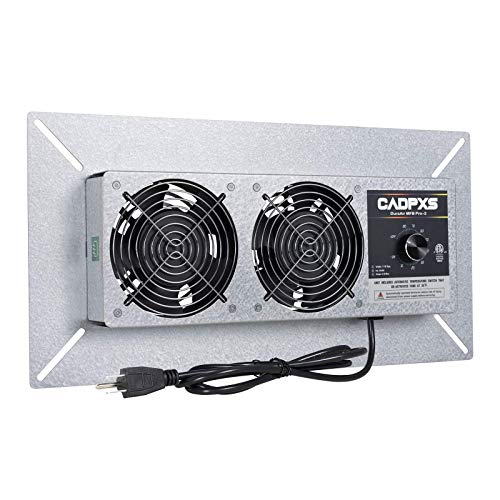
CADPXS Crawlspace Ventilation Fan, Crawlspace Fan Vent with Humidistat, Dehumidistat & Freeze Protection Thermostat, for Crawl Spaces/Basement/Garage/Attic/Hydroponics Grow Tents (220 CFM Air Out)
Crawlspace Vent Fan: Air Out. Airflow: 220 CFM. 18" x9" x2”. Dual fans with 6.56 foot grounded power…
As an affiliate, we earn on qualifying purchases.
As an affiliate, we earn on qualifying purchases.